 Preview
 Send
Send Share
Share
 Details

 Download
 Similars
 X-Ray
X-Ray Diaporama
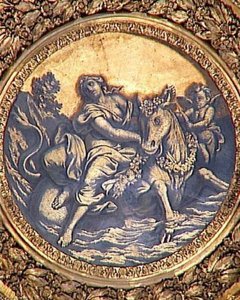
ENLEVEMENT D'EUROPE

 Read More
Giclée / Art Print
Museum-quality giclée or canvas print with fast production and flexible finish options. ( Buy Hand Made Painting Buy Image)




































Pick from our preset sizes that match the artwork's original proportions.

You may enter your own dimensions to fit a specific frame or space. If your selected size does not match the original image's proportions, we will either crop the artwork or extend the image with a mirrored or solid-fill edge. A digital mockup will be sent for your approval before production begins.
Please note that the on-screen preview does not reflect the actual cropping or extension. Only the mockup will accurately show the final composition.
While custom sizes are available, we recommend selecting a dimension from the predefined list to preserve the original proportions.
Worldwide Delivery () in 2 weeks instead of standard 4/5 weeks. (21 August)

Free Worldwide Express Shipping

High-Quality Linen Canvas

Full Shipping Insurance

Customs Tax Refund Guarantee

True Color Matching Guarantee

60-Day Return Policy (Defects Only)

100% Money-Back Guarantee

Bulk Discount Offer
 Glass option is only available in size under 110 CM

ENLEVEMENT D'EUROPE
Giclée / Art Print
Reproduction Size
-


Total Price
$ 63
Collectible Description
ENLÈVEMENT D'EUROPE: A Rococo Masterpiece by René-Antoine Houasse
- Artist: René-Antoine Houasse
- Date: Unknown
- Materials: Ceramic or Plaster with Applied Gold Leaf
A Mythological Scene of Desire and Transformation
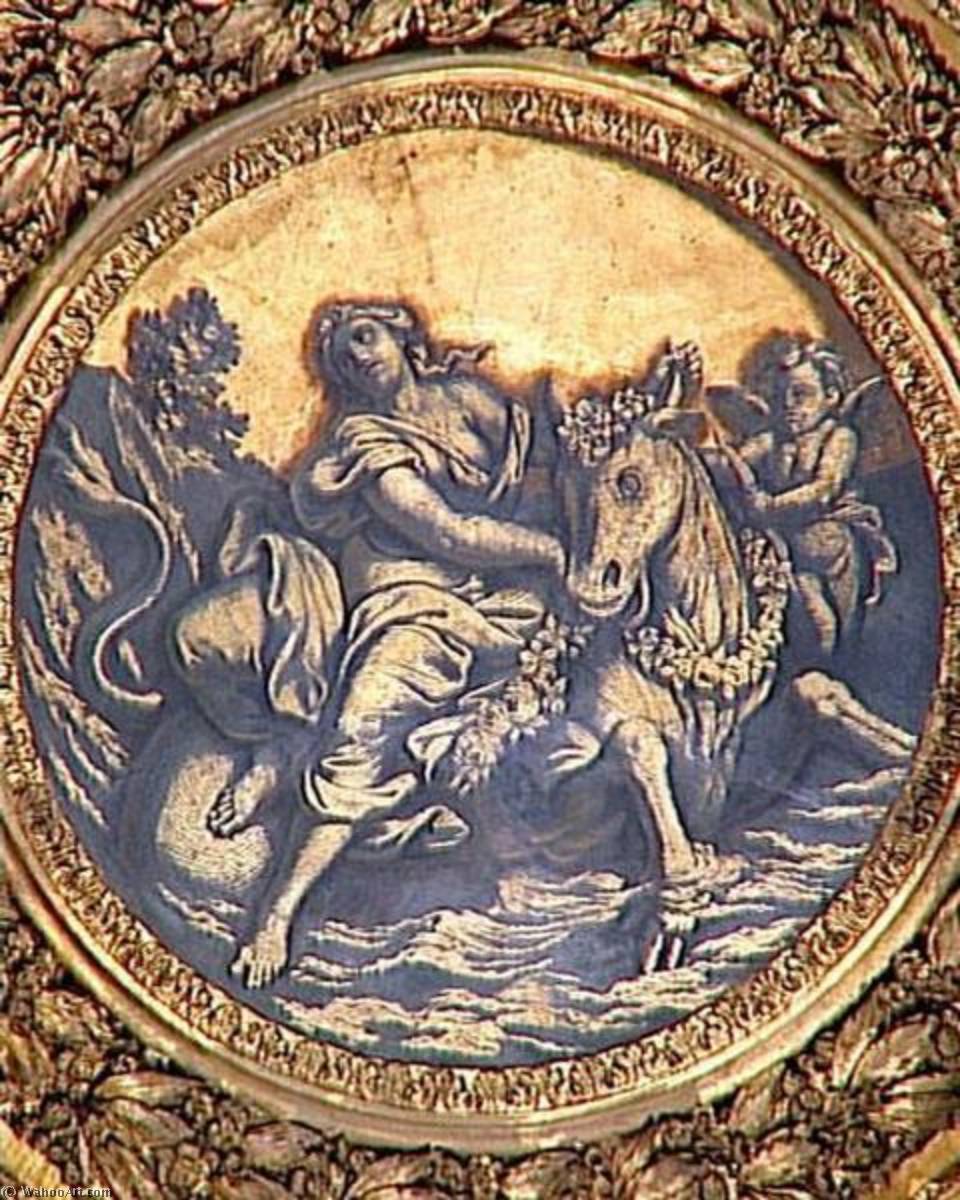
René-Antoine Houasse's Enlèvement d'Europe (The Abduction of Europa) is a captivating work that draws viewers into the heart of Greek mythology. The artwork depicts the pivotal moment when Zeus, disguised as a magnificent white bull, abducts Europa, a Phoenician princess. This narrative, rich in symbolism, explores themes of divine power, desire, and destiny. Presented within an ornate oval medallion, the scene is framed by elaborate gilded ornamentation, characteristic of the Rococo style.
Style and Technique: Late Baroque Opulence
Houasse’s Enlèvement d'Europe exemplifies the late Baroque period, transitioning into the elegant aesthetics of Rococo. The composition is dynamic and theatrical, with figures arranged in a diagonal movement that conveys a sense of urgency and drama. Strong outlines define the forms, typical of Baroque art, while curved lines contribute to the overall feeling of motion. The technique likely involves relief carving or a similar sculptural method, creating raised forms within the medallion. The extensive use of gold leaf—gilding—adds a layer of opulence and visual richness, contrasting beautifully with the cool blues used to depict Europa and the bull.
Color Palette and Compositional Elements
The color palette is dominated by shades of blue and gold. Varying tones of blue create a somewhat monochromatic effect for the central scene, while the surrounding ornamentation bursts with golden hues. This stark contrast draws immediate attention to the mythological narrative unfolding within. The tight framing within the oval medallion creates a sense of intimacy and containment, focusing the viewer's gaze on the embrace between Europa and the bull. A smaller figure, Cupid, perched atop the bull’s back, introduces an element of playful mischief into this otherwise dramatic scene. The limited perspective emphasizes the foreground, contributing to the artwork's overall flatness.
Symbolism and Emotional Impact
Beyond its narrative depiction, Enlèvement d'Europe is laden with symbolic meaning. Europa’s abduction represents not only a tale of divine intervention but also a metaphor for transformation and destiny. The embrace between Europa and the bull evokes complex emotions – fear, surrender, and perhaps even an unexpected connection. The presence of Cupid suggests that love, in all its forms, plays a crucial role in shaping human events. This piece, originally intended to adorn the Château de Versailles, embodies the grandeur and artistic sophistication of the French court during the reign of Louis XIV, offering viewers a glimpse into a world of myth, power, and exquisite beauty.
Related Artworks
Artist Biography
A Brush with Grandeur: The Life and Art of René-Antoine Houasse
René-Antoine Houasse, a name perhaps less immediately recognized than some of his Baroque contemporaries, nevertheless occupies a significant place in the artistic landscape of 17th-century France. Born in Paris in 1645, Houasse’s career unfolded against the backdrop of Louis XIV’s opulent reign, an era defined by a relentless pursuit of magnificence and a fervent patronage of the arts. His journey began under the tutelage of Charles Le Brun, the preeminent figure of French Baroque painting and first painter to the King. This formative period at the Manufacture des Gobelins proved crucial, immersing Houasse in the creation of grand tapestries and decorative schemes that would shape his aesthetic sensibilities and technical prowess. The Gobelins wasn’t merely a workshop; it was an incubator for artistic talent, fostering a collaborative spirit and demanding meticulous execution – qualities that became hallmarks of Houasse's own work. He absorbed Le Brun’s emphasis on dramatic composition, vibrant color palettes, and narrative clarity, but would ultimately forge his own distinct path within the Baroque tradition.Versailles and the Cultivation of Myth
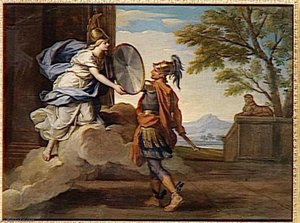
Houasse quickly ascended through the ranks, becoming deeply involved in the ambitious decoration projects at the Château de Versailles. This was more than just painting walls; it was contributing to a carefully constructed image of royal power and divine right. His contributions weren’t limited to any single style or subject matter. He deftly moved between mythological scenes, allegorical compositions, and historical narratives, each imbued with a sense of grandeur befitting the Sun King's palace. However, a recurring motif in Houasse’s oeuvre is his fascination with the Greco-Roman goddess Athena – known as Minerva to the Romans. He repeatedly returned to this figure, exploring her multifaceted nature through various myths and attributes. Paintings like Minerve Donne Son Bouclier A Persee showcase not only his technical skill in depicting classical forms but also a deeper engagement with the intellectual currents of the time – the revival of interest in classical learning and its integration into contemporary artistic expression. His depictions weren’t simply illustrations of ancient tales; they were carefully considered statements about wisdom, strategy, and divine favor, qualities Louis XIV actively sought to embody. Other notable works from this period include Antoine et Cléopatre, a dramatic rendering of the historical encounter, and La Terreur, la crainte et l'épouvante s'emparant des puissances de la terre, an allegorical exploration of powerful emotions.A Roman Interlude: Directing the French Academy
In 1699, Houasse’s artistic standing and leadership qualities were formally recognized with his appointment as director of the French Academy in Rome. This prestigious position placed him at the heart of the artistic community in Italy, responsible for overseeing the training of aspiring French artists. The Académie de France wasn't merely a school; it was an embassy of French art, designed to expose young talents to the rich heritage of Italian Renaissance and Baroque masters. Houasse’s role extended beyond pedagogy. He served as a cultural liaison, reporting back to Paris on artistic trends and significant events in Roman life, ensuring that France remained at the forefront of European artistic innovation. This period allowed him to further refine his own style, absorbing influences from Italian painting while simultaneously imparting French techniques and aesthetic principles to the next generation of artists.Style, Legacy, and Enduring Influence
Houasse’s artistic style is characterized by a compelling blend of elegance, dynamism, and meticulous detail. He masterfully synthesized classical principles with Baroque exuberance, creating compositions that were both visually striking and intellectually engaging. While deeply indebted to Charles Le Brun – his mentor's influence is evident in Houasse’s approach to composition, color, and narrative storytelling – he developed a distinctive artistic voice. His work possesses a refined gracefulness that sets it apart, a subtle sophistication that avoids the sometimes-overwrought drama of other Baroque painters. His legacy extends beyond his own paintings; his son, Michel Ange Houasse, followed in his footsteps, becoming a painter specializing in genre scenes and continuing the family’s artistic tradition. Though perhaps not as widely celebrated today as some of his contemporaries, René-Antoine Houasse played a vital role in shaping the artistic landscape of 17th-century France. His contributions to Versailles and the French Academy in Rome cemented his place as a significant figure in the history of French Baroque art, offering valuable insights into the cultural values, political ideologies, and artistic tastes of his time. His paintings weren’t merely decorative embellishments; they were powerful statements about royal authority, religious devotion, and the enduring power of classical learning.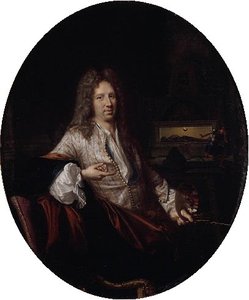
rené antoine houasse
1645 - 1710 , France
Quick Facts
- Artistic Movement Or Style: Baroque
- Artists Or Movements Influenced By This Artist: ['Michel Ange Houasse']
- Artists Who Influenced This Artist: ['Charles Le Brun']
- Date Of Birth: 1645
- Date Of Death: 1710
- Full Name: René-Antoine Houasse
- Nationality: French
- Notable Artworks:
- Antoine et Cléopatre
- Minerve sur le Parnasse
- Titus et Berenice
- Place Of Birth: Paris, France
Related Articles
From Grandeur to Grace: Exploring the Evolution of Baroque & Rococo Art
Explore the captivating evolution from Baroque's drama to Rococo's grace! Discover key artists, characteristics & lasting influence of these art movements with expert insights at ArtsDot.
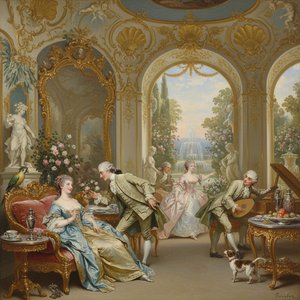
The Rococo Aesthetic: Opulence, Rebellion & the Pursuit of Pleasure in 18th-Century Art
Explore the opulent world of Rococo art! Discover its origins, key artists like Watteau & Boucher, and lasting influence on design. Expert insights for collectors & enthusiasts.

Rococo's Radiant Legacy: 10 Masterpieces for Your Home |
Indulge in the elegance of Rococo! Explore 10 masterpieces by Fragonard, Boucher & Watteau. Discover the stories behind these iconic paintings and bring timeless art to your home with museum-quality reproductions from .

Baroque Drama: Bringing Opulence & Emotion into Contemporary Interiors
Explore the opulent world of Baroque interior design! Discover key elements, modern applications & how to bring dramatic elegance into your home with 's authentic reproductions.
Decoding Baroque Grandeur: A Guide to the Drama and Emotion of 17th-Century Art
Explore the breathtaking drama of 17th-century Baroque art. Our expert guide decodes the use of chiaroscuro, emotional intensity, and historical grandeur to help you appreciate and curate timeless masterpieces for your collection.