 Preview
 Send
Send Share
Share
 Details

 Download
 Similars
 X-Ray
X-Ray Diaporama
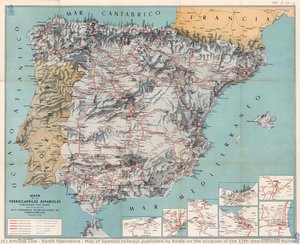
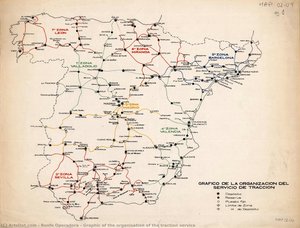
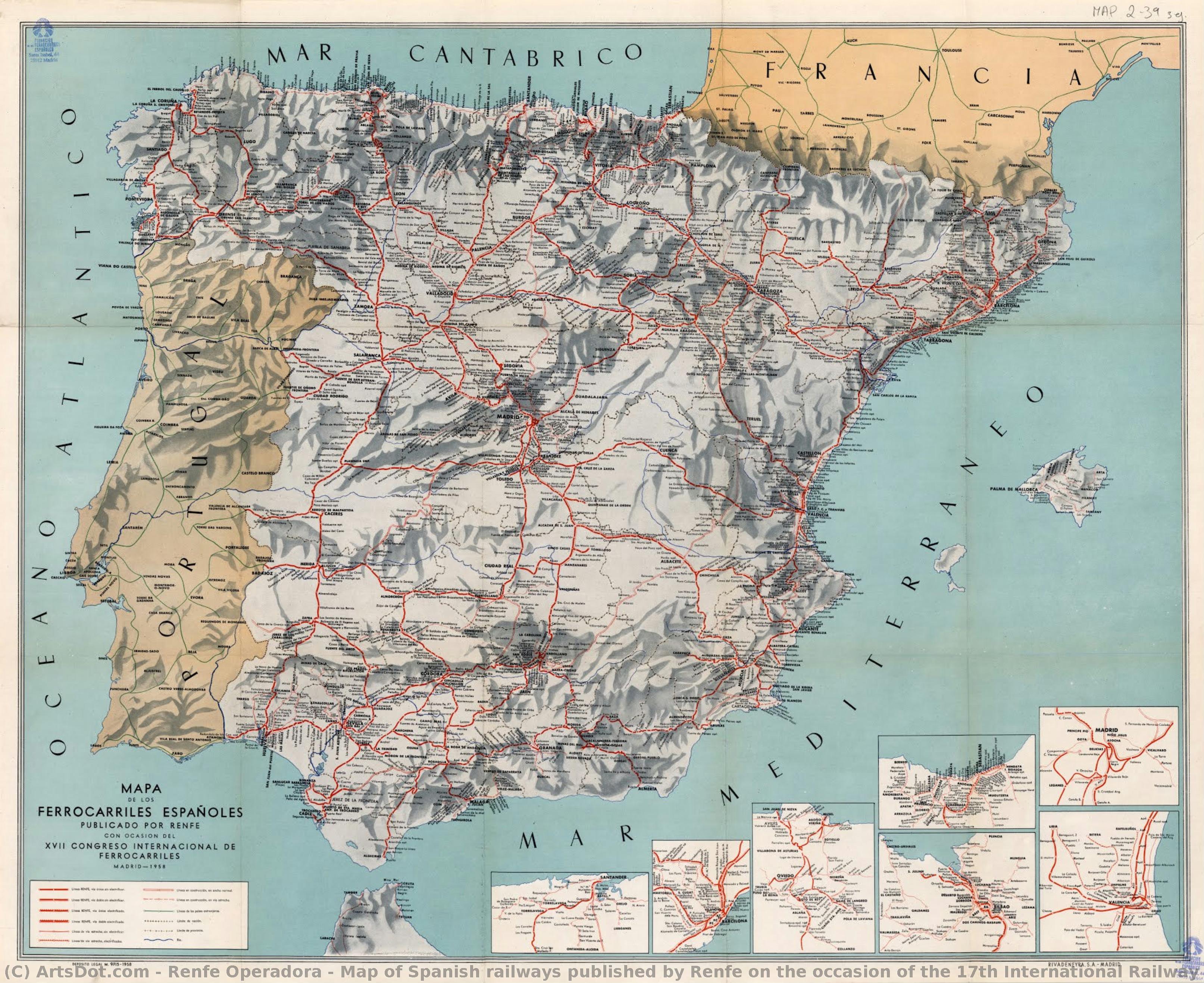
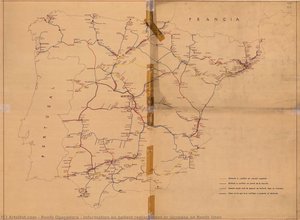
Map of Spanish railways published by Renfe on the occasion of the 17th International Railway Congress


 Read More
Giclée / Art Print
Museum-quality giclée or canvas print with fast production and flexible finish options. ( Buy Hand Made Painting Buy Image)




































Pick from our preset sizes that match the artwork's original proportions.

You may enter your own dimensions to fit a specific frame or space. If your selected size does not match the original image's proportions, we will either crop the artwork or extend the image with a mirrored or solid-fill edge. A digital mockup will be sent for your approval before production begins.
Please note that the on-screen preview does not reflect the actual cropping or extension. Only the mockup will accurately show the final composition.
While custom sizes are available, we recommend selecting a dimension from the predefined list to preserve the original proportions.
Worldwide Delivery () in 2 weeks instead of standard 4/5 weeks. (24 August)

Free Worldwide Express Shipping

High-Quality Linen Canvas

Full Shipping Insurance

Customs Tax Refund Guarantee

True Color Matching Guarantee

60-Day Return Policy (Defects Only)

100% Money-Back Guarantee

Bulk Discount Offer
 Glass option is only available in size under 110 CM

Map of Spanish railways published by Renfe on the occasion of the 17th International Railway Congress
Giclée / Art Print
Reproduction Size
-


Total Price
$ 63
Related Artworks
Artist Biography
The Soul of Spanish Rail: A Legacy in Motion
To speak of Renfe Operadora is to trace the very veins of Spain itself. While often recognized as the national state-owned railway company, its identity transcends mere logistics; it embodies a profound connection to the nation’s industrial evolution and cultural heartbeat. The story of Renfe is not merely one of tracks and locomotives, but a narrative of transformation, beginning with the forceful nationalization of railways in 1941. Born from a period of significant political upheaval under the Franco regime, the original RENFE was conceived as a pillar of economic stability and centralized control. It was a symbol of resilience, a mechanical force designed to bind a fractured landscape together through the rhythmic pulse of steam and steel.
As the decades unfolded, the essence of this entity underwent a metamorphosis that mirrored Spain’s broader journey toward European integration. The pivotal restructuring in 2005 marked a definitive departure from the bureaucratic rigidity of the past. By bifurcating into ADIF, which manages the physical infrastructure, and Renfe Operadora, which oversees passenger services, the organization embraced modern management principles and a spirit of competition. This era signaled a shift toward efficiency and a renewed commitment to connecting the Spanish people with the wider European landscape, turning the railway from a tool of national consolidation into a gateway for international mobility.
The High-Speed Revolution and Technological Splendor
Perhaps the most breathtaking chapter in this history is the advent of the AVE (Alta Velocidad Española). Launched in 2008, this high-speed network revolutionized the concept of distance within the Iberian Peninsula. The introduction of the AVE dramatically compressed the geography of Spain, turning arduous journeys between hubs like Madrid and Barcelona into swift, seamless transitions. This technological triumph is best exemplified by the iconic rolling stock that has graced the tracks, such as the Renfe Class 100—the first high-speed train to serve Spain in 1992—and the ingenious Class 130, affectionately nicknamed patitos (ducklings) due to their distinctive aerodynamic noses. These machines are not merely transport vessels; they are triumphs of engineering that represent Spain’s embrace of innovation and its desire to compete on a global stage.
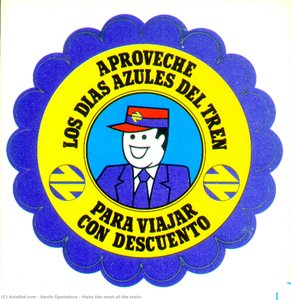
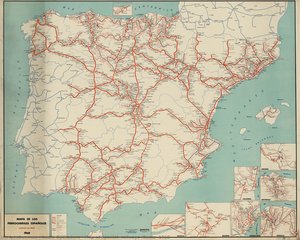
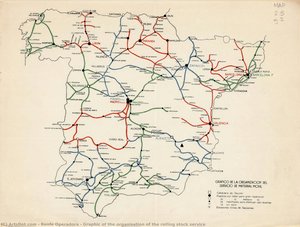
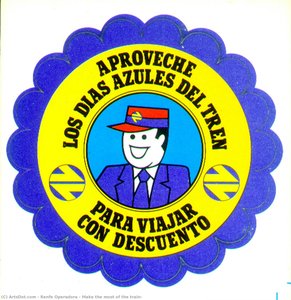
The artistry of Renfe extends beyond the sleek lines of modern trains into the nostalgic charm of its historical documentation and graphic identity. From vintage 1958 maps that showcase the intricate web of Spanish infrastructure to whimsical mid-century promotional stickers featuring jovial conductors, there is a palpable sense of graphic nostalgia. These artifacts capture a moment in time where commercial design met pop art, utilizing bold lines and vibrant colors to evoke a sense of adventure and progress. Even the heavy, powerful diesel locomotives like the Class 333, with their immense strength and industrial presence, contribute to a visual language of power and reliability that has defined the Spanish landscape for generations.
A Living Chronicle of Connectivity
The significance of Renfe Operadora lies in its role as a living chronicle of Spain’s transformation. It is an entity that has navigated the transition from the heavy, coal-driven era of the mid-20th century to the electrified, high-speed precision of the 21st. This legacy is preserved not only in the movement of passengers but also in the cultural institutions it inspires, such as the Spanish Railways Foundation located within the magnificent Madrid-Delicias Station. Within that Beaux Arts masterpiece, the echoes of a single industrial era resonate through grand arches and soaring ceilings, much like the history of Renfe itself.
Ultimately, the work of Renfe Operadora is measured in the connections it facilitates—the bridging of cities, the shortening of horizons, and the unification of a nation. Whether through the specialized Altaria services that utilized gauge-changing technology to traverse different track widths or the integration of narrow-gauge networks like Renfe Feve, the company has remained a steadfast architect of movement. It remains a symbol of how infrastructure can shape identity, turning a network of steel and stone into a profound expression of national continuity and technological aspiration.
renfe operadora
Spain
Quick Facts
- Full Name: renfe operadora
- Nationality: Spanish
- Place Of Birth: Spain
Related Articles
Rafael de Penagos: A Study in Spanish Portraiture & Artistic Identity
Explore the life & art of Rafael de Penagos, a leading Spanish Art Deco illustrator. Discover his iconic 'Penagos Woman', commercial work, and lasting legacy. Learn about this pivotal figure in 20th-century Spanish art history.
Echoes of Time: Nostalgia, Technique & Cultural Significance in Vintage Paintings
Explore the captivating world of vintage paintings! Discover key styles, cultural significance & collecting tips from art experts at ArtsDot. Find authentic reproductions and elevate your home décor.
The Golden Age Reforged: Dramatic Realism & Religious Zeal in Spanish Baroque Art
Explore the dramatic world of Spanish Baroque art! Discover masters like Zurbarán & the powerful influence of religious zeal on painting techniques – a guide for collectors and enthusiasts.

Echoes of Time: Exploring the Enduring Appeal of Vintage Artwork
Explore the captivating world of vintage art! Discover its history, enduring appeal, & how to build your own collection. Expert advice, custom reproductions & museum-quality prints at ArtsDot.
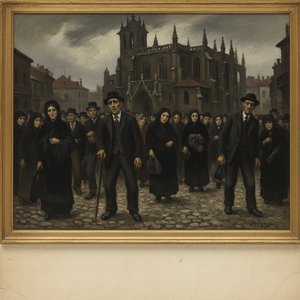
José Gutiérrez Solana: A Chronicle of Spanish Society Through Expressionist Vision
Explore the captivating world of José Gutiérrez Solana, a pivotal Spanish Expressionist painter. Discover his haunting depictions of early 20th-century Spain, influenced by Goya & El Greco. Learn about his key works and lasting legacy.