 Preview
 Send
Send Share
Share
 Details

 Download
 Similars
 X-Ray
X-Ray Diaporama
Self-portrait
 Oil On Canvas
- WallArt
- Baroque
 1635
1635 34.0 x 45.0 cm
 Galleria degli Uffizi
 Read More
Hand Made Oil Reproduction
Hand-painted oil on canvas in your size and frame, made to order by our artists. ( Buy Print Buy Image)




P118B $10

P118H $10

P118W $10

P438Z $10

P508JH $12

P508YH $12

P805H $10

P805Z $10

P919BZ $10

P919G $10

P919XJ $10

P959ZH $10

P968JZ $12

W106C $8

W218G $10

W218JH $8

W218Y $10

W307PJ $10

W316G $10

W316PJ $8

W316Y $10

W398PJ $8

W4111J $10

W500HY $15

W500JH $15

W692G $12

W849H $8

W940BG $15

W953PJ $8




Pick from our preset sizes that match the artwork's original proportions.

You may enter your own dimensions to fit a specific frame or space. If your selected size does not match the original image's proportions, we will either crop the artwork or extend the painting with additional hand-painted elements. A digital mockup will be sent for your approval before production begins.
Please note that the on-screen preview does not reflect the actual cropping or extension. Only the mockup will accurately show the final composition.
While custom sizes are available, we recommend selecting a dimension from the predefined list to preserve the original proportions.
After order, ArtsDot.com team will email client for instructions and provide a mockup preview
Worldwide Delivery () in 3/4 weeks instead of standard 5 weeks. (17 August). No compromise on quality.

Free Worldwide Express Shipping

High-Quality Linen Canvas

Full Shipping Insurance

Customs Tax Refund Guarantee

True Color Matching Guarantee

60-Day Return Policy (Defects Only)

100% Money-Back Guarantee

Bulk Discount Offer
 Glass option is only available in size under 110 CM

Self-portrait
Reproduction Medium
Reproduction Size
-


Total Price
$ 263
Artwork Description
The Intimate Gaze of a Renaissance Soul
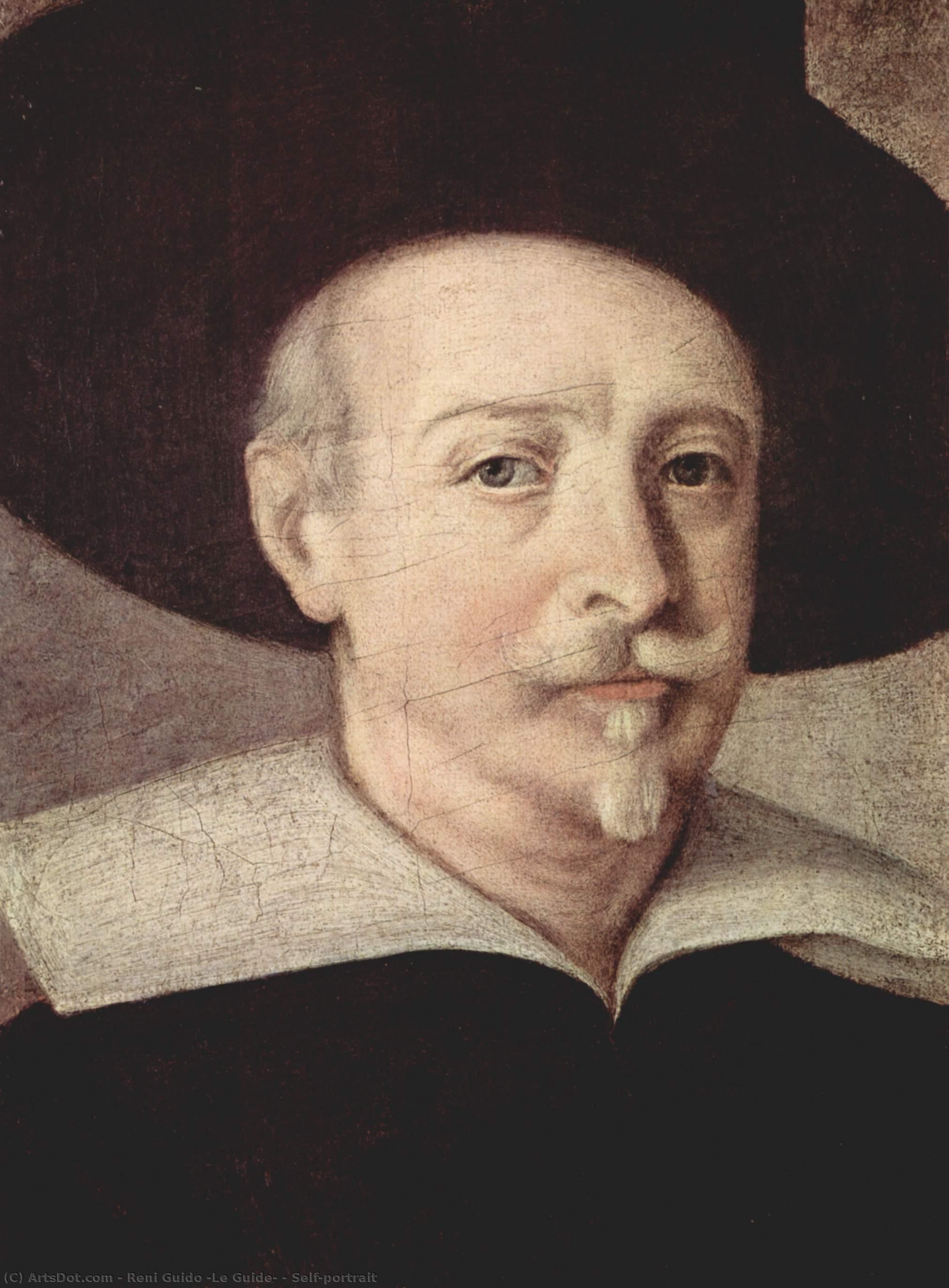
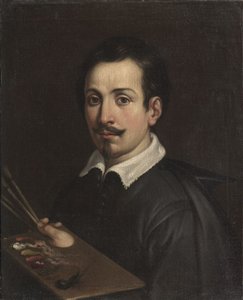
Guido Reni’s “Self-Portrait,” painted circa 1635, isn't merely a likeness; it’s an invitation into the mind and spirit of one of the most celebrated artists of the Baroque period. Within the confines of this relatively small canvas – measuring just 34 x 45 cm – Reni has captured not simply his physical appearance, but a profound sense of contemplation and quiet dignity. The painting immediately draws the viewer in with its direct gaze; the artist’s eyes meet ours across centuries, conveying an almost palpable awareness of our presence.

A Symphony of Light and Shadow – The Baroque Technique
Reni’s mastery lies not just in his likeness, but in the exquisite execution of the Baroque technique. He employs a dramatic chiaroscuro—a masterful manipulation of light and shadow—to sculpt the contours of his face and clothing. Notice how the light gently illuminates his features, highlighting the strong lines of his jaw, the thoughtful curve of his brow, and the carefully groomed mustache and beard. The darker background serves to intensify these highlights, creating a sense of depth and volume that is remarkably lifelike. The subtle gradations of tone suggest not just form but also texture – the velvet of his coat, the sheen of his hair, the delicate folds of his collar.
The painting’s composition is carefully balanced, with the artist positioned slightly off-center, drawing our eye across the canvas. The simplicity of the background—a dark, almost impenetrable void—further emphasizes his presence and directs all attention to his face. This deliberate restraint contributes significantly to the painting's overall impact.
Echoes of Bolognese Classicism and a Personal Vision
Reni’s artistic journey began in Bologna, where he was apprenticed to Denis Calvaert, a Flemish painter who instilled in him a deep appreciation for classical principles. Early influences from the Carracci brothers—particularly their emphasis on anatomical accuracy and dramatic composition—are evident in his early work. However, Reni quickly developed a distinctive style characterized by its elegance, refinement, and emotional intensity. This “Self-Portrait” exemplifies this evolution; it’s not simply a replication of a model but an expression of the artist's own personality and artistic sensibilities.
Born in 1575 in Bologna, Reni spent his career across Italy, working in Rome, Naples, and his native city. His life was marked by both professional success and personal tragedy – he lost his wife and two children within a few years of each other. This loss undoubtedly informed the introspective mood conveyed in this painting, suggesting a quiet melancholy beneath the surface of dignified composure.
Symbolism and the Portraiture Tradition
The inclusion of the wide-brimmed hat—a fashionable accessory of the early modern era—provides a subtle glimpse into the social context of the time. The black coat and white collar denote a formal or upper-class status, reflecting Reni’s position as a respected artist within Bolognese society. The direct gaze is itself a powerful symbol – it invites dialogue, challenges the viewer to engage with the artist's thoughts and emotions. Portraits during this period were not merely representations of appearance; they were carefully constructed statements about identity, social standing, and artistic skill.
A Timeless Masterpiece for Reflection and Display
“Self-Portrait” by Guido Reni is more than just a painting; it’s a window into the soul of a Renaissance artist. Its masterful technique, evocative symbolism, and profound emotional depth continue to resonate with viewers centuries after its creation. Whether displayed in a private collection or a prestigious gallery, this work offers an opportunity for quiet contemplation and a deeper appreciation of the enduring power of art.
Related Artworks
Artist Biography
Guido Reni (Le Guide): Life and Legacy
Early Life and Training
Guido Reni, also known as Le Guide, was born in Bologna, Italy, in 1575. He was the only child of Daniele Reni, a musician, and Ginevra Pozzi, also from a musical family. This upbringing instilled in him an appreciation for harmony and form that would later influence his artistic style. At the young age of nine, Guido began his apprenticeship under Denis Calvaert, a Flemish painter working in Bologna. He studied alongside fellow aspiring artists Albani and Domenichino, forming a strong foundation in classical principles.
Artistic Career and Development
Reni’s artistic career spanned several Italian cities, including Rome, Naples, and his native Bologna. His early work showed the influence of Calvaert and the Carracci brothers, emphasizing anatomical accuracy and dramatic composition. However, Reni quickly developed a distinctive style characterized by its elegant classicism, refined technique, and emotional intensity. He became a dominant figure in the Bolognese School, known for its emphasis on academic training and idealized forms.
Key Influences
- Denis Calvaert: Reni’s initial teacher provided him with a strong foundation in Flemish painting techniques.
- The Carracci Family (Annibale, Agostino, Ludovico): Their emphasis on classical art and anatomical study profoundly impacted his artistic development.
- Raphael: Reni greatly admired Raphael’s gracefulness and harmonious compositions, which are evident in many of his works.
Major Works and Artistic Style
Reni's oeuvre encompasses a wide range of subjects, including religious scenes, mythological narratives, and allegorical representations. Some of his most celebrated works include:
- Apollo on the Sun Chariot (Albertina, Vienna): A dynamic drawing showcasing Reni’s mastery of Baroque style.
- Saint James the Greater: Demonstrates his skill in capturing religious fervor and human emotion.
- Atalanta and Hippomenes (Palace of Capodimonte, Naples): An example of his mythological paintings, characterized by graceful figures and dramatic storytelling.
- Saint Jerome: A testament to Reni’s ability to balance composition with emotional depth.
- Tarantella (Palace of Capodimonte, Naples): Illustrates his influence on Italian folk dance culture.
Reni's style is often described as eclectic classicism. He blended the precision of classical art with the dynamism and emotion of the Baroque period. His figures are typically idealized, possessing a serene beauty and graceful movement.
Historical Significance and Legacy
Guido Reni played a crucial role in shaping the development of High Baroque style in Italy. He influenced generations of artists with his refined technique, elegant compositions, and emotional depth. His work can be found in prominent museums worldwide, including the Palace of Capodimonte in Naples. Reni’s legacy extends beyond painting; he was also a poet and a respected intellectual figure in his time.
His art continues to inspire artists and art enthusiasts today, solidifying his place as one of the most important painters of the 17th century. His influence can be seen in subsequent Baroque artists who sought to emulate his gracefulness and emotional power.
Death
Guido Reni died in Bologna in 1642, leaving behind a rich artistic legacy that continues to captivate audiences centuries later.
reni guido (le guide)
1575 - 1642 , Italy
Quick Facts
- Birth Date: 1575
- Birth Place: Bologna, Italy
- Death Date: 1642
- Influenced By: Denis Calvaert
- Movement: High Baroque, Bolognese School
- Name: Guido Reni (Le Guide)
- Nationality: Italian
- Notable Works:
- Apollo on the Sun Chariot
- Saint James the Greater
- Atalanta and Hippomenes
- Saint Jerome
- Tarantella
Related Articles
The Digital Portrait Renaissance: Transforming Personal Photography into Timeless Oil Paintings Through Artistic Reproduction
Transform your cherished photos into timeless oil paintings with ArtsDot's expert artists. Museum-quality reproductions & custom portraits, crafted to last a lifetime. Discover the art of personal legacy.
From Renaissance Memes to Viral Portraits: The Rise of Customized Classical Paintings in the Age of Instagram
Discover the captivating world of customized classical paintings! Explore how memes sparked a renaissance & learn to commission your own personalized portrait. Expert art consultation & museum-quality reproductions at ArtsDot.
Guido Reni: A Study in Baroque Classicism & Artistic Perfection
Explore the life & work of Guido Reni, a master of Baroque classicism. Discover his iconic religious & mythological paintings, and understand his enduring influence on art history. Expert analysis for collectors.
Early Renaissance Masters: 10 Paintings That Changed Art History |
Journey through the Early Renaissance! Explore 10 iconic paintings by Botticelli, Leonardo da Vinci & Michelangelo. Discover their stories, techniques & lasting impact. Find museum-quality art reproductions and elevate your home decor with .
Raphael's Masterpieces: 25 Iconic Paintings & Renaissance Art for Your Home
Explore 25 breathtaking Raphael paintings! Journey through the Italian Renaissance with masterpieces like 'School of Athens' & iconic Madonnas. Find museum-quality art reproductions and elevate your home decor on ArtsDot.com.