 Preview
 Send
Send Share
Share
 Details

 Download
 Similars
 X-Ray
X-Ray Diaporama
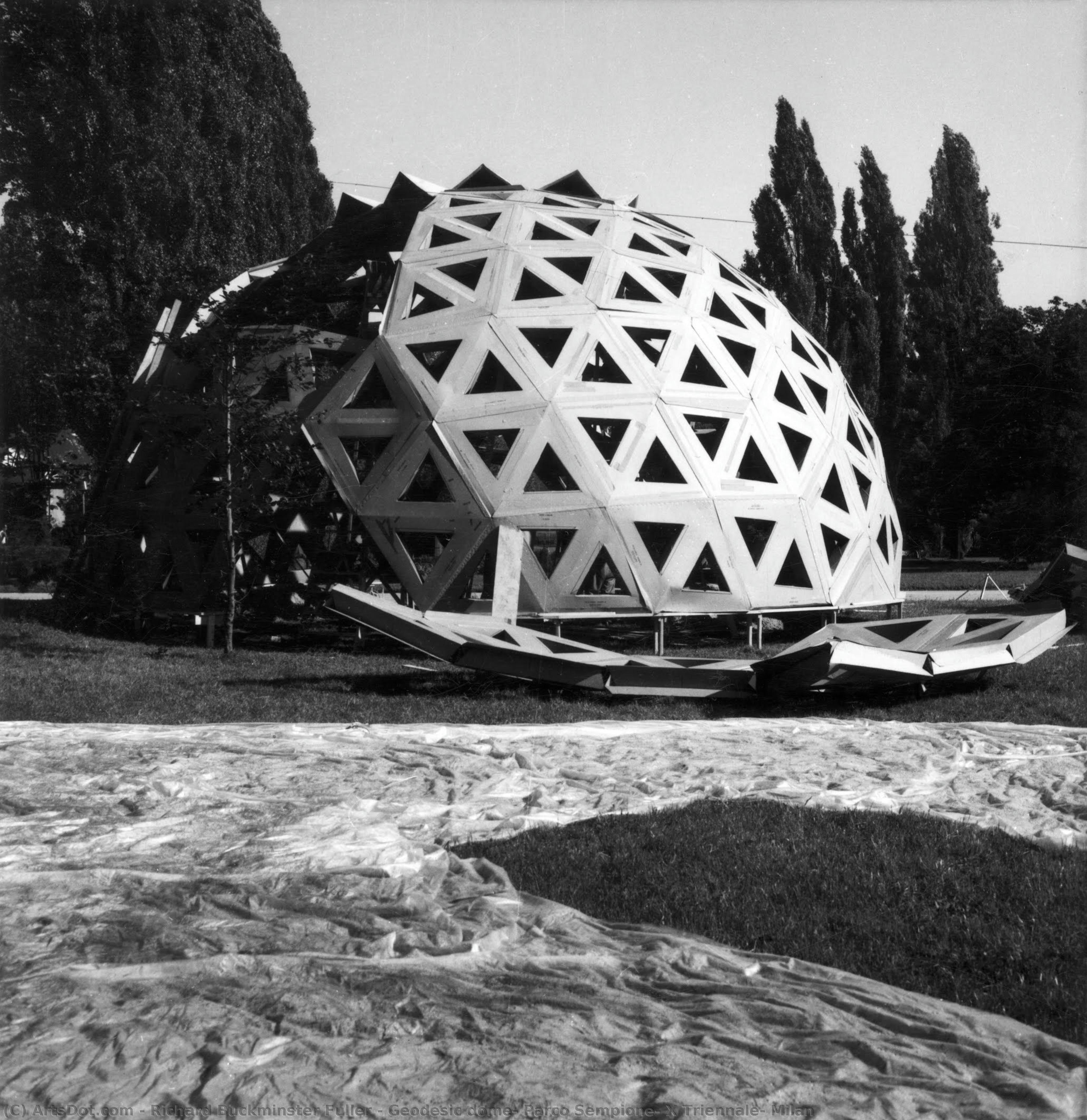
Geodesic dome, Parco Sempione, X Triennale, Milan


 Read More
Hand Made Oil Reproduction
Hand-painted oil on canvas in your size and frame, made to order by our artists. ( Buy Print Buy Image)




P118B $10

P118H $10

P118W $10

P438Z $10

P508JH $12

P508YH $12

P805H $10

P805Z $10

P919BZ $10

P919G $10

P919XJ $10

P959ZH $10

P968JZ $12

W106C $8

W218G $10

W218JH $8

W218Y $10

W307PJ $10

W316G $10

W316PJ $8

W316Y $10

W398PJ $8

W4111J $10

W500HY $15

W500JH $15

W692G $12

W849H $8

W940BG $15

W953PJ $8




Pick from our preset sizes that match the artwork's original proportions.

You may enter your own dimensions to fit a specific frame or space. If your selected size does not match the original image's proportions, we will either crop the artwork or extend the painting with additional hand-painted elements. A digital mockup will be sent for your approval before production begins.
Please note that the on-screen preview does not reflect the actual cropping or extension. Only the mockup will accurately show the final composition.
While custom sizes are available, we recommend selecting a dimension from the predefined list to preserve the original proportions.
After order, ArtsDot.com team will email client for instructions and provide a mockup preview
Worldwide Delivery () in 3/4 weeks instead of standard 5 weeks. (25 August). No compromise on quality.

Free Worldwide Express Shipping

High-Quality Linen Canvas

Full Shipping Insurance

Customs Tax Refund Guarantee

True Color Matching Guarantee

60-Day Return Policy (Defects Only)

100% Money-Back Guarantee

Bulk Discount Offer
 Glass option is only available in size under 110 CM

Geodesic dome, Parco Sempione, X Triennale, Milan
Reproduction Medium
Reproduction Size
-


Total Price
$ 363
Artwork Description
A Monumental Embrace: Buckminster Fuller’s Geodesic Dome at Parco Sempione
The photograph captures more than just a structure; it presents a moment of profound intersection – the audacious geometry of Buckminster Fuller's geodesic dome rising against the backdrop of Milan’s Parco Sempione. Constructed for the 1954 X Triennale exhibition, this image isn’t merely documentation of an architectural marvel; it’s a testament to Fuller’s revolutionary vision and his belief in harnessing nature’s own principles of efficiency and strength. The stark black and white palette intensifies the drama, emphasizing the dome's intricate network of triangular supports and highlighting its monumental scale against the comparatively modest trees that frame it – a deliberate juxtaposition reflecting Fuller’s ambition to create structures that could rival the grandeur of the natural world.
Fuller’s geodesic dome represents a radical departure from traditional building methods. Inspired by the geometry of honeycombs and snowflakes, this structure utilizes a network of interconnected triangles to distribute stress evenly across its entire surface. This ingenious design allows for incredible strength with minimal material – a principle that underpinned much of Fuller's work, from his Dymaxion house to his ambitious plans for “Domeshell” housing projects designed to provide shelter for the world’s growing population. The photograph subtly reveals this underlying logic, inviting the viewer to contemplate the elegant simplicity and inherent stability of the design.
The Context of Innovation: Fuller's Vision in 1954
To understand the significance of this image, it’s crucial to situate it within the context of 1954 Milan. The X Triennale was a pivotal event in post-war Europe, showcasing cutting-edge design and architectural ideas. Fuller's dome arrived at a time of immense optimism about technological progress and its potential to solve humanity’s challenges. He wasn’t simply designing a building; he was articulating a philosophy – one centered on sustainability, efficiency, and the interconnectedness of all things. The dome became a symbol of this forward-looking spirit, embodying Fuller's belief that architecture could be a force for positive change.
The photograph itself was taken by Esther McCoy, a renowned architectural photographer known for her ability to capture both the technical details and the emotional impact of buildings. Her choice of black and white further enhances the image’s timeless quality, allowing viewers to focus on the structure's form and geometry rather than being distracted by color. The slightly low perspective emphasizes the dome’s imposing height, creating a sense of awe and wonder.
Deconstructing the Form: Technique and Materials
The construction of the dome involved a remarkable feat of engineering and craftsmanship. It was built using a complex system of prefabricated triangular panels, meticulously assembled to create the spherical structure. Fuller’s design prioritized simplicity and ease of assembly, reflecting his belief in efficient production methods. The photograph offers subtle clues about the materials used – the metallic sheen of the supports suggests a durable alloy, while the ground cover hints at a practical, perhaps plastic or fabric-based material designed for stability and drainage.
The dome’s geometry is particularly striking. Each triangular panel is precisely cut and folded to create a tessellated surface that seamlessly connects to its neighbors. This intricate pattern not only provides structural strength but also creates a visually captivating effect, transforming the building into a dynamic sculpture of light and shadow. The interplay between the geometric precision of the dome and the organic forms of the surrounding trees adds another layer of visual interest.
A Legacy of Inspiration: Symbolism and Emotional Resonance
Beyond its technical achievements, Fuller’s geodesic dome carries profound symbolic weight. It represents a vision of a future where architecture is integrated with nature, where structures are designed to be both efficient and beautiful. The dome's spherical form evokes notions of unity and wholeness, reflecting Fuller’s belief in the interconnectedness of all things. The image itself inspires a sense of optimism and possibility – a reminder that human ingenuity can overcome seemingly insurmountable challenges.
Reproductions of this iconic photograph offer a powerful way to bring Fuller's vision into contemporary spaces. Whether adorning a wall or serving as a focal point in an interior design scheme, the dome’s geometric elegance and symbolic resonance continue to captivate and inspire. It is a testament to the enduring legacy of one of the 20th century’s most visionary architects and designers.
Related Artworks


Artist Biography
Richard Buckminster Fuller: A Life of Innovation
Richard Buckminster Fuller (July 12, 1895 – July 1, 1983) was an American architect, systems theorist, writer, designer, inventor, philosopher, and futurist. He remains a profoundly influential figure in 20th-century design and thought.
Early Life and Education
Born in Milton, Massachusetts, Fuller’s early life was marked by intellectual curiosity and a rebellious spirit. He attended Milton Academy and briefly studied at Harvard University, from which he was twice expelled for his unconventional behavior and lack of focus on traditional academics. This experience, however, fostered his independent thinking and experimentation.
Early Career & Influences
Fuller’s early career involved various practical experiences, including working in a textile mill and serving in the U.S. Navy during World War I. These roles provided him with valuable hands-on knowledge of materials and construction techniques. He was deeply influenced by his great-aunt, Margaret Fuller, a transcendentalist writer and advocate for social reform.
Artistic Development & Key Concepts
Fuller’s artistic development wasn't rooted in traditional art forms but rather in a holistic approach to problem-solving. He sought to maximize efficiency and minimize resource consumption – a philosophy he termed “ephemeralization.” His work was driven by systems thinking, believing that understanding the interconnectedness of elements was crucial for innovation.
Major Achievements & Inventions
- The Geodesic Dome: Perhaps Fuller’s most iconic invention, the geodesic dome is a lightweight, strong structure capable of enclosing large spaces with minimal materials.
- Dymaxion House: A prefabricated, mass-producible home designed for efficient living and sustainability.
- Dymaxion Car: An experimental three-wheeled vehicle intended to revolutionize transportation.
- Dymaxion Map: A world map projection that minimized distortion of landmasses.
- Tensegrity Structures: Fuller explored tensegrity, a structural principle based on the use of isolated components in compression inside a network of continuous tension.
Philosophical & Theoretical Contributions
Fuller’s work extended beyond physical structures into philosophical realms. He developed the concept of “Synergetics,” a geometric system for understanding the universe and its patterns. His book, Critical Path, outlined his vision for a sustainable future based on technological innovation and global cooperation.
Historical Significance & Legacy
Fuller’s impact extends far beyond architecture. He challenged conventional thinking about design, technology, and the relationship between humanity and the environment. His ideas have influenced fields ranging from environmental science to computer science. He received 28 U.S. patents and numerous honorary doctorates, including being elected an Honorary Member of Phi Beta Kappa in 1967.
Awards & Recognition
- Frank P. Brown Medal (Franklin Institute, 1960)
- Gold Medal Award (American Institute of Architects, 1970)
- St. Louis Literary Award (Saint Louis University Library Associates, 1976)
- Presidential Medal of Freedom (Ronald Reagan, 1983)
Fuller’s legacy continues to inspire designers, architects, and thinkers today, urging us to envision a more sustainable and equitable future.

richard buckminster fuller
1895 - 1983 , United States of America
Quick Facts
- Birth Date: July 12, 1895
- Birth Place: Milton, Massachusetts, United States
- Death Date: July 1, 1983
- Movement: Futurism, Systems Theory
- Name: Richard Buckminster Fuller
- Nationality: American
- Notable Works: Geodesic Dome, Dymaxion House, Dymaxion Car
Related Articles

The Subtleties of Shade: Exploring Black, White & Gray Abstraction in Modern Interior Design
Explore the power of black, white & gray abstraction in modern interior design. Discover how minimalist art impacts spatial perception & creates sophisticated hotel spaces. Expert insights for designers.

The Enduring Legacy of Architecture in Art: A Historical Survey of Representation & Meaning
Explore the rich history of architecture in art, from Renaissance theory to 19th-century reconstructions. Discover key artists & movements shaping visual representation – a guide for discerning collectors.

The Enduring Legacy of Architecture in Art: A Historical Survey of Representation & Aesthetic Influence
Explore the rich history of architecture's influence on art! Discover Renaissance perspective techniques, symbolism, & iconic masterpieces. Enhance your understanding with our expert analysis.

The Inevitable Canvas: Bespoke Art Design as Architectural Integration for Harmonious Interiors
Elevate your luxury home with bespoke art seamlessly integrated into architectural design. Expert consultation, custom commissions & museum-quality reproductions by ArtsDot.

Beyond Decoration: Architectural Resonance of Fine Art Reproductions in Interior Design
Elevate hotel interiors with fine art reproductions that resonate architecturally. Discover how custom artwork & expert curation create unforgettable guest experiences. Explore Renaissance-inspired design solutions.