


The Foundations: Classical Architecture & Early Artistic Depictions
 The Eloquence of Arrangement: Exploring Compositional Strategies in Western Art
Explore the evolution of compositional strategies in Western art from the Renaissance to Modernism. Discover how masters like Raphael & Zurbaran used perspective, proportion, and dynamic arrangement to create timeless masterpieces. Enhance your art a...
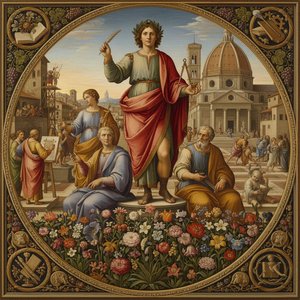
Before the advent of linear perspective revolutionized artistic representation, architecture existed within art as a foundational element – a symbol of power, divinity, and human aspiration. From the imposing structures depicted in Roman frescoes to the early Christian basilicas rendered with symbolic weight, buildings weren’t merely backdrops; they were active participants in narratives. These initial depictions, while lacking the precision we associate with later periods, established crucial visual languages. The sheer scale of imperial architecture served as a testament to earthly authority, frequently employed to legitimize rulers and convey their dominion. Early Christian art, conversely, utilized architectural forms – particularly the basilica – to evoke a sense of spiritual grandeur and the presence of the divine. These spaces weren’t replicated faithfully; rather, they were idealized, abstracted, and imbued with theological meaning. The focus wasn't on accurate representation but on conveying an emotional or spiritual truth. The inherent stability and order associated with classical forms—columns, arches, domes—provided a visual vocabulary for expressing permanence and the established cosmic order.
Renaissance Perspective: Reconstructing Space on Canvas
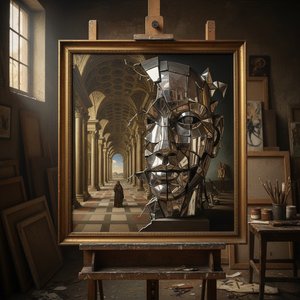 Illusion & Reality: Exploring Perspective Techniques in Art History
Explore the fascinating history of perspective in art! Discover Renaissance techniques like linear & atmospheric perspective, key artists, and its enduring impact on painting. Enhance your art appreciation today.
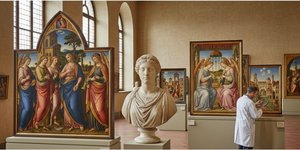
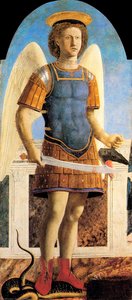
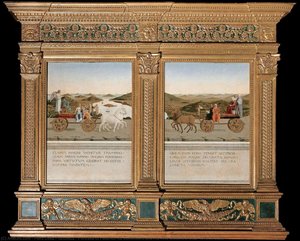
The Early Renaissance witnessed a seismic shift in how artists approached the depiction of space, largely driven by a renewed interest in classical learning and mathematics. Artists like Filippo Brunelleschi began to systematically investigate linear perspective – a technique that allowed for the illusionistic representation of three-dimensional depth on a two-dimensional surface. This wasn’t simply about creating more ‘realistic’ images; it was about understanding and codifying the very principles governing vision itself. Piero della Francesca, perhaps more than any other artist, mastered this new science. His works, such as 'The Flagellation,' demonstrate an almost obsessive attention to geometric precision. The painting isn't merely a dramatic scene of Christ’s suffering; it is a meticulously constructed spatial environment where every line converges towards a vanishing point, creating a profound sense of depth and order. Similarly, his ‘Nativity (detail)’ showcases the urban architecture with diffused light, highlighting the linear perspective and earthy tones that define his style. This newfound ability to convincingly recreate space had a transformative effect on art, allowing artists to create more immersive and believable worlds. Leonardo da Vinci’s 'Perspectiva para la Adoración' exemplifies this pursuit of spatial accuracy, though left unfinished, it reveals the complex calculations underpinning Renaissance perspective.
Architecture as Symbolism: Power, Faith, and Urban Identity in Art
 Leon Battista Alberti
Leon Battista Alberti (1404-1472): Renaissance polymath! Architect, writer, mathematician & humanist. Explore his groundbreaking designs like Palazzo Rucellai & Tempio Malatestiano and theories on perspective.
Beyond its technical implications, architecture continued to function as a potent symbol during the Renaissance. Buildings weren’t just structures; they were embodiments of civic pride, religious devotion, and individual ambition. Leon Battista Alberti, a true polymath of the era, understood this intimately. As an architect, writer, and mathematician, he theorized extensively about the principles of ideal architectural design, emphasizing harmony, proportion, and classical precedent. His designs, like the Palazzo Rucellai and Tempio Malatestiano, weren’t simply aesthetically pleasing; they were carefully constructed statements about the patrons who commissioned them and their place within society. The grandeur of cathedrals, for example, served to reinforce the power and authority of the Church, while palatial residences proclaimed the wealth and status of noble families. The depiction of bustling urban landscapes in Renaissance paintings also reveals a growing awareness of architecture as an expression of collective identity. Cityscapes became visual representations of civic life, showcasing the prosperity and cultural achievements of particular communities.
Beyond Representation: The Emotional Impact of Architectural Settings
While perspective offered artists unprecedented control over spatial representation, it wasn’t merely about technical skill. The careful manipulation of architectural settings could also be used to evoke specific emotions and psychological states. Consider the use of light and shadow in Renaissance paintings. Artists frequently employed chiaroscuro – the dramatic contrast between light and dark – to create a sense of mystery, drama, or spiritual intensity. Architectural elements played a crucial role in this process, with columns, arches, and doorways used to frame figures and direct the viewer’s gaze. The scale and proportion of buildings could also be manipulated to convey feelings of awe, humility, or even oppression. A vast, imposing cathedral might inspire reverence and religious devotion, while a cramped, dimly lit interior could evoke a sense of claustrophobia and anxiety. The architecture wasn't simply *there*; it actively participated in the emotional narrative of the artwork.
From Alberti to Modernity: Evolving Approaches to Architecture in Painting & Sculpture
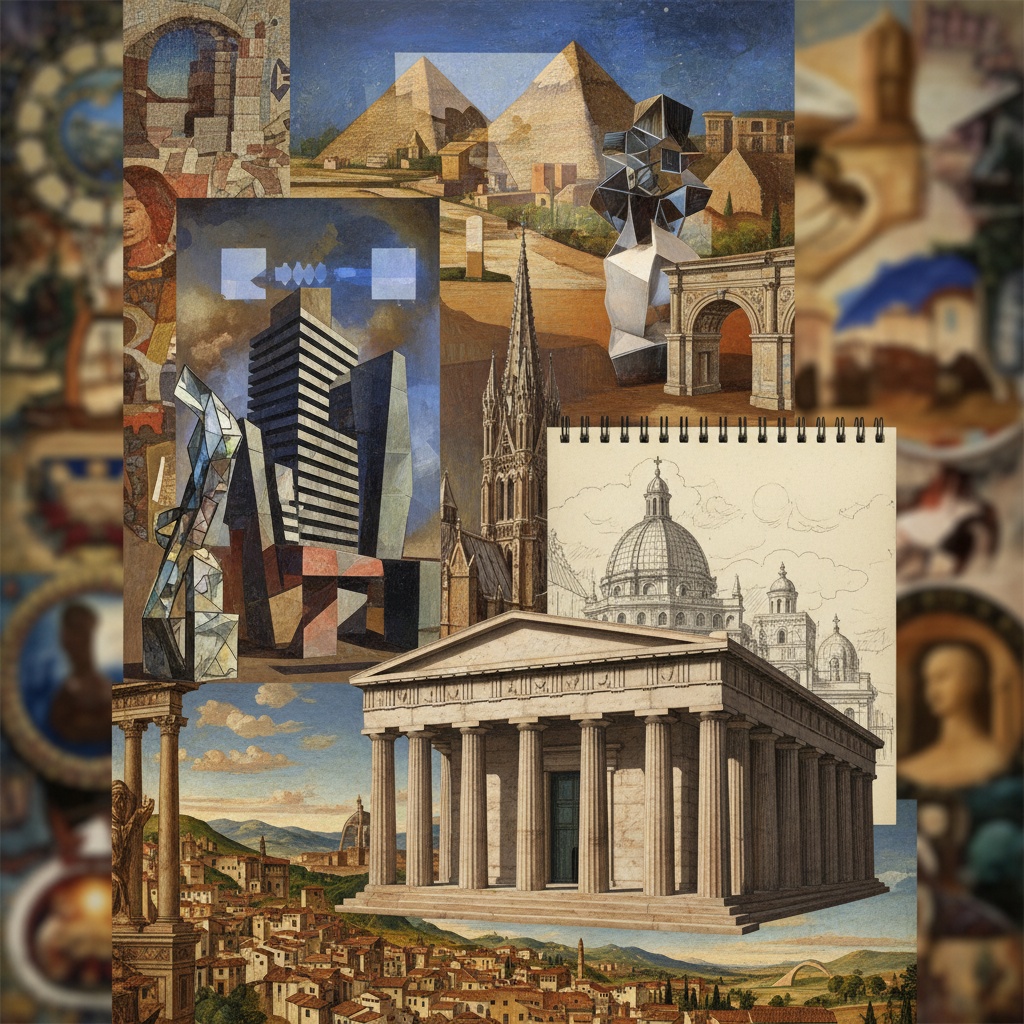
The Renaissance fascination with architectural form didn’t end with the 15th century. Subsequent generations of artists continued to explore its possibilities, albeit with evolving approaches and sensibilities. Baroque painters, for example, embraced a more dynamic and theatrical style, utilizing architecture to create dramatic illusions and evoke intense emotional responses. Architectural elements became increasingly ornate and elaborate, reflecting the period’s emphasis on grandeur and spectacle. Even as art moved beyond representational accuracy in subsequent centuries – with the rise of Impressionism, Cubism, and other modern movements – architecture continued to exert a powerful influence. Artists often used architectural forms as metaphors for structure, order, or fragmentation, exploring their psychological and symbolic potential. The legacy of Alberti’s theories—the pursuit of harmony, proportion, and classical precedent—can be traced through centuries of artistic innovation.
The Enduring Dialogue: How Artistic Representations Shape Our Perception of Architecture
Ultimately, the relationship between architecture and art is a reciprocal one. Art doesn't simply *reflect* architecture; it actively shapes our perception of it. The way artists choose to depict buildings – their emphasis on certain features, their manipulation of light and shadow, their use of perspective – influences how we understand and experience architectural space. Renaissance paintings, for example, have played a crucial role in shaping our idealized vision of classical architecture. We often see these buildings not as they actually existed but as they were *represented* by artists like Piero della Francesca. This enduring dialogue between art and architecture continues to this day, reminding us that both are fundamentally human creations – expressions of our aspirations, beliefs, and cultural values. At ArtsDot.com, we celebrate this legacy by offering high-quality reproductions of masterpieces that capture the beauty and complexity of architecture throughout history.