 Preview
 Send
Send Share
Share
 Details

 Download
 Similars
 X-Ray
X-Ray Diaporama
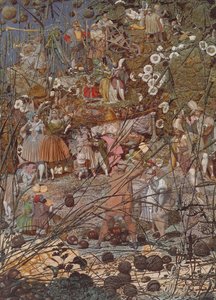
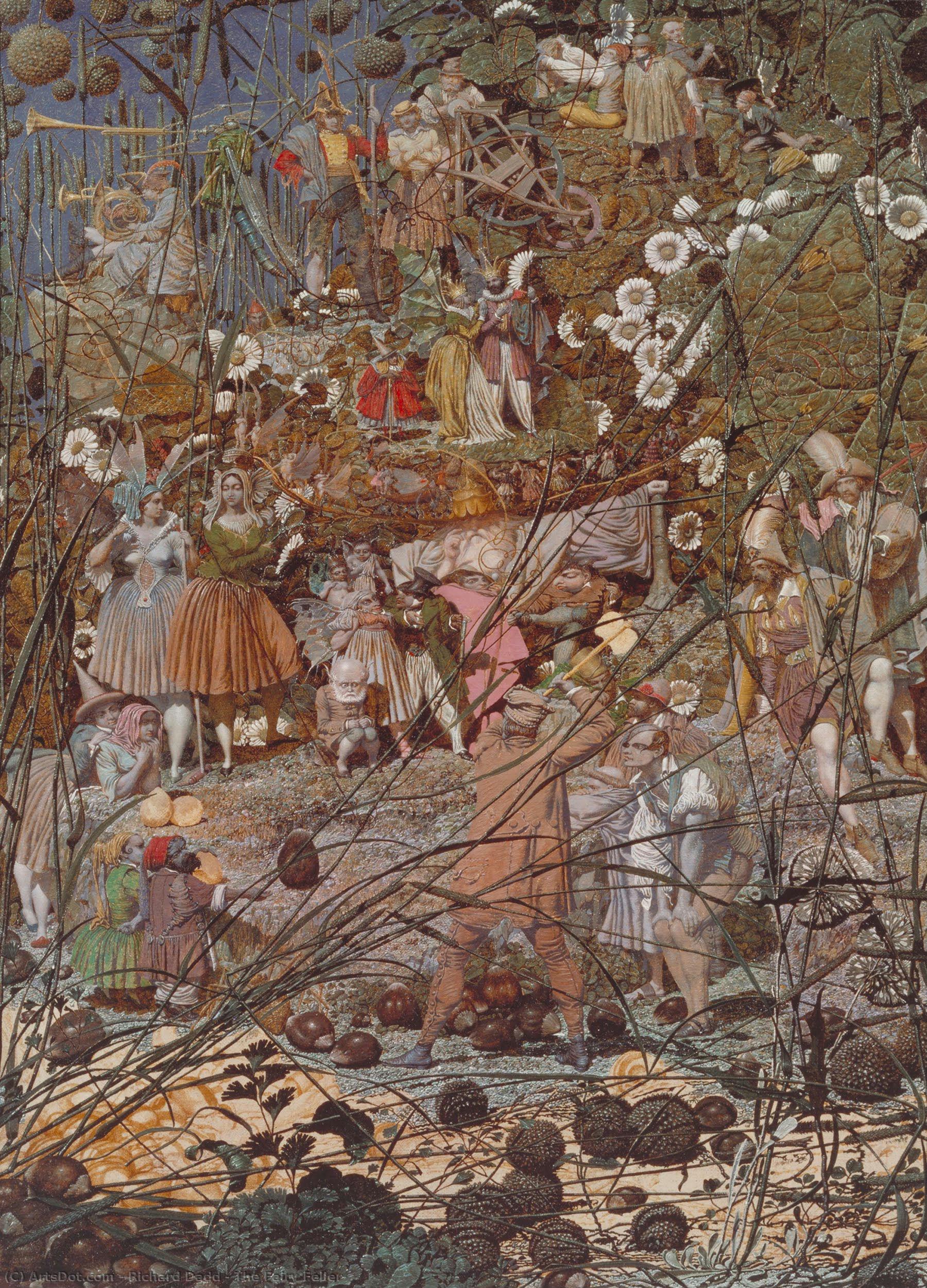
The Fairy Feller
 Painting
- Victorian Romanticism
 1855
1855- 19th Century
 39.0 x 5.0 cm
 Tate Britain
 Read More
Hand Made Oil Reproduction
Hand-painted oil on canvas in your size and frame, made to order by our artists. ( Buy Print Buy Image)




P118B $10

P118H $10

P118W $10

P438Z $10

P508JH $12

P508YH $12

P805H $10

P805Z $10

P919BZ $10

P919G $10

P919XJ $10

P959ZH $10

P968JZ $12

W106C $8

W218G $10

W218JH $8

W218Y $10

W307PJ $10

W316G $10

W316PJ $8

W316Y $10

W398PJ $8

W4111J $10

W500HY $15

W500JH $15

W692G $12

W849H $8

W940BG $15

W953PJ $8




Pick from our preset sizes that match the artwork's original proportions.

You may enter your own dimensions to fit a specific frame or space. If your selected size does not match the original image's proportions, we will either crop the artwork or extend the painting with additional hand-painted elements. A digital mockup will be sent for your approval before production begins.
Please note that the on-screen preview does not reflect the actual cropping or extension. Only the mockup will accurately show the final composition.
While custom sizes are available, we recommend selecting a dimension from the predefined list to preserve the original proportions.
After order, ArtsDot.com team will email client for instructions and provide a mockup preview
Worldwide Delivery () in 3/4 weeks instead of standard 5 weeks. (17 August). No compromise on quality.

Free Worldwide Express Shipping

High-Quality Linen Canvas

Full Shipping Insurance

Customs Tax Refund Guarantee

True Color Matching Guarantee

60-Day Return Policy (Defects Only)

100% Money-Back Guarantee

Bulk Discount Offer
 Glass option is only available in size under 110 CM

The Fairy Feller
Reproduction Medium
Reproduction Size
-


Total Price
$ 263
Artwork Description
A Woodland Reverie: Exploring Richard Dadd's "The Fairy Feller"
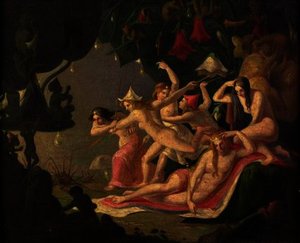
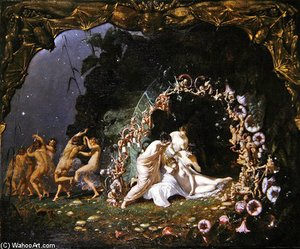
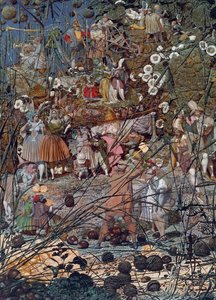
To gaze upon Richard Dadd’s The Fairy Feller is to step through a veil into an enchanted, sun-dappled realm where the boundaries between myth and reality dissolve. This painting, executed in 1855, captures not merely a scene, but a palpable atmosphere—a moment suspended in time during a joyous, almost feverish gathering of woodland sprites. The composition is richly populated; men and women alike, all adorned in varied period costumes that speak to the Victorian fascination with folklore and the ethereal. Scattered across the mossy ground are humble offerings—vibrant apples resting near curious figures, bunches of bananas suggesting an unexpected bounty, and a simple bowl placed thoughtfully on the right. It is a tableau vivant of fae delight.
Technique and The Allure of Victorian Fantasy
Dadd’s technique here showcases a meticulous attention to detail that belies the fantastical subject matter. One can almost feel the texture of the leaves underfoot or smell the ripe sweetness emanating from the fruit. While Dadd's life was marked by profound psychological turmoil, his artistic output often displayed an astonishing capacity for narrative richness and descriptive power. The handling of light seems crucial; it filters through the unseen canopy, illuminating the figures just enough to allow us a glimpse into their merriment. For those who appreciate decorative arts or historical reproduction, this piece offers a masterclass in capturing movement within a static frame, making it an ideal focal point for any room seeking a touch of romantic escapism.
Symbolism and the Celebration of Life
The very presence of fairies suggests themes of nature's magic, cyclical renewal, and the enduring power of imagination. The gathering itself feels like a celebration—a momentary reprieve from the rigid structures of Victorian life. The objects scattered around are potent symbols: apples often represent knowledge or temptation, while the bounty of fruit speaks to abundance and earthly pleasure. Dadd invites us to participate in this secret woodland ritual, suggesting that joy, much like nature, is cyclical and requires moments of unburdened celebration. It whispers of a time when wonder was still believed to reside just beyond the edge of the known path.
Bringing Enchantment Home: Decorating with Myth
For the collector or designer, The Fairy Feller offers more than mere decoration; it offers an emotional anchor. Reproducing this work allows one to infuse a space—be it a drawing-room corner or a study nook—with narrative depth and romantic mystery. The blend of detailed human figures with overtly magical elements creates a sophisticated tension that appeals across eras. It is a piece that demands contemplation, encouraging the viewer to slow down, look closer at the faces, and imagine the whispered secrets shared among these woodland revelers.
Related Artworks
Artist Biography
A Life Shrouded in Fantasy and Turmoil
Richard Dadd, a name that resonates with both artistic brilliance and profound psychological distress, remains one of the most compelling figures within Victorian art. Born in 1817 at Chatham, Kent, his life was a captivating yet tragic narrative—a journey from promising Royal Academy student to resident of Bethlem and Broadmoor Hospitals, all while producing works of astonishing detail and haunting beauty. From an early age, Dadd displayed a remarkable aptitude for drawing, nurtured during his schooling at King’s School, Rochester. This talent propelled him towards the prestigious Royal Academy of Arts, where he was admitted at twenty years old and awarded a medal for life drawing in 1840. He quickly integrated into London's vibrant art scene, becoming a founding member of “The Clique,” alongside artists like William Powell Frith and Augustus Egg—a group known for their narrative skill and meticulous realism. Early successes included illustrations for *Book of British Ballads* and the frontispiece for *Kentish Coronal*, showcasing his developing mastery of illustrative storytelling. These works hinted at the fantastical inclinations that would later define his most celebrated, yet deeply personal, creations.The Shadow Over the Nile
A pivotal moment—and a tragic turning point—occurred in 1842 when Dadd accompanied Sir Thomas Phillips on an expedition to the Middle East. The journey through Europe, Greece, Turkey, Syria, and Egypt initially seemed a grand opportunity for artistic exploration. However, as they travelled up the Nile, a disturbing transformation began to overtake Dadd. He experienced a dramatic shift in personality, succumbing to delusional beliefs centered around the Egyptian god Osiris and an increasing sense of persecution. Upon his return to England in 1843, his condition rapidly deteriorated, culminating in a horrific act: the murder of his father, driven by the conviction that he was battling the embodiment of evil. This event led to Dadd’s arrest, a brief escape attempt, and ultimately, his commitment to Bethlem Psychiatric Hospital—a place then known as Bedlam. Modern understanding suggests Dadd suffered from paranoid schizophrenia, a condition tragically echoed within other members of his family.Art Within the Walls
Despite his confinement, Dadd’s artistic spirit was not extinguished. Remarkably, enlightened doctors like William Wood and Sir W. Charles Hood recognized the therapeutic value of art and actively encouraged him to continue painting. It was during his decades within Bethlem and later Broadmoor Hospitals that he created many of his most iconic works. The Fairy Feller's Master-Stroke, a sprawling, intricately detailed depiction of the fairy realm, became his magnum opus—a testament to both his artistic skill and his fractured psyche. This painting, along with numerous others, reveals a world teeming with fantastical creatures, meticulously rendered foliage, and an unsettling sense of unease. Beyond the fairies, Dadd continued to explore other subjects: portraits, like that of Dr. Alexander Morison; series such as *Sketches to Illustrate the Passions*, offering poignant glimpses into human emotion; and detailed shipping scenes and landscapes—like *Port Stragglin*—that showcased his remarkable ability to capture both imagination and memory with a miniaturist’s precision. These works weren't merely diversions, but rather profound expressions of his inner world, born from the confines of institutional life.A Legacy Rediscovered
Richard Dadd’s artistic vision was—and remains—unique. His work stands apart for its obsessive detail, fantastical subject matter, and psychological depth. He wasn't simply illustrating fairies or orientalist scenes; he was constructing entire worlds imbued with a haunting beauty and an underlying sense of melancholy. While largely overlooked for many years after his death in 1886, Dadd’s art has experienced a significant revival in recent decades. His influence can be seen in the work of numerous artists, writers, and musicians—most notably, the rock band Queen, whose song “The Fairy Feller's Master-Stroke” is directly inspired by his painting. Terry Pratchett also acknowledged Dadd’s impact on his own fantastical creations. Today, Richard Dadd is recognized as a crucial figure in Victorian art history—a testament to the enduring power of creativity even in the face of profound personal suffering. His paintings continue to captivate and disturb, offering viewers a glimpse into a mind both brilliantly imaginative and tragically fractured. His story serves as a poignant reminder that artistic genius can often coexist with inner turmoil.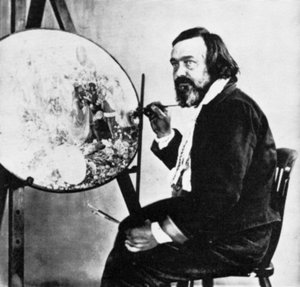
Richard Dadd
1817 - 1886 , United Kingdom
Quick Facts
- Artistic Movement Or Style: Victorian, Fantastical
- Artists Or Movements Influenced By This Artist:
- Queen (band)
- Terry Pratchett
- Date Of Birth: 1817
- Date Of Death: 1886
- Full Name: Richard Dadd
- Nationality: British
- Notable Artworks:
- The Death of Richard II
- The Diadonos
- Fairy Feller's Master-Stroke
- Port Stragglin
- Place Of Birth: Chatham, UK
Related Articles

Giclée Prints: Archival Quality & Aesthetic Nuances for the Discerning Collector
Explore the world of giclée prints with ArtsDot. Learn about archival quality, aesthetic nuances & investment potential. Expert guidance for discerning art collectors seeking museum-quality reproductions and lasting value.

Echoes of Time: Exploring the Enduring Appeal & Historical Context of Vintage Art Prints
Explore the captivating world of vintage art prints! Discover their history, collecting tips & enduring appeal. Expert insights on chromolithography and building a legacy collection with ArtsDot.

The Enduring Legacy of Fine Art Prints: Technique, History & Aesthetic Impact
Explore the rich history & techniques of fine art prints. Discover investment potential, assess authenticity, and learn how to preserve your collection with expert guidance. Trusted insights for discerning collectors.
Marianne North's Masterpieces: 25 Botanical Paintings That Bloom With Adventure | ArtsDot
Journey through the vibrant world of Marianne North’s botanical paintings! Explore 25 iconic artworks from this Victorian artist, celebrating exotic flora & travel. Find museum-quality reproductions and curated decor ideas at ArtsDot.com.
The Enduring Legacy of Printmaking: Techniques, Themes & Artistic Innovation Across Centuries
Explore the rich history of printmaking with ArtsDot. Discover techniques from intaglio to lithography, learn about collecting valuable prints & find museum-quality reproductions. Expert insights for art enthusiasts and collectors.