 Preview
 Send
Send Share
Share
 Details

 Download
 Similars
 X-Ray
X-Ray Diaporama
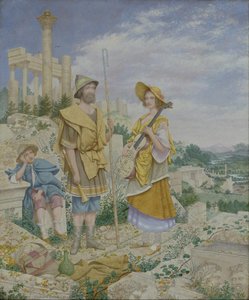
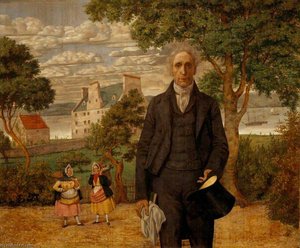
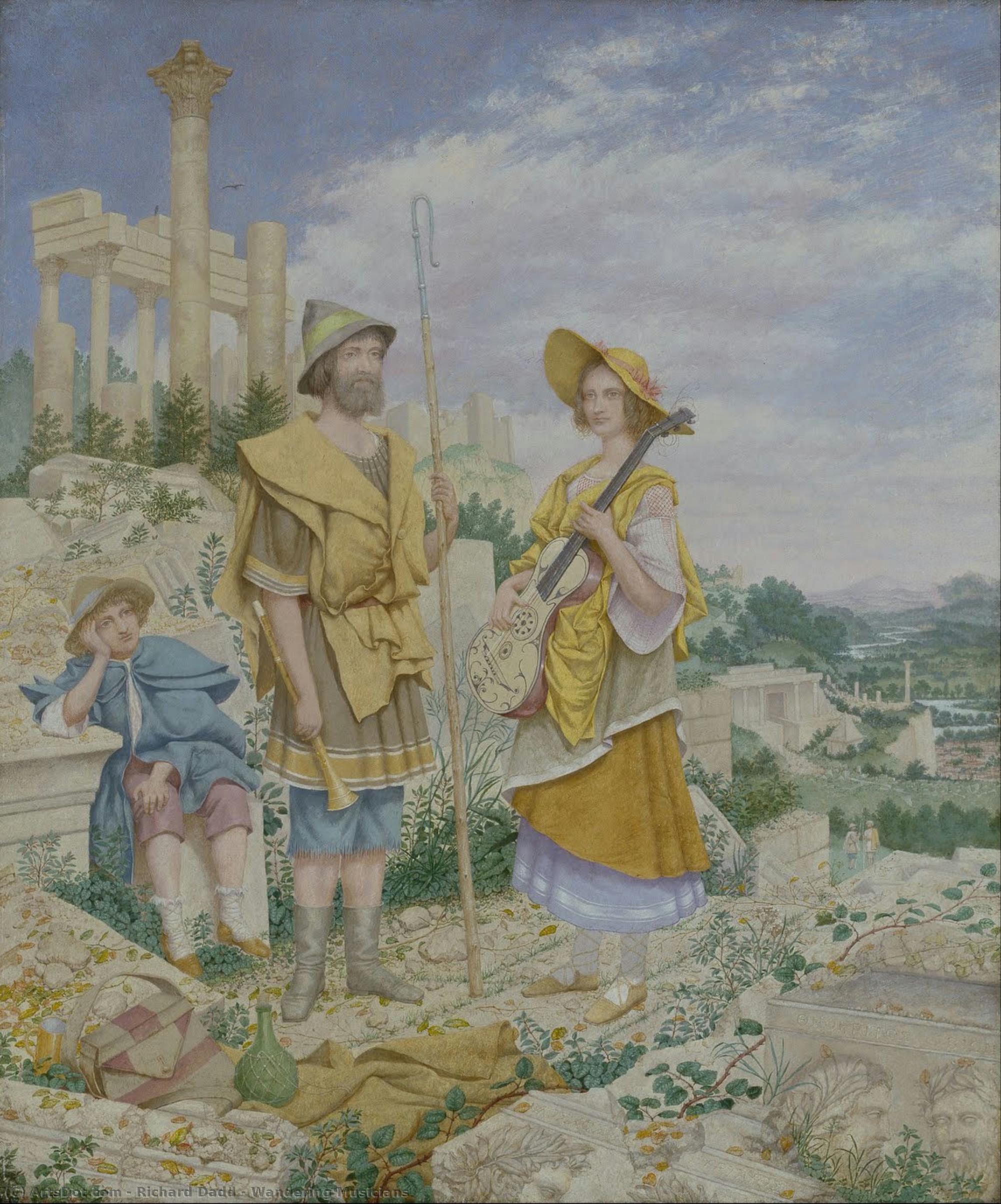
Wandering Musicians
 Oil On Canvas
- WallArt
- Victorian Romanticism
 1878
1878 5.0 x 6.0 cm
 Tate Britain
 Read More
Hand Made Oil Reproduction
Hand-painted oil on canvas in your size and frame, made to order by our artists. ( Buy Print Buy Image)




P118B $10

P118H $10

P118W $10

P438Z $10

P508JH $12

P508YH $12

P805H $10

P805Z $10

P919BZ $10

P919G $10

P919XJ $10

P959ZH $10

P968JZ $12

W106C $8

W218G $10

W218JH $8

W218Y $10

W307PJ $10

W316G $10

W316PJ $8

W316Y $10

W398PJ $8

W4111J $10

W500HY $15

W500JH $15

W692G $12

W849H $8

W940BG $15

W953PJ $8




Pick from our preset sizes that match the artwork's original proportions.

You may enter your own dimensions to fit a specific frame or space. If your selected size does not match the original image's proportions, we will either crop the artwork or extend the painting with additional hand-painted elements. A digital mockup will be sent for your approval before production begins.
Please note that the on-screen preview does not reflect the actual cropping or extension. Only the mockup will accurately show the final composition.
While custom sizes are available, we recommend selecting a dimension from the predefined list to preserve the original proportions.
After order, ArtsDot.com team will email client for instructions and provide a mockup preview
Worldwide Delivery () in 3/4 weeks instead of standard 5 weeks. (18 August). No compromise on quality.

Free Worldwide Express Shipping

High-Quality Linen Canvas

Full Shipping Insurance

Customs Tax Refund Guarantee

True Color Matching Guarantee

60-Day Return Policy (Defects Only)

100% Money-Back Guarantee

Bulk Discount Offer
 Glass option is only available in size under 110 CM

Wandering Musicians
Reproduction Medium
Reproduction Size
-


Total Price
$ 263
Artwork Description
A Visionary’s Descent: Richard Dadd's "Wandering Musicians"
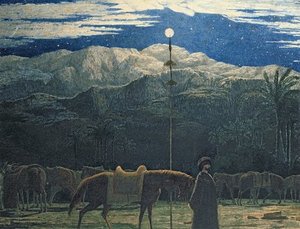
Richard Dadd’s “Wandering Musicians,” painted circa 1878, is not merely a pastoral scene; it’s a poignant window into the mind of an artist grappling with profound psychological turmoil. Created during his extended confinement within the walls of Bethlem and Broadmoor Hospitals – institutions then considered pioneering in the treatment of mental illness – the painting transcends simple representation, becoming a deeply layered exploration of memory, delusion, and the enduring power of artistic creation amidst suffering. The work’s genesis lies in Dadd's 1842 tour of the Levant, an experience that ignited his imagination but ultimately contributed to his descent into madness. He meticulously recreated this journey on canvas, blending recollections with fevered dreams and unsettling visions – a testament to the way memory itself can be reshaped by mental instability.A Symphony of Detail: Technique and Style
Dadd’s technical mastery is immediately apparent in “Wandering Musicians.” Executed in rich, luminous oil paint on canvas, the scene unfolds with an astonishing level of detail. Every instrument – a lute, a flute, a drum – is rendered with painstaking accuracy, reflecting Dadd's lifelong passion for music and his meticulous observation skills honed during his early artistic training at the Royal Academy. The figures themselves are imbued with a quiet dignity, their postures suggesting a shared moment of contemplation amidst the idyllic landscape. However, closer inspection reveals subtle distortions—a slightly elongated hand, an unnaturally wide-eyed gaze – hinting at the artist’s fractured perception and the unsettling influence of his mental state. The use of color is particularly noteworthy; vibrant greens and blues dominate the scene, creating a sense of serenity and warmth, yet these are punctuated by darker hues that subtly suggest underlying unease and foreboding.Symbolism and Narrative Echoes
The painting’s narrative is rich with symbolic resonance. The open landscape, bathed in golden light, evokes the classical ideal of Arcadia – a pastoral paradise representing harmony, innocence, and escape from worldly concerns. Yet, this idyllic setting is subtly undermined by the presence of the musicians themselves, their faces obscured and their movements suggesting a detached, almost spectral quality. Some art historians have linked the scene to fragments of Greek mythology, specifically references to shepherds and wandering minstrels, drawing parallels with Theocritus’ pastoral poems – a connection Dadd himself likely appreciated given his interest in classical literature. The broken frieze at the foreground, bearing traces of ancient writing, further reinforces this symbolic link, suggesting a yearning for lost traditions and a sense of timelessness. The inclusion of the bottle hints at a possible reflection on the artist's own struggles with addiction and self-medication during his confinement.A Portrait of Turmoil: Context and Legacy
Richard Dadd’s life is inextricably intertwined with “Wandering Musicians.” His descent into mental illness, marked by periods of lucidity interspersed with violent outbursts and delusional episodes, profoundly shaped his artistic output. The painting was created during a particularly challenging period in his confinement at Broadmoor Hospital, where he endured isolation and limited access to creative outlets. Despite these circumstances, Dadd continued to produce works of extraordinary beauty and complexity – a testament to the indomitable spirit of an artist driven by an inner compulsion. “Wandering Musicians” stands as both a poignant self-portrait—a glimpse into the mind of a man struggling with his demons—and a remarkable achievement of artistic skill and emotional depth. It’s a haunting reminder that even in the darkest corners of human experience, creativity can flourish, offering solace, expression, and ultimately, a fragile connection to beauty and meaning. Today, reproductions of this evocative work continue to captivate viewers, inviting contemplation on the complexities of the human psyche and the enduring power of art to transcend suffering.Related Artworks


Artist Biography
A Life Shrouded in Fantasy and Turmoil
Richard Dadd, a name that resonates with both artistic brilliance and profound psychological distress, remains one of the most compelling figures within Victorian art. Born in 1817 at Chatham, Kent, his life was a captivating yet tragic narrative—a journey from promising Royal Academy student to resident of Bethlem and Broadmoor Hospitals, all while producing works of astonishing detail and haunting beauty. From an early age, Dadd displayed a remarkable aptitude for drawing, nurtured during his schooling at King’s School, Rochester. This talent propelled him towards the prestigious Royal Academy of Arts, where he was admitted at twenty years old and awarded a medal for life drawing in 1840. He quickly integrated into London's vibrant art scene, becoming a founding member of “The Clique,” alongside artists like William Powell Frith and Augustus Egg—a group known for their narrative skill and meticulous realism. Early successes included illustrations for *Book of British Ballads* and the frontispiece for *Kentish Coronal*, showcasing his developing mastery of illustrative storytelling. These works hinted at the fantastical inclinations that would later define his most celebrated, yet deeply personal, creations.The Shadow Over the Nile
A pivotal moment—and a tragic turning point—occurred in 1842 when Dadd accompanied Sir Thomas Phillips on an expedition to the Middle East. The journey through Europe, Greece, Turkey, Syria, and Egypt initially seemed a grand opportunity for artistic exploration. However, as they travelled up the Nile, a disturbing transformation began to overtake Dadd. He experienced a dramatic shift in personality, succumbing to delusional beliefs centered around the Egyptian god Osiris and an increasing sense of persecution. Upon his return to England in 1843, his condition rapidly deteriorated, culminating in a horrific act: the murder of his father, driven by the conviction that he was battling the embodiment of evil. This event led to Dadd’s arrest, a brief escape attempt, and ultimately, his commitment to Bethlem Psychiatric Hospital—a place then known as Bedlam. Modern understanding suggests Dadd suffered from paranoid schizophrenia, a condition tragically echoed within other members of his family.Art Within the Walls
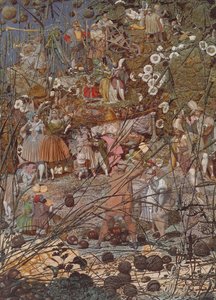
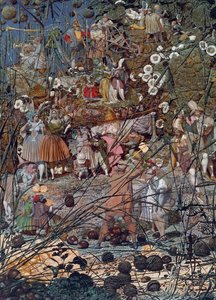
Despite his confinement, Dadd’s artistic spirit was not extinguished. Remarkably, enlightened doctors like William Wood and Sir W. Charles Hood recognized the therapeutic value of art and actively encouraged him to continue painting. It was during his decades within Bethlem and later Broadmoor Hospitals that he created many of his most iconic works. The Fairy Feller's Master-Stroke, a sprawling, intricately detailed depiction of the fairy realm, became his magnum opus—a testament to both his artistic skill and his fractured psyche. This painting, along with numerous others, reveals a world teeming with fantastical creatures, meticulously rendered foliage, and an unsettling sense of unease. Beyond the fairies, Dadd continued to explore other subjects: portraits, like that of Dr. Alexander Morison; series such as *Sketches to Illustrate the Passions*, offering poignant glimpses into human emotion; and detailed shipping scenes and landscapes—like *Port Stragglin*—that showcased his remarkable ability to capture both imagination and memory with a miniaturist’s precision. These works weren't merely diversions, but rather profound expressions of his inner world, born from the confines of institutional life.A Legacy Rediscovered
Richard Dadd’s artistic vision was—and remains—unique. His work stands apart for its obsessive detail, fantastical subject matter, and psychological depth. He wasn't simply illustrating fairies or orientalist scenes; he was constructing entire worlds imbued with a haunting beauty and an underlying sense of melancholy. While largely overlooked for many years after his death in 1886, Dadd’s art has experienced a significant revival in recent decades. His influence can be seen in the work of numerous artists, writers, and musicians—most notably, the rock band Queen, whose song “The Fairy Feller's Master-Stroke” is directly inspired by his painting. Terry Pratchett also acknowledged Dadd’s impact on his own fantastical creations. Today, Richard Dadd is recognized as a crucial figure in Victorian art history—a testament to the enduring power of creativity even in the face of profound personal suffering. His paintings continue to captivate and disturb, offering viewers a glimpse into a mind both brilliantly imaginative and tragically fractured. His story serves as a poignant reminder that artistic genius can often coexist with inner turmoil.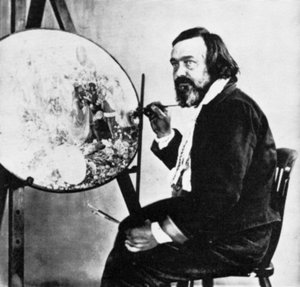
Richard Dadd
1817 - 1886 , United Kingdom
Quick Facts
- Artistic Movement Or Style: Victorian, Fantastical
- Artists Or Movements Influenced By This Artist:
- Queen (band)
- Terry Pratchett
- Date Of Birth: 1817
- Date Of Death: 1886
- Full Name: Richard Dadd
- Nationality: British
- Notable Artworks:
- The Death of Richard II
- The Diadonos
- Fairy Feller's Master-Stroke
- Port Stragglin
- Place Of Birth: Chatham, UK
Related Articles

The Enduring Legacy of Oil on Canvas: Technique, History & Aesthetic Impact
Explore the rich history & techniques of oil painting – from Renaissance masters to Impressionism. Discover pigments, layering methods, and why this timeless medium endures. Expert insights for artists & art enthusiasts.

Oil on Canvas: A Historical & Technical Exploration of a Timeless Artistic Medium
Explore the rich history & enduring techniques of oil painting on canvas. Discover the science behind its longevity, conservation practices, and contemporary relevance. Expert insights for art enthusiasts.

Idyllic Visions: Exploring the Pastoral Tradition in Western Art – Themes, Techniques & Enduring Appeal
Explore the rich history of pastoral art from classical Arcadia to contemporary interpretations. Discover key artists, themes & collecting tips at ArtsDot.

The Enduring Power of Painting: A Historical & Contemporary Exploration of Form and Emotion
Explore the rich history & enduring techniques of oil painting with ArtsDot. Discover masterpieces, learn about art collecting, and find authentic handmade reproductions crafted by skilled artists.

The Enduring Legacy of Oil on Canvas: Technique, History & Contemporary Practice
Explore the rich history & enduring techniques of oil painting on canvas. Discover the science behind its longevity, conservation practices, and contemporary relevance. Expert insights for art enthusiasts.