 Preview
 Send
Send Share
Share
 Details

 Download
 Similars
 X-Ray
X-Ray Diaporama
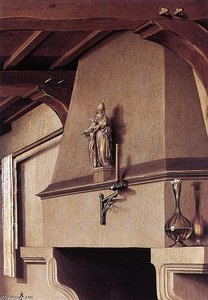
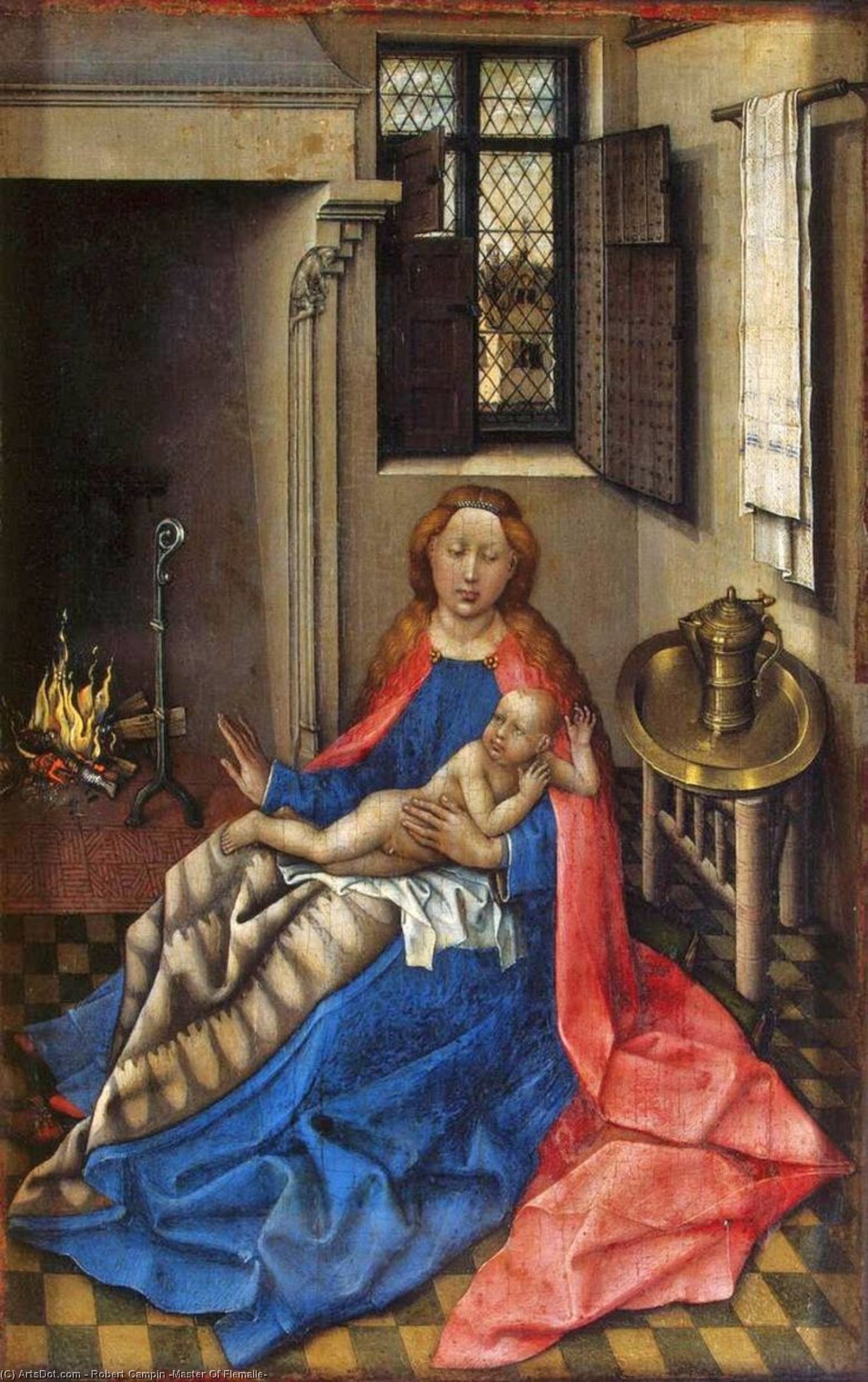
Madonna with the Child by a Fireplace
 Acrylic On Canvas
- WallArt
- Early Netherlandish Painting
 1433
1433 34.0 x 24.0 cm
 Hermitage Museum
 Read More
Hand Made Oil Reproduction
Hand-painted oil on canvas in your size and frame, made to order by our artists. ( Buy Print Buy Image)




P118B $10

P118H $10

P118W $10

P438Z $10

P508JH $12

P508YH $12

P805H $10

P805Z $10

P919BZ $10

P919G $10

P919XJ $10

P959ZH $10

P968JZ $12

W106C $8

W218G $10

W218JH $8

W218Y $10

W307PJ $10

W316G $10

W316PJ $8

W316Y $10

W398PJ $8

W4111J $10

W500HY $15

W500JH $15

W692G $12

W849H $8

W940BG $15

W953PJ $8




Pick from our preset sizes that match the artwork's original proportions.

You may enter your own dimensions to fit a specific frame or space. If your selected size does not match the original image's proportions, we will either crop the artwork or extend the painting with additional hand-painted elements. A digital mockup will be sent for your approval before production begins.
Please note that the on-screen preview does not reflect the actual cropping or extension. Only the mockup will accurately show the final composition.
While custom sizes are available, we recommend selecting a dimension from the predefined list to preserve the original proportions.
After order, ArtsDot.com team will email client for instructions and provide a mockup preview
Worldwide Delivery () in 3/4 weeks instead of standard 5 weeks. (17 August). No compromise on quality.

Free Worldwide Express Shipping

High-Quality Linen Canvas

Full Shipping Insurance

Customs Tax Refund Guarantee

True Color Matching Guarantee

60-Day Return Policy (Defects Only)

100% Money-Back Guarantee

Bulk Discount Offer
 Glass option is only available in size under 110 CM

Madonna with the Child by a Fireplace
Reproduction Medium
Reproduction Size
-


Total Price
$ 263
Artwork Description
The Quiet Devotion of a Florentine Hearth
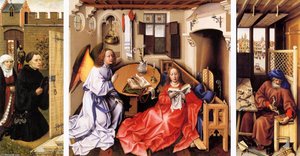
Robert Campin’s “Madonna and Child Before a Fireplace,” painted in 1430, isn't merely a depiction of the Virgin Mary cradling her infant son; it’s a profound meditation on domesticity, faith, and the nascent realism that would define the Early Netherlandish school. Born in Valenciennes around 1375 and working primarily in Tournai, Campin – often referred to as the Master of Flémalle – was a pivotal figure bridging the gap between the opulent International Gothic style and the burgeoning naturalism of his contemporaries like Jan van Eyck. This particular painting, now housed in a private collection, offers an intimate glimpse into a world both familiar and subtly transformed by artistic innovation.
The scene unfolds within a warmly lit interior, dominated by a substantial fireplace – not a theatrical display of flames, but a grounding element of everyday life. Mary, dressed in a rich blue robe accented with a delicate pink hood, sits serenely, her gaze fixed on the Christ Child. He, in turn, gazes back at his mother with an expression of quiet contemplation. The composition is remarkably balanced, eschewing dramatic diagonals for a stable, almost architectural arrangement. Campin masterfully employs a technique known as *discomfort*, subtly distorting objects and figures to create a sense of depth and realism – a key characteristic that distinguishes this work from the flatter styles prevalent at the time.
A Window into 15th-Century Life
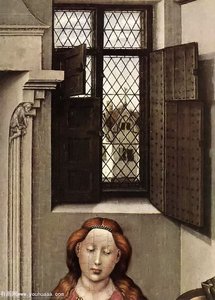
To fully appreciate “Madonna and Child,” it’s essential to understand its historical context. The mid-15th century was a period of significant social and economic change in Europe, particularly in the Low Countries – the region encompassing modern Belgium and the Netherlands. The rise of urban centers, burgeoning trade networks, and increasing wealth fueled a demand for art that reflected both religious piety and worldly prosperity. Campin’s painting embodies this duality; it celebrates the sanctity of faith while simultaneously capturing the details of everyday domestic life—a chair, a clock, two windows offering glimpses to the outside world.
The inclusion of these seemingly mundane objects is deliberate. Campin wasn't simply depicting a religious scene; he was creating a believable portrait of a family home. The placement of the clock, for instance, subtly anchors the composition in time and space, while the windows invite the viewer to imagine the world beyond the hearth. This attention to detail—the texture of the fabrics, the subtle modeling of the figures’ faces, the realistic depiction of the fireplace—demonstrates Campin's commitment to portraying the world as he observed it.
Symbolism and the Language of Faith
Beyond its realism, “Madonna and Child” is rich in symbolic meaning. The fireplace itself represents domesticity, warmth, and protection – a haven from the uncertainties of the outside world. Mary’s blue robe, a color associated with royalty and divinity, underscores her role as the Queen of Heaven. The Christ Child, often depicted with a halo, symbolizes divine grace and redemption. Note also the subtle gestures between mother and child—a gentle touch, a shared gaze—that evoke feelings of love, tenderness, and familial connection.
Campin’s use of light is particularly noteworthy. The soft, diffused illumination emanating from the fireplace creates a sense of intimacy and tranquility. It's not a dramatic, theatrical lighting effect; rather, it’s a subtle, almost ethereal glow that enhances the painting’s emotional impact. This careful manipulation of light and shadow contributes to the overall feeling of quiet devotion and contemplative peace.
A Legacy of Realism
Robert Campin's “Madonna and Child Before a Fireplace” stands as a cornerstone of Early Netherlandish painting, demonstrating his mastery of technique and his profound understanding of human emotion. His innovative approach to realism—his meticulous attention to detail, his subtle use of *discomfort*, and his ability to imbue everyday scenes with symbolic meaning—laid the foundation for generations of artists who followed. Reproductions of this masterpiece offer a unique opportunity to experience the quiet beauty and spiritual depth of one of the most important works in art history.
Related Artworks
Artist Biography
The Dawn of Netherlandish Realism: The Legacy of Robert Campin
In the misty, burgeoning landscape of the fifteenth-century Low Countries, a transformative vision began to take shape, forever altering the trajectory of Western art. At the heart of this revolution stood Robert Campin, an artist whose name is now inextricably linked with the Master of Flémalle. Born around 1375 in Valenciennes, France, Campin emerged from a period of transition, bridging the gap between the stylized elegance of the International Gothic and the profound, tactile realism that would define the Northern Renaissance. While much of his early life remains veiled by the shadows of history, his presence in Tournai for over three decades established him as a titan of the Flemish tradition, a master whose brushwork breathed life into the divine through the lens of the everyday.
The evolution of Campin’s artistry was not merely a personal journey but a technical conquest. He was among the earliest and most daring pioneers to embrace the medium of oil painting, moving away from the flatter, more opaque qualities of tempera. This mastery of oil allowed him to achieve an unprecedented luminosity, capturing the way light dances across polished brass, settles into the heavy folds of velvet, or glimmers upon a single drop of water. Through this innovation, Campin did not just paint subjects; he sculpted them with light and shadow, creating a sense of weight and presence that felt startlingly immediate to his contemporary viewers.
Symbolism Within the Domestic Sphere
What truly distinguishes the work of Robert Campin is his ability to weave the sacred into the seemingly mundane. To look upon a masterpiece like the Mérode Altarpiece is to enter a world where every object carries a whispered prayer. In his hands, a domestic interior—a quiet room filled with the familiar clutter of middle-class life—becomes a stage for profound theological truths. This technique, often referred to as disguised symbolism, invites the viewer to look closer, finding the miraculous hidden within the ordinary.
In these sacred narratives, nothing is accidental:
- The Annunciation: Within a contemporary Flemish parlor, the arrival of the Angel Gabriel is marked by subtle cues, where light streaming through a window serves as a metaphor for divine grace.
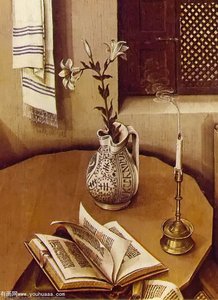
- Everyday Objects: A simple basin of water or a clean towel represents purity, while the flickering candle or the humble flora in a vase speaks to the omnipresence of the Holy Spirit.
- Texture and Detail: The meticulous rendering of wooden furniture, heavy drapery, and ceramic vessels grounds the spiritual event in a tangible, human reality that resonates with emotional depth.
A Lasting Influence on the Northern Renaissance
The historical significance of Robert Campin cannot be overstated. Alongside contemporaries like Jan van Eyck, he laid the foundational stones for the development of Early Netherlandish painting. While Van Eyck is often celebrated for his ethereal perfection, Campin provided a more robust, grounded realism—a style that emphasized the physical presence and psychological weight of his figures. His influence rippled through the workshops of Tournai and beyond, shaping the next generation of painters, including Jacques Daret, who carried forward the traditions of Flemish precision.
Though some of his works were once attributed to the anonymous "Master of Flémalle," modern scholarship has largely unified these identities, recognizing the singular, powerful voice behind the panels. His ability to marry the spiritual with the material created a visual language that would dominate Northern Europe for decades. Today, when we gaze upon his surviving altarpieces and devotional panels, we are not merely looking at relics of the past; we are witnessing the very moment when art learned to see the world with new, unblinking eyes, finding the eternal within the ephemeral beauty of human existence.
robert campin (master of flemalle)
1375 - 1444 , France
Quick Facts
- Artistic Movement Or Style: Early Netherlandish Painting
- Artists Who Influenced This Artist: ['Jan van Eyck']
- Date Of Birth: ca. 1375 Valenciennes
- Date Of Death: 1444 Tournai
- Full Name: Robert Campin
- Nationality: Flemish
- Notable Artworks:
- Mérode Altarpiece
- Portrait of a Man
- Place Of Birth: Tournai, Belgium
Related Articles
Robert Campin: Pioneering Realism & Spiritual Depth in Early Netherlandish Painting
Explore the revolutionary work of Robert Campin, a pioneer of Early Netherlandish painting. Discover his naturalistic style, religious symbolism in masterpieces like the Mérode Altarpiece, and lasting influence on art history.

Early Netherlandish Masters: 10 Paintings That Revolutionized Art & Decor
Journey into the world of Early Netherlandish painting! Explore 10 masterpieces by Jan van Eyck, Rogier van der Weyden & more. Discover stunning detail, symbolism & Renaissance art for your home decor. Find museum-quality reproductions on ArtsDot.com

Raphael's Masterpieces: 25 Iconic Paintings & Renaissance Art for Your Home
Explore 25 breathtaking Raphael paintings! Journey through the Italian Renaissance with masterpieces like 'School of Athens' & iconic Madonnas. Find museum-quality art reproductions and elevate your home decor on ArtsDot.com.

Hubert Robert: Picturing Ruins, Preserving Memory – A Study of Romantic Antiquarianism & Artistic Innovation
Explore the captivating world of Hubert Robert, master of Romantic landscape painting & 'capriccio' ruins. Discover his historical context, artistic innovations, and collecting insights with ArtsDot.

David Roberts: A Scottish Pioneer of Topographical Art & Orientalist Vision
Explore the captivating world of David Roberts, a pioneering Scottish painter renowned for his detailed Orientalist scenes & stunning Egyptian landscapes. Discover his legacy and find museum-quality reproductions at ArtsDot.