 Preview
 Send
Send Share
Share
 Details

 Download
 Similars
 X-Ray
X-Ray Diaporama
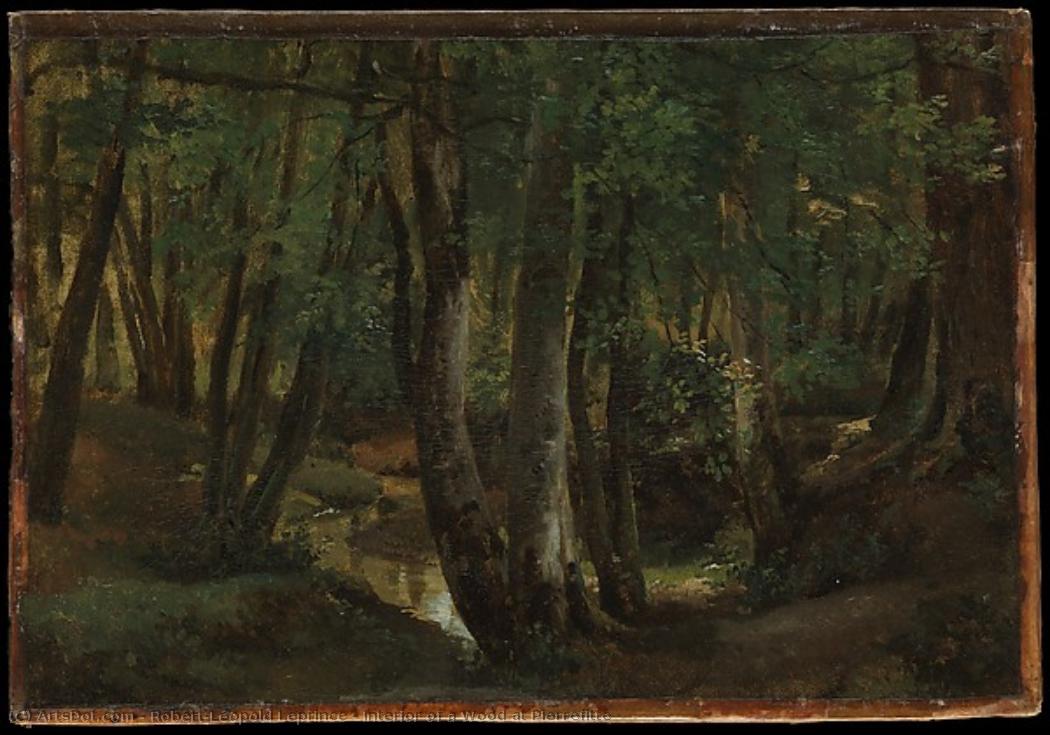
Interior of a Wood at Pierrefitte
 Oil On Canvas
- WallArt
- Romantic Landscape
 1822
1822 28.0 x 41.0 cm
 Metropolitan Museum of Art
 Read More
Hand Made Oil Reproduction
Hand-painted oil on canvas in your size and frame, made to order by our artists. ( Buy Print Buy Image)




P118B $10

P118H $10

P118W $10

P438Z $10

P508JH $12

P508YH $12

P805H $10

P805Z $10

P919BZ $10

P919G $10

P919XJ $10

P959ZH $10

P968JZ $12

W106C $8

W218G $10

W218JH $8

W218Y $10

W307PJ $10

W316G $10

W316PJ $8

W316Y $10

W398PJ $8

W4111J $10

W500HY $15

W500JH $15

W692G $12

W849H $8

W940BG $15

W953PJ $8




Pick from our preset sizes that match the artwork's original proportions.

You may enter your own dimensions to fit a specific frame or space. If your selected size does not match the original image's proportions, we will either crop the artwork or extend the painting with additional hand-painted elements. A digital mockup will be sent for your approval before production begins.
Please note that the on-screen preview does not reflect the actual cropping or extension. Only the mockup will accurately show the final composition.
While custom sizes are available, we recommend selecting a dimension from the predefined list to preserve the original proportions.
After order, ArtsDot.com team will email client for instructions and provide a mockup preview
Worldwide Delivery () in 3/4 weeks instead of standard 5 weeks. (22 August). No compromise on quality.

Free Worldwide Express Shipping

High-Quality Linen Canvas

Full Shipping Insurance

Customs Tax Refund Guarantee

True Color Matching Guarantee

60-Day Return Policy (Defects Only)

100% Money-Back Guarantee

Bulk Discount Offer
 Glass option is only available in size under 110 CM

Interior of a Wood at Pierrefitte
Reproduction Medium
Reproduction Size
-


Total Price
$ 263
Artwork Description
The Essence of Woodland Solitude
Robert-Léopold Leprince’s “Interior of a Wood at Pierrefitte,” painted in 1822, isn't merely a landscape; it’s an immersion into the quiet contemplation of nature. Captured during a period when artists were increasingly fascinated by the fleeting effects of light and atmosphere – a trend heavily influenced by the Romantic movement – this work transcends simple representation to become a profound meditation on solitude, observation, and the sublime beauty found in the natural world. The scene unfolds within a dense, almost claustrophobic thicket of trees, their branches intertwining to create a dappled ceiling of light and shadow. It’s a space that immediately invites the viewer to step inside, to feel the cool dampness of the earth beneathfoot and breathe in the scent of pine needles.

A Painter’s Observation: Technique and Style
Leprince's masterful technique lies in his loose, expressive brushstrokes – a deliberate departure from the rigid academic styles prevalent at the time. He doesn’t meticulously render every leaf or branch; instead, he captures the *impression* of the forest, prioritizing atmosphere and light over photographic accuracy. The palette is restrained, dominated by deep greens, browns, and blacks, punctuated by the occasional shaft of sunlight that pierces through the canopy. This limited color range amplifies the sense of depth and creates a subtly melancholic mood. The composition itself draws the eye towards a vanishing point deep within the woods, suggesting an infinite expanse beyond what is immediately visible – a technique reminiscent of earlier landscape masters like Constable and Turner, who sought to convey not just what they saw but also how they *felt* about it.
- Brushwork: Loose, expressive strokes create a sense of movement and atmosphere.
- Color Palette: Restrained greens, browns, and blacks emphasize depth and mood.
- Composition: A vanishing point draws the eye into the depths of the forest.
Historical Context and Artistic Influences
Painted in 1822, “Interior of a Wood at Pierrefitte” reflects the burgeoning Romantic interest in nature as a source of spiritual experience. The artist’s location – Pierrefitte, just north of Paris – provided an ideal setting for capturing this phenomenon. Leprince was deeply influenced by his father and brother, both accomplished landscape painters, and by the broader artistic currents of the era. The work echoes the meticulous studies of light and shadow undertaken by artists like Constable, while also retaining a distinctly French sensibility. Interestingly, Leprince’s career was tragically cut short at the age of twenty-seven, leaving behind a remarkably brief but intensely productive period of artistic creation. His early success, fueled by the patronage of influential figures such as the Duchess de Berry and Charles X, highlights his extraordinary talent and the immediate recognition he received for his evocative depictions of rural life.
Symbolism and Emotional Resonance
Beyond its technical merits, “Interior of a Wood at Pierrefitte” resonates with profound symbolic meaning. The dense forest represents not just a physical space but also the complexities of the human psyche – a place of both beauty and mystery, of solace and potential danger. The solitary stream symbolizes the flow of time and the passage of life. The dappled light suggests moments of revelation and insight. Ultimately, this painting invites viewers to contemplate their own relationship with nature, prompting questions about solitude, introspection, and the enduring power of the natural world to inspire awe and wonder. It’s a piece that speaks not just to the eye but also to the soul.
Related Artworks
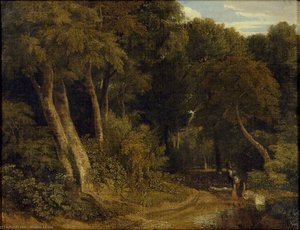
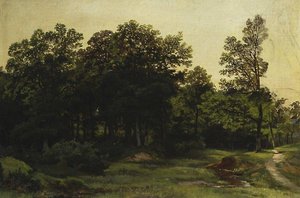
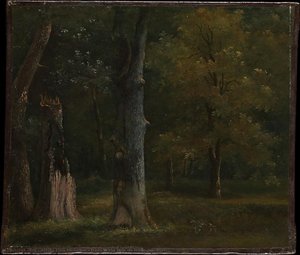
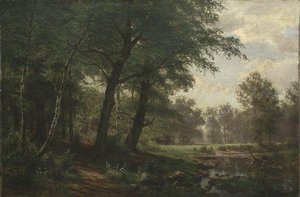
Artist Biography
A Brief but Brilliant Flame: The Life and Art of Robert Léopold Leprince
Robert Léopold Leprince, a name that resonates with the delicate beauty of early 19th-century French landscape painting, enjoyed a meteoric rise to fame before his tragically premature death at the age of twenty-seven. Born in Paris in 1800 into a family steeped in artistic tradition – his father, Anne-Pierre Leprince, was a painter and lithographer – Robert demonstrated exceptional talent from a remarkably young age. His early success wasn’t merely a matter of skill; it captured the shifting sensibilities of a post-Revolutionary France yearning for tranquility and a reconnection with the natural world. Patronage came swiftly, including commissions from figures as prominent as the Duchesse de Berry and King Charles X, establishing him within the highest echelons of Parisian society. This early acclaim, however, would prove to be both a blessing and a shadow over his all-too-short career.Early Promise and Pastoral Visions
Leprince’s initial artistic focus centered on pastoral scenes – idyllic depictions of rural life, livestock, and the gentle rhythms of the countryside. These works weren't simply representations of nature; they were imbued with a sense of poetic longing, reflecting the Romantic movement’s emphasis on emotion and individual experience. His technique, even in these early pieces, revealed a masterful understanding of light and atmosphere, creating dappled sunlight and serene woodland settings that captivated viewers. Alexandre du Sommerard, an influential collector and connoisseur, noted Leprince's almost intuitive grasp of his art, suggesting he developed his skills with little formal guidance beyond nature itself. The influence of 17th-century Dutch landscape masters like Adriaen van de Velde is discernible in these early works, but Leprince quickly moved beyond imitation to forge his own distinct style. His painting *Interior of a Wood at Pierrefitte* (1822) exemplifies this burgeoning talent – a tranquil scene showcasing the artist’s ability to capture the fleeting beauty of light filtering through trees, a hallmark of his early work.A Teacher and an Atelier
By his twenties, Leprince had not only established himself as a successful painter but also as a respected teacher. He founded his own atelier in Paris, attracting a dedicated group of pupils. Notably, among them were his two younger brothers, Robert-Léopold and Pierre-Gustave, ensuring the continuation of the family’s artistic legacy. Other students included Eugène Lepoittevin and Nicolas Alexandre Barbier, both of whom would go on to achieve recognition in their own right. This commitment to education underscores a generosity of spirit often overlooked when discussing artists whose careers were cut short. He wasn't simply focused on his own success but actively fostered the development of the next generation of painters. He also became known for completing figure work for other landscape artists, demonstrating versatility and a collaborative approach to art-making.The Forest of Fontainebleau and Expanding Horizons
Around 1825, Leprince began frequenting the Forest of Fontainebleau, a location that would profoundly influence his artistic development. The forest’s complex topography – its magnificent trees, dramatic rock formations, and ever-changing light – provided endless inspiration. He exhibited regularly at the Paris Salon from 1822 to 1844, receiving a first-class medal in 1824, further solidifying his reputation. While initially known for pastoral scenes, Leprince’s artistic interests broadened during this period. He experimented with marine art, Parisian cityscapes, and even works in the *troubadour* style – historical paintings inspired by medieval themes. This willingness to explore different genres demonstrates a restless creative spirit and a desire to push beyond the confines of his early success. His work began to reflect a more nuanced understanding of landscape, moving towards a greater emphasis on direct observation and plein air painting—a practice that would later become central to the Barbizon school.A Legacy Cut Short: Influence and Historical Significance
The untimely death of Robert Léopold Leprince in 1847 at the age of twenty-seven brought an abrupt end to a career brimming with promise. While his output was relatively small compared to many of his contemporaries, his influence on subsequent generations of French landscape painters is undeniable. He paved the way for artists like Corot and the Barbizon school, who embraced direct observation of nature and sought to capture its fleeting beauty with greater fidelity. His paintings, characterized by their delicate light, serene atmosphere, and poetic sensibility, continue to resonate with viewers today, offering a glimpse into the artistic landscape of 19th-century France and the brief but brilliant flame of Robert Léopold Leprince’s talent. His work serves as a poignant reminder of the potential lost—a testament to the enduring power of art created with passion, skill, and an unwavering connection to the natural world.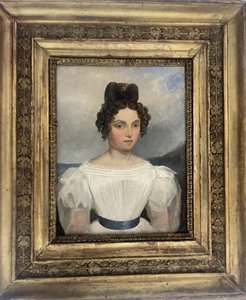
robert léopold leprince
1800 - 1847 , France
Quick Facts
- Artistic Movement Or Style: Romanticism painting
- Artists Or Movements Influenced By This Artist: ['Corot']
- Date Of Birth: 1800
- Date Of Death: 1847
- Full Name: Robert Léopold Leprince
- Nationality: French
- Notable Artworks: ['Interior of a Wood at Pierrefitte']
- Place Of Birth: Paris, France
Related Articles

Romantic Landscapes: 10 Masterpieces for Your Home | ArtsDot
Journey through 10 Romantic landscape masterpieces by Friedrich, Turner & Cole. Explore emotional art, sublime nature scenes & iconic 19th-century paintings. Find museum-quality reproductions for your home at ArtsDot.com – discover the full collection online!

Evocations of Place: A Historical Journey Through Landscape Art
Explore the rich history of landscape art with ArtsDot. Discover renowned artists, movements like Impressionism & Romanticism, and expert guidance for collecting timeless pieces. Find your perfect serene escape today!

John Constable's Masterpieces: Explore 25 Iconic Landscapes for Your Home
Journey through John Constable's 25 most celebrated landscapes. Explore Romanticism, Dedham Vale & his masterful use of light in iconic paintings like 'Hay Wain'. Find museum-quality art reproductions and elevate your home decor on ArtsDot.com.
Nature’s Sanctuary: Curating Enchanting Forest Artworks to Transform Your Home into a Serene Woodland Retreat
Transform your home into a serene woodland retreat with enchanting forest artworks. Discover museum-quality oil reproductions and custom landscape commissions designed to bring the peaceful beauty of nature indoors.
Hubert Robert: Picturing Ruins, Preserving Memory – A Study of Romantic Antiquarianism & Artistic Innovation
Explore the captivating world of Hubert Robert, master of Romantic landscape painting & 'capriccio' ruins. Discover his historical context, artistic innovations, and collecting insights with ArtsDot.