 Preview
 Send
Send Share
Share
 Details

 Download
 Similars
 X-Ray
X-Ray Diaporama
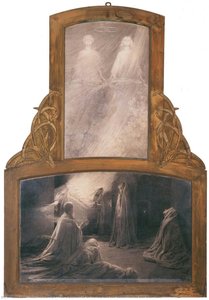
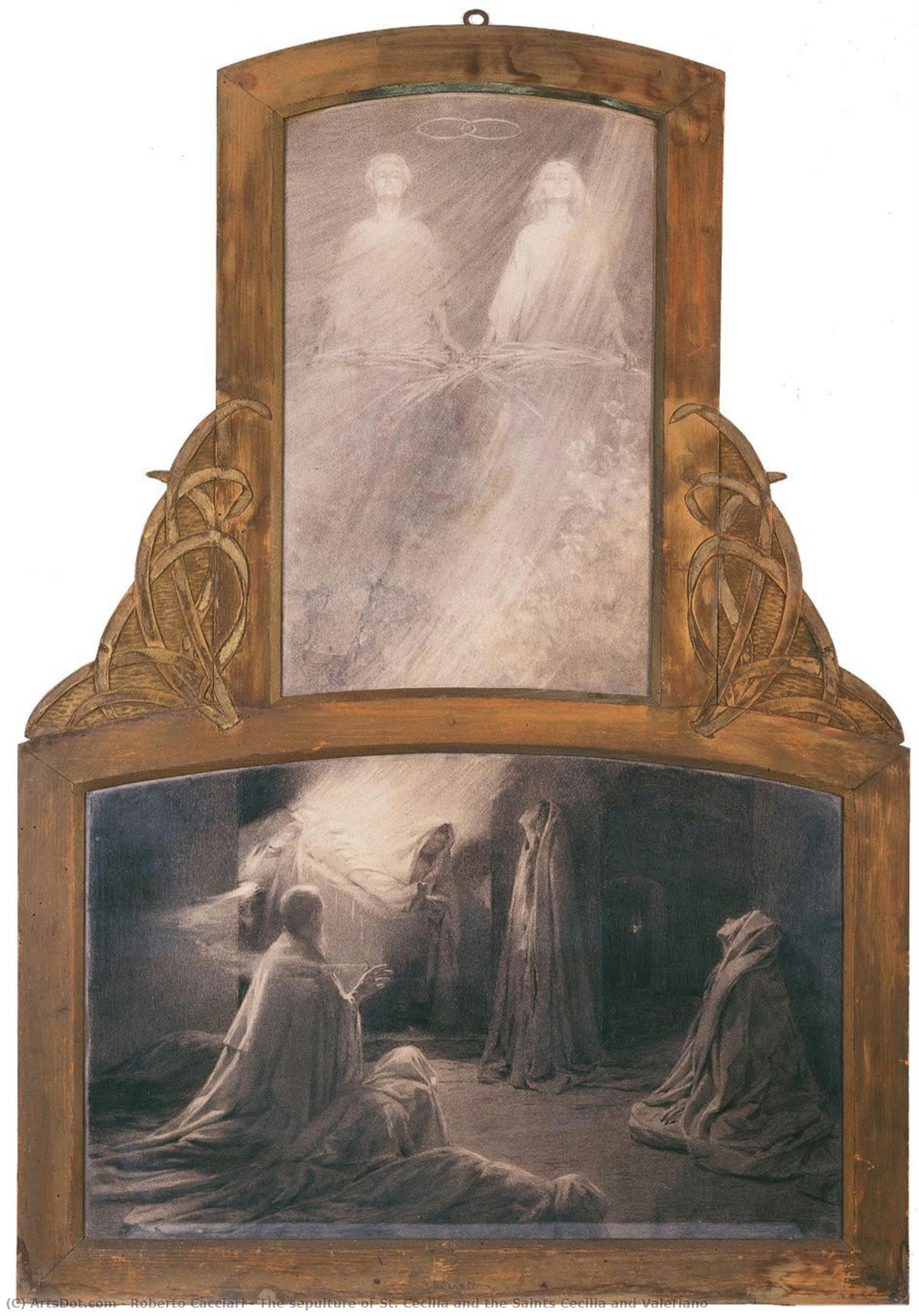
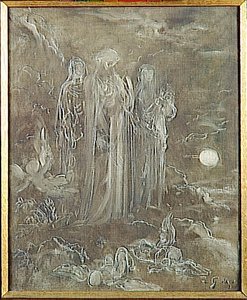
The sepulture of St. Cecilia and the Saints Cecilia and Valeriano


 Read More
Giclée / Art Print
Museum-quality giclée or canvas print with fast production and flexible finish options. ( Buy Hand Made Painting Buy Image)




































Pick from our preset sizes that match the artwork's original proportions.

You may enter your own dimensions to fit a specific frame or space. If your selected size does not match the original image's proportions, we will either crop the artwork or extend the image with a mirrored or solid-fill edge. A digital mockup will be sent for your approval before production begins.
Please note that the on-screen preview does not reflect the actual cropping or extension. Only the mockup will accurately show the final composition.
While custom sizes are available, we recommend selecting a dimension from the predefined list to preserve the original proportions.
Worldwide Delivery () in 2 weeks instead of standard 4/5 weeks. (6 September)

Free Worldwide Express Shipping

High-Quality Linen Canvas

Full Shipping Insurance

Customs Tax Refund Guarantee

True Color Matching Guarantee

100-Day Return Policy (Defects Only)

100% Money-Back Guarantee

Bulk Discount Offer
 Glass option is only available in size under 110 CM

The sepulture of St. Cecilia and the Saints Cecilia and Valeriano
Giclée / Art Print
Reproduction Size
-


Total Price
$ 63
Related Artworks





Artist Biography
The Architect of Light and Line
In the heart of Bologna, where the echoes of architectural grandeur meet the soft light of the Italian sun, the life of Roberto Cacciari unfolded as a profound dialogue between structure and soul. Born in 1882 into a lineage deeply rooted in the city's architectural heritage, Cacciari was destined to perceive the world through a lens of meticulous craftsmanship and enduring form. His early years were not merely an education in technique, but an immersion into the very weight of history. Under the masterful guidance of Silvio Gordini, he began to bridge the gap between the rigid precision of the architect and the expressive fluidity of the painter. This formative period instilled in him a reverence for the Bolognese Baroque and the intricate decorative traditions that define his home, allowing him to develop a vision where every line served both a structural and an aesthetic purpose.A Symbiosis of Form and Spirit
Cacciari’s career was a remarkable tapestry woven from the threads of academic rigor and artistic intuition. As he navigated the halls of the University of Bologna, establishing himself as both an educator and a practitioner, his work began to reflect a unique tension between classical stability and the burgeoning energy of modernism. While many of his contemporaries were drifting toward the abstraction of the new century, Cacciari remained anchored in the power of figurative representation. He possessed a singular ability to utilize charcoal to evoke profound depth, transforming simple monochromatic strokes into compositions that breathed with life and nuance. This mastery is perhaps most poignantly captured in his work, The Sepulture of St. Cecilia and the Saints Cecilia and Valeriano, where he distilled complex theological narratives into visually arresting scenes. His approach mirrored the stylistic elegance of the Art Deco period, blending a respect for historical sanctity with a contemporary sense of rhythm and ornamentation.The Enduring Legacy of a Bolognese Master
Beyond the canvas and the blueprint, Cacciari’s significance lies in his role as a bridge between eras. Through his architectural collaborations, such as the firm Cacciari, Guidacci and Venturi, he helped shape the very physical landscape of Bologna, leaving an indelible mark on its urban identity. Yet, it was through his devotion to the fine arts that his spirit truly resonated. His ability to harmonize the technical demands of architecture with the emotive potential of painting created a legacy of innovation that honored the past while embracing the future. To study Cacciari is to witness the evolution of early 20th-century Italian art, a journey marked by:- The mastery of technique, specifically his evocative use of charcoal and watercolor to capture depth and nuance.
- A dedication to tradition, maintaining the importance of figurative storytelling in an age increasingly defined by abstraction.
- An architectural sensibility that brought a sense of permanence, structural grace, and meticulous detail to his pictorial compositions.

Roberto Cacciari
1882 - 1966 , Italy
Quick Facts
- Artistic Movement Or Style: Traditional Italian art
- Artists Or Movements Influenced By This Artist: Caravaggio
- Artists Who Influenced This Artist: Silvio Gordini
- Date Of Birth: 1882
- Date Of Death: 1966
- Full Name: Roberto Cacciari
- Nationality: Italian
- Notable Artworks: ['The Sepulture of St. Cecilia']
- Place Of Birth: Bologna, Italy