 Preview
 Send
Send Share
Share
 Details

 Download
 Similars
 X-Ray
X-Ray Diaporama
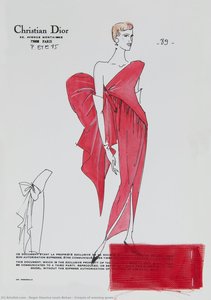
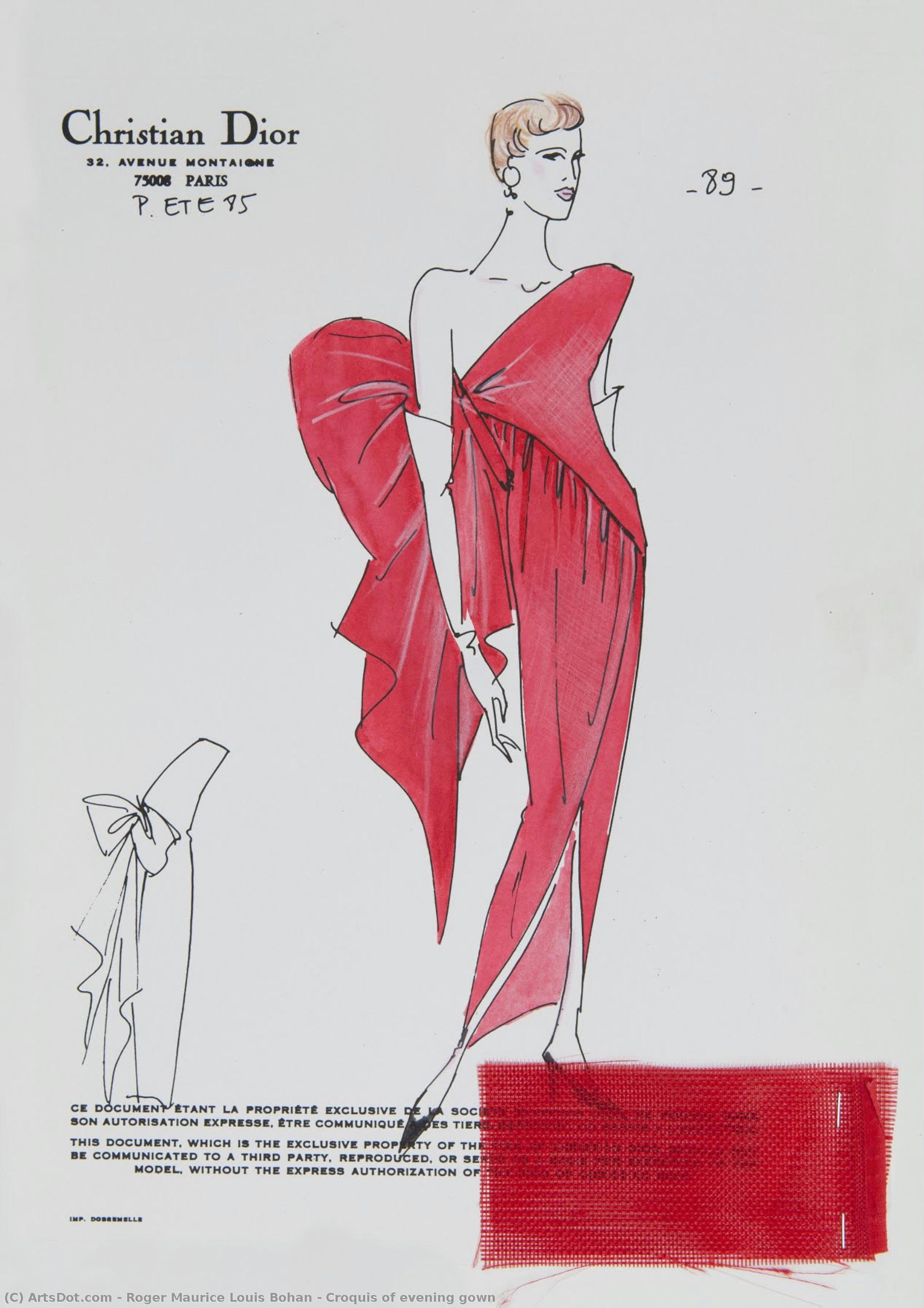
Croquis of evening gown


 Read More
Giclée / Art Print
Museum-quality giclée or canvas print with fast production and flexible finish options. ( Buy Hand Made Painting Buy Image)




































Pick from our preset sizes that match the artwork's original proportions.

You may enter your own dimensions to fit a specific frame or space. If your selected size does not match the original image's proportions, we will either crop the artwork or extend the image with a mirrored or solid-fill edge. A digital mockup will be sent for your approval before production begins.
Please note that the on-screen preview does not reflect the actual cropping or extension. Only the mockup will accurately show the final composition.
While custom sizes are available, we recommend selecting a dimension from the predefined list to preserve the original proportions.
Worldwide Delivery () in 2 weeks instead of standard 4/5 weeks. (26 August)

Free Worldwide Express Shipping

High-Quality Linen Canvas

Full Shipping Insurance

Customs Tax Refund Guarantee

True Color Matching Guarantee

60-Day Return Policy (Defects Only)

100% Money-Back Guarantee

Bulk Discount Offer
 Glass option is only available in size under 110 CM

Croquis of evening gown
Giclée / Art Print
Reproduction Size
-


Total Price
$ 63
Collectible Description
Related Artworks

Artist Biography
The Enduring Elegance of Marc Bohan: A Legacy in Dior and Beyond
Roger Maurice Louis Bohan, more commonly known as Marc Bohan, was a name synonymous with understated sophistication and timeless grace within the world of haute couture. Born in Paris in 1926, his life’s work culminated in a remarkable three-decade partnership with Christian Dior, shaping the brand's aesthetic for nearly two decades and leaving an indelible mark on fashion history. Bohan wasn’t a flamboyant innovator; rather, he possessed a rare ability to distill elegance into its purest form, drawing inspiration from the past while simultaneously anticipating future trends. His designs were characterized by their quiet confidence, impeccable tailoring, and a subtle understanding of how clothing could enhance the wearer's natural beauty – a philosophy that continues to resonate today.
Bohan’s early career laid the foundation for his later success. He began as an assistant at Robert Piguet in 1945, gaining invaluable experience amidst the burgeoning post-war fashion scene. Subsequent roles with Madeleine de Rauch and Jean Patou further honed his skills, exposing him to diverse design approaches and establishing a strong work ethic. It was his appointment as head designer for Christian Dior’s London line in 1958 that truly propelled him into the spotlight. This period saw Bohan refine his signature style – a deliberate rejection of the excesses of the era, favoring instead clean lines, sophisticated silhouettes, and a restrained palette. His designs were rooted in the elegance of the 1920s, capturing a sense of timelessness that would become a hallmark of his work.
Bohan’s tenure at Dior was marked by both creative triumphs and significant challenges. Following Yves Saint Laurent's military service in 1960, Bohan stepped into the role of artistic director, inheriting a brand already steeped in legend. He skillfully navigated this transition, maintaining Dior’s reputation for luxury while subtly injecting his own refined sensibilities. Notable collections from this period included those inspired by Russian cinema – particularly *Doctor Zhivago* – showcasing his ability to translate cultural influences into wearable art. His designs were frequently sought after by royalty and celebrities, including Princess Grace of Monaco, Jacqueline Kennedy, and Sophia Loren, solidifying Dior’s position as a favorite among the elite.
Beyond Dior, Bohan continued to contribute significantly to the fashion landscape. He briefly worked for Norman Hartnell in London, designing for the royal wedding of King Carl XVI Gustaf of Sweden in 1976 and Princess Caroline of Monaco in 1978. His versatility extended beyond ready-to-wear; he created the wedding gown for Silvia Sommerlath, a testament to his enduring influence. Throughout his career, Bohan’s designs were celebrated for their quality and craftsmanship, often finding their way into museum collections as embodiments of classic style. His legacy is not one of fleeting trends but rather of enduring elegance – a quiet revolution in the world of fashion.
The Art of the Croquis: A Window into Bohan's Creative Process
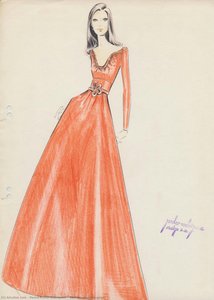
Roger Bohan’s artistic process was deeply rooted in meticulous sketching and detailed croquis. These preparatory drawings, often rendered in vibrant red ink, offer an intimate glimpse into his creative thinking. The artwork showcased here—a 1985 illustration of a stunning evening gown— exemplifies this approach. The precise lines, carefully considered proportions, and attention to fabric texture reveal the depth of his design expertise. Bohan’s croquis weren't merely technical drawings; they were visual narratives, capturing not just the silhouette but also the intended mood and atmosphere of each garment.
These sketches demonstrate Bohan’s ability to translate abstract ideas into tangible forms. The use of red ink is particularly noteworthy – a bold choice that immediately draws attention to key design elements. The level of detail—from the draping of the fabric to the placement of embellishments—highlights his commitment to perfection. Studying these croquis provides valuable insight into the evolution of Bohan’s designs and reveals the meticulous craftsmanship that characterized his work.
Influences and Style: A Synthesis of Past and Present
Bohan's design philosophy was shaped by a deep appreciation for the past, particularly the elegance of the 1920s. He drew inspiration from this era’s streamlined silhouettes, luxurious fabrics, and understated glamour, rejecting the more flamboyant styles that dominated the mid-20th century. However, he wasn’t simply replicating historical trends; rather, he was selectively incorporating elements—such as bias cuts and geometric patterns—into his own designs, creating a unique aesthetic that felt both familiar and contemporary.
His work also reflected a keen understanding of tailoring – a skill honed during his early years at Robert Piguet. Bohan’s garments were renowned for their impeccable fit and construction, emphasizing the wearer's natural form. He favored luxurious materials such as silk, wool crepe, and velvet, often combining them in unexpected ways to create visually striking effects. The influence of Madeleine de Rauch, with her emphasis on refined simplicity, is also evident in Bohan’s early work.
A Lasting Legacy: Bohan's Enduring Impact
Marc Bohan passed away in September 2023 at the age of 97, leaving behind a remarkable legacy as one of the most influential figures in fashion history. His three-decade collaboration with Christian Dior established a new standard for elegance and sophistication, shaping the brand’s image for decades to come. His designs continue to be admired for their timelessness, quality, and understated beauty.
Beyond his contributions to Dior, Bohan's influence extends far beyond the fashion industry. His meticulous approach to design—characterized by a deep understanding of craftsmanship, an appreciation for historical styles, and a commitment to perfection—has served as an inspiration to countless designers. Roger Maurice Louis Bohan’s work remains a testament to the power of quiet elegance – a reminder that true style is not about ostentation but rather about expressing oneself with confidence and grace.
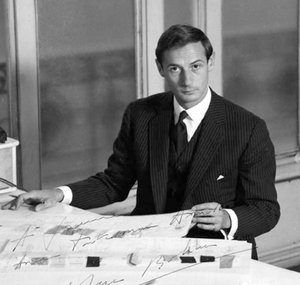
roger maurice louis bohan
1926 - 2023 , France
Quick Facts
- Artistic Movement Or Style: Fashion Design
- Date Of Birth: August 22, 1926
- Date Of Death: September 6, 2023
- Full Name: Roger Maurice Louis Bohan
- Nationality: French
- Notable Artworks: ['Croquis of evening gown']
- Place Of Birth: Paris, France
Related Articles
Georges Barbier: A Synthesis of Art Nouveau Elegance & Early 20th-Century Fashion Illustration
Explore the exquisite world of Georges Barbier, a leading Art Nouveau illustrator celebrated for his opulent fashion designs & masterful pochoir technique. Discover his legacy and find collectible art at ArtsDot.
Angelo Chiacchio: A Mid-Century American Illustration Master & the Rise of Commercial Art
Explore the captivating world of Angelo Chiacchio, a master of mid-century American illustration. Discover his evolution, signature style, and lasting impact on commercial art & design. Learn about his legacy at the Museum of American Illustration.
Kay Rasmus Nielsen: A Golden Age Illustrator's Enchanting Legacy of Symbolism & Narrative
Explore the captivating world of Kay Rasmus Nielsen, a celebrated Golden Age illustrator renowned for his Art Nouveau fairy tale art & Disney contributions. Discover his unique style, enduring legacy, and how to collect his enchanting works.
The Refined Aesthetic of Victorian Illustration: A Study in Narrative & Technique
Explore the captivating world of Victorian illustration! Discover Pre-Raphaelite influences, key artists like Rossetti & Stephens, and the era's rich narrative detail. A deep dive for art enthusiasts.
The Eloquent Line: Exploring the Artistic Significance of Sketches Across Movements and Media
Explore the profound artistic significance of sketches throughout history. From Renaissance masters to modern innovators like Van Gogh & Guston, discover how these foundational works reveal technique, emotion, and vision. Learn more at ArtsDot.