 Preview
 Send
Send Share
Share
 Details

 Download
 Similars
 X-Ray
X-Ray Diaporama
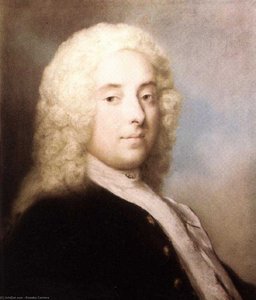
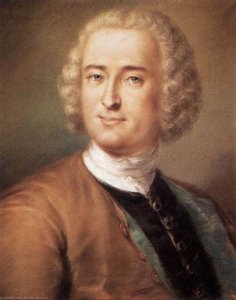
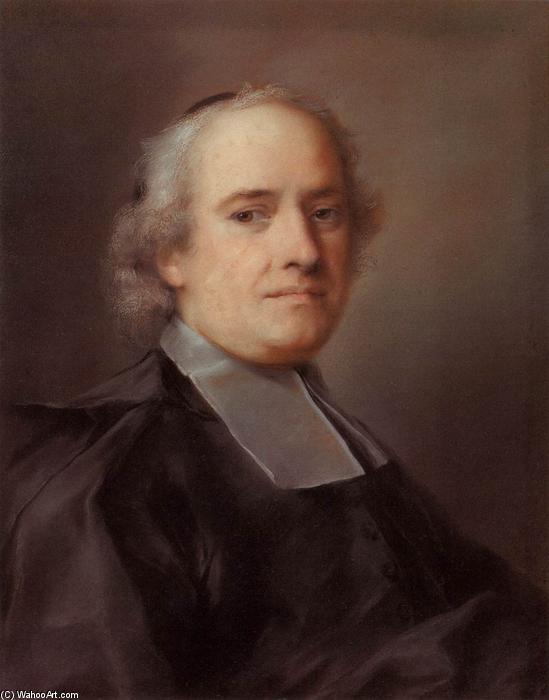
Portrait of the French Consul Le Blond
 Acrylic On Canvas
- WallArt
- Rococo
 1727
1727 58.0 x 56.0 cm
 Gallerie dell'Accademia
 Read More
Hand Made Oil Reproduction
Hand-painted oil on canvas in your size and frame, made to order by our artists. ( Buy Print Buy Image)




P118B $10

P118H $10

P118W $10

P438Z $10

P508JH $12

P508YH $12

P805H $10

P805Z $10

P919BZ $10

P919G $10

P919XJ $10

P959ZH $10

P968JZ $12

W106C $8

W218G $10

W218JH $8

W218Y $10

W307PJ $10

W316G $10

W316PJ $8

W316Y $10

W398PJ $8

W4111J $10

W500HY $15

W500JH $15

W692G $12

W849H $8

W940BG $15

W953PJ $8




Pick from our preset sizes that match the artwork's original proportions.

You may enter your own dimensions to fit a specific frame or space. If your selected size does not match the original image's proportions, we will either crop the artwork or extend the painting with additional hand-painted elements. A digital mockup will be sent for your approval before production begins.
Please note that the on-screen preview does not reflect the actual cropping or extension. Only the mockup will accurately show the final composition.
While custom sizes are available, we recommend selecting a dimension from the predefined list to preserve the original proportions.
After order, ArtsDot.com team will email client for instructions and provide a mockup preview
Worldwide Delivery () in 3/4 weeks instead of standard 5 weeks. (16 August). No compromise on quality.

Free Worldwide Express Shipping

High-Quality Linen Canvas

Full Shipping Insurance

Customs Tax Refund Guarantee

True Color Matching Guarantee

60-Day Return Policy (Defects Only)

100% Money-Back Guarantee

Bulk Discount Offer
 Glass option is only available in size under 110 CM

Portrait of the French Consul Le Blond
Reproduction Medium
Reproduction Size
-


Total Price
$ 263
Artwork Description
Portrait of the French Consul Le Blond – A Window into Rococo Dignity
Rosalba Carriera’s “Portrait of the French Consul Jean Le Blond,” painted in 1727, is more than just a likeness; it's a meticulously crafted tableau of Venetian elegance and aristocratic restraint. This pastel masterpiece, currently residing within the Galleria dell’Accademia in Venice, offers a captivating glimpse into the world of 18th-century diplomacy and artistic refinement. Carriera, a pioneering figure who defied societal expectations to become one of history’s most celebrated women artists, masterfully captures Le Blond's presence with an astute understanding of both formal portraiture and the subtle nuances of human expression.
The painting immediately draws the eye to Le Blond himself – a man of considerable bearing. Dressed in the dark, rich fabrics characteristic of his position, he exudes an air of quiet authority. His gaze is direct, yet not confrontational; it suggests contemplation and a measured awareness of his surroundings. The careful rendering of his facial features—the slight furrow of his brow, the subtle lines around his eyes—reveals a depth beyond mere representation, hinting at a complex personality beneath the surface of formality.
The Language of Pastel – Technique and Texture
Carriera’s genius lies not only in her ability to capture likeness but also in her innovative use of pastel. Unlike the heavier oils favored by many of her contemporaries, pastel allowed for an unparalleled delicacy and luminosity. Observe how she builds up layers of color with astonishing precision, creating a remarkable sense of texture – the subtle sheen of his robe, the delicate fuzz of his beard, the soft contours of his face. The use of ivory as a support was revolutionary at the time, providing a smooth surface that enhanced the pastel’s inherent qualities.
The muted palette—primarily shades of brown, grey, and cream—contributes to the painting's overall sense of sophistication. Carriera skillfully employs chiaroscuro – the contrast between light and shadow – to sculpt Le Blond’s form and create a dramatic effect. The background, rendered in soft, hazy tones, serves to further isolate the subject and draw attention to his dignified presence.
A Venetian Masterpiece – Context and Influence
Carriera's work flourished during a period of immense artistic innovation in Venice—a city renowned for its patronage of the arts. The Rococo style, characterized by its grace, elegance, and playful ornamentation, was at its peak, and Carriera became one of its most prominent exponents. This portrait reflects the prevailing aesthetic sensibilities of the time, emphasizing beauty, refinement, and social status.
Furthermore, “Portrait of the French Consul Le Blond” is a testament to Carriera’s success in navigating the complex world of European diplomacy. Her ability to attract commissions from foreign dignitaries—including royalty and nobility—demonstrates her artistic skill and diplomatic acumen. The painting itself serves as a visual record of the intricate networks of power and influence that characterized 18th-century Europe.
Symbolism and Emotional Resonance
Beyond its technical brilliance, the portrait is imbued with subtle symbolic meaning. Le Blond’s attire—the dark robe, the white collar—suggests his position as a respected member of Venetian society. His direct gaze invites the viewer to engage with him on an intellectual level, prompting reflection on themes of power, responsibility, and human dignity. The overall mood of the painting is one of quiet contemplation – a testament to Carriera’s ability to capture not just outward appearances but also the inner life of her subjects.
Reproductions of “Portrait of the French Consul Le Blond” offer an exceptional opportunity to bring this exquisite work of art into your home or office. The delicate pastel technique and rich details are faithfully reproduced, allowing you to appreciate Carriera’s artistry in full measure. It's a timeless piece that speaks volumes about Venetian culture, aristocratic life, and the enduring power of portraiture.
Related Artworks
Artist Biography
A Venetian Luminary: The Life and Art of Rosalba Carriera
Rosalba Carriera emerged from the vibrant artistic milieu of 18th-century Venice as a true innovator, defying societal expectations to become one of the most celebrated portraitists of her time. Born in 1675 into a family of modest means—her mother a skilled lacemaker and her father a lawyer—Carriera’s path to artistic renown was initially unconventional. The decline of the Venetian lace industry prompted the family to seek alternative livelihoods, leading young Rosalba to apply her delicate hand to painting miniatures on snuffbox lids. This early foray into artistry proved remarkably successful, establishing her reputation for meticulous detail and an innate understanding of form and color. Crucially, she pioneered the use of ivory as a support for these miniature portraits, moving away from traditional vellum and showcasing a willingness to experiment that would define her career. These charming miniatures quickly gained popularity among Venice’s aristocratic circles and visiting Grand Tourists, laying the foundation for her future success.The Pastel Revolution
While Carriera initially excelled in miniature painting, it was her embrace of pastel that truly cemented her legacy. Though pastels had been used previously for sketches and studies, she was among the first to elevate them to the status of a medium suitable for formal portraiture. This wasn’t merely a technical shift; it was an aesthetic one. Pastels allowed Carriera to capture the delicate nuances of skin tone, the shimmering textures of fabrics, and the fleeting expressions of her sitters with unparalleled softness and grace—qualities perfectly aligned with the emerging Rococo style. Her portraits weren't simply likenesses; they were idealized representations that flattered and charmed. She quickly attracted a prestigious clientele, including Maximilian II of Bavaria, Frederick IV of Denmark, and perhaps most notably, Augustus the Strong, King of Poland and Elector of Saxony, who amassed an impressive collection of her pastel works. In 1704, recognition arrived in the form of appointment as an *Accademico di merito* by the Roman Accademia di San Luca—a rare honor for a woman artist and a testament to her growing reputation.Triumph in Paris and International Acclaim
By 1720, Rosalba Carriera’s fame had extended far beyond Venice, drawing her to the artistic heart of Europe: Paris. Invited by the influential art collector Pierre Crozat, she spent nearly two years in the French capital, where she became a sensation. Her portraits were eagerly sought after by members of the French court, including King Louis XV and the celebrated painter Antoine Watteau himself. Carriera’s talent was so universally admired that she achieved an unprecedented feat: election as a member of the Académie Royale de Peinture et de Sculpture—an honor rarely bestowed upon foreign-born artists, let alone women. This triumph not only validated her artistic skill but also challenged prevailing societal norms that limited opportunities for female creatives. Her presence in Paris significantly influenced aristocratic tastes, moving art patronage beyond solely royal circles and fostering a broader appreciation for the Rococo aesthetic. She wasn’t working in isolation; her sisters, Giovanna and Angela, assisted with the immense volume of commissions she received during this period, demonstrating a strong familial support system that enabled her success.Later Years, Enduring Influence, and Historical Significance
Following her Parisian triumph, Carriera continued to travel extensively throughout Europe, visiting Modena, Parma, and Vienna. In Vienna, she found another devoted patron in Holy Roman Emperor Charles VI, who acquired over 150 of her pastels. Despite these accolades, the later years of her life were marked by personal tragedy—the loss of her sister Giovanna and a gradual decline in her eyesight due to cataracts. Yet, even as her physical abilities diminished, Carriera’s influence continued to grow. She became an inspiration for subsequent generations of women artists, including Adélaïde Labille-Guiard and Elisabeth Vigée Le Brun, who followed in her footsteps, breaking barriers and achieving recognition in a male-dominated art world. Rosalba Carriera's legacy extends beyond her technical mastery of pastel; she was a trailblazer who challenged societal expectations, popularized a new artistic medium, and demonstrated the remarkable creative capabilities of women during the Rococo period. Her work remains a testament to her ingenuity, skill, and enduring impact on the history of art. She is remembered not just as a painter, but as a pioneer.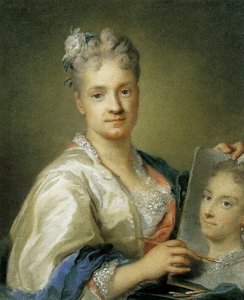
Rosalba Carriera
1675 - 1757 , Italy
Quick Facts
- Artistic Movement Or Style: Rococo
- Artists Or Movements Influenced By This Artist:
- Adélaïde Labille-Guiard
- Elisabeth Vigée Le Brun
- Date Of Birth: 1675
- Date Of Death: 1757
- Full Name: Rosalba Carriera
- Nationality: Italian
- Notable Artworks:
- Maximilian II Bavaria
- Frederick IV Denmark
- Artist & Sister Naneta
- Augustus the Strong
- Young Girl w/ Monkey
- Spring
- Place Of Birth: Venice, Italy
Related Articles
Charles Le Brun: Master of French Baroque Classicism & His Enduring Legacy
Explore the life & art of Charles Le Brun, master of French Baroque Classicism. Discover his royal commissions, influence on Versailles, and enduring legacy through detailed analysis & stunning artworks.
The Subdued Radiance of Pastel: Exploring Nuance & Emotion in Art
Explore the nuanced world of pastel art! Discover its history, techniques & emotional power with expert insights from ArtsDot.com. Find museum-quality reproductions and learn about collecting this delicate medium.
The Subtleties of Pastel: A Comprehensive Exploration of Technique, History & Emotional Resonance
Explore the captivating world of pastel art! Discover its rich history, Impressionistic masters like Degas, emotional power & unique techniques. Find museum-quality reproductions at ArtsDot.
Vigée Le Brun: Portraiture, Patronage & Feminine Identity in 18th-Century France
Explore the life & art of Louise Élisabeth Vigée Le Brun, Marie Antoinette’s renowned portraitist. Discover her Rococo style, self-portraits, and influence on 18th-century French painting. A deep dive into patronage & feminine identity.
The Subdued Radiance of Pastel Palettes: Exploring Emotional Resonance in Art History
Explore the emotional power of pastel palettes in art history! Discover Impressionism, Post-Impressionism & color psychology insights. Find museum-quality reproductions at ArtsDot.