 Preview
 Send
Send Share
Share
 Details

 Download
 Similars
 X-Ray
X-Ray Diaporama
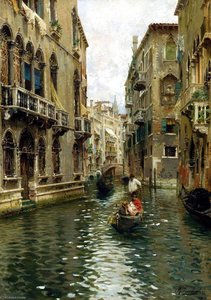
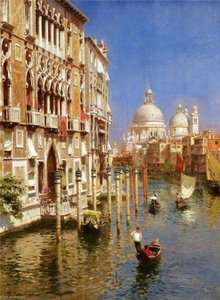
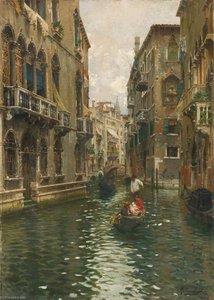
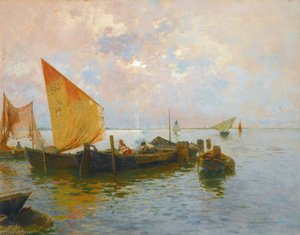
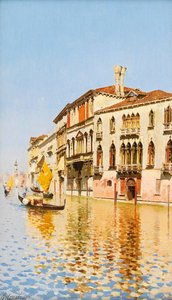
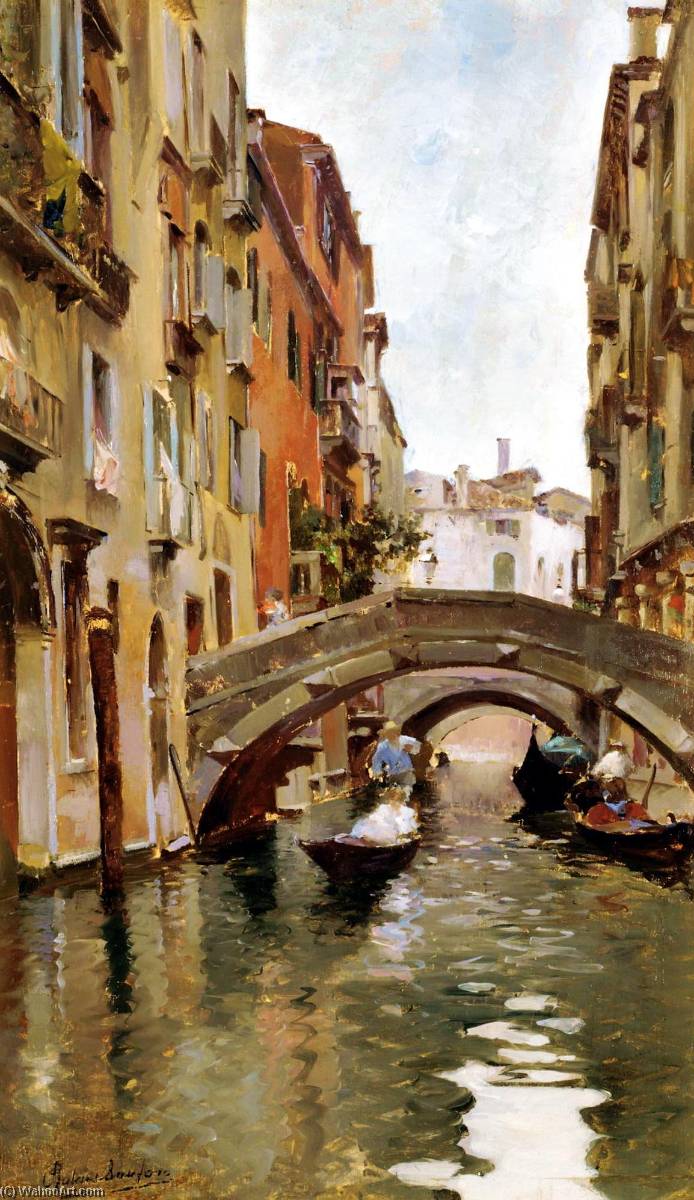
Gondola on a Venetian Canal

 Read More
Hand Made Oil Reproduction
Hand-painted oil on canvas in your size and frame, made to order by our artists. ( Buy Print Buy Image)




































Pick from our preset sizes that match the artwork's original proportions.

You may enter your own dimensions to fit a specific frame or space. If your selected size does not match the original image's proportions, we will either crop the artwork or extend the painting with additional hand-painted elements. A digital mockup will be sent for your approval before production begins.
Please note that the on-screen preview does not reflect the actual cropping or extension. Only the mockup will accurately show the final composition.
While custom sizes are available, we recommend selecting a dimension from the predefined list to preserve the original proportions.
After order, ArtsDot.com team will email client for instructions and provide a mockup preview
Worldwide Delivery () in 3/4 weeks instead of standard 5 weeks. (21 August). No compromise on quality.

Free Worldwide Express Shipping

High-Quality Linen Canvas

Full Shipping Insurance

Customs Tax Refund Guarantee

True Color Matching Guarantee

60-Day Return Policy (Defects Only)

100% Money-Back Guarantee

Bulk Discount Offer
 Glass option is only available in size under 110 CM

Gondola on a Venetian Canal
Reproduction Medium
Reproduction Size
-


Total Price
$ 288
Related Artworks
Artist Biography
Rubens Santoro: Capturing the Soul of the Amalfi Coast
Rubens Santoro, born in Mongrassano, Calabria, on October 26th, 1859, and passing away in Naples on December 30th, 1941, was an Italian painter whose evocative landscapes and scenes of Southern Italy – particularly the dramatic beauty of the Amalfi Coast and the vibrant energy of Naples and Venice – secured his place as a significant figure in late 19th and early 20th-century art. Unlike many artists of his time who rigorously adhered to academic training, Santoro’s artistic journey was deeply rooted in direct observation and an intensely personal connection with the world around him. His early life, spent immersed in the rugged landscapes of Calabria alongside his artist father, instilled a profound appreciation for nature's power and beauty – a foundation that would inform every brushstroke he later created.Early Years and Influences
Santoro’s formal artistic education was brief and somewhat unconventional. He enrolled briefly at the Neapolitan Academy of Fine Arts but quickly found its rigid structure stifling. Instead, he embraced a more fluid approach, learning primarily through direct experience. This decision proved pivotal, allowing him to develop an intensely realistic style characterized by meticulous detail and a remarkable ability to capture the nuances of light and atmosphere. Domenico Morelli, a respected critic and art historian, recognized Santoro’s talent early on, offering encouragement and guidance that helped shape his artistic vision. Notably, he was profoundly influenced by Mariano Fortuny, whose work demonstrated a masterful use of color and a sensitivity to the effects of light – particularly evident in Fortuny's own depictions of the Mediterranean landscape. Santoro’s travels throughout Italy, absorbing the diverse regional styles and techniques, further broadened his artistic horizons.A Life Dedicated to Observation
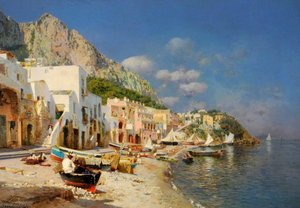
Santoro’s artistic practice was defined by a relentless pursuit of authentic representation. He eschewed idealized or romanticized depictions in favor of capturing the raw beauty and everyday life of the places he visited. His subjects ranged from bustling cityscapes – the vibrant streets of Naples, the canals of Venice – to serene coastal vistas along the Amalfi Coast, including Torre Annunziata, Granatello, Procida, and Resina. He frequently incorporated elements of local culture into his paintings, depicting fishermen, vendors, and women engaged in daily activities with remarkable accuracy and sensitivity. He was known for taking long walks, often accompanied by playing the mandolin, allowing him to observe and sketch directly from life – a practice that informed his meticulous attention to detail and his ability to convey the essence of each location. His work wasn’t simply about recording scenery; it was about capturing the *feeling* of being there.Major Works and Recognition
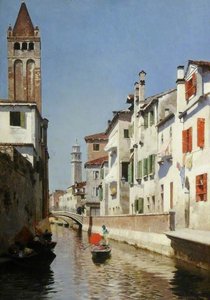
Santoro's artistic career spanned several decades, during which he exhibited extensively throughout Italy and Europe. Early successes included “A Girl who Laughs,” exhibited in Venice in 1875, which garnered critical acclaim and secured him a commission from Domenico Morelli. His landscapes of the Amalfi Coast, such as *Marina di Maiuri* and *Grotta degli Zingari*, were particularly popular with collectors and gained recognition through sales to the Goupil Gallery. He produced numerous vedute (city views) for Venice, including *Cloister of San Gregorio*, *Via di Piccioni*, and *Blue House*, each rendered with a keen eye for architectural detail and atmospheric perspective. In 1911, his painting *Verona* was awarded a silver medal at the Barcelona Exhibition, further cementing his reputation as a skilled and accomplished artist. His work also found favor with Stewart Gardner, commissioned by Colnaghi, the art merchant of London.Legacy and Artistic Significance
Rubens Santoro’s legacy lies in his ability to translate the beauty and vitality of Southern Italy onto canvas with remarkable realism and emotional depth. His paintings are not merely picturesque representations; they are imbued with a sense of place, capturing the light, color, and atmosphere of each location with astonishing precision. He is considered a key figure in the development of Orientalist painting – a genre that focused on depicting scenes from the Middle East and North Africa – though his primary subject matter remained firmly rooted in Italy. Santoro’s work continues to be appreciated for its technical skill, its evocative imagery, and its authentic portrayal of Italian life during a period of significant social and artistic change. His paintings offer a valuable window into the beauty and spirit of Southern Italy, reminding us of the power of art to capture the essence of a place and its people.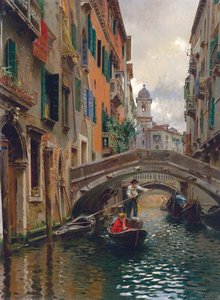
rubens santoro
1859 - 1941
Quick Facts
- Artistic Movement Or Style: Orientalist, Realism
- Artists Or Movements Influenced By This Artist:
- Fortuny
- Venetian painting
- Artists Who Influenced This Artist:
- Mariano Fortuny
- Domenico Morelli
- Date Of Birth: October 26, 1859
- Date Of Death: December 30, 1941
- Full Name: Rubens Santoro
- Nationality: Italian
- Notable Artworks:
- Marina di Maiuri
- Grotta degli Zingari
- Morning Rest
- Verona
- Place Of Birth: Mongrassano, Calabria
Related Articles
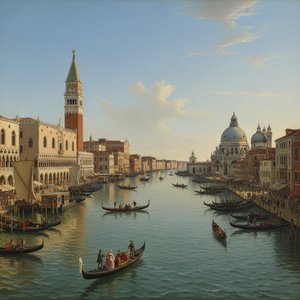
Giovanni Antonio Canal (Canaletto): A Venetian Master of Light, Space & Societal Observation
Explore the life & art of Giovanni Antonio Canal (Canaletto), a Venetian master renowned for his breathtaking cityscapes. Discover his techniques, legacy, and captivating depictions of 18th-century Venice & London.

Jacopo Tintoretto's Masterpieces: 25 Paintings That Define Venetian Drama | ArtsDot
Explore 25 breathtaking masterpieces by Jacopo Tintoretto, the Venetian master of drama and light. Discover the stories behind iconic Renaissance paintings & find museum-quality art reproductions to elevate your home decor on ArtsDot.com.
Pietro Longhi's Venetian Scenes: A Study of Rococo Society & Domestic Life
Explore the captivating world of Pietro Longhi's Venetian scenes! Discover insightful analysis of his Rococo masterpieces & social commentary on 18th-century life. Learn about this 'Venetian Hogarth' and his lasting artistic legacy.

Impressionist Landscapes: 10 Masterpieces for Your Home | ArtsDot
Journey through 10 iconic Impressionist landscapes by Monet, Renoir & Degas. Explore the history, techniques & emotions behind these masterpieces. Find museum-quality reproductions for your home at ArtsDot.com – where art comes to life! Discover all masterpieces on ArtsDot.com
The Golden Light of Innovation: Exploring the Venetian Renaissance Art Movement (1430–1580)
Explore the Golden Age of Venetian art (1430–1580). Discover Giorgione, Titian & Tintoretto's techniques, the 'colorito' revolution, and lasting influence. Expert insights for collectors & enthusiasts.