 Preview
 Send
Send Share
Share
 Details

 Download
 Similars
 X-Ray
X-Ray Diaporama
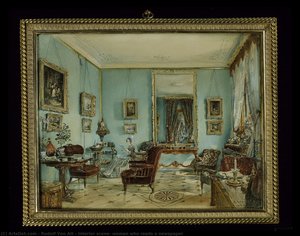
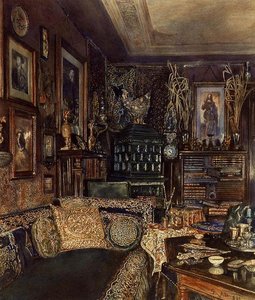
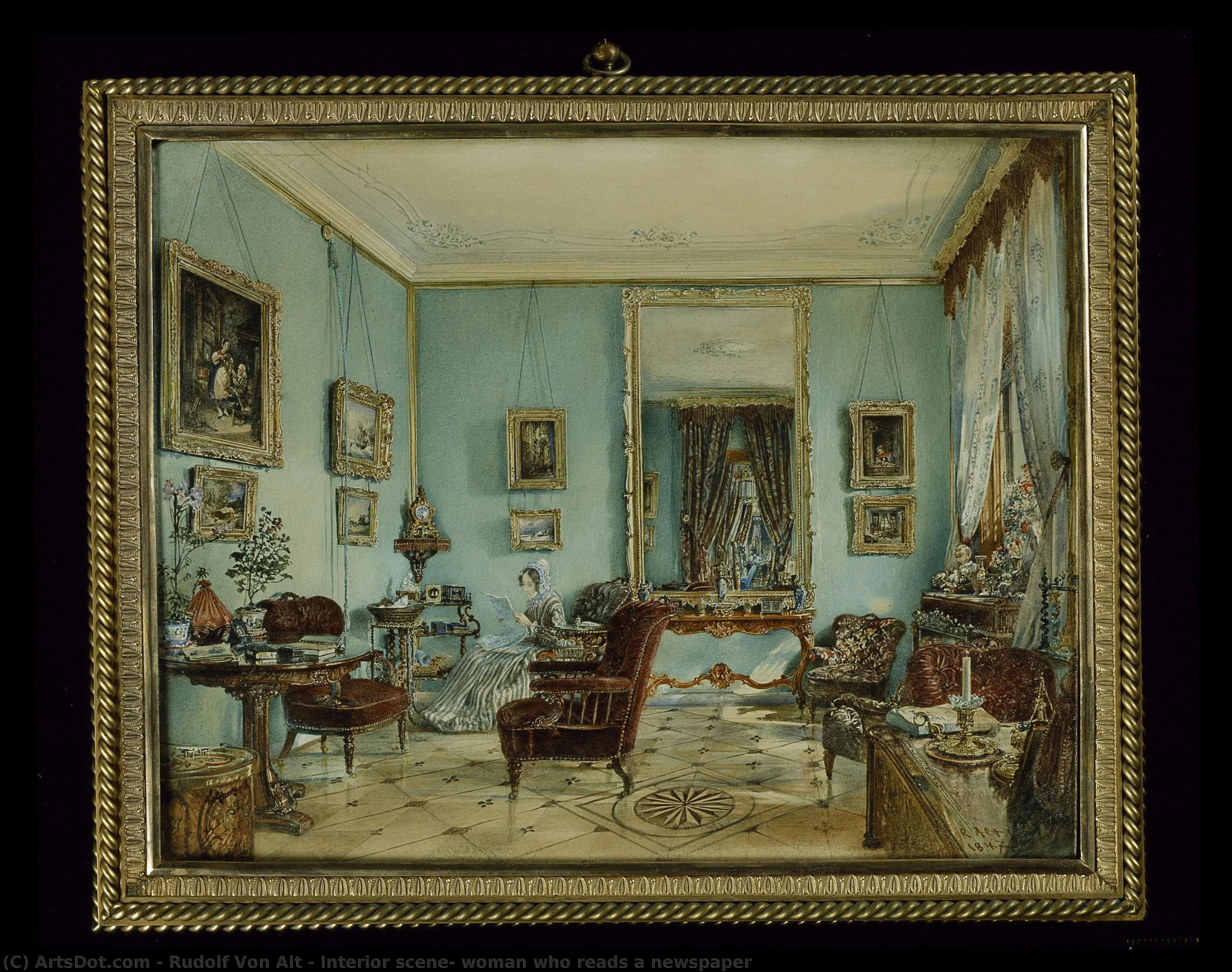
Interior scene, woman who reads a newspaper
 Watercolor
- WallArt
- Realism
 19th Century
 29.0 x 22.0 cm
 Palazzo Madama
 Read More
Giclée / Art Print
Museum-quality giclée or canvas print with fast production and flexible finish options. ( Buy Hand Made Painting Buy Image)




P118B $10

P118H $10

P118W $10

P438Z $10

P508JH $12

P508YH $12

P805H $10

P805Z $10

P919BZ $10

P919G $10

P919XJ $10

P959ZH $10

P968JZ $12

W106C $8

W218G $10

W218JH $8

W218Y $10

W307PJ $10

W316G $10

W316PJ $8

W316Y $10

W398PJ $8

W4111J $10

W500HY $15

W500JH $15

W692G $12

W849H $8

W940BG $15

W953PJ $8




Pick from our preset sizes that match the artwork's original proportions.

You may enter your own dimensions to fit a specific frame or space. If your selected size does not match the original image's proportions, we will either crop the artwork or extend the image with a mirrored or solid-fill edge. A digital mockup will be sent for your approval before production begins.
Please note that the on-screen preview does not reflect the actual cropping or extension. Only the mockup will accurately show the final composition.
While custom sizes are available, we recommend selecting a dimension from the predefined list to preserve the original proportions.
Worldwide Delivery () in 2 weeks instead of standard 4/5 weeks. (26 August)

Free Worldwide Express Shipping

High-Quality Linen Canvas

Full Shipping Insurance

Customs Tax Refund Guarantee

True Color Matching Guarantee

60-Day Return Policy (Defects Only)

100% Money-Back Guarantee

Bulk Discount Offer
 Glass option is only available in size under 110 CM

Interior scene, woman who reads a newspaper
Giclée / Art Print
Reproduction Size
-


Total Price
$ 63
Collectible Description
A Moment of Quietude: The Serene World of Rudolf von Alt
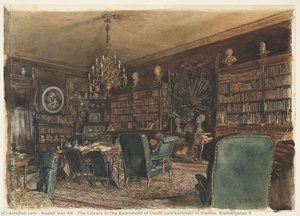
In the delicate interplay of light and shadow, "Interior scene, woman who reads a newspaper" invites the viewer into a sanctuary of profound stillness. This exquisite watercolor by the renowned Austrian master Rudolf von Alt captures more than just a domestic moment; it encapsulates an entire atmosphere of nineteenth-century elegance. The composition centers on a solitary figure, lost in the rhythmic pages of her news, seated within a room that breathes with a soft, blue-toned tranquility. As one gazes upon this piece, there is an immediate sense of being transported to a private, refined era where time slows down, and the simple act of reading becomes a meditative ritual.
The technique employed by von Alt showcases his unparalleled mastery of the watercolor medium. Known for his ability to render architectural precision alongside the ephemeral qualities of light, he uses a sophisticated blue color scheme to unify the space. This cool palette does not feel cold; rather, it lends an ethereal, dreamlike quality to the interior. The artist’s brushwork is incredibly nuanced, capturing the textures of various fabrics, the sturdy presence of wooden furniture, and the organic softness of a potted plant tucked into the corner. Every element, from the delicate vase resting on a table to the scattered arrangement of chairs and couches, is rendered with a meticulous attention to detail that speaks to his training at the Akademie der Bildenden Künste in Vienna.
Beyond its technical brilliance, the painting serves as a window into the social fabric of the era. The presence of the dining table, the carefully placed greenery, and the structured yet comfortable arrangement of the room suggest a lifestyle of cultured leisure. There is a subtle symbolism in the woman's immersion in her newspaper—it represents the intersection of private domesticity and the wider, unfolding world. For the collector or interior designer, this artwork offers a profound emotional resonance. It provides a focal point of calm and sophistication, making it an ideal centerpiece for a study, a library, or a refined living space where one wishes to evoke feelings of peace, intellectual curiosity, and timeless grace.
Owning a reproduction of such a masterpiece allows the enduring spirit of von Alt’s vision to inhabit a modern home. It is not merely a decoration but an invitation to embrace the beauty of quiet contemplation. Whether placed in a sunlit corner or a more formal setting, this piece brings with it the historical weight of the Austrian landscape tradition and the intimate, poetic charm of a life lived with intention.
Related Artworks
Artist Biography
The Master of Light and Line: The Life of Rudolf von Alt
Born amidst the cultural splendor of Vienna on August 28, 1812, Rudolf von Alt emerged as one of the most profound chroniclers of the Austrian landscape and architectural grandeur. His journey into the heart of artistry was paved by a family legacy deeply rooted in visual expression; his father, Jakob Alt, was a skilled lithographer, and his brother, Franz, followed a similar path into painting. This early immersion in the technical nuances of printmaking and pigment allowed Rudolf to develop an extraordinary eye for detail from a tender age. His formal education at the Akademie der Bildenden Künste in Vienna provided the academic rigor necessary to transform raw talent into a sophisticated mastery of both watercolor and oil, setting the stage for a career that would eventually earn him the noble title of Ritter in 1889.
The soul of von Alt’s work lies in his profound connection to the natural world. Driven by an insatiable curiosity, he embarked on extensive hiking expeditions through the rugged majesty of the Austrian Alps and the sun-drenched vistas of Northern Italy. These travels were more than mere excursions; they were essential pilgrimages that fueled his creative spirit. Through his delicate use of watercolors, he captured the ephemeral qualities of nature—the way mist clings to a mountain peak or how sunlight dances across a valley floor. His ability to render the atmosphere of a landscape, making the viewer feel the crispness of the alpine air or the warmth of an Italian afternoon, remains one of his most enduring legacies.
Architectural Grandeur and Artistic Evolution
While his landscapes captured the wild beauty of Europe, von Alt’s architectural paintings offered a meticulous study of human achievement and historical permanence. He possessed a rare ability to marry the structural precision of architecture with the fluid, emotive qualities of light. His works often serve as windows into a bygone era, documenting the intricate facades and soaring spires of European landmarks with a reverence that borders on the poetic. This technical prowess is perhaps most evident in his mastery of oil painting, where he could manipulate texture and shadow to give stone and mortar a breathing, living quality.
As his career progressed, von Alt’s style underwent a fascinating metamorphosis. While his early works were grounded in a rigorous realism and a devotion to topographical accuracy, his later compositions began to embrace the softer, more fragmented light characteristic of Impressionism. This evolution demonstrates an artist who was never stagnant, but rather one who continuously sought new ways to interpret the sensory experience of the world around him. His later works move away from mere documentation toward a more subjective, emotional interpretation of light and color, bridging the gap between classical tradition and modern sensibility.
Legacy and Enduring Influence
The historical significance of Rudolf von Alt extends far beyond the borders of Austria. His meticulous records of landscapes and architecture have become invaluable historical documents, preserving the visual identity of much of Central Europe before the upheavals of the 20th century. His presence in prestigious institutions, such as the Albertina in Vienna, ensures that his contributions to the art canon are studied and celebrated by scholars and enthusiasts alike. The retrospective exhibition held at the Albertina between 2005 and 2006 served as a poignant reminder of his enduring relevance to the global art community.
Today, the works of von Alt continue to resonate with a modern audience, offering a sense of tranquility and a profound appreciation for the beauty of the physical world. Whether through the precise lines of his architectural studies or the atmospheric washes of his landscapes, his art invites us to pause and observe the intricate details of our environment. His life, marked by both artistic triumph and personal nobility, remains a testament to the power of observation and the timeless allure of the natural and built landscapes.
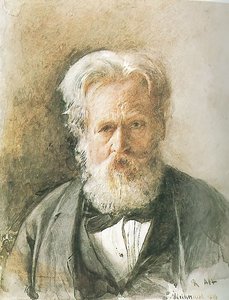
Rudolf von Alt
1812 - 1905 , Austria
Quick Facts
- Artistic Movement Or Style: Romanticism; Impressionism
- Artists Or Movements Influenced By This Artist: ['']
- Artists Who Influenced This Artist: ['Franz Alt']
- Date Of Birth: August 28, 1812
- Date Of Death: March 12, 1905
- Full Name: Rudolf Ritter von Alt
- Nationality: Austrian German
- Notable Artworks:
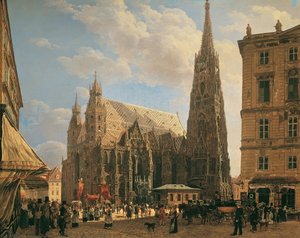
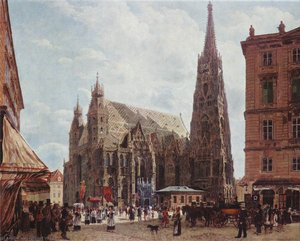
- St. Stephan
- Schwarzenberg Palace
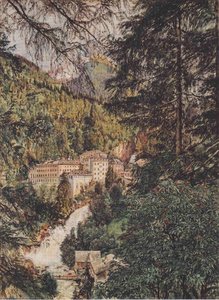
- The Large Pine in Gastein
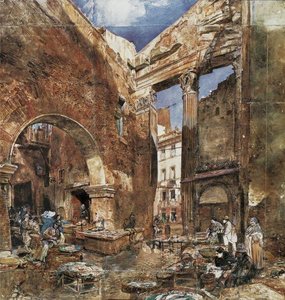
- The Fish Market in Rome
- Place Of Birth: Vienna, Austria
Related Articles
Watercolor Wonders: 10 Masterpieces That Redefined Art History | ArtsDot
Journey through 10 legendary watercolor masterpieces by Sargent, Turner & Homer! Explore iconic landscapes, portraits & floral art that redefined history. Find museum-quality reproductions and curated decor ideas at ArtsDot.com.

Slate Blue Masterpieces: 10 Iconic Paintings & Timeless Home Decor Ideas
Immerse yourself in the captivating world of slate blue! Explore 10 iconic paintings by Monet, Van Gogh & Renoir. Discover their stories, techniques & find museum-quality art reproductions for your home at .

Ephemeral Visions: Exploring the Artistic Legacy & Contemporary Practice of Watercolor Painting
Explore the captivating world of watercolor painting! Discover its rich history, essential techniques, influential artists & collecting tips. A comprehensive guide for art enthusiasts from ArtsDot.
Ephemeral Visions: Exploring the History & Emotional Resonance of Watercolor Painting
Explore the captivating history of watercolor painting, from ancient techniques to modern masters like Kandinsky & Blake. Discover essential artists, collecting tips & the emotional power of this luminous medium. Expert insights for art enthusiasts.
Ephemeral Visions: Exploring the Artistic Legacy & Nuances of Watercolor Painting
Explore the captivating world of watercolor painting! Discover its rich history, essential techniques, influential artists & collecting tips from art experts. A comprehensive guide for enthusiasts.