 Preview
 Send
Send Share
Share
 Details

 Download
 Similars
 X-Ray
X-Ray Diaporama
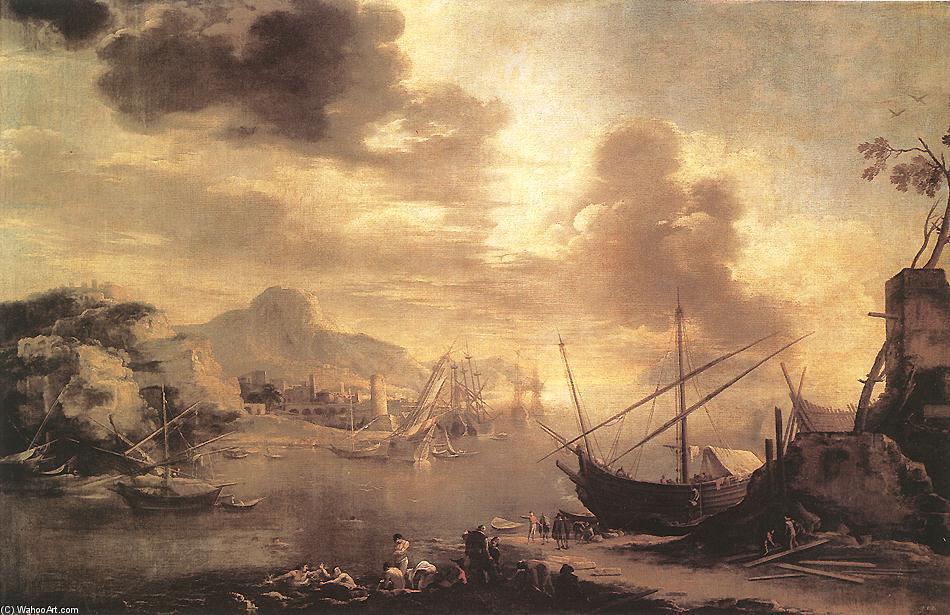
View of the Gulf of Salerno
 Oil On Canvas
- WallArt
- Baroque Landscape
 1640
1640 170.0 x 260.0 cm
 Museo del Prado
 Read More
Giclée / Art Print
Museum-quality giclée or canvas print with fast production and flexible finish options. ( Buy Hand Made Painting Buy Image)




P118B $10

P118H $10

P118W $10

P438Z $10

P508JH $12

P508YH $12

P805H $10

P805Z $10

P919BZ $10

P919G $10

P919XJ $10

P959ZH $10

P968JZ $12

W106C $8

W218G $10

W218JH $8

W218Y $10

W307PJ $10

W316G $10

W316PJ $8

W316Y $10

W398PJ $8

W4111J $10

W500HY $15

W500JH $15

W692G $12

W849H $8

W940BG $15

W953PJ $8




Pick from our preset sizes that match the artwork's original proportions.

You may enter your own dimensions to fit a specific frame or space. If your selected size does not match the original image's proportions, we will either crop the artwork or extend the image with a mirrored or solid-fill edge. A digital mockup will be sent for your approval before production begins.
Please note that the on-screen preview does not reflect the actual cropping or extension. Only the mockup will accurately show the final composition.
While custom sizes are available, we recommend selecting a dimension from the predefined list to preserve the original proportions.
Worldwide Delivery () in 2 weeks instead of standard 4/5 weeks. (1 September)

Free Worldwide Express Shipping

High-Quality Linen Canvas

Full Shipping Insurance

Customs Tax Refund Guarantee

True Color Matching Guarantee

60-Day Return Policy (Defects Only)

100% Money-Back Guarantee

Bulk Discount Offer
 Glass option is only available in size under 110 CM

View of the Gulf of Salerno
Giclée / Art Print
Reproduction Size
-


Total Price
$ 63
Salvator Rosa’s “View of the Gulf of Salerno”: A Symphony of Light and Landscape
Salvator Rosa's "View of the Gulf of Salerno," painted around 1640, isn’t merely a depiction of a coastal scene; it’s an immersive experience—a window into the artist’s soul and his profound connection to the rugged beauty of Southern Italy. Housed within the Museo del Prado in Madrid, this oil on canvas transports the viewer to a moment suspended between twilight and dawn, capturing the ethereal quality of a Mediterranean evening. The painting immediately commands attention not through dramatic figures or overt narrative, but through its masterful manipulation of light and atmosphere—a hallmark of Rosa’s distinctive style.
Rosa, a figure perpetually challenging artistic conventions, rejected the polished elegance favored by his contemporaries in Rome. Instead, he embraced a raw, almost violent realism, often depicting subjects from the margins of society: bandits, fishermen, and the untamed wilderness. “View of the Gulf of Salerno” embodies this approach perfectly. The landscape isn’t idealized; it's presented with its inherent imperfections—the craggy cliffs, the turbulent sea, and the bruised-purple hues of the sky all speak to a world both beautiful and unforgiving. This deliberate rejection of conventional beauty aligns with the emerging Romantic sensibility that would later define European art.
The Language of Chiaroscuro: Light and Shadow as Narrative
Rosa’s technique is deeply rooted in the principles of chiaroscuro, a dramatic contrast between light and shadow—a technique perfected by Caravaggio. Here, it's not simply used for technical effect but to imbue the scene with emotional weight. The foreground is bathed in a soft, diffused glow, highlighting the small boats moored along the shoreline and suggesting a sense of tranquility. However, this serenity is immediately undercut by the looming darkness that dominates the background—the distant hills shrouded in mist, hinting at hidden dangers and an uncertain future. This interplay of light and shadow isn’t merely descriptive; it's profoundly symbolic, reflecting the inherent duality of nature – its capacity for both beauty and destruction.
The artist’s brushstrokes are visible, adding a tactile quality to the painting that invites close inspection. Notice how he builds up layers of paint in the clouds, creating a sense of movement and turbulence. The foliage is rendered with a loose, expressive style, capturing the texture of leaves and branches without sacrificing overall clarity. This deliberate imperfection contributes to the painting’s authenticity—it feels as though we are witnessing a fleeting moment captured on canvas, rather than a carefully constructed illusion.
A Window into 17th-Century Italy: Symbolism and Context
To fully appreciate “View of the Gulf of Salerno,” it's essential to understand its historical context. Painted during a period of political instability in Italy—the aftermath of the Sack of Rome and the rise of powerful regional states—the painting reflects a broader sense of unease and uncertainty. The rugged landscape, with its hints of danger and isolation, can be interpreted as a metaphor for the turbulent state of Italian society at the time. Rosa’s frequent depictions of solitary figures – often engaged in humble or even desperate activities – further reinforce this theme.
The inclusion of small boats and fishermen speaks to the vital role that the sea played in the lives of the people of Southern Italy. These modest vessels, navigating the unpredictable waters of the Gulf of Salerno, represent a connection to tradition and resilience—a testament to the enduring spirit of the region. The painting also subtly references the mythology of Prometheus, chained to a rock as an eternal punishment for defying the gods – a theme that Rosa frequently explored in his work, often imbuing it with a sense of moral allegory.
An Emotional Resonance: Beauty and Melancholy
Ultimately, “View of the Gulf of Salerno” is more than just a landscape painting; it’s an exploration of human emotion. The painting evokes a profound sense of melancholy—a feeling of longing for something lost or unattainable. Yet, there's also a quiet beauty to be found in its ruggedness and vulnerability. It’s a reminder that even in the darkest corners of the world, there is still light to be found – a glimmer of hope amidst the shadows. Rosa’s masterful use of color, light, and texture creates an experience that lingers long after the viewer has turned away, inviting contemplation and reflection on the enduring power of nature and the human spirit.
Related Artworks
Artist Biography
**early life and training**
salvator rosa, an italian baroque painter, poet, and printmaker, was born in arenella, naples, on either june 20 or july 21, 1615. his mother, giulia greca rosa, was a member of one of the greek families of sicily. despite his father's wishes for him to become a lawyer or priest, salvator showed a preference for the arts from an early age.**artistic career**
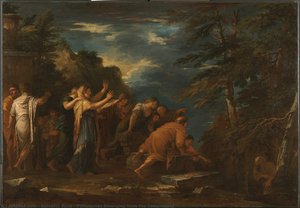
salvator rosa's artistic career was marked by his unorthodox and extravagant style, which set him apart from his contemporaries. he was active in naples, rome, and florence, and his work was influenced by the naturalism of ribera and the classicism of poussin. however, he refused to be tied down by any particular style or movement.- pythagoras emerging from the underworld (kimbell art museum, fort worth, united states), one of his most famous works, showcases his unique blend of philosophical and artistic themes.
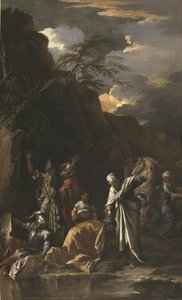
- his the baptism of the eunuch (chrysler museum of art, norfolk, united states) demonstrates his ability to infuse high drama into even minor bible stories.
**influences and legacy**
salvator rosa's work had a significant impact on the development of baroque art. his influence can be seen in the works of later artists, such as luca giordano, who continued to push the boundaries of artistic expression. **important links:** salvator rosa's profile on ArtsDot wikipedia: salvator rosa pythagoras emerging from the underworld on ArtsDot**conclusion**
salvator rosa's life and work continue to fascinate art lovers and historians alike. his unorthodox style and perpetual rebellion against the norms of his time have cemented his place in the annals of baroque art. as a painter, poet, and printmaker, he remains an enigmatic figure, and his work continues to inspire new generations of artists and art enthusiasts.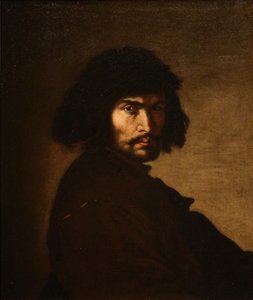
Salvator Rosa
1615 - 1673 , Italy
Quick Facts
- Artistic Movement Or Style: Baroque art
- Artists Or Movements Influenced By This Artist: ['Luca Giordano']
- Artists Who Influenced This Artist: ['José de Ribera']
- Date Of Birth: June 20, 1615
- Full Name: Salvator Rosa
- Nationality: Italian
- Notable Artworks:
- View of the Gulf of Salerno
- Study for 'Il Genio di Rosa
- Grotto with Cascades
- Place Of Birth: Arenella, Sicily
Related Articles
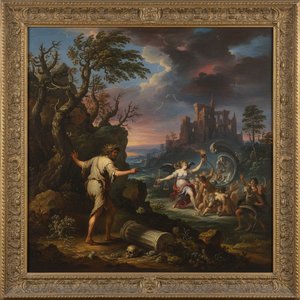
Salvator Rosa: A Baroque Rebel's Vision of Landscape, Allegory & the Human Condition
Explore the captivating world of Salvator Rosa, a rebellious Baroque master. Discover his dramatic landscapes, allegorical paintings & lasting influence on Romanticism. Hand-painted reproductions available at ArtsDot.

Romantic Landscapes: 10 Masterpieces for Your Home | ArtsDot
Journey through 10 Romantic landscape masterpieces by Friedrich, Turner & Cole. Explore emotional art, sublime nature scenes & iconic 19th-century paintings. Find museum-quality reproductions for your home at ArtsDot.com – discover the full collection online!

Evocations of Place: A Historical Journey Through Landscape Art
Explore the rich history of landscape art with ArtsDot. Discover renowned artists, movements like Impressionism & Romanticism, and expert guidance for collecting timeless pieces. Find your perfect serene escape today!

John Constable's Masterpieces: Explore 25 Iconic Landscapes for Your Home
Journey through John Constable's 25 most celebrated landscapes. Explore Romanticism, Dedham Vale & his masterful use of light in iconic paintings like 'Hay Wain'. Find museum-quality art reproductions and elevate your home decor on ArtsDot.com.
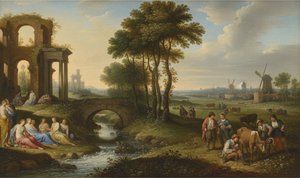
Cornelis van Poelenburch: Bridging Mannerism & the Dutch Baroque Landscape
Discover Cornelis van Poelenburch, a pivotal Dutch Baroque landscape painter bridging Mannerism & Italianate styles. Explore his life, key works, and lasting influence on 17th-century art with ArtsDot.