 Preview
 Send
Send Share
Share
 Details

 Download
 Similars
 X-Ray
X-Ray Diaporama
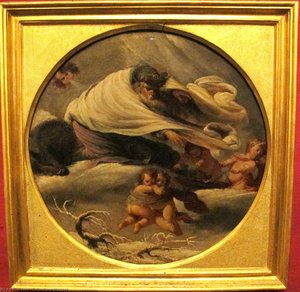
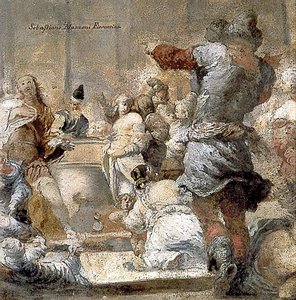
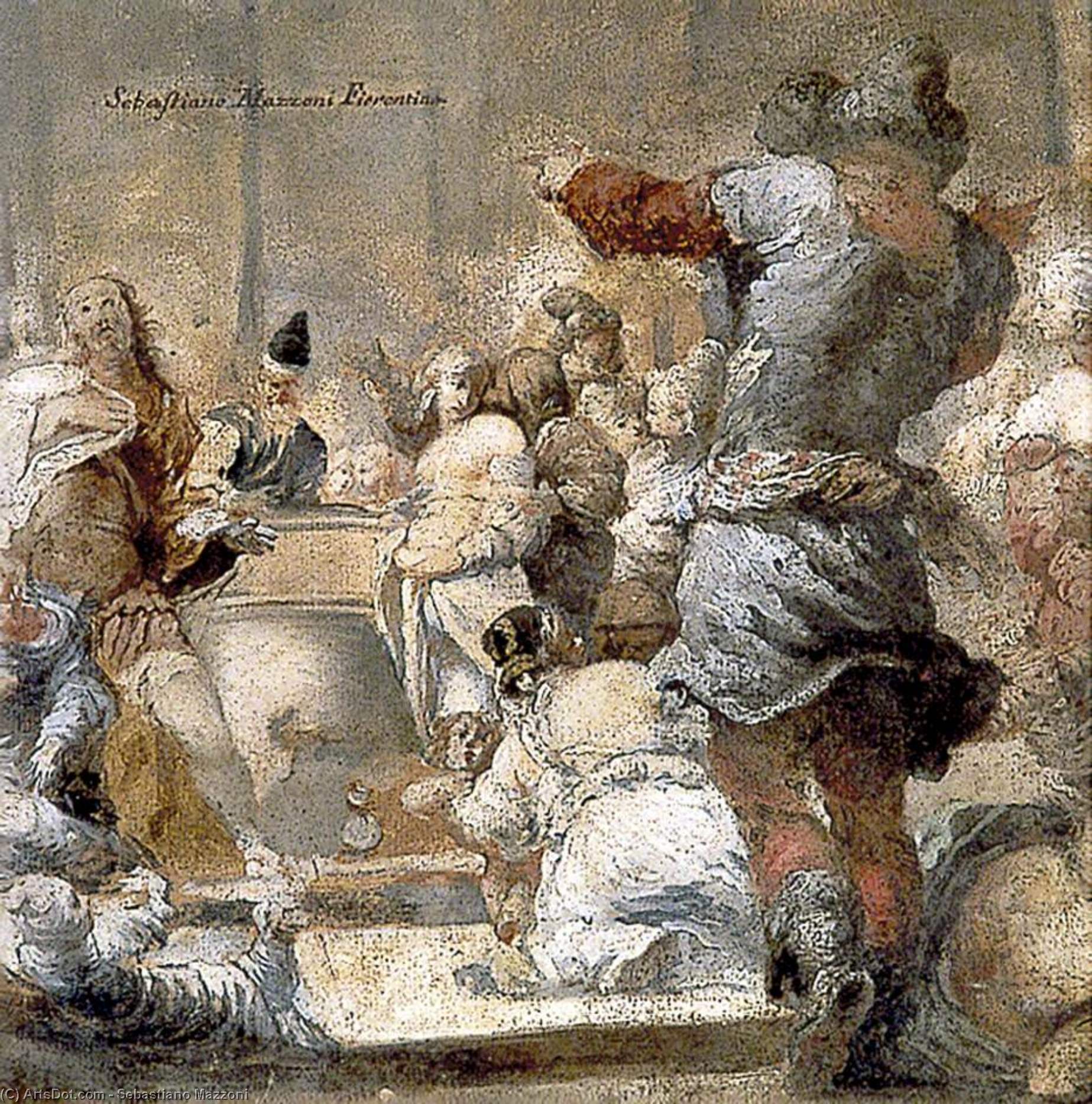
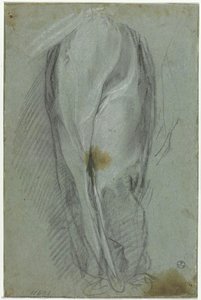
Study For The Sacrifice Of Jephthah

 Read More
Hand Made Oil Reproduction
Hand-painted oil on canvas in your size and frame, made to order by our artists. ( Buy Print Buy Image)




































Pick from our preset sizes that match the artwork's original proportions.

You may enter your own dimensions to fit a specific frame or space. If your selected size does not match the original image's proportions, we will either crop the artwork or extend the painting with additional hand-painted elements. A digital mockup will be sent for your approval before production begins.
Please note that the on-screen preview does not reflect the actual cropping or extension. Only the mockup will accurately show the final composition.
While custom sizes are available, we recommend selecting a dimension from the predefined list to preserve the original proportions.
After order, ArtsDot.com team will email client for instructions and provide a mockup preview
Worldwide Delivery () in 3/4 weeks instead of standard 5 weeks. (23 August). No compromise on quality.

Free Worldwide Express Shipping

High-Quality Linen Canvas

Full Shipping Insurance

Customs Tax Refund Guarantee

True Color Matching Guarantee

60-Day Return Policy (Defects Only)

100% Money-Back Guarantee

Bulk Discount Offer
 Glass option is only available in size under 110 CM

Study For The Sacrifice Of Jephthah
Reproduction Medium
Reproduction Size
-


Total Price
$ 263
Related Artworks

Artist Biography
The Enigmatic Spirit of Sebastiano Mazzoni
In the grand, turbulent tapestry of the Italian Baroque, few threads are as mysterious or as captivating as those woven by Sebastiano Mazzoni. Born in the cradle of the Renaissance, Florence, around 1611, Mazzoni’s artistic journey began under the tutelage of Baccio del Bianco. While his early training was rooted in the Florentine tradition, his soul eventually found its true resonance in the luminous, atmospheric light of Venice. Moving to the Venetian Republic in 1648, he became a vital participant in the city's evolving painterly movement, leaving behind a legacy defined by an almost unsettling sense of motion and psychological depth.
Mazzoni’s style was far from the predictable; it was a singular, enigmatic expression that defied easy categorization. He possessed a rare ability to infuse his canvases with unresolved dynamism, often employing awkward, daring perspectives that challenged the viewer's equilibrium. To look upon a Mazzoni painting is to experience a sense of tension and urgency, as if the figures are caught in a moment of profound transition. His work frequently evokes the distorted, emotive power of Lorenzo Lotto or the restless energy of his contemporary Francesco Maffei, creating a visual language that feels both deeply historical and strikingly modern in its instability.
A Venetian Transformation
The transition from Florence to Venice marked a pivotal evolution in Mazzoni’s technical mastery. In Venice, he immersed himself in a vibrant circle of masters, forming close bonds with artists such as Pietro Liberi and drawing inspiration from the works of Fetti, Johann Liss, and Strozzi. This period saw him leading a painterly movement that embraced the dramatic textures and light-filled compositions characteristic of the Venetian Baroque. His ability to blend these influences resulted in works that were not merely decorative but emotionally charged.
His religious commissions during this era demonstrate his profound command over sacred narrative:
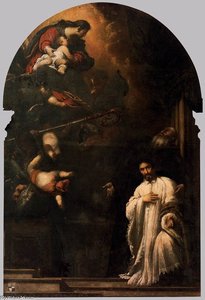
- St. Benedict Presenting a Priest to the Virgin (1648): A significant altarpiece for the church of San Beneto, showcasing his early Venetian period.
- St. Benedict in Glory among the Theological Virtues (1649): A work that highlights his ability to manage complex, celestial compositions.
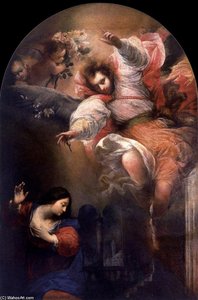
- The Annunciation: Perhaps one of his most haunting achievements, featuring a ghostly, hovering angel that dominates the scene with an otherworldly presence.
Legacy and Artistic Significance
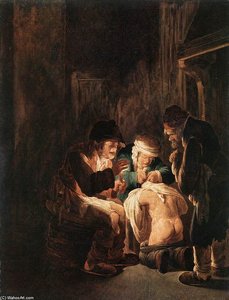
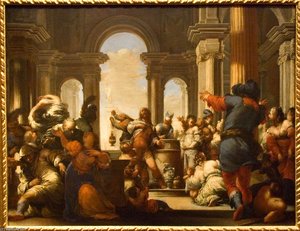
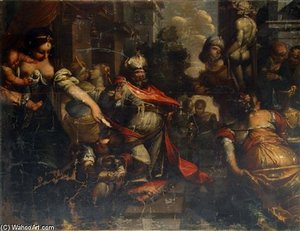
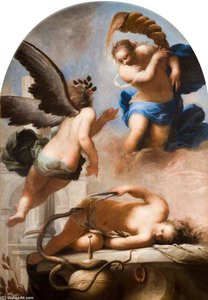
Beyond his immediate religious works, Mazzoni’s repertoire extended into the realm of historical and mythological drama. His later paintings, such as Cleopatra’s Banquet (1660) and The Death of Cleopatra, reveal a fascination with the theatricality of human fate. These pieces, characterized by their intense movement and dramatic lighting, exemplify the turbulent spirit of the 17th century. Even his more intimate or experimental studies, such as those exploring candlelight or historical scenes, reflect a lifelong pursuit of capturing the ephemeral nature of light and shadow.
The influence of Mazzoni extended through generations; his pupil Andrea Celesti would go on to become a significant figure in Venetian art, carrying forward the lessons of movement and drama. Though his name may not carry the same immediate recognition as some of his more famous contemporaries, the historical significance of Sebastiano Mazzoni lies in his role as a bridge between styles—a painter who could evoke the haunting distortions of the past while driving the energetic, painterly innovations of the Baroque future.
Sebastiano Mazzoni
1611 - 1678 , Italy
Quick Facts
- Artistic Movement Or Style: Baroque
- Artists Or Movements Influenced By This Artist: ['Tintoretto']
- Artists Who Influenced This Artist:
- Lorenzo Lotto
- Francesco Maffei
- Date Of Birth: Florence, Italy (1611)
- Date Of Death: Venice, Italy (1678)
- Full Name: Sebastiano Mazzoni
- Nationality: Italian
- Notable Artworks:
- Annunciation
- Saint Catherine Refuses to Worship Idols
- Cleopatra’s Banquet
- Place Of Birth: Florence
Related Articles
Decoding Baroque Grandeur: A Guide to the Drama and Emotion of 17th-Century Art
Explore the breathtaking drama of 17th-century Baroque art. Our expert guide decodes the use of chiaroscuro, emotional intensity, and historical grandeur to help you appreciate and curate timeless masterpieces for your collection.

The Dramatic Flourish: Exploring the Baroque Movement's Enduring Legacy in Art History
Explore the dramatic world of Baroque art! Discover iconic artists like Caravaggio & Rubens, defining techniques, and its lasting impact on art history. Expert insights for collectors & enthusiasts at ArtsDot.

Baroque Drama: Bringing Opulence & Emotion into Contemporary Interiors
Explore the opulent world of Baroque interior design! Discover key elements, modern applications & how to bring dramatic elegance into your home with 's authentic reproductions.

The Visceral Stage: Exploring Dramatic Narratives & Emotional Intensity in Baroque Art
Explore the dramatic world of Baroque art! Discover iconic masters like Caravaggio & Rembrandt, their techniques, and the movement's lasting impact. Expert insights for collectors & enthusiasts at ArtsDot.
Baroque Classicism: Reconciling Drama & Order in 17th-Century Art
Explore the captivating world of Baroque Classicism! Discover its history, key artists like Caravaggio & Rubens, and defining characteristics. Expert insights & high-quality reproductions at ArtsDot.