 Preview
 Send
Send Share
Share
 Details

 Download
 Similars
 X-Ray
X-Ray Diaporama
Auguste devant le tombeau d'Alexandre


 Read More
Hand Made Oil Reproduction
Hand-painted oil on canvas in your size and frame, made to order by our artists. ( Buy Print Buy Image)




P118B $10

P118H $10

P118W $10

P438Z $10

P508JH $12

P508YH $12

P805H $10

P805Z $10

P919BZ $10

P919G $10

P919XJ $10

P959ZH $10

P968JZ $12

W106C $8

W218G $10

W218JH $8

W218Y $10

W307PJ $10

W316G $10

W316PJ $8

W316Y $10

W398PJ $8

W4111J $10

W500HY $15

W500JH $15

W692G $12

W849H $8

W940BG $15

W953PJ $8




Pick from our preset sizes that match the artwork's original proportions.

You may enter your own dimensions to fit a specific frame or space. If your selected size does not match the original image's proportions, we will either crop the artwork or extend the painting with additional hand-painted elements. A digital mockup will be sent for your approval before production begins.
Please note that the on-screen preview does not reflect the actual cropping or extension. Only the mockup will accurately show the final composition.
While custom sizes are available, we recommend selecting a dimension from the predefined list to preserve the original proportions.
After order, ArtsDot.com team will email client for instructions and provide a mockup preview
Worldwide Delivery () in 3/4 weeks instead of standard 5 weeks. (22 August). No compromise on quality.

Free Worldwide Express Shipping

High-Quality Linen Canvas

Full Shipping Insurance

Customs Tax Refund Guarantee

True Color Matching Guarantee

60-Day Return Policy (Defects Only)

100% Money-Back Guarantee

Bulk Discount Offer
 Glass option is only available in size under 110 CM

Auguste devant le tombeau d'Alexandre
Reproduction Medium
Reproduction Size
-


Total Price
$ 613
Artwork Description
A Baroque Symphony of Memory and Legend
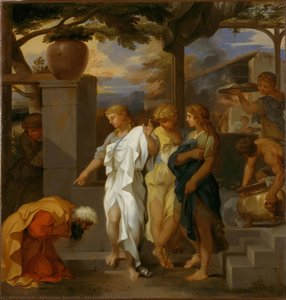
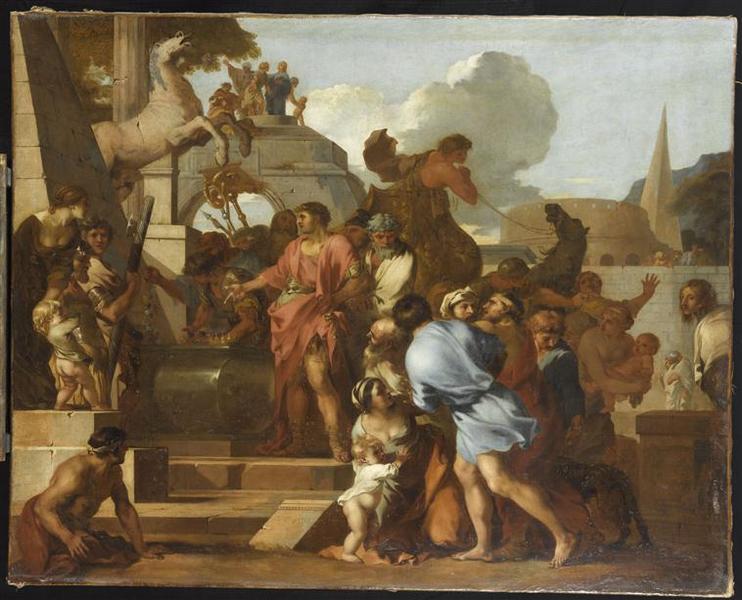
In the grand tapestry of the seventeenth century, few works capture the theatrical essence of the Baroque era as poignantly as Sébastien Bourdon’s Auguste devant le tombeau d'Alexandre. Executed around 1645, this monumental piece serves as more than a mere historical record; it is a visceral experience that invites the viewer into a moment of profound imperial piety and solemnity. The scene depicts Emperor Augustus paying homage to the tomb of Alexander the Great—a gesture steeped in symbolic significance that bridges the gap between Roman authority and the legendary heroism of antiquity. As one gazes upon the densely populated tableau, there is an immediate sense of being present within a sacred ritual, where the weight of history is felt through every meticulously rendered figure and architectural shadow.
Bourdon, a master whose versatility allowed him to navigate the stylistic currents of both France and Italy, utilizes a composition that mimics the dramatic stagecraft of his time. The arrangement of figures around the grand sarcophagus creates a dynamic movement, drawing the eye through a complex web of interaction and contemplation. While a central group engages in the primary act of reverence, scattered individuals throughout the foreground and background contribute to an atmosphere of collective emotion. This layering of subjects provides a sense of depth and chaos that is paradoxamente balanced by a clear hierarchy of importance, ensuring that the viewer's focus remains anchored to the monumental tomb of the conqueror.
The Mastery of Light and Tonal Depth
Though the medium of etching and engraving inherently relies on line, Bourdon achieves a painterly richness that rivals the finest oil works of his contemporaries, such as Rubens or Van Dyck. Through a masterful command of tonal gradation, he manipulates light and shadow to breathe life into the monochrome landscape. Dramatic lighting serves as the primary storyteller here, casting long, evocative shadows that emphasize the grandeur of the architectural elements and the somber mood of the gathering. The interplay between brilliant highlights on key figures and the deep, velvety darkness of the recesses creates a chiaroscuro effect that heightens the emotional intensity of the scene.
The palette, while restricted by its medium, is rich with earthy browns, ochres, and muted reds, providing a grounded, somber foundation for the narrative. These tones are punctuated by subtle splashes of white and blue that illuminate the central figures, acting as visual beacons within the crowded composition. This careful use of value allows Bourdon to suggest textures—from the cold, hard surface of the stone sarcophagus to the soft, flowing drapery of the mourners' garments—creating a tactile quality that engages the senses. For the collector or interior designer, such a work offers a sophisticated interplay of light and shadow, making it an ideal centerpiece for spaces that demand a sense of drama, history, and intellectual depth.
A Legacy of Symbolism and Eternal Remembrance
Beyond its technical brilliance, the artwork is a profound meditation on mortality and the enduring nature of fame. Drawing inspiration from historical chronicles like Suétone’s Vie des douze Césars, Bourdon weaves a narrative where the physical tomb serves as a bridge between the living and the dead. The presence of the sarcophagus bearing the likeness of Alexander symbolizes the Roman ideal of heroic virtue and the inevitable passage of time. There is an undeniable sense of grief and reverence permeating the air, a collective breath held in respect for a fallen titan.
For those seeking to adorn a collection with pieces that provoke thought and conversation, this reproduction offers an unparalleled opportunity. It is not merely a decoration but a window into the soul of the Baroque period—a time when art was used to explore the very limits of human emotion and imperial ambition. Owning a piece of Bourdon’s legacy means bringing into one's environment a fragment of history that continues to resonate with the themes of memory, legend, and the eternal pursuit of greatness.
Related Artworks


Artist Biography
A Master of Light and Versatility: The Life of Sébastien Bourdon
Sébastien Bourdon (1616–1671) remains one of the most captivating and multifaceted figures of the seventeenth-century French Baroque. Born in Montpellier into a family of Protestant artists, his early life was shaped by the vibrant, yet often turbulent, artistic traditions of southern France. His journey from a young apprentice to a foundational member of the Académie Royale de Peinture et de Sculpture is a testament to a profound, restless intellect and an unparalleled ability to absorb the stylistic currents of Europe. After early training in Paris, Bourdon’s path led him through Bordeaux and Toulouse before reaching the spiritual and artistic heart of the continent: Rome. It was in Italy that his talent truly ignited, as he immersed himself in the works of masters like Caravaggio, Nicolas Poussin, and Claude Lorrain. This period of intense study allowed him to develop a unique visual language—one that could pivot from the gritty, dramatic realism of the Caravaggisti to the luminous, classical elegance of the Venetian school.The Evolution of Style and Technique
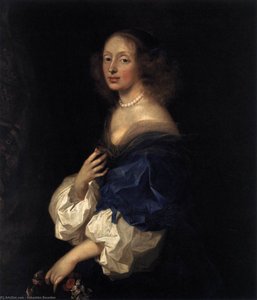
What truly distinguishes Bourdon’s oeuvre is its remarkable stylistic fluidity, a quality that sometimes drew both admiration and criticism from his contemporaries. His development was marked by a series of transformative encounters with different European traditions. Following a pivotal visit to Venice, his palette underwent a profound metamorphosis; the starker contrasts of his early training gave way to a richer, more atmospheric use of color inspired by the Venetian masters. This evolution allowed him to masterfully navigate between disparate genres. In his portraiture, he often adopted a Rubensian approach or favored intimate, bust-length compositions that captured the psychological depth and elegance of his subjects, such as the Swedish noblewoman in Countess Ebba Sparre. Conversely, his religious works utilized a dramatic chiaroscuro to evoke spiritual awe, most notably in his monumental masterpiece, The Crucifixion of St. Peter, created for the cathedral of Notre Dame.Legacy and Historical Significance
Beyond his individual canvases, Bourdon played a crucial role in the institutionalization of French art. As a co-founder of the Royal Academy in 1648, he helped establish the standards of excellence that would define French painting for generations. His career was also characterized by an extraordinary breadth of service; his reputation as a premier portraitist led him to the court of Queen Christina of Sweden, where he served as court painter, bringing the sophisticated aesthetics of Paris and Rome to Stockholm. Whether depicting the harrowing tension of Moses and the Brazen Serpent or the serene grandeur of classical landscapes, Bourdon’s work embodies the dual spirit of the Baroque era: the intense emotional drama of the human condition and the balanced, intellectual pursuit of classical beauty. His ability to synthesize the naturalist traditions of France with the monumental styles of Italy ensures his enduring place in the pantheon of European art history.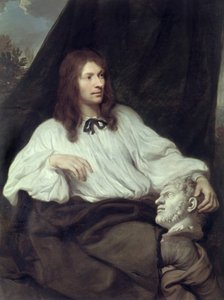
sébastien bourdon
1616 - 1671 , France
Quick Facts
- Artistic Movement Or Style: Baroque
- Artists Or Movements Influenced By This Artist: ['French Baroque Art']
- Artists Who Influenced This Artist:
- Nicolas Poussin
- Claude Lorrain
- Caravaggio
- Date Of Birth: February 2, 1616
- Date Of Death: May 8, 1671
- Full Name: Sébastien Bourdon
- Nationality: French
- Notable Artworks:
- The Crucifixion of St. Peter
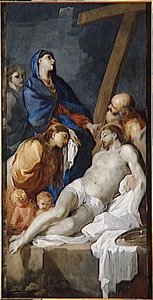
- The Deposition
- Place Of Birth: Montpellier, France
Related Articles

The Visceral Stage: Exploring Dramatic Narratives & Emotional Intensity in Baroque Art
Explore the dramatic world of Baroque art! Discover iconic masters like Caravaggio & Rembrandt, their techniques, and the movement's lasting impact. Expert insights for collectors & enthusiasts at ArtsDot.

The Dramatic Flourish: Exploring the Baroque Movement's Enduring Legacy in Art History
Explore the dramatic world of Baroque art! Discover iconic artists like Caravaggio & Rubens, defining techniques, and its lasting impact on art history. Expert insights for collectors & enthusiasts at ArtsDot.
Decoding Baroque Grandeur: A Guide to the Drama and Emotion of 17th-Century Art
Explore the breathtaking drama of 17th-century Baroque art. Our expert guide decodes the use of chiaroscuro, emotional intensity, and historical grandeur to help you appreciate and curate timeless masterpieces for your collection.

Dutch Baroque Masters: 10 Paintings That Shaped an Era | ArtsDot
Journey through the Golden Age with our guide to the Top 10 Dutch Baroque masterpieces! Explore iconic paintings by Rembrandt, Vermeer & Frans Hals. Find museum-quality art reproductions and elevate your home decor at ArtsDot.com.
Masterpieces of the 17th Century: Art, History & Decor Inspiration | ArtsDot
Journey through 17th century art with masterpieces by Rembrandt, Vermeer & Caravaggio. Explore Baroque paintings, Dutch Golden Age techniques & timeless beauty. Find museum-quality reproductions and elevate your home decor on ArtsDot.com.