 Preview
 Send
Send Share
Share
 Details

 Download
 Similars
 X-Ray
X-Ray Diaporama
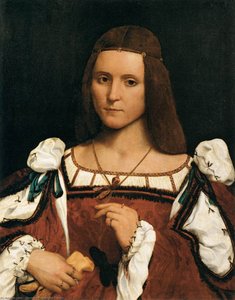
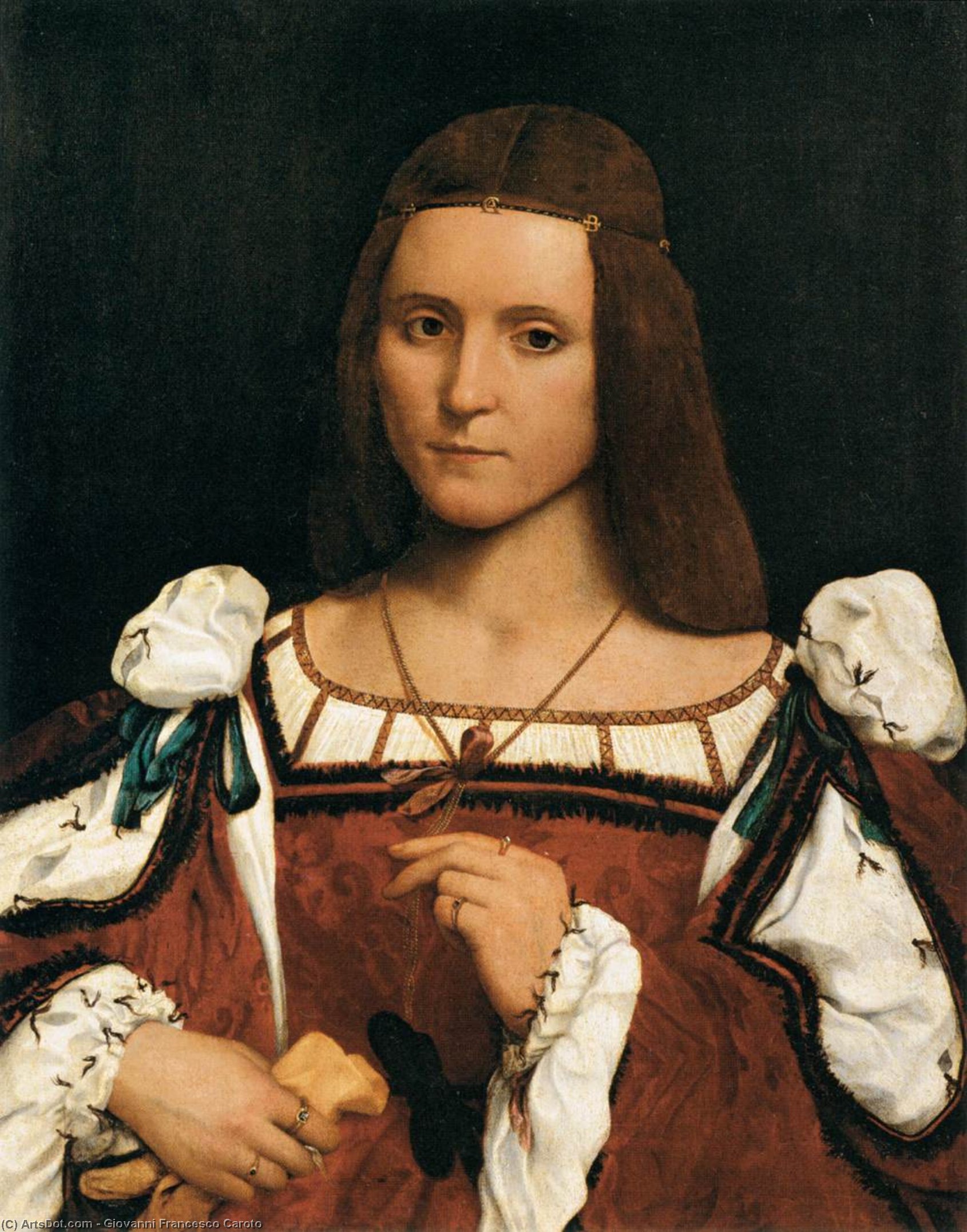
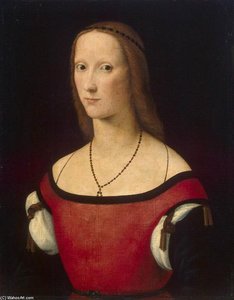
Portrait of a Woman
 Oil On Canvas
- WallArt
- Mannerist Painting
 1505
1505 69.0 x 53.0 cm
 The Louvre
 Read More
Hand Made Oil Reproduction
Hand-painted oil on canvas in your size and frame, made to order by our artists. ( Buy Print Buy Image)




P118B $10

P118H $10

P118W $10

P438Z $10

P508JH $12

P508YH $12

P805H $10

P805Z $10

P919BZ $10

P919G $10

P919XJ $10

P959ZH $10

P968JZ $12

W106C $8

W218G $10

W218JH $8

W218Y $10

W307PJ $10

W316G $10

W316PJ $8

W316Y $10

W398PJ $8

W4111J $10

W500HY $15

W500JH $15

W692G $12

W849H $8

W940BG $15

W953PJ $8




Pick from our preset sizes that match the artwork's original proportions.

You may enter your own dimensions to fit a specific frame or space. If your selected size does not match the original image's proportions, we will either crop the artwork or extend the painting with additional hand-painted elements. A digital mockup will be sent for your approval before production begins.
Please note that the on-screen preview does not reflect the actual cropping or extension. Only the mockup will accurately show the final composition.
While custom sizes are available, we recommend selecting a dimension from the predefined list to preserve the original proportions.
After order, ArtsDot.com team will email client for instructions and provide a mockup preview
Worldwide Delivery () in 3/4 weeks instead of standard 5 weeks. (18 August). No compromise on quality.

Free Worldwide Express Shipping

High-Quality Linen Canvas

Full Shipping Insurance

Customs Tax Refund Guarantee

True Color Matching Guarantee

60-Day Return Policy (Defects Only)

100% Money-Back Guarantee

Bulk Discount Offer
 Glass option is only available in size under 110 CM

Portrait of a Woman
Reproduction Medium
Reproduction Size
-


Total Price
$ 263
Artwork Description
A Venetian Master’s Intimate Portrait – Giovanni Francesco Caroto's "Portrait of a Woman"
Giovanni Francesco Caroto’s “Portrait of a Woman,” painted in Verona around 1505, is more than just a depiction of an individual; it’s a window into the burgeoning world of Venetian Mannerism and a testament to the artist’s subtle yet profound understanding of human emotion. This captivating work, now meticulously reproduced for discerning collectors, offers a glimpse into a refined era where portraiture moved beyond simple likenesses towards explorations of psychological depth and artistic innovation.
The subject herself remains enigmatic, presented in a pose that is both graceful and subtly defiant. Dressed in a rich crimson gown – a color historically associated with wealth, passion, and even danger – she holds her gaze just slightly off-center, drawing the viewer into an unspoken dialogue. Her long, flowing brown hair cascades down her shoulders, framing a face marked by quiet intelligence and a hint of melancholy. The inclusion of a delicate necklace suggests both status and perhaps a touch of vulnerability, adding layers to her character.
Caroto’s mastery lies not merely in his technical skill but in his ability to imbue the portrait with atmosphere. He employs a muted palette dominated by earthy tones – ochres, browns, and subtle greens – creating a sense of intimacy and quiet contemplation. The lighting is carefully considered, highlighting the contours of her face and dress while leaving much of the background softly shadowed, contributing to the painting’s overall mood. Notice the delicate brushstrokes that define the fabric's texture and the subtle modeling of her features; these details speak volumes about Caroto’s meticulous approach.
The Rise of Mannerism in Venice
Caroto’s “Portrait of a Woman” is firmly rooted within the Venetian Renaissance, yet it anticipates the stylistic shifts that would define the subsequent era of Mannerism. Following his training under Liberale da Verona and his travels to Milan and other northern Italian centers, Caroto absorbed influences from masters like Mantegna, Raphael, and Leonardo da Vinci. However, he skillfully synthesized these diverse elements into a distinctly Venetian style characterized by elongated figures, complex compositions, and an emphasis on emotional expression rather than strict realism.
Venice during this period was a vibrant hub of artistic innovation, attracting artists from across Europe and fostering a dynamic exchange of ideas. The city’s unique cultural landscape – its maritime trade, its wealth derived from glassmaking and commerce, and its rich history – profoundly shaped the art produced within its walls. Caroto's work reflects these influences, showcasing a sophisticated understanding of perspective, color theory, and human anatomy, while simultaneously pushing the boundaries of traditional portraiture.
Symbolism and Interpretation
While the precise meaning behind the woman’s expression remains open to interpretation, several symbolic elements contribute to the painting's richness. The crimson gown, as mentioned earlier, carries connotations of power and allure, but also hints at potential danger or hidden secrets. The necklace could represent marital status, wealth, or perhaps a connection to religious symbolism – a subtle nod to the Virgin Mary, a common motif in Venetian art.
The background, though relatively simple, is carefully constructed to create a sense of depth and perspective. The presence of two figures in the distance—one on the right and another further back on the left—suggests a domestic setting, perhaps hinting at the woman’s role as a wife or mother. These secondary figures add context without distracting from the central subject, reinforcing the painting's focus on her inner life.
A Timeless Masterpiece – Reproduction and Legacy
Today, “Portrait of a Woman” by Giovanni Francesco Caroto stands as a testament to the enduring power of Venetian art. Its captivating beauty, psychological depth, and masterful technique continue to resonate with viewers centuries after its creation. WGA’s detailed research provides invaluable insight into this piece, highlighting Caroto's journey from Mantua to Venice and his embrace of Mannerist principles.
Our meticulously crafted reproductions capture every nuance of the original painting – the subtle color variations, the delicate brushstrokes, and the evocative atmosphere. Whether adorning a private residence or gracing a corporate space, this reproduction offers a timeless addition to any collection, bringing the artistry of Caroto’s Venetian world into your home.
- Size: 69 x 53 cm
- Date: 1505
- Artist: Giovanni Francesco Caroto
Related Artworks

Artist Biography
The Veronese Visionary: The Life and Legacy of Giovanni Francesco Caroto
In the vibrant tapestry of the Italian Renaissance, few threads are as intricately woven as those left by Giovanni Francesco Caroto. Born in Verona around 1480, Caroto emerged from a landscape deeply influenced by the rigorous classical traditions of Mantegna. His early years were shaped by the mentorship of Liberale da Verona, a period that instilled in him a profound respect for anatomical precision and a restrained, monumental grandeur. This foundational training provided the technical scaffolding upon which he would later build a style far more fluid, expressive, and experimental than the rigid structures of his predecessors.
As Caroto’s journey took him beyond the borders of Verona, his artistic soul underwent a transformative evolution. His time in Milan proved to be a watershed moment, placing him in the presence of the era's most formidable intellects and creators. The subtle shadows and atmospheric depth of Leonardo da Vinci, combined with the harmonious grace of Raphael, acted as catalysts for change. Through these encounters, Caroto began to move away from the static perfection of the early Renaissance, embracing instead the burgeoning complexities of Mannerism. This transition was marked by a newfound interest in compositional tension, elongated forms, and a more emotive use of light and color that would define his mature period.
Mastery of Form and the Mannerist Shift
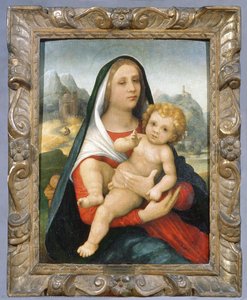
The brilliance of Caroto’s oeuvre lies in his ability to balance the naturalism of his training with the stylized elegance of the Mannerist movement. His works often serve as a bridge between two eras, capturing the divine beauty of the High Renaissance while hinting at the dramatic distortions of the later sixteenth century. In masterpieces such as Madonna and Child, one can observe a breathtaking synthesis of rich, Venetian color palettes and a profound sense of spiritual intimacy. He possessed a unique talent for rendering the human figure with both physical weight and an ethereal, almost otherworldly, grace.
Caroto’s technical prowess extended into the realm of portraiture, where he captured the psychological depth of his subjects with remarkable sensitivity. His Portrait of a Woman stands as a testament to his ability to use texture, light, and subtle facial expressions to convey character and status. This mastery of detail was not merely decorative; it was an exploration of humanist ideals, seeking to find the eternal within the individual. Whether depicting sacred figures or contemporary nobility, Caroto infused his canvases with a sense of movement and life that resonated far beyond the frame.
A Lasting Influence on the Venetian School
Beyond his individual achievements, Caroto’s historical significance is cemented by his role as a vital conduit for artistic innovation. He was not merely a practitioner of art but a custodian of its future. Alongside Antonio Badile, Caroto played a crucial role in nurturing the next generation of masters. Most notably, he served as a teacher to Paolo Veronese, one of the most celebrated painters of the Venetian school. By passing on his refined techniques and his experimental spirit, Caroto ensured that the stylistic advancements he helped pioneer would flourish in the works of the great Mannerist successors.
The legacy of Giovanni Francesco Caroto is found in the enduring vitality of the Venetian Renaissance. His life’s work represents a period of intense intellectual and aesthetic ferment, where the boundaries of tradition were tested and expanded. Through his ability to absorb the influences of giants like Da Vinci and Raphael while forging his own path, he helped shape the visual language of an entire epoch. Today, as we gaze upon his surviving works in museums across the globe, we witness the enduring power of a master who dared to embrace change, leaving behind a trail of beauty that continues to inspire awe.
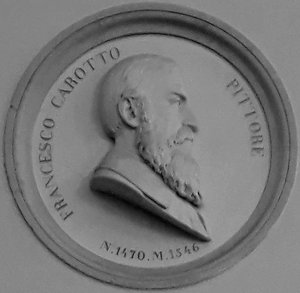
Giovanni Francesco Caroto
1480 - 1555 , Italy
Quick Facts
- Artistic Movement Or Style: Renaissance; Mannerism
- Artists Or Movements Influenced By This Artist: ['Paolo veronese']
- Artists Who Influenced This Artist:
- Liberale da Verona
- Andrea Mantegna
- Francesco Bonsignori
- Leonardo da vinci
- raphael
- giulio romano
- Date Of Birth: Verona, Italy (1480)
- Date Of Death: 1555
- Full Name: Giovanni Francesco Caroto
- Nationality: Italian
- Notable Artworks:
- Madonna and Child
- St jerome
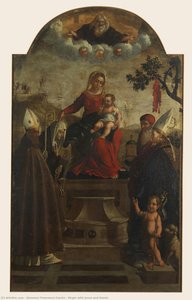
- Virgin with Jesus and Saints
- Place Of Birth: Verona
Related Articles

Jacopo Tintoretto's Masterpieces: 25 Paintings That Define Venetian Drama | ArtsDot
Explore 25 breathtaking masterpieces by Jacopo Tintoretto, the Venetian master of drama and light. Discover the stories behind iconic Renaissance paintings & find museum-quality art reproductions to elevate your home decor on ArtsDot.com.
Francesco Guardi: Venetian Light, Atmospheric Perspective & the Rococo to Neoclassical Transition
Explore the captivating world of Francesco Guardi, master of Venetian light and atmosphere. Discover his transition from Rococo to Neoclassicism, influence on Impressionism & investment potential with ArtsDot.
The Golden Light of Innovation: Exploring the Venetian Renaissance Art Movement (1430–1580)
Explore the Golden Age of Venetian art (1430–1580). Discover Giorgione, Titian & Tintoretto's techniques, the 'colorito' revolution, and lasting influence. Expert insights for collectors & enthusiasts.
Sebastiano del Piombo: Bridging Venetian Colorism & Roman Grand Manner Portraiture
Explore the captivating art of Sebastiano del Piombo, a Renaissance master bridging Venetian colorism & Roman grandeur. Discover his iconic portraits and lasting influence on art history. Learn more at ArtsDot.
Giovanni Antonio Canal (Canaletto): A Venetian Master of Light, Space & Societal Observation
Explore the life & art of Giovanni Antonio Canal (Canaletto), a Venetian master renowned for his breathtaking cityscapes. Discover his techniques, legacy, and captivating depictions of 18th-century Venice & London.