 Preview
 Send
Send Share
Share
 Details

 Download
 Similars
 X-Ray
X-Ray Diaporama
 Stats
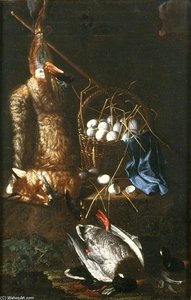
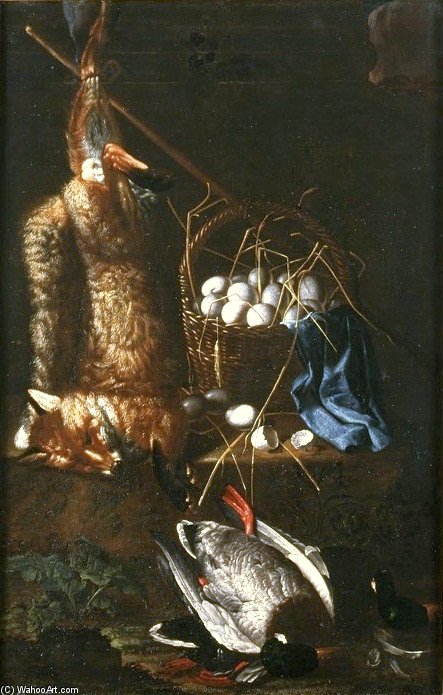
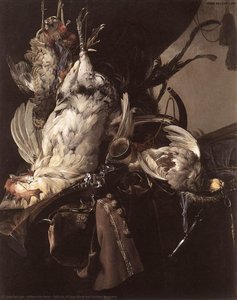
StatsStill Life With A Dead Fox And Ducks

 Read More
Hand Made Oil Reproduction
Hand-painted oil on canvas in your size and frame, made to order by our artists. ( Switch to Print Switch to Digital Image)




































Pick from our preset sizes that match the artwork's original proportions.

You may enter your own dimensions to fit a specific frame or space. If your selected size does not match the original image's proportions, we will either crop the artwork or extend the painting with additional hand-painted elements. A digital mockup will be sent for your approval before production begins.
Please note that the on-screen preview does not reflect the actual cropping or extension. Only the mockup will accurately show the final composition.
While custom sizes are available, we recommend selecting a dimension from the predefined list to preserve the original proportions.
After order, ArtsDot.com team will email client for instructions and provide a mockup preview
Worldwide Delivery () in 3/4 weeks instead of standard 5 weeks. (12 September). No compromise on quality.

Free Worldwide Express Shipping

High-Quality Linen Canvas

Full Shipping Insurance

Customs Tax Refund Guarantee

True Color Matching Guarantee

100-Day Return Policy (Defects Only)

100% Money-Back Guarantee

Bulk Discount Offer
 Glass option is only available in size under 110 CM

Still Life With A Dead Fox And Ducks
Reproduction Medium
Reproduction Size
-


Total Price
$ 263
Related Artworks

Artist Biography
Philipp Ferdinand de Hamilton: A Viennese Hunter’s Vision
Born in Brussels around 1664, Philipp Ferdinand de Hamilton emerged as a significant figure in 18th-century European art, primarily known for his captivating depictions of hunting scenes. His life and artistic journey were deeply intertwined with the legacy of his father, James de Hamilton, a Scottish painter who instilled in him the foundational skills and passion for capturing the natural world. De Hamilton’s career unfolded largely within the vibrant court circles of Austria, particularly during his tenure as a court painter from 1705 to 1750 in Vienna – a period that profoundly shaped his artistic style and subject matter.
The early influence of James de Hamilton is undeniable. Like his father, Philipp inherited a strong tradition of still life painting, but he quickly distinguished himself through his masterful renderings of wildlife and the dramatic narratives inherent in hunting expeditions. His work reflects a keen observation of animal behavior combined with an understanding of composition and light – elements honed under his father’s tutelage. The brothers' shared artistic lineage is further evidenced by similarities in their style, particularly in the detailed portrayal of animals and the use of rich, earthy tones characteristic of Flemish painting.
Vienna: A Crucible for Artistic Development
Vienna provided a fertile ground for de Hamilton’s artistic development. The city's court was a hub of cultural activity during this period, attracting artists from across Europe. De Hamilton’s time as a court painter allowed him to immerse himself in the refined tastes and expectations of the aristocracy, influencing his subject matter and compositional choices. His paintings frequently depicted scenes of aristocratic hunts – a popular pastime among the Viennese elite – offering glimpses into their lifestyle and social customs. These weren't merely depictions of hunting; they were carefully staged narratives designed to showcase skill, wealth, and connection with nature.
Furthermore, Vienna’s artistic environment fostered experimentation and innovation. While rooted in Flemish traditions, de Hamilton’s work demonstrates a growing awareness of contemporary trends, including the Baroque emphasis on dramatic lighting and dynamic movement. His compositions often feature a sense of immediacy and action, capturing the fleeting moments of pursuit and capture.
The Language of Hunting Scenes
De Hamilton's fame rests primarily on his hunting scenes, but these were more than just depictions of sport; they were carefully constructed visual narratives. He meticulously rendered each element – from the proud posture of the hounds to the wary expressions of the prey – conveying a sense of realism and drama. The inclusion of human figures within the scenes highlights the role of skill, strategy, and social status in the pursuit of game. The animals themselves are portrayed with remarkable detail, showcasing de Hamilton’s deep understanding of their anatomy and behavior.
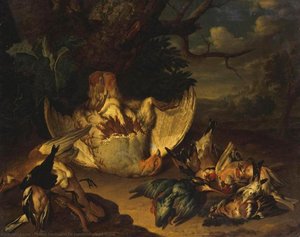
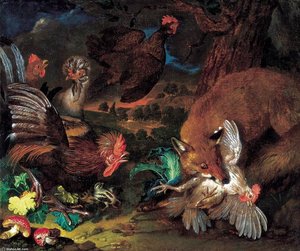
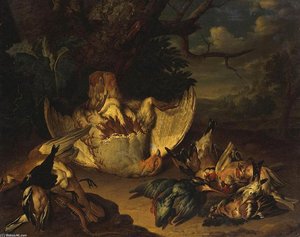
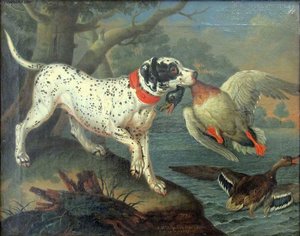
Consider his work, “Dead Game,” a dramatic still life that exemplifies this approach. The arrangement of the fallen fox and ducks is not arbitrary; it's carefully orchestrated to create a sense of pathos and contemplation – a reminder of the cycle of life and death inherent in the natural world. Similarly, "Anatre Selvatiche Cacciate Da Un Cane" (Wild Animals Hunted by a Dog) captures the energy and excitement of the hunt with dynamic brushstrokes and a strong sense of movement.
Family Legacy and Continuing Influence
De Hamilton’s artistic career was inextricably linked to that of his brother, Johann Georg de Hamilton. While Philipp focused primarily on hunting scenes, Johann specialized in similar subjects, often emphasizing the beauty and grandeur of the forest landscape. The brothers' shared interests and stylistic similarities suggest a collaborative spirit within their family – a legacy of artistic training and mutual inspiration. Karl Wilhelm de Hamilton, another member of this artistic lineage, further expanded upon these themes, demonstrating the enduring appeal of depicting wildlife and aristocratic pursuits.
Philipp Ferdinand de Hamilton’s work continues to resonate today, offering a valuable window into 18th-century European art and culture. His paintings are testaments to his skill as an artist and his ability to capture the essence of both the natural world and the social customs of his time. His legacy lives on through reproductions like those offered by ArtsDot.com, allowing audiences worldwide to appreciate the beauty and artistry of this remarkable painter.
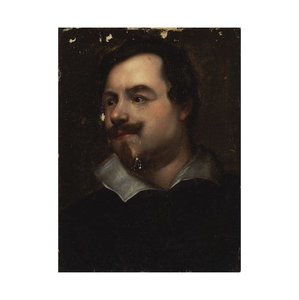
Philipp Ferdinand de Hamilton
1664 - 1750 , Belgium
Quick Facts
- Artistic Movement Or Style: Hunting scenes
- Artists Or Movements Influenced By This Artist: ['Karl Wilhelm de Hamilton']
- Artists Who Influenced This Artist: James de Hamilton
- Date Of Birth: c. 1664
- Date Of Death: 1750
- Full Name: Philipp Ferdinand de Hamilton
- Nationality: Flemish
- Notable Artworks:
- Dead Game
- Still Life...
- Anatre Selvatiche...
- Place Of Birth: Brussels, Belgium
Related Articles

Illuminating Innovation: Exploring the Dutch Golden Age of Painting
Explore the Dutch Golden Age of painting with ArtsDot. Discover Rembrandt, Vermeer & other Masters. Learn about key characteristics, iconic artworks, and lasting influence. Expert insights for collectors & enthusiasts.
Illuminating Realism: Exploring the Dutch Golden Age of Painting (1600-1700)
Explore the Dutch Golden Age of painting (1600-1700) with ArtsDot. Discover Rembrandt, Vermeer & other masters. Learn about techniques, history & find museum-quality reproductions.

Dutch Masters: 10 Golden Age Paintings That Still Inspire |
Journey into the Dutch Golden Age! Explore 10 iconic paintings by Rembrandt, Vermeer & Hals. Discover the stories behind these Baroque masterpieces and find museum-quality art reproductions to elevate your home decor on .

Golden Age Reflections: Dutch Baroque Painting & Cultural Innovation
Explore the Dutch Golden Age of painting! Discover key artists like Vermeer & ter Borch, their innovative techniques, and the rich cultural context behind these Baroque masterpieces. Learn about collecting & appreciating this iconic art period.
Abraham Hendricksz van Beyeren: Pioneering Dutch Still Life & the Banquet Tradition
Explore the captivating world of Dutch Golden Age still life with Abraham van Beyeren. Discover his innovative techniques, symbolic banquet scenes & lasting influence on art history. Learn about collecting these masterpieces.