

 Send
Send Share
Share
 Details

 Download
 Similars
 Diaporama
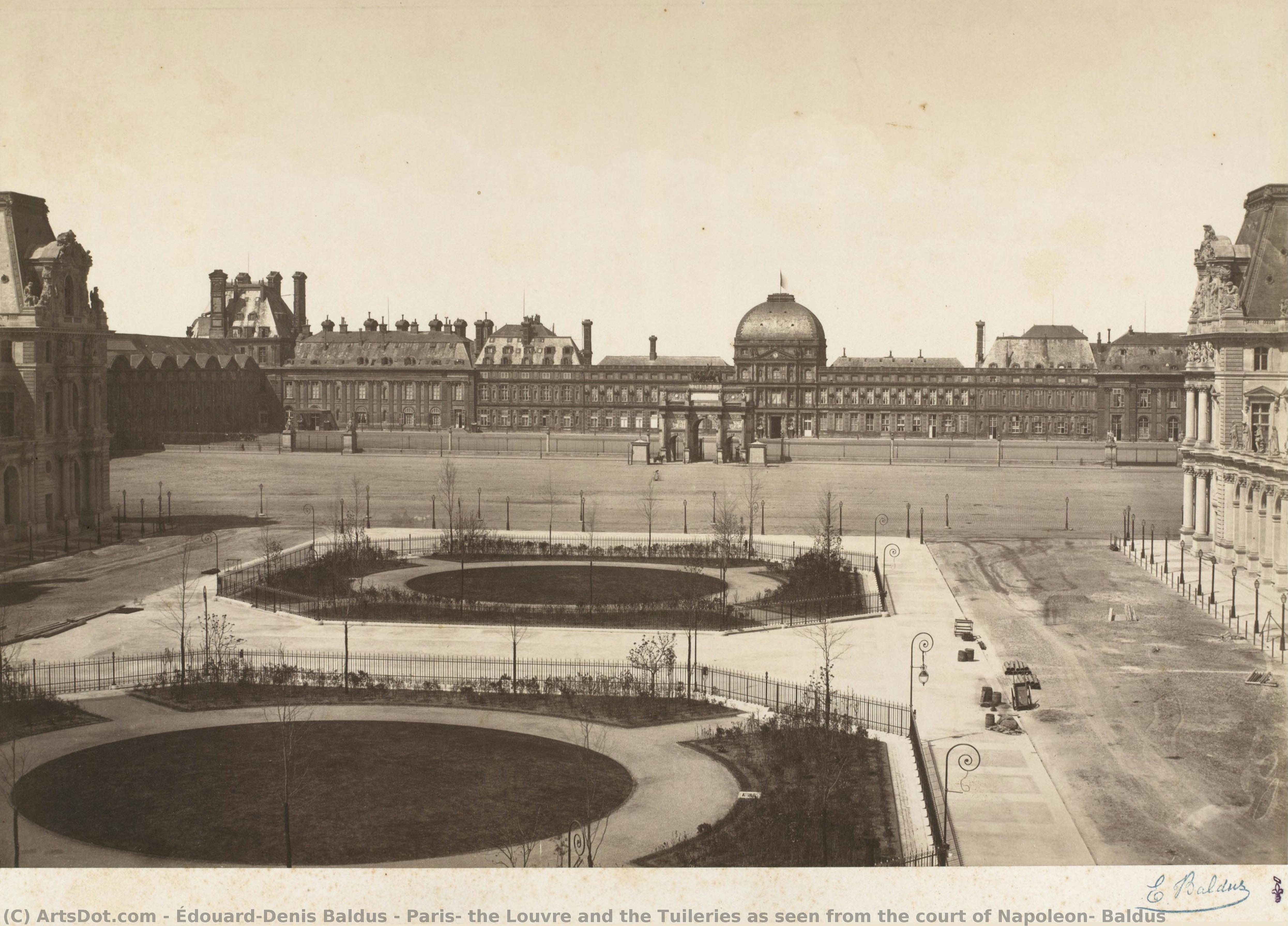
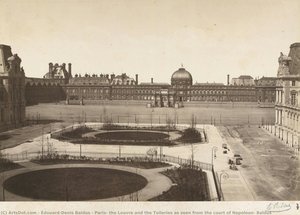
Paris: the Louvre and the Tuileries as seen from the court of Napoleon, Baldus


 Read More
Hand Made Oil Reproduction
Hand-painted oil on canvas in your size and frame, made to order by our artists. ( Buy Print Buy Image)




































Pick from our preset sizes that match the artwork's original proportions.

You may enter your own dimensions to fit a specific frame or space. If your selected size does not match the original image's proportions, we will either crop the artwork or extend the painting with additional hand-painted elements. A digital mockup will be sent for your approval before production begins.
Please note that the on-screen preview does not reflect the actual cropping or extension. Only the mockup will accurately show the final composition.
While custom sizes are available, we recommend selecting a dimension from the predefined list to preserve the original proportions.
After order, ArtsDot.com team will email client for instructions and provide a mockup preview
Worldwide Delivery () in 3/4 weeks instead of standard 5 weeks. (17 August). No compromise on quality.

Free Worldwide Express Shipping

High-Quality Linen Canvas

Full Shipping Insurance

Customs Tax Refund Guarantee

True Color Matching Guarantee

60-Day Return Policy (Defects Only)

100% Money-Back Guarantee

Bulk Discount Offer
 Glass option is only available in size under 110 CM

Paris: the Louvre and the Tuileries as seen from the court of Napoleon, Baldus
Reproduction Medium
Reproduction Size
-


Total Price
$ 263
Artwork Description
A Timeless Vista: Baldus's "Paris: the Louvre and the Tuileries as seen from the court of Napoleon"
Édouard-Denis Baldus’s “Paris: the Louvre and the Tuileries as seen from the court of Napoleon” is more than a photograph; it’s a meticulously crafted moment in time, a frozen tableau of Parisian grandeur that speaks volumes about ambition, architectural beauty, and the evolving relationship between art, history, and the burgeoning modern world. Executed in 1860, this remarkable image transcends its photographic origins to become a powerful work of artistic observation, revealing Baldus’s profound understanding of composition, light, and the evocative power of perspective.
- Subject Matter: The photograph captures two of Paris's most iconic landmarks – the Louvre Museum and the Tuileries Palace – presented with an almost theatrical precision. The aerial viewpoint, reminiscent of a classical landscape painting, elevates these structures to monumental status, emphasizing their scale and imposing presence within the city’s fabric.
- Technical Mastery: Baldus's skill as a photographer is immediately apparent in his masterful manipulation of light and shadow. He employs a subtle gradatioin of tones, characteristic of the daguerreotype process, to create depth and texture, imbuing the stone facades with an almost palpable solidity. The sharp detail, particularly evident in the architectural ornamentation, demonstrates a rigorous attention to technical precision.
Historical Context: A City Transformed
The year 1860 marks a pivotal moment in Parisian history. Following the Napoleonic era, the city was undergoing significant transformation – industrialization, urban expansion, and the rise of new social classes were reshaping its landscape. Baldus’s photograph serves as a visual record of this dynamic period, capturing the Louvre and Tuileries Palace not just as architectural marvels but also as symbols of France's enduring legacy. The inclusion of figures—likely Parisians enjoying the view or engaged in daily life—adds another layer of narrative, grounding the monumental architecture within the context of a bustling urban environment. Even the presence of early automobiles hints at the dawn of a new era of transportation and technological advancement.
- The Historic Monuments Commission: Baldus’s work was commissioned by the French Historic Monuments Commission, reflecting a growing interest in preserving and documenting France's architectural heritage. This project aligns with the broader 19th-century trend of systematic documentation through visual media.
- Influence of Romanticism: The composition of the photograph echoes the aesthetic principles of Romantic landscape painting, emphasizing emotion, drama, and the sublime qualities of nature (represented here by the urban environment).
Symbolism and Emotional Impact
Beyond its technical brilliance and historical significance, “Paris: the Louvre and the Tuileries as seen from the court of Napoleon” possesses a profound emotional impact. The photograph evokes a sense of awe and wonder at the scale and beauty of Parisian architecture, while simultaneously conveying a feeling of timelessness. Baldus’s careful framing invites the viewer to contemplate the relationship between past and present, grandeur and everyday life. It's a testament to the enduring power of art to capture not just what is seen, but also what is felt.
- The Court of Napoleon: The title itself – “as seen from the court of Napoleon” – adds an intriguing layer of historical context, suggesting that Baldus was deliberately positioning himself within a lineage of artistic observation and patronage.
- A Window to the Soul of Paris: Ultimately, this photograph offers us a glimpse into the soul of Paris—a city that has captivated artists, writers, and dreamers for centuries.
Related Artworks
![[the Cour Napoléon Looking Towards The Tuileries, Louvre, Paris] — Édouard-denis Baldus, Academic Realism](/media/artworks/images/thumbnails/74/01/7401ebaa3e1e42a38041829030a9006c.jpg)
Artist Biography
early life and training
édouard-denis baldus, a german-born artist, was born on june 5, 1813, in grünebach, prussia. initially trained as a painter, he also worked as a draughtsman and lithographer before transitioning to photography in 1849.photographic career
in 1851, baldus was commissioned by the historic monuments commission of france for the missions héliographiques, photographing historic buildings, bridges, and monuments. this project showcased his exceptional skill, earning him government support for les villes de france photographiées, a series of architectural views in paris and the provinces.notable works and collaborations
in 1855, baldus was commissioned by baron james de rothschild to create a photographic album as a gift for queen victoria and prince albert. this project highlighted his ability to capture the essence of french culture.- les villes de france photographiées, a comprehensive series of architectural views, showcased baldus's mastery of photography.
- his work was featured in the museum formerly collection bernhard koehler (berlin, germany), a renowned art collection.
- baldus's photographs are also part of the édouard-denis baldus | 4 artworks collection on ArtsDot, offering a glimpse into his photographic legacy.
legacy and later life
édouard-denis baldus passed away in 1889 in arcueil, france. his contributions to photography and painting have left an indelible mark on the art world. important links: - discovering the museum ostdeutsche galerie (germany) - édouard-denis baldus | 4 artworks on ArtsDot - the saryan museum yerevan, armenia, another notable art institution featured on ArtsDot.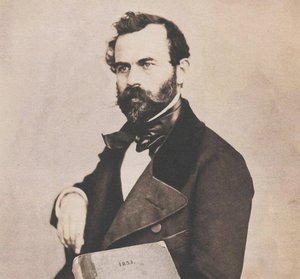
édouard-denis baldus
1813 - 1889 , Germany
Quick Facts
- Artistic Movement Or Style: Landscape & Marine
- Artists Or Movements Influenced By This Artist: ['Capriccio']
- Artists Who Influenced This Artist:
- Samuel Scott
- Richard Wilson
- Date Of Birth: 1740
- Date Of Death: 1813
- Full Name: William Marlow
- Nationality: English
- Notable Artworks:
- Boys Fishing
- Departure Militiaman
- Place Of Birth: London, England
Related Articles

Pictorialism: A Search for Artistic Photography's Soul – Aesthetics, Techniques & Legacy
Explore the captivating world of Pictorialism – a pivotal movement that transformed photography into fine art. Discover key artists like Stieglitz & Käsebier, techniques, and collecting tips from experts.
Giclée Prints: Archival Quality & Aesthetic Nuances for the Discerning Collector
Explore the world of giclée prints with ArtsDot. Learn about archival quality, aesthetic nuances & investment potential. Expert guidance for discerning art collectors seeking museum-quality reproductions and lasting value.

Monochrome Visions: Exploring the Aesthetic & Historical Significance of Black & White Photography
Explore the rich history & artistic power of black and white photography. From early techniques to iconic masters like Ansel Adams, discover why monochrome continues to captivate art lovers today. Expert insights for collectors.
Louvre Masterpieces: Explore the Top 25 Artworks for Your Home | ArtsDot
Journey through the Louvre's 25 most iconic artworks! Explore masterpieces by Leonardo da Vinci, Michelangelo & Delacroix. Discover art history, techniques & find museum-quality reproductions for your home at ArtsDot.com.
Beyond the Lens: Photography's Enduring Influence on Modern & Contemporary Art
Explore photography's pivotal role in shaping modern & contemporary art. Discover key movements, influential artists like Stieglitz, and expert collecting advice from ArtsDot.
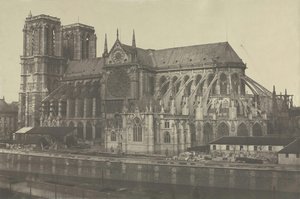
![Arles. Cloitre St. Trophime [north gallery]](/media/artworks/images/thumbnails/e5/9a/e59a7e2a1fd246639a32d15b68e17a1f.jpg)

