 Preview
 Send
Send Share
Share
 Details

 Download
 Similars
 X-Ray
X-Ray Diaporama
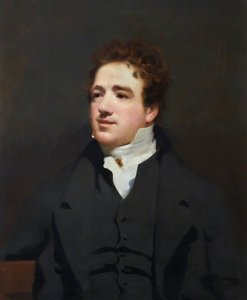
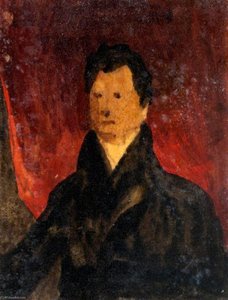
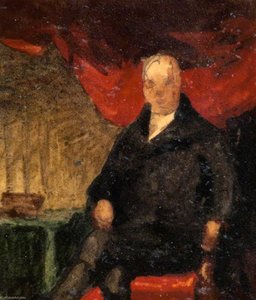
Album Copies of Old Masters and other Paintings (no.77, p.32)


 Read More
Giclée / Art Print
Museum-quality giclée or canvas print with fast production and flexible finish options. ( Buy Hand Made Painting Buy Image)




P118B $10

P118H $10

P118W $10

P438Z $10

P508JH $12

P508YH $12

P805H $10

P805Z $10

P919BZ $10

P919G $10

P919XJ $10

P959ZH $10

P968JZ $12

W106C $8

W218G $10

W218JH $8

W218Y $10

W307PJ $10

W316G $10

W316PJ $8

W316Y $10

W398PJ $8

W4111J $10

W500HY $15

W500JH $15

W692G $12

W849H $8

W940BG $15

W953PJ $8




Pick from our preset sizes that match the artwork's original proportions.

You may enter your own dimensions to fit a specific frame or space. If your selected size does not match the original image's proportions, we will either crop the artwork or extend the image with a mirrored or solid-fill edge. A digital mockup will be sent for your approval before production begins.
Please note that the on-screen preview does not reflect the actual cropping or extension. Only the mockup will accurately show the final composition.
While custom sizes are available, we recommend selecting a dimension from the predefined list to preserve the original proportions.
Worldwide Delivery () in 2 weeks instead of standard 4/5 weeks. (29 August)

Free Worldwide Express Shipping

High-Quality Linen Canvas

Full Shipping Insurance

Customs Tax Refund Guarantee

True Color Matching Guarantee

60-Day Return Policy (Defects Only)

100% Money-Back Guarantee

Bulk Discount Offer
 Glass option is only available in size under 110 CM

Album Copies of Old Masters and other Paintings (no.77, p.32)
Giclée / Art Print
Reproduction Size
-


Total Price
$ 63
A Portrait of Innocence: Exploring William Nicholson’s Album Copies
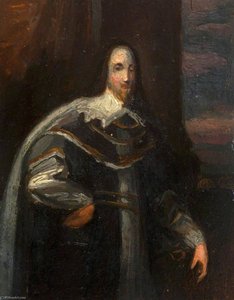
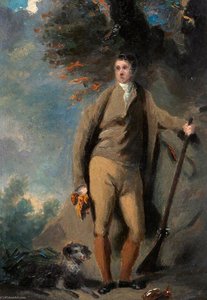
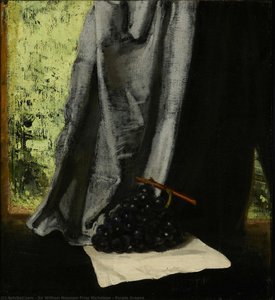
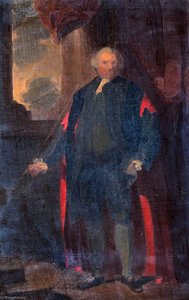
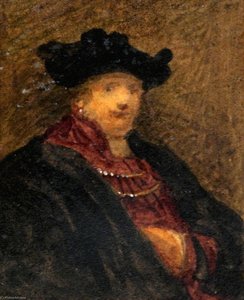
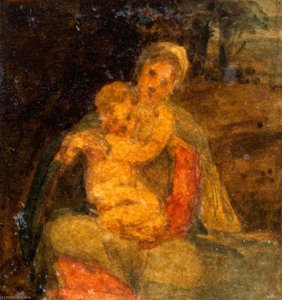
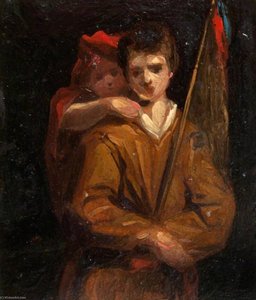
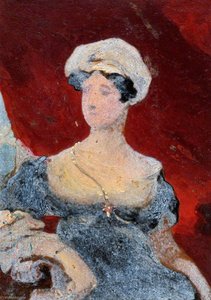
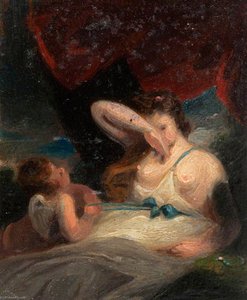
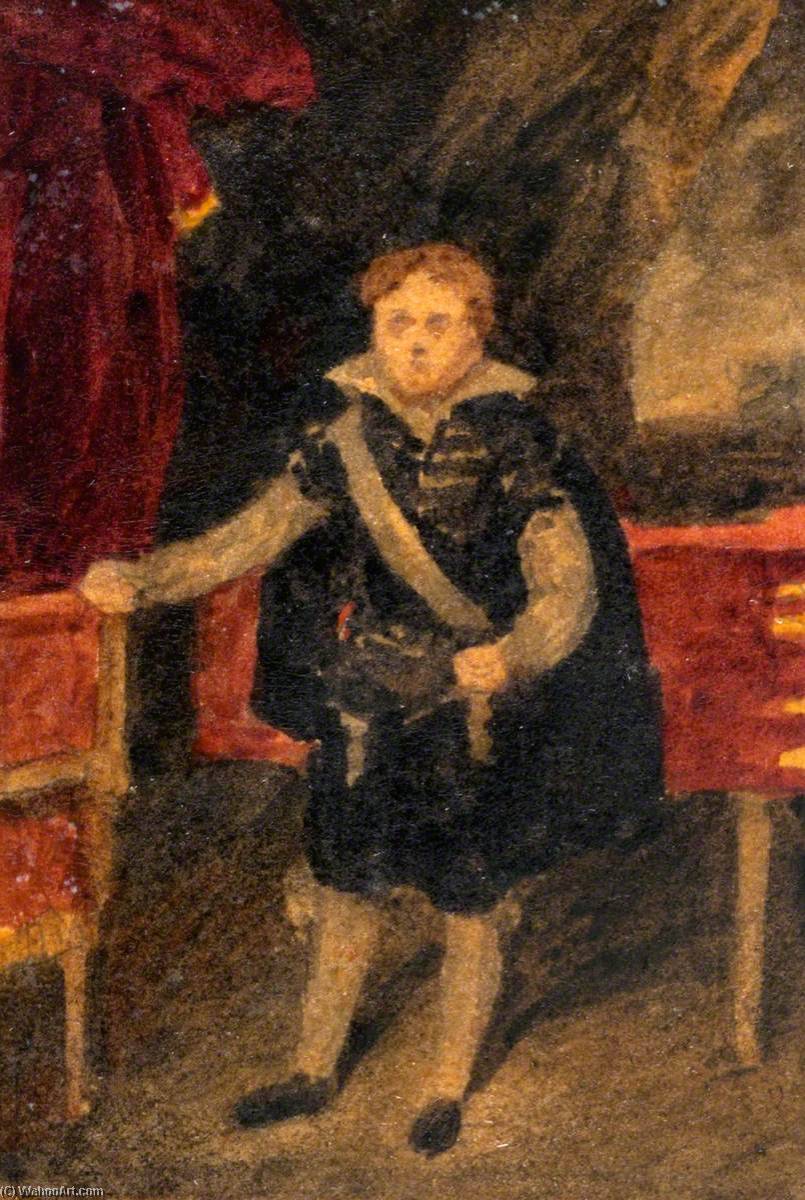
The painting “Album Copies of Old Masters and other Paintings” (no.77, p.32), created by Sir William Nicholson in 1856, stands as a testament to both artistic influence and the enduring fascination with classical ideals. Held at the Royal Scottish Academy of Art - Architecture in Edinburgh, this diminutive canvas – measuring just 5 x 4 cm – belies its profound significance within Nicholson’s oeuvre and the broader context of Victorian art. It's not merely a reproduction; it’s an embodiment of artistic dialogue, reflecting the formative impact of Joshua Reynolds and Cubley on his developing vision.Style and Technique: Echoes of Reynoldsian Idealism
Nicholson’s approach to this commission exemplifies the stylistic conventions championed by Reynolds, arguably the father figure of British portraiture. Reynolds advocated for a carefully constructed illusionistic space—a technique meticulously executed here—designed to convey not just likeness but also character and moral virtue. The artist skillfully employs oil paint on canvas, layering translucent glazes to achieve remarkable luminosity and capturing subtle nuances of light and shadow that imbue the boy’s face with an ethereal quality. Notice the deliberate positioning of the boy before a crimson curtain; this theatrical backdrop serves as more than just visual ornamentation—it symbolizes aspiration and performance, mirroring Nicholson's own ambition to elevate art beyond mere representation.Historical Context: Victorian Morality and Artistic Patronage
The painting emerged during a period marked by intense scrutiny of social morality within Victorian Britain. Portraits like “Album Copies” were commissioned frequently by wealthy families eager to demonstrate their status and uphold values deemed respectable. Nicholson’s work speaks to this cultural preoccupation, presenting an idealized depiction of boyhood—a symbol of purity and potential—against which the anxieties of the era are subtly countered. The Academy itself was a bastion of artistic conservatism, prioritizing classical ideals and upholding standards of excellence that demanded unwavering dedication to craftmanship.Symbolism: Beyond Appearance – A Reflection of Inner Virtue
Beyond its surface beauty lies a deeper symbolic resonance. The boy’s gaze is direct yet contemplative, conveying an awareness of his surroundings without relinquishing inner serenity. His costume—a scarlet cloak and sword—represents courage and nobility, qualities prized in Victorian society. However, Nicholson transcends mere adherence to convention; he imbues the figure with a palpable sense of vulnerability, hinting at the fragility inherent within innocence itself. The crimson curtain isn’t simply a stage setting; it symbolizes ambition and aspiration – mirroring Nicholson's own artistic journey.Emotional Impact: A Moment Frozen in Time
Ultimately, “Album Copies” transcends its diminutive size to evoke a powerful emotional response. It captures a fleeting moment of youthful contemplation—a glimpse into the soul of a boy poised on the cusp of adulthood. The painting’s luminous palette and masterful technique invite viewers to linger upon its surface, contemplating not just what is seen but also what is felt. Like many Victorian portraits, it seeks to inspire admiration for beauty and virtue – qualities Nicholson himself championed throughout his prolific artistic career. This piece remains a captivating example of how art can encapsulate both aesthetic excellence and profound human emotion.Related Artworks
Artist Biography
Early Life and Artistic Beginnings
Sir William Newzam Prior Nicholson, born in Newark-on-Trent in 1872, emerged from a background that blended industrial pragmatism with artistic sensibility. His father, a successful engineer and Conservative MP, instilled a sense of discipline, while his mother’s lineage connected him to the aesthetic traditions of Oxfordshire. From a young age, Nicholson displayed an aptitude for art, nurtured by lessons from William Cubley, a local painter who himself traced his artistic roots back to Sir Joshua Reynolds. This early exposure laid the foundation for a career that would span diverse mediums and styles. A brief stint at Hubert von Herkomer’s art school proved pivotal, not only for honing his skills but also for introducing him to Mabel Pryde, who would become his wife and an essential collaborator in his burgeoning artistic journey. It was through Mabel that he met her brother, James Pryde, a partnership that would soon revolutionize the world of graphic design.The Beggarstaffs and a Revolution in Poster Art
The collaboration between William Nicholson and James Pryde, known as “J. & W. Beggarstaff,” marked a turning point in British visual culture. Rejecting the prevailing ornate aesthetic of Victorian posters, they embraced a bold simplicity characterized by striking silhouettes, flat planes of color, and a deliberate rejection of traditional perspective. Their designs weren’t merely advertisements; they were statements—powerful, graphic compositions that captured the public's imagination. Posters for productions like Don Quixote and publications such as Harper’s Magazine became instantly recognizable, influencing a generation of artists and designers. This period wasn’t simply about commercial art; it was about redefining visual communication itself. The Beggarstaffs’ work challenged conventions, paving the way for modern graphic design and establishing Nicholson's reputation as an innovator. Their impact resonated far beyond the realm of posters, influencing illustration and even painting with its emphasis on strong form and deliberate composition.From Woodcuts to Portraits: A Developing Style
Following the dissolution of the Beggarstaff partnership, Nicholson embarked on a period of stylistic exploration. He turned his attention to woodcut and wood-engraving, techniques that allowed him to further refine his mastery of line and form. Encouraged by the influential James McNeill Whistler, he embraced these methods, producing intricate and evocative prints that showcased his growing artistic maturity. These works demonstrated a remarkable ability to capture essence with minimal detail, a quality that would become a hallmark of his style. Simultaneously, Nicholson began to establish himself as a portrait painter, receiving commissions from prominent figures of the era. His portraits weren’t merely likenesses; they were insightful studies of character, revealing the inner lives of his subjects through subtle nuances of expression and pose. Works like *Lady in Furs, Mme. P.* exemplify this skill, capturing not just physical appearance but also a sense of personality and social standing.Still Life, Landscape, and Lasting Legacy
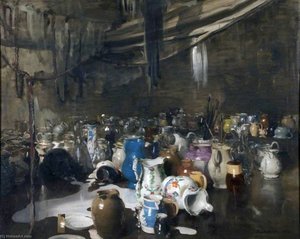
In the later stages of his career, Nicholson increasingly focused on still life and landscape painting. His still lifes, such as *The Lowestoft Bowl*, are celebrated for their exquisite attention to detail, harmonious color palettes, and a quiet sense of intimacy. He imbued everyday objects with a poetic quality, elevating them beyond mere representation to become symbols of beauty and contemplation. His landscapes, often depicting scenes from his travels in Spain and Italy, reveal a sensitivity to light and atmosphere, capturing the essence of place with remarkable skill. Throughout his life, Nicholson remained a versatile artist, constantly experimenting with new techniques and approaches. He authored children’s books, designed for the theatre, and continued to produce prints alongside his paintings. Sir William Nicholson's influence extends beyond his own prolific output; he inspired generations of artists with his commitment to craftsmanship, his innovative spirit, and his ability to find beauty in the ordinary. His work remains a testament to the power of art to illuminate the human experience and transform our perception of the world around us. He died in 1949, leaving behind a rich artistic legacy that continues to captivate and inspire today.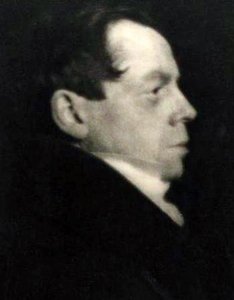
Sir William Nicholson
1872 - 1949 , United Kingdom
Quick Facts
- Artistic Movement Or Style: Still life, portraiture
- Artists Who Influenced This Artist:
- James Pryde
- Whistler
- Date Of Birth: February 5, 1872
- Date Of Death: May 16, 1949
- Full Name: Sir William Newzam Prior Nicholson
- Nationality: British
- Notable Artworks:
- Lady in Furs
- The Lowestoft Bowl
- Plaza de toros, Malaga
- Place Of Birth: Newark, United Kingdom
Related Articles

The Enduring Legacy of Oil on Canvas: Technique, History & Aesthetic Impact
Explore the rich history & techniques of oil painting – from Renaissance masters to Impressionism. Discover pigments, layering methods, and why this timeless medium endures. Expert insights for artists & art enthusiasts.

Oil on Canvas: A Historical & Technical Exploration of a Timeless Artistic Medium
Explore the rich history & enduring techniques of oil painting on canvas. Discover the science behind its longevity, conservation practices, and contemporary relevance. Expert insights for art enthusiasts.

The Enduring Power of Painting: A Historical & Contemporary Exploration of Form and Emotion
Explore the rich history & enduring techniques of oil painting with ArtsDot. Discover masterpieces, learn about art collecting, and find authentic handmade reproductions crafted by skilled artists.
The Enduring Legacy of Oil Paint: Technique, History & Emotional Resonance in Western Art
Explore the rich history & techniques of oil painting! Discover Renaissance masters, scientific principles behind color, and emotional resonance in art. Learn about glazing, layering, and atmospheric perspective – a guide for enthusiasts & collectors.

The Enduring Legacy of Oil on Canvas: Technique, History & Contemporary Practice
Explore the rich history & enduring techniques of oil painting on canvas. Discover the science behind its longevity, conservation practices, and contemporary relevance. Expert insights for art enthusiasts.