 Preview
 Send
Send Share
Share
 Details

 Download
 Similars
 X-Ray
X-Ray Diaporama
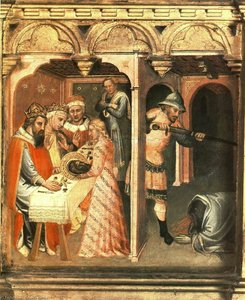
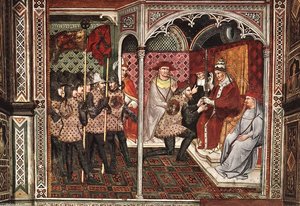
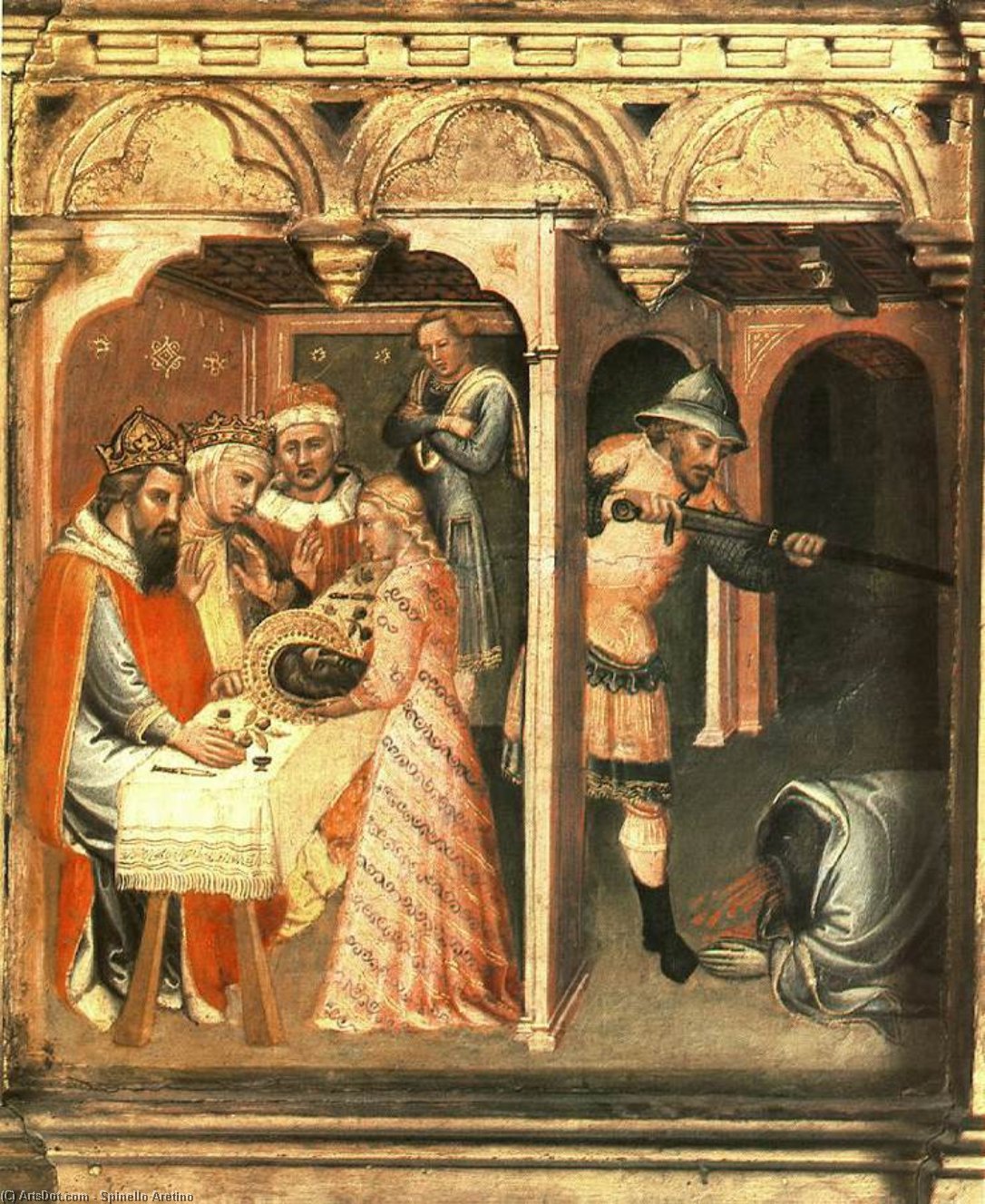
Feast of Herod
 Oil On Canvas
- WallArt
- Late Gothic
 1385
1385- Late Medieval
 35.0 x 34.0 cm
 Szépmûvészeti Múzeum
 Read More
Hand Made Oil Reproduction
Hand-painted oil on canvas in your size and frame, made to order by our artists. ( Buy Print Buy Image)




P118B $10

P118H $10

P118W $10

P438Z $10

P508JH $12

P508YH $12

P805H $10

P805Z $10

P919BZ $10

P919G $10

P919XJ $10

P959ZH $10

P968JZ $12

W106C $8

W218G $10

W218JH $8

W218Y $10

W307PJ $10

W316G $10

W316PJ $8

W316Y $10

W398PJ $8

W4111J $10

W500HY $15

W500JH $15

W692G $12

W849H $8

W940BG $15

W953PJ $8




Pick from our preset sizes that match the artwork's original proportions.

You may enter your own dimensions to fit a specific frame or space. If your selected size does not match the original image's proportions, we will either crop the artwork or extend the painting with additional hand-painted elements. A digital mockup will be sent for your approval before production begins.
Please note that the on-screen preview does not reflect the actual cropping or extension. Only the mockup will accurately show the final composition.
While custom sizes are available, we recommend selecting a dimension from the predefined list to preserve the original proportions.
After order, ArtsDot.com team will email client for instructions and provide a mockup preview
Worldwide Delivery () in 3/4 weeks instead of standard 5 weeks. (16 August). No compromise on quality.

Free Worldwide Express Shipping

High-Quality Linen Canvas

Full Shipping Insurance

Customs Tax Refund Guarantee

True Color Matching Guarantee

60-Day Return Policy (Defects Only)

100% Money-Back Guarantee

Bulk Discount Offer
 Glass option is only available in size under 110 CM

Feast of Herod
Reproduction Medium
Reproduction Size
-


Total Price
$ 263
Artwork Description
A Dramatic Tableau from Medieval Florence
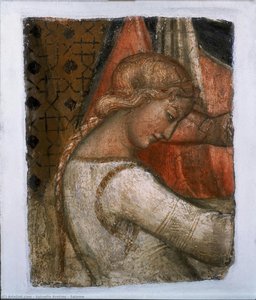
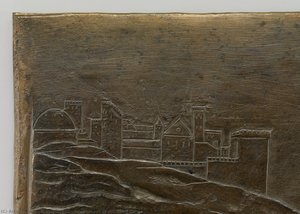
Behold this captivating scene, Feast of Herod, a richly detailed window into the dramatic narratives favored by Florentine masters in the late medieval period. The painting immediately draws the viewer into a moment charged with palpable tension. Gathered around an elaborate dining table, the figures are caught mid-action, their postures and gazes telling a story of sudden violence juxtaposed against the supposed conviviality of a feast. One figure dominates the foreground, wielding a sword in a gesture that speaks of imminent conflict, while another kneels before him, embodying vulnerability or perhaps supplication. The entire composition pulses with narrative energy, inviting contemplation on themes of power, betrayal, and divine judgment.
Mastery of Late Fourteenth-Century Technique
Attributed to the circle of spinello aretino, this work exemplifies the refined elegance characteristic of Florentine painting around 1385. The artist demonstrates a remarkable command over human anatomy and drapery, rendering the varied costumes with meticulous care. Observe the texture suggested in the rich fabrics and the subtle variations in skin tones—these details speak to an advanced understanding of oil or tempera techniques popular during Lorenzo di Bicci's era. The intricacy is breathtaking; every fold of cloth, every gesture of the hand, contributes to a cohesive visual tapestry. It is a testament to the skill required to translate grand religious or historical epics onto a panel.
Historical Echoes and Symbolic Weight
The subject matter itself—the Feast of Herod—is steeped in biblical drama, providing fertile ground for symbolic interpretation. The setting, clearly a wealthy dining hall, contrasts sharply with the violence suggested by the sword. This juxtaposition is key to the painting's emotional resonance; it suggests that even moments intended for celebration can be shattered by human failing or moral transgression. For the collector or designer, this piece offers more than mere decoration; it provides an intellectual anchor, a conversation starter steeped in centuries of art historical dialogue regarding civilization versus savagery.
Bringing Medieval Drama into Modern Spaces
Measuring 35 x 34 cm, its substantial yet manageable size allows it to function as a powerful focal point. Imagine this piece gracing a formal dining room or an academic study; the deep hues and dramatic composition will lend an air of storied gravitas to any interior design scheme. Reproducing such a work allows one to connect with the profound artistic currents of the late 14th century, bringing the sophisticated narrative depth of Renaissance precursors into contemporary life. It is art that demands to be looked at closely, rewarding the viewer with layers of historical context and emotional engagement.
Related Artworks


![Adoration Of The Magi — The Younger Zurich Carnation Master [nelkenmeister], Early Renaissance](/media/artworks/images/thumbnails/d0/9c/d09c413b060242debc09f709e76ffab0.jpg)
Artist Biography
Lorenzo di Bicci: A Florentine Master of the Late Fourteenth Century
The mid-fourteenth century in Florence witnessed a blossoming of artistic innovation, and within this vibrant scene emerged Lorenzo di Bicci (c. 1350 – 1427), an artist whose influence quietly shaped the course of Florentine painting for decades. Often overshadowed by his more flamboyant contemporaries, Lorenzo’s contribution lies not in dramatic displays of virtuosity but rather in a refined elegance and a masterful understanding of color and composition that established him as one of the most important painters of his time. His work offers a glimpse into the evolving artistic landscape of Florence during a period of profound social and economic transformation.
Lorenzo’s early life remains shrouded in some mystery, largely due to the scant documentation available about his father, Jacopo (also known as Jacopo di Cione), who likely served as Lorenzo's initial mentor. It is believed that Lorenzo apprenticed under this unknown master, absorbing fundamental painting techniques and developing a distinctive style characterized by a balanced approach – avoiding excessive complexity while maintaining a remarkable level of detail and precision. Unlike many artists of the era who primarily catered to wealthy patrons, Lorenzo’s commissions largely stemmed from the country clergy and the lower-middle class Florentine guilds, reflecting a shift in patronage dynamics during this period. This focus on serving a broader segment of society distinguished him from some of his more established rivals.
Lorenzo's artistic development was profoundly influenced by several key figures. The work of Andrea di Cione, a contemporary painter known for his elegant and refined style, clearly resonated with Lorenzo’s aesthetic sensibilities. The influence of Jacopo di Cione is also evident in early works like “St. Martin Enthroned,” a panel painting commissioned by the Arte dei Vinattieri (the wine-merchants' guild) around 1380. This piece, now housed in the Depositi Galleria d’Arte Moderna in Florence, showcases Lorenzo’s burgeoning talent – employing bright colors and a balanced composition to depict the biblical scene of St. Martin distributing his cloak to a beggar. The predella, which accompanies the main panel, further demonstrates Lorenzo's skill in narrative painting, presenting a carefully orchestrated sequence of figures and gestures.
The Influence of Giotto and the Florentine School
Lorenzo di Bicci’s artistic trajectory is inextricably linked to the legacy of Giotto di Bondone, the revolutionary painter who had dramatically altered the course of Italian art in the late thirteenth century. Giotto's emphasis on naturalism, emotional expression, and a sense of three-dimensionality profoundly impacted subsequent generations of Florentine artists. Lorenzo, like his contemporaries Jacopo di Cione and Niccolò di Pietro Gerini, absorbed Giotto’s innovations, adapting them to his own unique style. However, unlike Giotto's often dynamic and emotionally charged compositions, Lorenzo favored a more restrained and balanced approach, prioritizing clarity of form and harmonious color relationships.
The Florentine School during this period was characterized by a remarkable diversity of styles and influences. Artists were constantly experimenting with new techniques and approaches, drawing inspiration from both classical antiquity and the latest developments in European painting. Lorenzo’s work reflects this dynamic environment, incorporating elements of Gothic elegance while simultaneously embracing a more naturalistic style. His meticulous attention to detail—particularly his skill in rendering drapery and facial features—demonstrates a commitment to realism that was becoming increasingly prevalent in Florentine art.
Key Works and Artistic Characteristics
Lorenzo’s artistic output, though relatively modest compared to some of his contemporaries, reveals a consistent stylistic approach. His paintings are notable for their use of bright colors – particularly reds, blues, and yellows – which create a sense of vibrancy and luminosity. He avoided overly complex compositions, opting instead for balanced arrangements that prioritize clarity and readability. The figures in his works often possess round faces and relatively expressionless features, reflecting a deliberate effort to convey serenity and dignity rather than intense emotion.
Among Lorenzo’s most significant works are the “St. Martin Enthroned” panel (1380), which exemplifies his early style; several altarpieces commissioned by churches in the surrounding countryside; and a series of devotional panels depicting scenes from the life of the Virgin Mary. His meticulous drawing skills, honed during his apprenticeship, are evident in every detail of these paintings—from the folds of drapery to the subtle nuances of facial expression. Lorenzo’s work stands as a testament to his exceptional technical ability and his unwavering commitment to artistic excellence.
Legacy and Historical Significance
Lorenzo di Bicci's influence extended beyond his own lifetime, shaping the development of Florentine painting for decades after his death in 1427. His successors, Bicci di Lorenzo and Neri di Bicci, continued to serve the same clientele – the country clergy and lower-middle class guilds – further solidifying his legacy as a key figure in the Florentine School. While he may not have achieved the widespread fame of some of his contemporaries, Lorenzo’s refined style and unwavering commitment to craftsmanship ensured that his work would be appreciated for its elegance, balance, and technical mastery.
Lorenzo di Bicci represents a crucial link between the late Gothic traditions of Giotto and the early Renaissance. His paintings offer a valuable insight into the artistic dynamics of Florence during a period of profound social and cultural change—a time when artists were grappling with new ideas and techniques while simultaneously upholding the values of tradition and craftsmanship. His quiet yet enduring influence continues to resonate within the rich tapestry of Florentine art history.
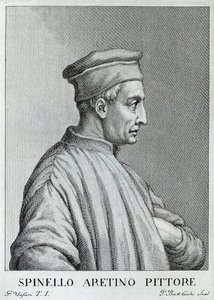
spinello aretino
1350 - 1410 , Italy
Quick Facts
- Artistic Movement Or Style: Florentine School
- Artists Or Movements Influenced By This Artist:
- Bicci di Lorenzo
- Neri di Bicci
- Artists Who Influenced This Artist: ['Andrea di Cione']
- Date Of Birth: c. 1350
- Date Of Death: 1427
- Full Name: Lorenzo di Bicci
- Nationality: Italian
- Notable Artworks: ['St. Martin Enthroned']
- Place Of Birth: Florence, Italy
Related Articles

Giclée Prints: Archival Quality & Aesthetic Nuances for the Discerning Collector
Explore the world of giclée prints with ArtsDot. Learn about archival quality, aesthetic nuances & investment potential. Expert guidance for discerning art collectors seeking museum-quality reproductions and lasting value.

The Enduring Legacy of Fine Art Prints: Technique, History & Aesthetic Impact
Explore the rich history & techniques of fine art prints. Discover investment potential, assess authenticity, and learn how to preserve your collection with expert guidance. Trusted insights for discerning collectors.

High Medieval Art: 10 Masterpieces That Shaped an Era | ArtsDot
Journey through High Medieval Art! Explore 10 iconic masterpieces – from Giotto's frescoes to stunning Gothic cathedrals. Discover the stories behind these timeless paintings, sculptures & illuminated manuscripts. Find museum-quality art reproductions at ArtsDot.com.

Echoes of Time: Exploring the Enduring Appeal & Historical Context of Vintage Art Prints
Explore the captivating world of vintage art prints! Discover their history, collecting tips & enduring appeal. Expert insights on chromolithography and building a legacy collection with ArtsDot.
The Enduring Legacy of Printmaking: Techniques, Themes & Artistic Innovation Across Centuries
Explore the rich history of printmaking with ArtsDot. Discover techniques from intaglio to lithography, learn about collecting valuable prints & find museum-quality reproductions. Expert insights for art enthusiasts and collectors.