 Preview
 Send
Send Share
Share
 Details

 Download
 Similars
 X-Ray
X-Ray Diaporama
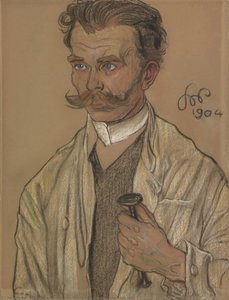
Self-portrait


 Read More
Hand Made Oil Reproduction
Hand-painted oil on canvas in your size and frame, made to order by our artists. ( Buy Print Buy Image)




P118B $10

P118H $10

P118W $10

P438Z $10

P508JH $12

P508YH $12

P805H $10

P805Z $10

P919BZ $10

P919G $10

P919XJ $10

P959ZH $10

P968JZ $12

W106C $8

W218G $10

W218JH $8

W218Y $10

W307PJ $10

W316G $10

W316PJ $8

W316Y $10

W398PJ $8

W4111J $10

W500HY $15

W500JH $15

W692G $12

W849H $8

W940BG $15

W953PJ $8




Pick from our preset sizes that match the artwork's original proportions.

You may enter your own dimensions to fit a specific frame or space. If your selected size does not match the original image's proportions, we will either crop the artwork or extend the painting with additional hand-painted elements. A digital mockup will be sent for your approval before production begins.
Please note that the on-screen preview does not reflect the actual cropping or extension. Only the mockup will accurately show the final composition.
While custom sizes are available, we recommend selecting a dimension from the predefined list to preserve the original proportions.
After order, ArtsDot.com team will email client for instructions and provide a mockup preview
Worldwide Delivery () in 3/4 weeks instead of standard 5 weeks. (17 August). No compromise on quality.

Free Worldwide Express Shipping

High-Quality Linen Canvas

Full Shipping Insurance

Customs Tax Refund Guarantee

True Color Matching Guarantee

60-Day Return Policy (Defects Only)

100% Money-Back Guarantee

Bulk Discount Offer
 Glass option is only available in size under 110 CM

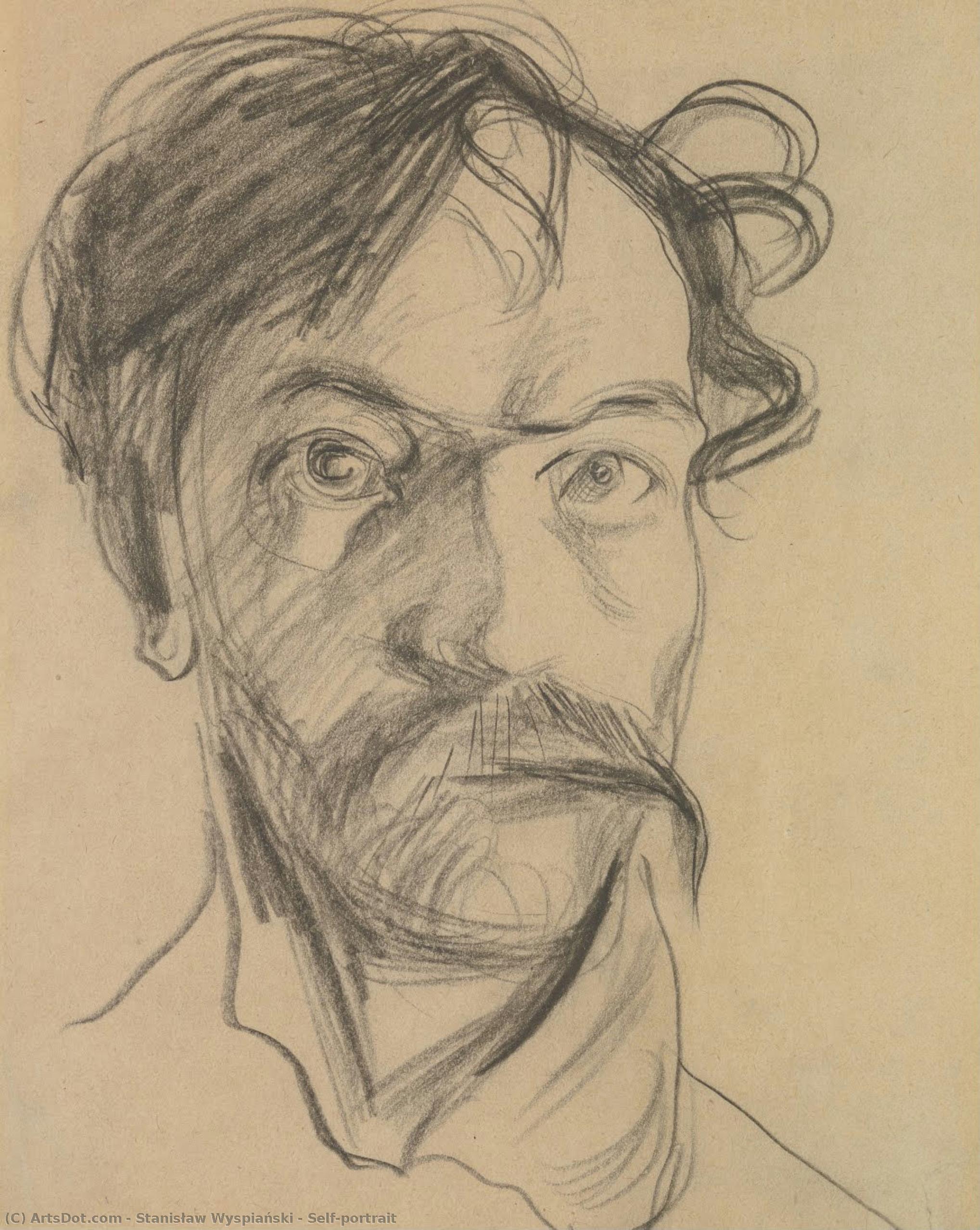
Self-portrait
Reproduction Medium
Reproduction Size
-


Total Price
$ 263
Artwork Description
The Final Gaze: A Soul Unveiled
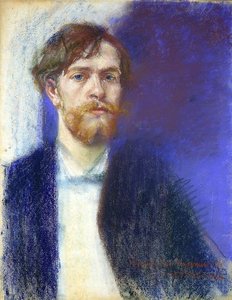
In the twilight of his short but incandescent life, Stanisław Wyspiański produced a work that transcends the boundaries of mere portraiture to become a profound psychological document. Created perhaps only months before his untimely death in 1907, this Self-portrait is far more than a study of a face; it is an intimate confrontation with mortality. As the artist stood at the threshold of his own end, he turned his gaze inward, capturing not just his physical likeness, but the very disintegration of his being. The drawing serves as a haunting testament to a man who, despite facing the dissolution of his physical form, maintained a spiritual intensity that continues to pierce through the decades.
The composition is strikingly intimate, utilizing a tight crop that forces the viewer into an inescapable encounter with the artist's features. There is no background to provide sanctuary or context; there is only the face, emerging from the shadows of the paper. Through a masterful use of Expressionist principles, Wyspiański eschews the polished smoothness of academic realism in favor of a raw, visceral energy. The lines are thick, gestural, and unapologetically heavy, carving out the contours of his visage with an urgency that suggests a race against time. This technique creates a sense of movement and instability, as if the subject is caught in a moment of profound metamorphosis.
Technique and the Language of Line
Executed primarily with graphite pencils on paper, the artwork relies on the subtle yet powerful interplay of light and shadow to build form. The artist employs varying line weights to create a tactile, almost rugged surface that mirrors the internal turbulence of his subject. The lighting, appearing to descend from above, casts deep, dramatic shadows across the planes of the face, accentuating the hollows of the eyes and the structural strength of the brow. This chiaroscuro effect does not merely provide three-dimensional depth; it serves a symbolic purpose, highlighting the tension between the fading physical shell and the enduring light of the intellect.
The texture of the drawing is achieved through meticulous yet spontaneous shading, where every stroke feels heavy with intention. The angularity of the shapes and the somewhat distorted proportions contribute to an atmosphere of unease and introspection. For the collector or lover of fine art, this piece represents a pinnacle of Polish Symbolism, where the technical mastery of the pencil is used to bridge the gap between the visible world and the unseen emotional landscape. It is a work that demands attention, offering a depth of character that rewards repeated observation.
A Legacy for the Modern Collector
For interior designers and curators of meaningful spaces, this self-portrait offers an unparalleled opportunity to introduce a piece of profound historical and emotional weight. Its monochromatic palette makes it a versatile yet commanding presence in any sophisticated setting, capable of anchoring a room with its somber elegance and intellectual gravity. It is a work that speaks to the themes of resilience, identity, and the human condition—making it an ideal selection for those who seek art that provokes thought and stirs the soul.
Owning a high-quality reproduction of this masterpiece allows one to bring the spirit of the Young Poland movement into a contemporary environment. It is not merely a decoration, but a conversation piece that invites contemplation on the nature of creativity and the enduring power of the human spirit even in the face of decay. To display this work is to honor the legacy of a polymath who saw the beauty in the struggle and the light within the darkness.
Related Artworks
Artist Biography
The Soul of Young Poland: The Life and Vision of Stanisław Wyspiański
In the misty, historical heart of Kraków, a singular genius emerged to redefine the cultural landscape of a nation yearning for identity. Stanisław Wyspiański was not merely a painter; he was a polymath, a visionary whose creative spirit breathed life into the Young Poland movement. Born in 1869, his short but incandescent life was a whirlwind of artistic exploration that bridged the gap between the delicate aesthetics of Art Nouveau and the profound, often turbulent, depths of Polish Symbolism. To study Wyspiański is to witness a man attempting to capture the very essence of a soul—both individual and national.
His development as an artist was deeply rooted in the rich, academic traditions of his training, yet he possessed an innate rebellion against the rigid constraints of realism. His work began to pulse with a new kind of energy, one that drew heavily from the vibrant folk motifs of the Polish countryside and the intricate, organic lines characteristic of the Secessionist style. This fusion created a visual language that was uniquely his: a delicate balance of botanical precision and haunting, metaphorical weight. He saw the world not just as it appeared, but as it felt, imbuing every petal and every portrait with a sense of cosmic significance.
A Master of Light and Symbolism
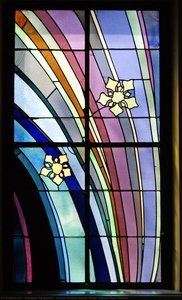
Wyspiański’s mastery extended far beyond the canvas, reaching into the very architecture of sacred spaces. He is perhaps most celebrated for his breathtaking stained glass windows, which transformed light into a medium of spiritual storytelling. In these works, color becomes a character itself, with deep blues and fiery ambers dancing through glass to evoke themes of martyrdom, rebirth, and national endurance. His ability to manipulate light allowed him to create immersive environments where the boundaries between the physical world and the symbolic realm began to dissolve.
Beyond his visual arts, his literary contributions were equally monumental. As a playwright and poet, he utilized the stage to weave complex tapestries of Polish history and myth. His most famous drama, The Wedding, stands as a cornerstone of Polish literature, a masterpiece that uses a single night of celebration to dissect the social and political anxieties of a nation under partition. Through his writing, he explored the tension between tradition and modernity, using symbolism to critique the inertia of the intelligentsia while celebrating the raw, unyielding spirit of the peasantry.
Legacy of a Visionary
The historical significance of Stanisław Wyspiański lies in his role as a cultural architect. He did not just create art; he helped construct a visual and literary identity for a people seeking sovereignty. His influence can be traced through several key achievements:
- Integration of Art Forms: He broke the barriers between fine arts, decorative arts, literature, and theater, creating a unified aesthetic experience.
- National Symbolism: He elevated Polish folk motifs to the level of high art, making them central to the modern national consciousness.
- Art Nouveau Innovation: His use of flowing, organic lines and expressive color palettes helped define the Polish iteration of the Art Nouveau movement.
- Enduring Dramatic Impact: His plays continue to be staged globally, serving as profound explorations of human psychology and political struggle.
Though his life was tragically cut short at the age of thirty-eight, the brilliance of his output remains undimmed. Wyspianski left behind a legacy that continues to haunt and inspire, a testament to the power of art to serve as both a mirror to society and a beacon for its future. His work remains an essential pilgrimage for anyone seeking to understand the profound intersection of beauty, tragedy, and national identity.
stanislaw wyspianski
1869 - 1907 , Poland
Quick Facts
- Artistic Movement Or Style: Polish Symbolism, Young Poland
- Date Of Birth: 1869
- Date Of Death: 1907
- Full Name: Stanisław Wyspiański
- Nationality: Polish
- Notable Artworks:
- Stained glass works
- The Wedding
- Place Of Birth: Kraków, Poland
Related Articles
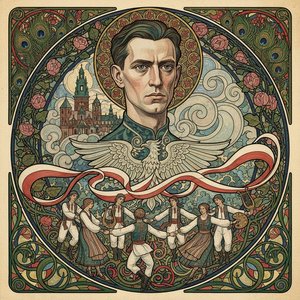
Stanisław Wyspiański: Symbolism, National Identity & the Polish Secession
Explore the life & work of Stanisław Wyspiański, a pivotal figure in Polish Symbolism and the Young Poland movement. Discover his iconic paintings, dramas, and stained glass designs reflecting national identity & artistic innovation.

Dark Masterpieces: 10 Iconic Paintings Dominated by Black Tones |
Explore 10 iconic paintings dominated by black tones, from Rembrandt’s chiaroscuro to Goya's dark expressions. Discover the stories behind these masterpieces & find museum-quality art reproductions for your home at .

Mars Black Masterpieces: 10 Iconic Paintings & Timeless Art Decor Ideas
Delve into the power of 'Mars Black' with 10 iconic paintings by masters like Rembrandt & Caravaggio. Explore dramatic chiaroscuro, gothic art, and timeless beauty. Find museum-quality reproductions & elevate your home decor on .
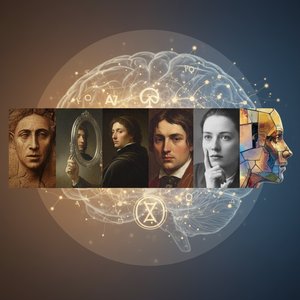
Reflecting the Self: A History of Portraiture & Psychological Insight
Explore the fascinating history of self-portraiture from Renaissance masters like Dürer & Rembrandt to modern interpretations. Discover the psychological insights and artistic techniques behind these iconic works. Expert analysis for art enthusiasts.
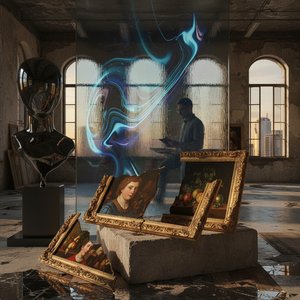
The Echo of Self: Reflectivity as a Core Theme in Art History & Contemporary Practice
Explore the rich history of self-representation in art, from Renaissance masters to modern innovators. Discover how artists use portraiture to reveal identity, emotion & the depths of the human psyche. Expert insights for collectors.