 Preview
 Send
Send Share
Share
 Details

 Download
 Similars
 X-Ray
X-Ray Diaporama
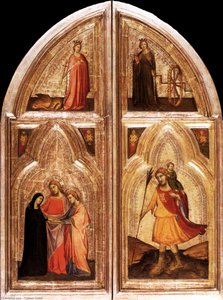
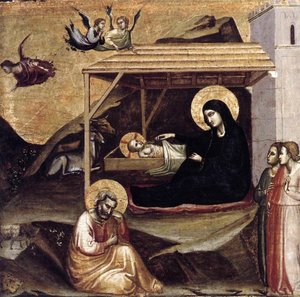
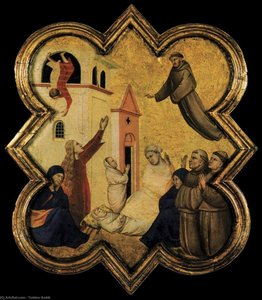
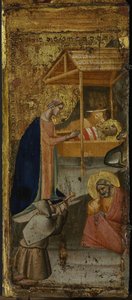
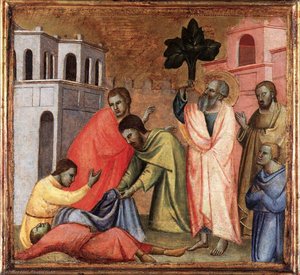
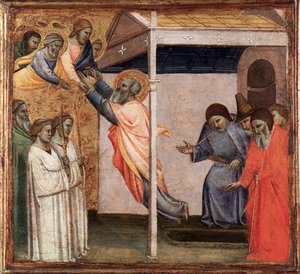
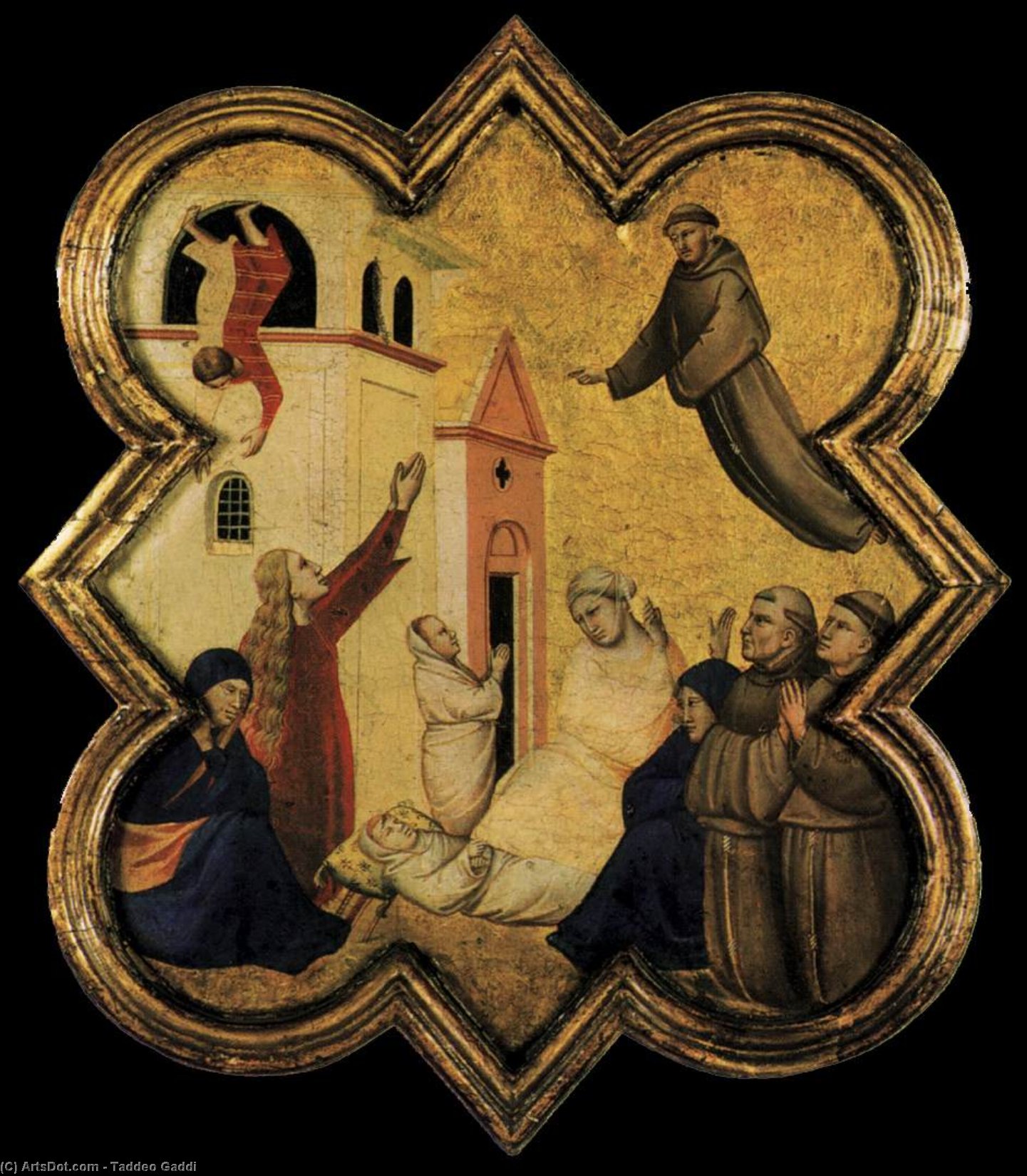
St Francis Restoring a Boy to Life
 Acrylic On Canvas
- WallArt
- Late Gothic
 1335
1335 35.0 x 31.0 cm
 Staatliche Museen
 Read More
Giclée / Art Print
Museum-quality giclée or canvas print with fast production and flexible finish options. ( Buy Hand Made Painting Buy Image)




P118B $10

P118H $10

P118W $10

P438Z $10

P508JH $12

P508YH $12

P805H $10

P805Z $10

P919BZ $10

P919G $10

P919XJ $10

P959ZH $10

P968JZ $12

W106C $8

W218G $10

W218JH $8

W218Y $10

W307PJ $10

W316G $10

W316PJ $8

W316Y $10

W398PJ $8

W4111J $10

W500HY $15

W500JH $15

W692G $12

W849H $8

W940BG $15

W953PJ $8




Pick from our preset sizes that match the artwork's original proportions.

You may enter your own dimensions to fit a specific frame or space. If your selected size does not match the original image's proportions, we will either crop the artwork or extend the image with a mirrored or solid-fill edge. A digital mockup will be sent for your approval before production begins.
Please note that the on-screen preview does not reflect the actual cropping or extension. Only the mockup will accurately show the final composition.
While custom sizes are available, we recommend selecting a dimension from the predefined list to preserve the original proportions.
Worldwide Delivery () in 2 weeks instead of standard 4/5 weeks. (23 August)

Free Worldwide Express Shipping

High-Quality Linen Canvas

Full Shipping Insurance

Customs Tax Refund Guarantee

True Color Matching Guarantee

60-Day Return Policy (Defects Only)

100% Money-Back Guarantee

Bulk Discount Offer
 Glass option is only available in size under 110 CM

St Francis Restoring a Boy to Life
Giclée / Art Print
Reproduction Size
-


Total Price
$ 63
Collectible Description
A Window Into Fourteenth Century Siena: Taddeo Gaddi’s St Francis Restoring Life
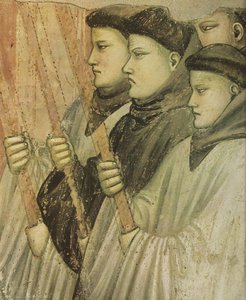
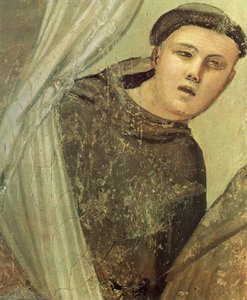
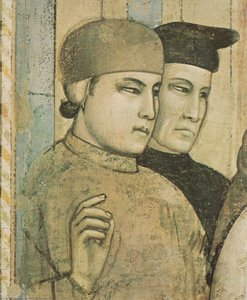
The Sala dei Nove in Siena’s Palazzo Pubblico stands as a monument not only to civic pride but also to artistic ambition—a testament to the daring vision of Ambrogio Lorenzetti and his protégé, Taddeo Gaddi. Their monumental frescoes depicting “St Francis Restoring a Boy to Life” offer an unparalleled glimpse into the anxieties and aspirations of Siena during the tumultuous years leading up to the Black Death, transforming it into more than just a depiction of religious piety; it’s a profound meditation on justice, compassion, and the enduring power of faith. Lorenzetti's influence extended far beyond his brother Pietro’s celebrated landscapes—he fundamentally reshaped artistic thought by embracing humanist principles alongside Byzantine traditions. This fusion resulted in an aesthetic characterized by meticulous observation of nature combined with stylized elegance, anticipating the stylistic innovations that would define the Renaissance. Unlike many contemporary artists preoccupied solely with religious iconography, Lorenzetti sought to portray human experience with psychological realism, capturing nuanced emotions and gestures—a characteristic evident throughout his oeuvre. Gaddi’s contribution to this ambitious project was crucial in establishing Siena as a center of artistic excellence. Trained under Cimabue and Giotto, Gaddi honed his craft mastering the techniques of tempera paint on plaster, ensuring that the frescoes retained their vibrancy for centuries to come. The meticulous layering of pigments—primarily reds, blues, and yellows—created textures that mirrored the natural world with astonishing accuracy. Furthermore, Gaddi’s masterful use of perspective subtly conveyed depth and spatial illusion, a breakthrough achievement compared to the flattened depictions prevalent in Gothic art. The fresco itself portrays St Francis kneeling before a lifeless boy, his hands outstretched as he performs an extraordinary miracle – restoring him to life. Surrounding him are figures representing Justice, Mercy, Faith, Hope, and Charity—symbols embodying the virtues considered essential for upholding moral order and fostering spiritual wellbeing. These figures aren’t merely decorative; they actively participate in the narrative, conveying a complex interplay of emotions and gestures that speaks to the viewer's intellect as well as their senses. The boy’s pallid complexion contrasts sharply with St Francis’ radiant aura, highlighting the transformative power of divine intervention. Beyond its technical brilliance, “St Francis Restoring Life” resonates deeply with viewers due to its exploration of humanist themes—specifically, the importance of compassion and social responsibility. Lorenzetti's insistence on portraying human beings as rational agents grappling with moral dilemmas foreshadowed the Renaissance’s focus on individual dignity and intellectual inquiry. The fresco serves as a poignant reminder that true greatness lies not in grand pronouncements but in acts of kindness and unwavering devotion—a timeless message conveyed through masterful artistry and enduring symbolism. Its impact continues to inspire artists and collectors alike, cementing Gaddi's legacy as one of the foremost painters of his era and securing “St Francis Restoring Life”’s place among Siena’s artistic treasures.Related Artworks
![Life Of Saint Francis - [01] - Stigmatization Of Saint Francis — Giotto Di Bondone, Early Renaissance](/media/artworks/images-thumb/fd/6a/fd6ae2a8f5e88e0ace6b86a21d020ded.jpg)
![Legend Of St Francis - [11] - St Francis Before The Sultan (trial By Fire) — Giotto Di Bondone, Proto-renaissance](/media/artworks/images-thumb/0d/32/0d328acfb6c90f7ef32707586e86044b.jpg)
![Legend Of St Francis - [24] - Canonization Of St Francis — Giotto Di Bondone, Gothic](/media/artworks/images-thumb/81/9b/819b5f0656848eb5cb3fcd40fd5756aa.jpg)
![Life Of Saint Francis - [04] - Death And Ascension Of St Francis — Giotto Di Bondone, Italian Renaissance](/media/artworks/images-thumb/08/8b/088b102b13c1a379233690905590f156.jpg)
Artist Biography
The Florentine Visionary: The Life and Legacy of Taddeo Gaddi
In the vibrant, burgeoning atmosphere of 14th-century Florence, a period defined by the transition from the medieval to the early Renaissance, Taddeo Gaddi emerged as a master of light, narrative, and architectural grandeur. As one of the most distinguished pupils of the legendary Giotto di Bondone, Gaddi did not merely inherit a style; he expanded the visual vocabulary of his era. His work serves as a vital bridge, carrying the monumental weight of Giottesque naturalism into a new realm of decorative complexity and luminous storytelling. To study Gaddi is to witness the evolution of Florentine painting, where the rigid hierarchies of the Byzantine tradition began to soften under the influence of human emotion and spatial depth.
The foundations of Gaddi's artistry were deeply rooted in the workshop of Giotto, where he learned the profound importance of chiaroscuro and the ability to render figures with a sense of physical presence. However, Gaddi possessed an innate inclination toward a more ornamental and detailed approach than his master. While Giotto focused on the raw, sculptural essence of humanity, Gaddi introduced a delicate elegance and a sophisticated use of light that could transform a flat surface into a window of divine radiance. This unique synthesis allowed him to excel in large-scale fresco cycles, where he demonstrated an unparalleled ability to organize complex theological narratives within architectural settings that felt both sacred and tangible.
Mastery of Narrative and the Sacred Light
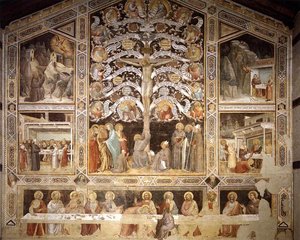
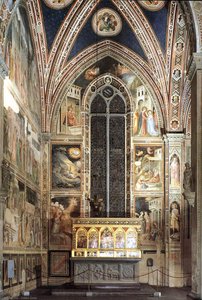
Gaddi’s most enduring contributions to the history of art are found within his magnificent fresco cycles, most notably in the Baroncelli Chapel in Santa Croce, Florence. In these works, he achieved a breathtaking level of narrative continuity, guiding the viewer through the lives of saints with a rhythmic grace. His technique involved a meticulous layering of color and light, often utilizing gold accents and rich pigments to evoke the celestial atmosphere of the divine. One can observe his mastery in pieces such as the Scene from the Life of St. Francis, where the artist captures moments of profound spiritual intimacy. Through these depictions, Gaddi does not just tell a story; he creates an immersive environment where birds, landscapes, and human figures coexist in a state of holy equilibrium.
Beyond his religious devotion, Gaddi’s work is characterized by several defining artistic elements:
- Architectural Integration: He possessed a rare talent for painting architectural frameworks that seemed to extend the actual physical space of the chapel or church.
- Luminous Color Palettes: His use of vibrant blues, deep reds, and shimmering golds helped define the aesthetic splendor of the Florentine school.
- Narrative Detail: Unlike the more austere compositions of his predecessors, Gaddi enriched his scenes with intricate details—from the texture of a monk's habit to the delicate movement of nature.
- Evolution of Light: He pushed the boundaries of how light interacts with surfaces, creating a sense of atmosphere that foreshadowed the atmospheric perspective of later Renaissance masters.
Historical Significance and Artistic Heritage
The historical importance of Taddeo Gaddi lies in his role as a custodian and an innovator. He preserved the monumental dignity of the Giottesque tradition while simultaneously infusing it with the decorative richness that would characterize the late Gothic period. His influence stretched far beyond the walls of Florentine chapels, impacting the way subsequent generations of painters approached the concept of space and light. By blending the structural solidity of his training with a new, more lyrical sensibility, Gaddi helped prepare the artistic landscape for the full flowering of the Renaissance.
As we look back upon his oeuvre, we see an artist who was deeply attuned to the spiritual and civic pulse of his time. His ability to render the sacred through the lens of a growing naturalism ensured that his works remained not only objects of veneration but also masterpieces of technical achievement. Taddeo Gaddi remains a cornerstone of Italian art history, a painter whose brushstrokes captured the very moment when the medieval world began to look toward the light of a new, human-centered era.
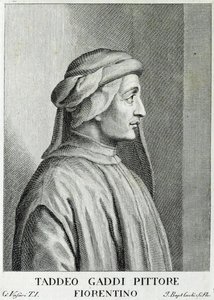
taddeo gaddi
1290 - 1366 , Italy
Quick Facts
- Artistic Movement Or Style: Early Renaissance
- Artists Or Movements Influenced By This Artist:
- Giotto
- Proto-Renaissance
- Artists Who Influenced This Artist:
- Simone Martini
- Italo-Byzantine art
- Date Of Birth: c. 1290
- Date Of Death: 1348
- Full Name: Ambrogio Lorenzetti
- Nationality: Italian
- Notable Artworks:
- Allegory of Good Gov'
- Allegory of Bad Gov'
- Place Of Birth: Siena, Italy
Related Articles
Francis Bacon's Masterpieces: Exploring 25 Iconic Paintings | ArtsDot
Delve into the haunting world of Francis Bacon with ArtsDot. Explore 25 iconic paintings, from his visceral portraits to powerful triptychs. Discover the stories behind these masterpieces & find museum-quality art reproductions for your home. Explore the full collection online!

The Fresco as Family Legacy: Preserving Heritage Through Wall Art
Explore the rich history & enduring legacy of fresco painting. Discover how to preserve family heritage through stunning wall art. Expert insights & restoration guidance.

The Enduring Legacy of Fresco Painting: Techniques, History & Contemporary Relevance
Explore the rich history & enduring artistry of fresco painting – from Giotto to Michelangelo! Discover techniques, conservation efforts, & modern applications. Learn how ArtsDot brings this timeless art form to your home.

The Enduring Legacy of Fresco: Technique, History & Artistic Expression Across Cultures
Explore the rich history & enduring legacy of fresco painting! Discover ancient techniques, Giotto's masterpieces, and modern applications. Expert insights for art lovers & professionals.
Art That Lives With You: The Emotional Power of a Custom Interior Fresco
Discover the emotional power & timeless beauty of custom interior frescoes. Explore history, design tips & expert guidance from – creating lasting legacies.