 Preview
 Send
Send Share
Share
 Details

 Download
 Similars
 X-Ray
X-Ray Diaporama
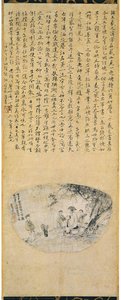
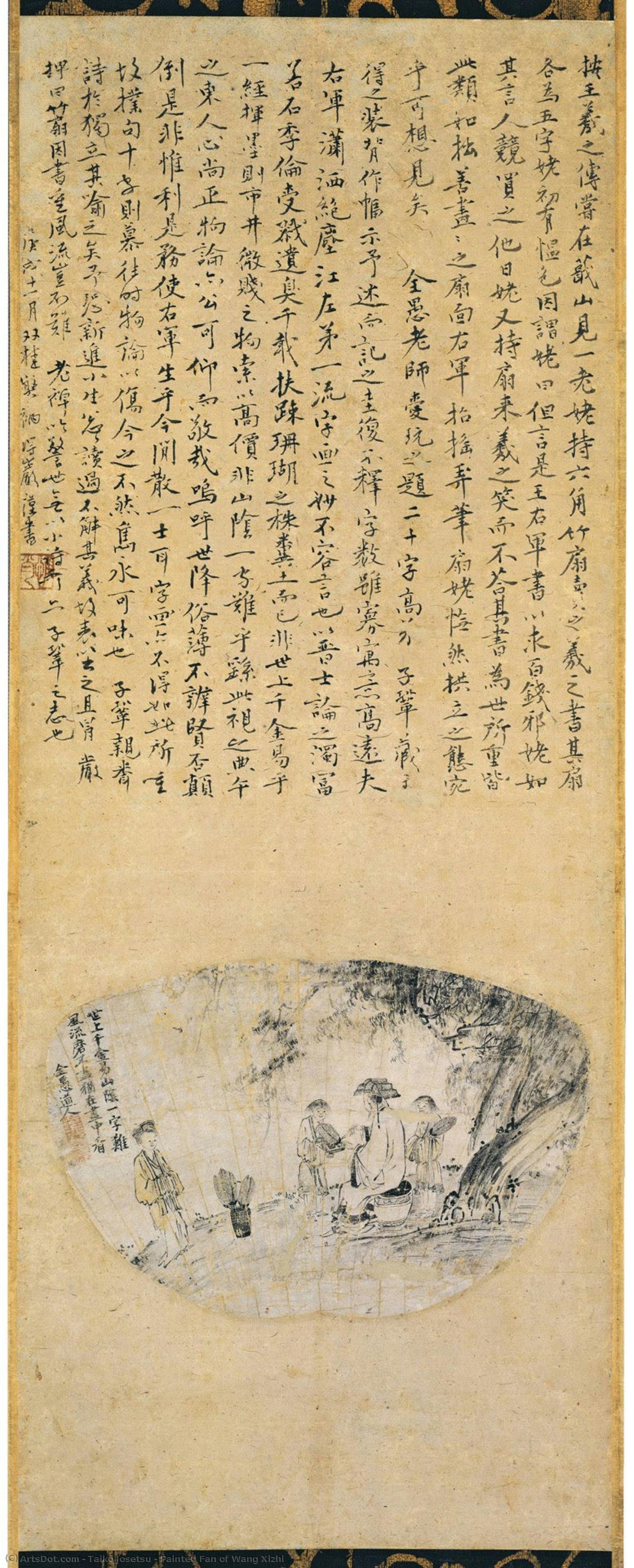
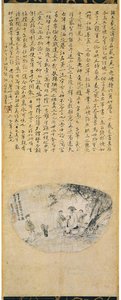
Painted Fan of Wang Xizhi

 Read More
Giclée / Art Print
Museum-quality giclée or canvas print with fast production and flexible finish options. ( Buy Hand Made Painting Buy Image)




































Pick from our preset sizes that match the artwork's original proportions.

You may enter your own dimensions to fit a specific frame or space. If your selected size does not match the original image's proportions, we will either crop the artwork or extend the image with a mirrored or solid-fill edge. A digital mockup will be sent for your approval before production begins.
Please note that the on-screen preview does not reflect the actual cropping or extension. Only the mockup will accurately show the final composition.
While custom sizes are available, we recommend selecting a dimension from the predefined list to preserve the original proportions.
Worldwide Delivery () in 2 weeks instead of standard 4/5 weeks. (30 August)

Free Worldwide Express Shipping

High-Quality Linen Canvas

Full Shipping Insurance

Customs Tax Refund Guarantee

True Color Matching Guarantee

60-Day Return Policy (Defects Only)

100% Money-Back Guarantee

Bulk Discount Offer
 Glass option is only available in size under 110 CM

Painted Fan of Wang Xizhi
Giclée / Art Print
Reproduction Size
-


Total Price
$ 63
Related Artworks
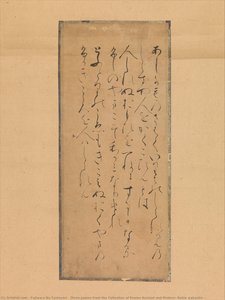
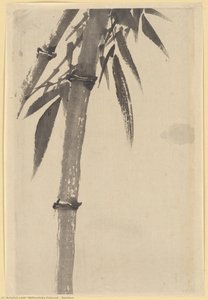
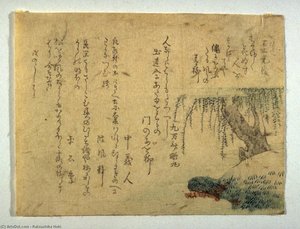
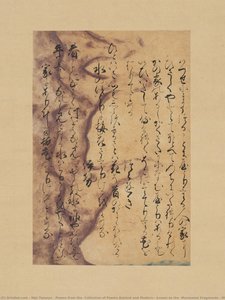
Artist Biography
The Architect of Silence: The Legacy of Taikō Josetsu
In the quiet, mist-shrouded landscapes of 15th-century Japan, a revolutionary aesthetic was quietly taking root, far removed from the vibrant, polychrome traditions of the past. At the heart of this transformation stood Taikō Josetsu, a painter-priest whose brushstrokes would forever alter the course of Japanese art. As a figure operating within the Muromachi period, Josetsu did not merely paint; he translated the profound, often paradoxical mysteries of Zen Buddhism into a visual language of monochrome ink. He is widely revered as the progenitor of the suiboku style—the monochromatic ink wash technique—a method that prioritized the spiritual essence of a subject over its literal, colorful representation.
Though much of his personal history remains veiled by the passage of centuries, we know that Josetsu was deeply embedded in the religious and intellectual life of Kyoto. Active at the Shōkoku-ji Temple under the patronage of the Ashikaga shoguns, he lived a life where art and meditation were inseparable. His training, likely influenced by the intensive artistic traditions of China, provided him with a mastery of calligraphy and ink wash that allowed him to explore the concept of mu, or emptiness. This pursuit of simplicity was not an absence of skill, but rather a disciplined refinement, where every subtle tonal variation in black ink served to evoke the infinite depth of the natural world.
A Visual Koan: The Mastery of Ink
The zenith of Josetsu’s creative output is perhaps best embodied in his most celebrated masterpiece, "Catching a Catfish with a Gourd." Created around 1413 by the decree of the Ashikaga shogun Yoshimochi, this work serves as more than just a landscape; it is a visual koan—a Zen riddle designed to provoke sudden enlightenment. The painting depicts a comical figure attempting an impossible task, set against a backdrop of winding rivers and bamboo groves. Through the use of minimal lines and delicate washes, Josetsu captures a sense of profound mystery, inviting the viewer to look beyond the physical impossibility of the act to find a deeper, spiritual truth.
This ability to blend humor with high philosophy became a hallmark of his approach. His technique relied on the jianbi method—an abbreviated brush drawing style—which demanded immense precision and a command over thin, decisive strokes. In works such as his "Painted Fan of Wang Xizhi," Josetsu demonstrated how he could weave historical anecdotes with delicate artistry, using the fluidity of ink to narrate tales of legendary calligraphers and the transient nature of fortune. His work was never static; it was a living dialogue between the artist's breath, the ink's flow, and the paper's void.
The Foundation of a Tradition
The historical significance of Taikō Josetsu cannot be overstated. By championing a purely black and white aesthetic, he provided the foundation upon which generations of Japanese masters would build. He was not only a pioneer but also a mentor, likely serving as a teacher to Tenshō Shūbun, another titan of the ink wash tradition. His influence ensured that the suiboku style would become the dominant language of Zen-influenced art for centuries to come, shaping the very soul of Japanese landscape painting.
To look upon a work by Josetsu is to enter a space of contemplation. He taught the eye to find beauty in the shadow, meaning in the mist, and a universe within a single drop of ink. His legacy remains etched in the history of the Muromachi period, standing as a testament to the power of restraint and the enduring resonance of the monochrome spirit.
taikō josetsu
1496 , Japan
Quick Facts
- Artistic Movement Or Style: Ink Wash Painting (Suiboku)
- Artists Or Movements Influenced By This Artist: ['Zen']
- Artists Who Influenced This Artist: ['Wang Xizhi']
- Date Of Death: 1496
- Full Name: Taikō Josetsu
- Nationality: Japanese
- Notable Artworks: ['Catching a Catfish with a Gourd']
- Place Of Birth: Kyoto, Japan
Related Articles
Ephemeral Expressions: Exploring the Nuances of Ink on Paper Through History & Contemporary Art
Explore the captivating world of ink wash painting – from its ancient origins to contemporary masters. Discover techniques, symbolism & conservation insights with ArtsDot.com.
The Beauty of Ink Wash: Discover Serene & Soulful Art for Your Home
Discover the tranquil beauty of ink wash painting. Explore how Sumi-e and monochrome landscapes bring Zen-inspired serenity and soulful elegance to your home decor through expert curation and timeless East Asian aesthetics.
Serenity on Canvas: A Guide to the Timeless Beauty of Japanese Landscape Painting
Discover the serene beauty of Japanese landscape painting. From Hokusai's iconic woodblock prints to meditative sumi-e ink washes, explore a visual journey through the 'floating world' and learn how to bring this timeless Zen aesthetic into your modern home decor.

Hokusai's Masterpieces: 25 Iconic Prints & Paintings for Art Lovers | ArtsDot
Journey through Katsushika Hokusai’s 25 most iconic artworks, including *The Great Wave*. Explore the ukiyo-e master's history, style & timeless Japanese woodblock prints. Find museum-quality reproductions for your home at ArtsDot.com.
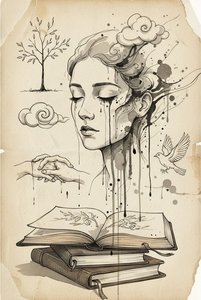
Ephemeral Lines: Exploring Emotional Resonance in Ink Sketching Traditions
Explore the profound art of ink sketching! Discover techniques to express emotion, master line work, and cultivate artistic sensitivity. Learn from historical masters & unlock your creative potential.