 Preview
 Send
Send Share
Share
 Details

 Download
 Similars
 X-Ray
X-Ray Diaporama
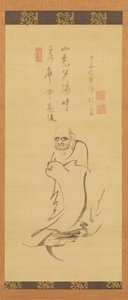
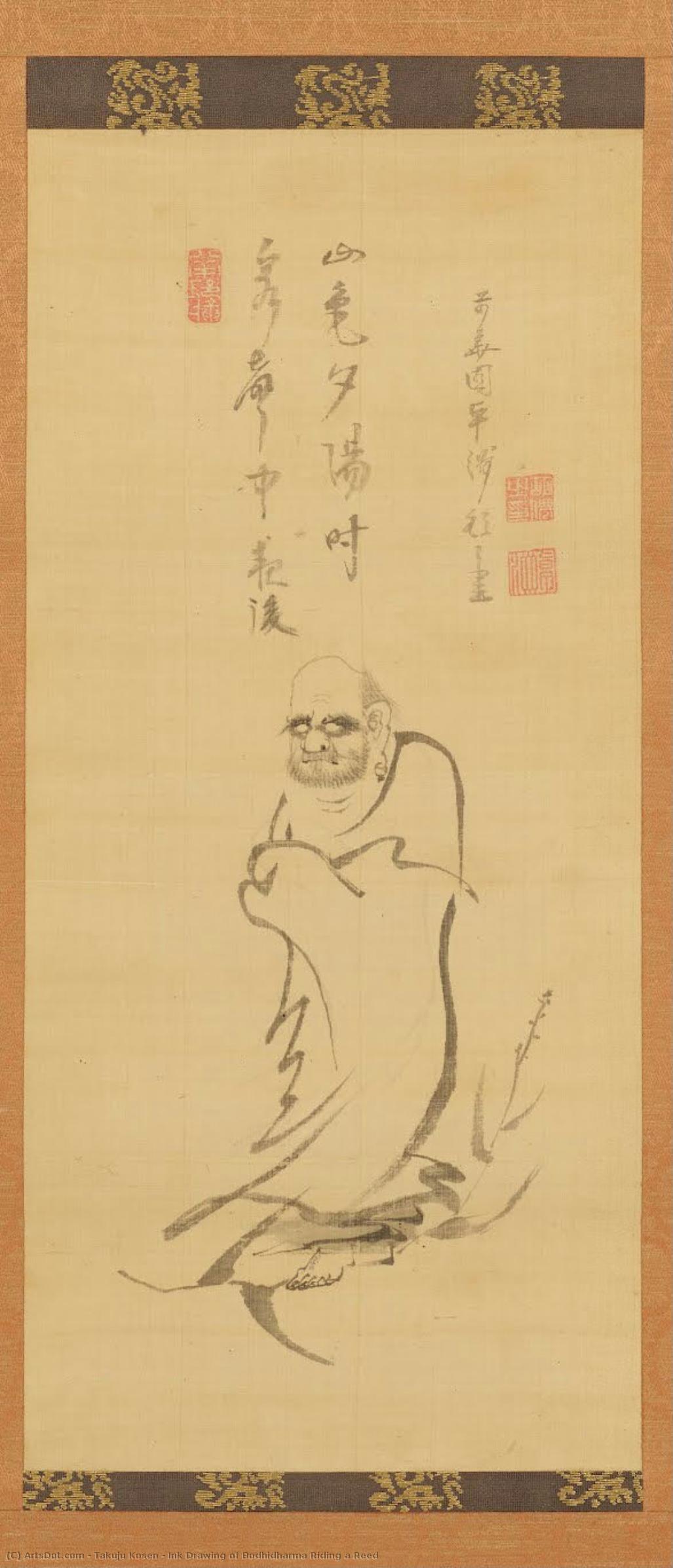
Ink Drawing of Bodhidharma Riding a Reed

 Read More
Giclée / Art Print
Museum-quality giclée or canvas print with fast production and flexible finish options. ( Buy Hand Made Painting Buy Image)




































Pick from our preset sizes that match the artwork's original proportions.

You may enter your own dimensions to fit a specific frame or space. If your selected size does not match the original image's proportions, we will either crop the artwork or extend the image with a mirrored or solid-fill edge. A digital mockup will be sent for your approval before production begins.
Please note that the on-screen preview does not reflect the actual cropping or extension. Only the mockup will accurately show the final composition.
While custom sizes are available, we recommend selecting a dimension from the predefined list to preserve the original proportions.
Worldwide Delivery () in 2 weeks instead of standard 4/5 weeks. (31 August)

Free Worldwide Express Shipping

High-Quality Linen Canvas

Full Shipping Insurance

Customs Tax Refund Guarantee

True Color Matching Guarantee

60-Day Return Policy (Defects Only)

100% Money-Back Guarantee

Bulk Discount Offer
 Glass option is only available in size under 110 CM

Ink Drawing of Bodhidharma Riding a Reed
Giclée / Art Print
Reproduction Size
-


Total Price
$ 63
Related Artworks

Artist Biography
The Ink-Stained Path of Takuju Kosen
In the quiet, meditative atmosphere of the Edo period, few figures bridged the gap between spiritual discipline and visual mastery as profoundly as Takuju Kosen. Born in 1760 in Tajima, Japan, Kosen was raised within a family deeply rooted in Confucian tradition. While his early years were dedicated to the rigorous study of classical texts, his soul eventually gravitated toward the profound stillness of Zen Buddhism. This transition from scholar to Rinzai monk would define not only his life but the very essence of his brushwork. His journey was one of seeking enlightenment through both the intellect and the senses, a pursuit that found its most enduring expression in the delicate, ink-washed landscapes and sacred figures that now stand as cornerstones of Japanese Buddhist art.
The trajectory of Kosen’s artistic development was irrevocably shaped by his relationship with the legendary Zen master Hakuin Ekaku. As a disciple within the Hakuin Zen School, Kosen did not merely learn to paint; he learned to see through a spiritual lens. Hakuin’s philosophy—a unique synthesis of Confucian ethics and Zen meditative practice—became the heartbeat of Kosen's creative output. This duality allowed Kosen to move beyond mere decoration, seeking instead a way to capture the unspoken truth of the natural world. He believed that by observing the minute details of a leaf or the rugged texture of a mountain, one could access the profound emptiness and interconnectedness central to Zen thought.
Technique and the Essence of Zen
Kosen’s mastery lay in his ability to balance meticulous precision with an ethereal, atmospheric quality. While many artists of his era leaned toward highly stylized or decorative motifs, Kosen pursued a path of remarkable realism, albeit a realism filtered through spiritual intention. His technique was a painstaking labor of devotion, involving the careful layering of ink washes to create subtle gradations of tone. These layers allowed him to build luminous surfaces that seemed to breathe with light and shadow, conveying a sense of depth that invited the viewer into a state of contemplation.
His work is characterized by several defining elements:
- Ink Gradation: The use of varying intensities of black ink to simulate the mist, moisture, and weight of the natural landscape.
- Spiritual Realism: A commitment to depicting nature with an accuracy that serves as a conduit for meditative insight.
- Calligraphic Fluidity: A seamless integration of brushstroke energy, reminiscent of the Zen tradition where the act of painting is itself a form of moving meditation.
A Lasting Legacy in Ink
Beyond his visual contributions, Kosen’s historical significance is cemented by his role as a chronicler of spiritual wisdom. His seminal text, “The Undying Lamp of Zen,” serves as a vital historical document, meticulously recording the teachings of Hakuin Ekaku. Through this writing, Kosen ensured that the intellectual and spiritual foundations of his lineage would be preserved for future generations. This dual legacy—as both a master of the brush and a guardian of the Dharma—positions him as a pivotal figure in the history of Japanese art.
Today, the works of Takuju Kosen continue to resonate with those seeking beauty in simplicity and truth in shadow. His ability to translate the profound, intangible concepts of Zen into the tangible medium of ink remains an unparalleled achievement. In every stroke of his brush, one finds the echo of a life dedicated to the pursuit of enlightenment, leaving behind a visual testament to the enduring power of the meditative spirit.
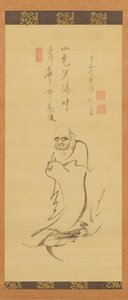
takuju kosen
1760 - 1833 , Japan
Quick Facts
- Artistic Movement Or Style: Zen Painting (Zenga)
- Artists Or Movements Influenced By This Artist: Hakuin Ekaku
- Artists Who Influenced This Artist: Gasan Jitô
- Date Of Birth: 1760
- Full Name: Takuju Kosen
- Nationality: Japanese
- Notable Artworks: ['Ink Drawing of Bodhidharma Riding a Reed']
- Place Of Birth: Tajima, Japan