 Preview
 Send
Send Share
Share
 Details

 Download
 Similars
 X-Ray
X-Ray Diaporama
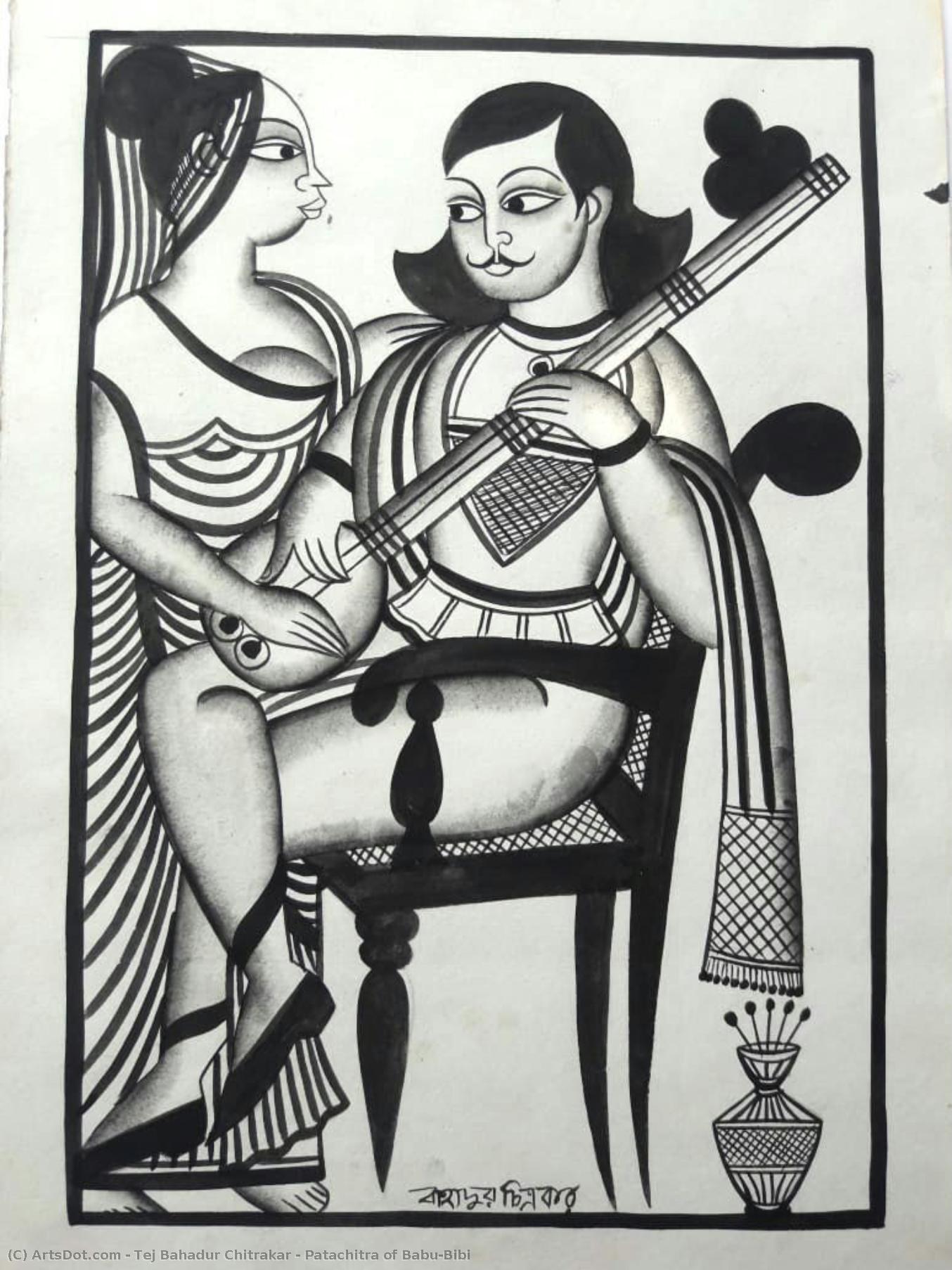
Patachitra of Babu-Bibi


 Read More
Giclée / Art Print
Museum-quality giclée or canvas print with fast production and flexible finish options. ( Buy Hand Made Painting Buy Image)




P118B $10

P118H $10

P118W $10

P438Z $10

P508JH $12

P508YH $12

P805H $10

P805Z $10

P919BZ $10

P919G $10

P919XJ $10

P959ZH $10

P968JZ $12

W106C $8

W218G $10

W218JH $8

W218Y $10

W307PJ $10

W316G $10

W316PJ $8

W316Y $10

W398PJ $8

W4111J $10

W500HY $15

W500JH $15

W692G $12

W849H $8

W940BG $15

W953PJ $8




Pick from our preset sizes that match the artwork's original proportions.

You may enter your own dimensions to fit a specific frame or space. If your selected size does not match the original image's proportions, we will either crop the artwork or extend the image with a mirrored or solid-fill edge. A digital mockup will be sent for your approval before production begins.
Please note that the on-screen preview does not reflect the actual cropping or extension. Only the mockup will accurately show the final composition.
While custom sizes are available, we recommend selecting a dimension from the predefined list to preserve the original proportions.
Worldwide Delivery () in 2 weeks instead of standard 4/5 weeks. (23 August)

Free Worldwide Express Shipping

High-Quality Linen Canvas

Full Shipping Insurance

Customs Tax Refund Guarantee

True Color Matching Guarantee

60-Day Return Policy (Defects Only)

100% Money-Back Guarantee

Bulk Discount Offer
 Glass option is only available in size under 110 CM

Patachitra of Babu-Bibi
Giclée / Art Print
Reproduction Size
-


Total Price
$ 63
Collectible Description
A Window Into Tradition: Exploring Tej Bahadur Chitrakar’s “Patachitra of Babu-Bibi”
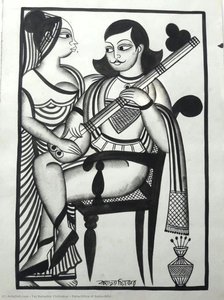
The artwork "Patachitra of Babu-Bibi," created by Tej Bahadur Chitrakar in 1928, stands as a cornerstone of Nepali modern art—a testament to the transformative influence of Western artistic principles on indigenous traditions. More than just a depiction of two figures seated together, it embodies a profound engagement with Kalighat style painting, reflecting the burgeoning interest in capturing everyday life and spiritual contemplation within Nepal’s evolving cultural landscape. This piece isn't merely visually arresting; it whispers tales of Nepali heritage and artistic innovation.The Essence of Kalighat Style: Bold Lines and Simplified Forms
Chitrakar’s approach to “Patachitra of Babu-Bibi” firmly establishes itself within the distinctive aesthetic framework of Kalighat art, a movement that emerged in Calcutta during the early 20th century. Rejecting academic realism—a trend gaining traction elsewhere—Kalighat artists prioritized expressive line work and stylized representations over meticulous detail. Chitrakar skillfully adopted this technique, utilizing thick, assertive lines to delineate the contours of the human figures and architectural elements like the chair and vase. These bold outlines convey dynamism and immediacy, mirroring the spirit of spontaneous observation characteristic of Kalighat’s artistic ethos. The simplification of forms—circles, squares, and rectangles dominating the composition—further enhances this visual impact, conveying a sense of clarity and symbolic resonance.Symbolism Embedded in Detail: Narrative and Cultural Significance
Beyond its stylistic choices, “Patachitra of Babu-Bibi” is rich in symbolic elements that illuminate Nepali cultural values. The seated figures represent a common scene from daily life—a conversation between men—yet their posture exudes serenity and contemplation. The inclusion of the ornate chair and vase serves as decorative embellishment but also carries deeper significance, reflecting the importance of hospitality and refinement within Newar culture. Furthermore, the attire worn by the figures hints at social status and tradition, anchoring the artwork firmly in its historical context. The artist’s deliberate use of geometric shapes—particularly circles representing wholeness and squares symbolizing stability—underscores these thematic concerns.Technique: Ink and Cloth – A Legacy Preserved
The execution of “Patachitra of Babu-Bibi” exemplifies a masterful blend of traditional craftsmanship and artistic vision. Chitrakar employed ink as his primary medium, applying it with meticulous precision to cloth or paper—a technique rooted in centuries of Nepali painting heritage. The layering of lines creates texture and depth, subtly suggesting the passage of time and conveying an emotional resonance that transcends mere visual representation. Careful consideration was given to lighting—casting soft shadows that illuminate the forms—enhancing their sculptural quality and contributing to the artwork’s overall atmosphere. This painstaking process reflects a dedication to preserving artistic traditions while simultaneously embracing new stylistic approaches.A Timeless Reflection of Nepali Identity
“Patachitra of Babu-Bibi” remains an enduring symbol of Nepal's artistic awakening during the early 20th century—a captivating fusion of Western influences and indigenous aesthetics. Its bold lines, simplified forms, and symbolic richness continue to inspire artists and collectors alike, reminding us of the power of art to capture the essence of cultural heritage and convey profound emotional truths. It’s a piece that invites contemplation and celebrates the beauty inherent in capturing the spirit of everyday life within a framework of spiritual reflection—a legacy beautifully preserved by Tej Bahadur Chitrakar.Related Artworks


Artist Biography
Tej Bahadur Chitrakar: A Pioneer of Modern Nepali Art
Early Life and Background
Tej Bahadur Chitrakar (1898–1971) was a Nepalese artist who played a pivotal role in the development of contemporary art in Nepal during the early 20th century. Born in Lalitpur, Nepal, as the second son to Shivadas and Ashamati, he came from a lineage deeply rooted in artistic tradition. His family belonged to the Chitrakar caste of the Newar community, traditionally entrusted with the creation of religious paintings since the 14th century AD under the Malla rulers.
Education and Training
Tej Bahadur’s exceptional talent was evident from a young age. In 1918, he became one of the earliest Nepalese artists to attend the Government College of Fine Art in Calcutta (now Kolkata), India. Sponsored by Prime Minister Chandra Shumsher, he received formal training and earned a degree in fine art with distinction in portraiture using oil paints in 1927. This education was instrumental in shaping his artistic vision and introducing him to Western techniques.
Artistic Development and Style
Upon returning to Nepal in 1929, Chitrakar spearheaded a significant shift in the Nepalese art scene. He moved away from strictly traditional religious art – which adhered to ancient textual descriptions – towards modern Western-style paintings. His work represented a fusion of these two worlds, blending traditional motifs and techniques with contemporary aesthetics. He was particularly known for his portraits and Patachitra works.
Major Achievements and Contributions
- Bridging Traditions: Chitrakar successfully integrated Western artistic principles into the Nepalese context, creating a unique style that resonated with both traditional sensibilities and modern tastes.
- Art Education: He dedicated himself to art education, teaching at Durbar High School and later becoming the head of Juddha Art School, nurturing generations of Nepali artists.
- Promoting Nepali Art: Chitrakar initiated ‘Chitrakala Udhyog Sangh’ (now defunct) with the aim of promoting and supporting Nepali art and artists.
- Expanding Artistic Themes: He broadened the scope of Nepalese painting beyond purely religious subjects, exploring portraiture, landscapes, and social themes.
Influences
Chitrakar’s artistic development was significantly influenced by his formal training in Calcutta, where he absorbed Western techniques in oil painting and portraiture. However, his upbringing within the Chitrakar caste and the rich tradition of Newari art also profoundly shaped his aesthetic sensibilities. He drew inspiration from traditional Patachitra styles while simultaneously embracing modern artistic trends.
Historical Significance
Tej Bahadur Chitrakar is recognized as a key figure in Nepal’s art history, credited with laying the foundation for modern Nepali art. His pioneering work paved the way for subsequent generations of artists to explore new styles and themes. Many of his enduring paintings are now held in prestigious art galleries worldwide, serving as a testament to his artistic legacy and contribution to Nepalese cultural heritage. He remains an iconic figure for those seeking to understand the evolution of Nepali art.
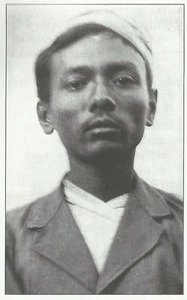
tej bahadur chitrakar
1898 - 1971 , Nepal
Quick Facts
- Birth Date: 1898
- Birth Place: Lalitpur, Nepal
- Death Date: 1971
- Movement: Modern Nepali Art, Patachitra
- Name: Tej Bahadur Chitrakar
- Nationality: Nepalese
- Notable Works:
- Patachitra on Environment Conservation
- Tribute to My Forefather
- Patachitra on Women
- Patachitra of Babu-Bibi
Related Articles
Angelo Chiacchio: A Mid-Century American Illustration Master & the Rise of Commercial Art
Explore the captivating world of Angelo Chiacchio, a master of mid-century American illustration. Discover his evolution, signature style, and lasting impact on commercial art & design. Learn about his legacy at the Museum of American Illustration.
Kay Rasmus Nielsen: A Golden Age Illustrator's Enchanting Legacy of Symbolism & Narrative
Explore the captivating world of Kay Rasmus Nielsen, a celebrated Golden Age illustrator renowned for his Art Nouveau fairy tale art & Disney contributions. Discover his unique style, enduring legacy, and how to collect his enchanting works.
The Refined Aesthetic of Victorian Illustration: A Study in Narrative & Technique
Explore the captivating world of Victorian illustration! Discover Pre-Raphaelite influences, key artists like Rossetti & Stephens, and the era's rich narrative detail. A deep dive for art enthusiasts.
Edmund Dulac: A Master of Golden Age Illustration – Exploring Myth, Symbolism & Art Nouveau Legacy
Explore the captivating world of Edmund Dulac, a master of Golden Age illustration! Discover his enchanting fairy tales, Art Nouveau style, and lasting influence on art & design. Learn about *The Rubaiyat* and more.
Raja Ravi Varma: Bridging Tradition & Modernity in 19th-Century Indian Art
Explore the life & art of Raja Ravi Varma, a pioneer who fused European techniques with Indian iconography. Discover his iconic paintings, lasting legacy, and influence on modern Indian art at ArtsDot.