 Preview
 Send
Send Share
Share
 Details

 Download
 Similars
 X-Ray
X-Ray Diaporama
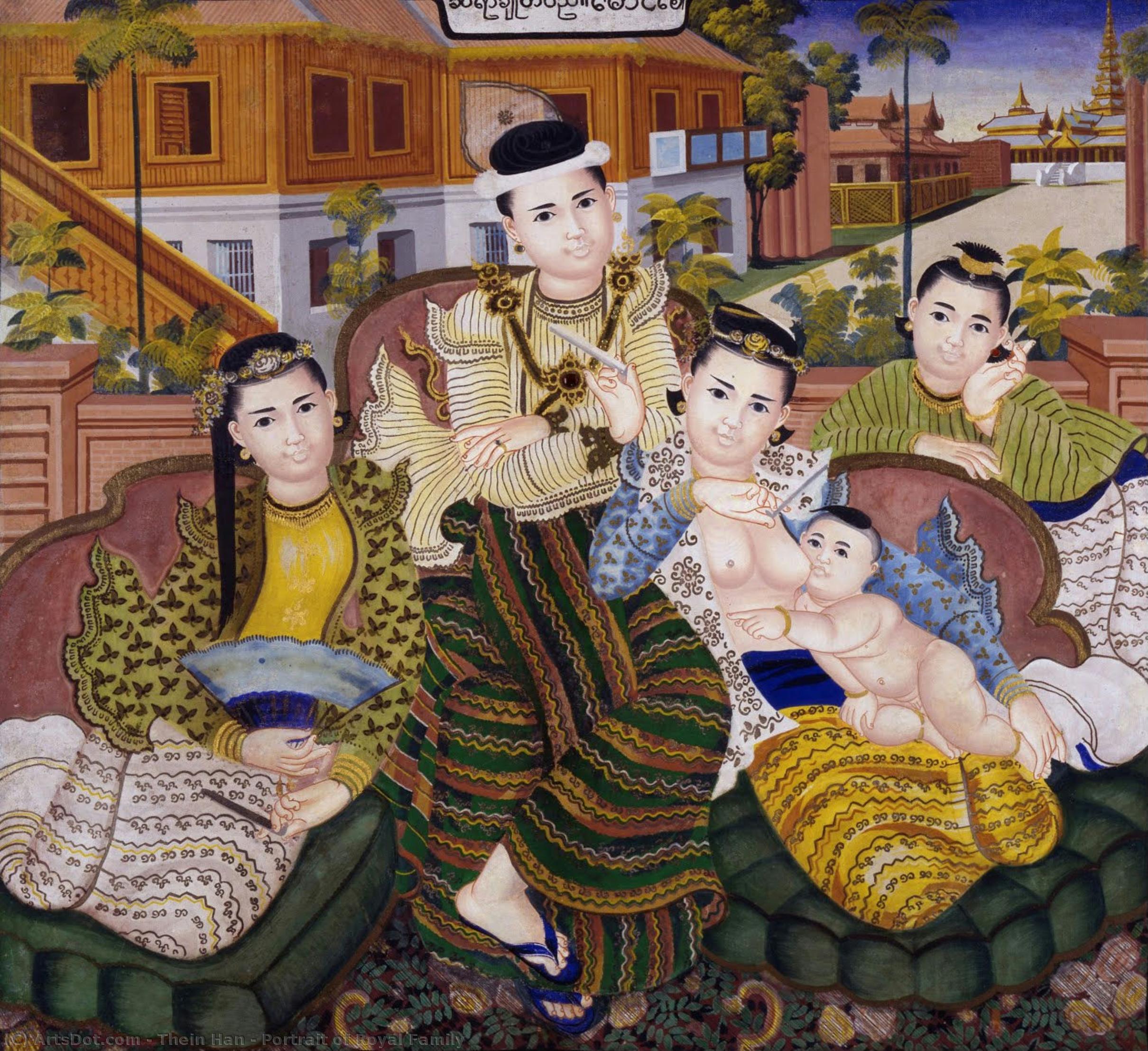
Portrait of Royal Family
 19th Century
 60.0 x 54.0 cm
 Fukuoka Asian Art Museum
 Read More
Hand Made Oil Reproduction
Hand-painted oil on canvas in your size and frame, made to order by our artists. ( Buy Print Buy Image)




P118B $10

P118H $10

P118W $10

P438Z $10

P508JH $12

P508YH $12

P805H $10

P805Z $10

P919BZ $10

P919G $10

P919XJ $10

P959ZH $10

P968JZ $12

W106C $8

W218G $10

W218JH $8

W218Y $10

W307PJ $10

W316G $10

W316PJ $8

W316Y $10

W398PJ $8

W4111J $10

W500HY $15

W500JH $15

W692G $12

W849H $8

W940BG $15

W953PJ $8




Pick from our preset sizes that match the artwork's original proportions.

You may enter your own dimensions to fit a specific frame or space. If your selected size does not match the original image's proportions, we will either crop the artwork or extend the painting with additional hand-painted elements. A digital mockup will be sent for your approval before production begins.
Please note that the on-screen preview does not reflect the actual cropping or extension. Only the mockup will accurately show the final composition.
While custom sizes are available, we recommend selecting a dimension from the predefined list to preserve the original proportions.
After order, ArtsDot.com team will email client for instructions and provide a mockup preview
Worldwide Delivery () in 3/4 weeks instead of standard 5 weeks. (28 August). No compromise on quality.

Free Worldwide Express Shipping

High-Quality Linen Canvas

Full Shipping Insurance

Customs Tax Refund Guarantee

True Color Matching Guarantee

60-Day Return Policy (Defects Only)

100% Money-Back Guarantee

Bulk Discount Offer
 Glass option is only available in size under 110 CM

Portrait of Royal Family
Reproduction Medium
Reproduction Size
-


Total Price
$ 263
A Glimpse into a Vanished Dynasty
In the delicate brushstrokes of thein han’s Portrait of Royal Family, we find more than just a family gathering; we encounter a poignant, painted memory of a lost era. Created in the wake of the British colonization of Burma, this work serves as a soulful bridge to the final days of the Konbaung dynasty. While the painting may not depict a formal royal assembly, it captures the intimate essence of those connected to the last ruler of one of Indochina’s most formidable kingdoms. It is a piece that breathes with the nostalgia of a sovereign nation, offering a window into a world that was being irrevocably transformed by colonial tides.
The composition invites the viewer into a private, domestic sanctuary where time seems to stand still. At the heart of the scene sits a patriarch, his presence anchored by the dignified weight of a traditional turban, embodying the strength and heritage of his lineage. Surrounding him are women and an infant, their placement on ornate couches and chairs suggesting a sense of profound togetherness and familial unity. The presence of the baby, nestled in a lap, adds a layer of tender continuity, hinting at the endurance of bloodlines even as political structures crumble around them.
The Art of Memory and Reconstructed History
Technically, this work occupies a fascinating space between photography and fine art. It is widely understood that the piece was likely executed by a descendant of a former court painter, working from photographic references to reconstruct a scene for posterity. This method imbues the painting with a unique stylistic duality; it possesses the observational precision of a photograph yet retains the warmth and textured soul of hand-painted artistry. For the discerning collector, this creates a captivating tension between the documented reality of the late 19th century and the romanticized, commemorative intent of the artist.
The brushwork, while focused on capturing the likeness and attire of the subjects, carries an emotional weight that transcends mere documentation. There is a soft, almost reverent quality to the rendering of fabrics and skin tones, which serves to elevate the subjects from historical figures to symbols of cultural resilience. The painting functions as a precious souvenir—a piece of "painted history" designed to preserve the dignity of the Burmese court for generations to come.
An Elegant Addition to Sophisticated Interiors
For interior designers and art enthusiasts, Portrait of Royal Family offers an unparalleled opportunity to introduce a sense of narrative depth and historical grandeur into a space. Its rich subject matter and evocative atmosphere make it a commanding centerpiece for a study, a formal dining room, or a curated gallery wall. The piece does not merely decorate a room; it starts a conversation about heritage, the passage of time, and the enduring power of family bonds.
When seeking a high-quality reproduction, one looks for the ability to capture this specific emotional resonance—the way light hits the silk of a garment or the quiet dignity in a subject's gaze. Integrating such a work into a modern or classical interior provides a sophisticated anchor, blending the exotic allure of Southeast Asian history with the timeless elegance of fine portraiture. It is an investment in storytelling, bringing a piece of the Konbaung legacy into the contemporary home.
Related Artworks

Artist Biography
Piet Mondrian: Architect of Abstraction
Piet Mondrian, a name synonymous with modern art’s pursuit of pure form and universal harmony, was far more than simply an artist; he was a theorist, a philosopher, and a relentless innovator. Born Pieter Cornelis Mondriaan in Amersfoort, Netherlands, on March 7, 1872, his journey from depicting landscapes to constructing geometric abstractions is a testament to the evolving nature of artistic expression in the early 20th century. His life was shaped by a deep-seated belief that art could transcend the limitations of the material world and reveal underlying spiritual truths – a conviction that profoundly influenced his distinctive style and enduring legacy.Early Influences and Artistic Development
Mondrian’s early artistic training, though initially focused on traditional landscape painting under his father and uncle, revealed a nascent desire for something more profound. He began formal studies at the Amsterdam Academy in 1892, absorbing influences from the Hague School, known for its earthy palette and depictions of Dutch rural life. However, it was his encounter with Cubism in Paris in 1911 that proved transformative. The fractured perspectives and geometric fragmentation of Picasso and Braque ignited a revolutionary shift within him. He recognized in Cubism a potential to dismantle traditional representation and pave the way for a new kind of art – one divorced from direct imitation of reality. This pivotal moment marked the beginning of his deliberate move away from figurative work, a process he undertook with unwavering determination.The Birth of Neo-Plasticism and De Stijl
Following his relocation to Paris in 1914, Mondrian began to refine his artistic vision, ultimately developing what he termed “Neo-Plasticism” (Neoplasticisme). This wasn’t merely a style; it was a rigorous philosophical approach to art. He distilled his aesthetic down to its most essential elements: primary colors – red, blue, and yellow – black, white, and straight lines (primarily horizontal and vertical), eliminating any suggestion of depth or perspective. His goal was to create paintings that were not merely representations but embodiments of universal harmony and balance. Crucially, he wasn’t alone in this endeavor. He co-founded the *De Stijl* (“The Style”) art movement with Theo van Doesburg, a fellow artist and intellectual companion. *De Stijl*, which included architects, designers, and writers, advocated for a total synthesis of art and life, believing that geometric abstraction could be applied to all aspects of human experience – from architecture to fashion to typography.Key Works and Artistic Evolution
Mondrian’s artistic output during this period is characterized by an increasing simplification and reduction of form. Early works like *Pier and Ocean 5 (Sea and Starry Sky)*, created in 1917, demonstrate a clear departure from naturalistic representation, utilizing fragmented lines and planes to evoke the essence of the scene. *Composition with Red, Blue and Yellow* (1921) exemplifies his mature style – a stark grid of black lines intersecting with bold blocks of primary color. Later in his career, he experimented with more dynamic compositions, incorporating subtle shifts in rhythm and color, as seen in works like *Broadway Boogie Woogie* (1943), which reflects the energy and complexity of urban life. Even during World War II, while living in New York, Mondrian continued to develop his aesthetic, exploring new ways to express harmony through color and line.Legacy and Historical Significance
Piet Mondrian’s influence on 20th-century art is immeasurable. He stands as a pivotal figure in the development of abstract expressionism, minimalism, and countless other movements. His relentless pursuit of pure form and universal harmony provided a theoretical framework for artists seeking to transcend the limitations of representation. His work continues to resonate today, not only for its aesthetic beauty but also for its profound philosophical implications – a testament to his belief that art could be a powerful force for spiritual renewal and social transformation. He died in New York City on February 1, 1944, leaving behind a body of work that remains both strikingly modern and profoundly timeless.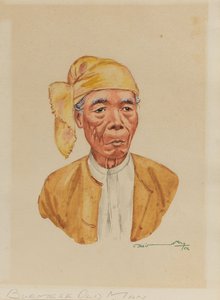
thein han
1872 - 1930 , Canada
Quick Facts
- Artistic Movement Or Style:
- Neo-Plasticism
- De Stijl
- Abstract art
- Artists Or Movements Influenced By This Artist:
- Vasily Kandinsky
- Kazimir Malevich
- Artists Who Influenced This Artist:
- Simon Mans
- Abraham Kuyper
- Date Of Birth: March 7, 1872
- Date Of Death: February 1, 1944
- Full Name: Pieter Cornelis Mondriaan
- Nationality: Dutch
- Notable Artworks:
- Composition with Red Blue and Yellow
- Broadway Boogie Woogie
- Victory Boogie Woogie
- Place Of Birth: Amersfoort, Netherlands
Related Articles
From Portraiture to Power: The Rise of Bespoke Royal-Themed Paintings as Luxury Personalized Gifts
Discover bespoke royal paintings – luxury personalized gifts crafted by skilled artists. Commission a unique heirloom artwork & elevate your space with timeless elegance. Expert art consultation available.
The Majesty of Representation: Exploring Regal Imagery in Art History
Explore the captivating history of royal portraiture with ArtsDot. Discover the symbolism, artistry, and enduring legacy of regal imagery in art. Expert insights for collectors & enthusiasts.
Sir William Beechey: Portraiture, Patronage & Shaping Georgian Society
Explore the life & art of Sir William Beechey, a leading British portraitist of the Georgian era. Discover his royal commissions, aristocratic subjects, and lasting influence on 18th-century painting. Learn more at ArtsDot.
Sir Francis Grant: Portraiture, Patronage & Victorian Society
Explore the life & work of Sir Francis Grant, a leading Victorian portraitist. Discover his aristocratic clientele, role at the Royal Academy, and enduring artistic legacy. Learn about art patronage in 19th-century Britain.
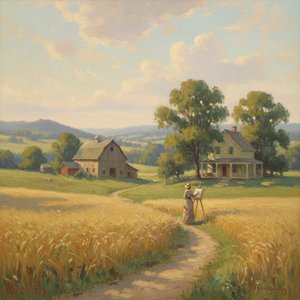
Arthur Stockdale Cope: A Study in American Impressionism & Rural Life's Poetics
Explore the life & work of Arthur Stockdale Cope, a prominent British portraitist influenced by American Impressionism. Discover his captivating rural landscapes and royal commissions at ArtsDot.