 Send
Send Share
Share
 Details

 Download
 Similars
 Diaporama
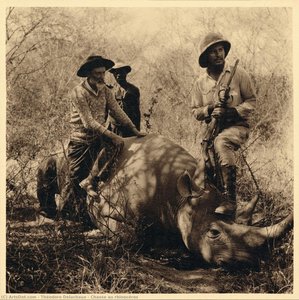
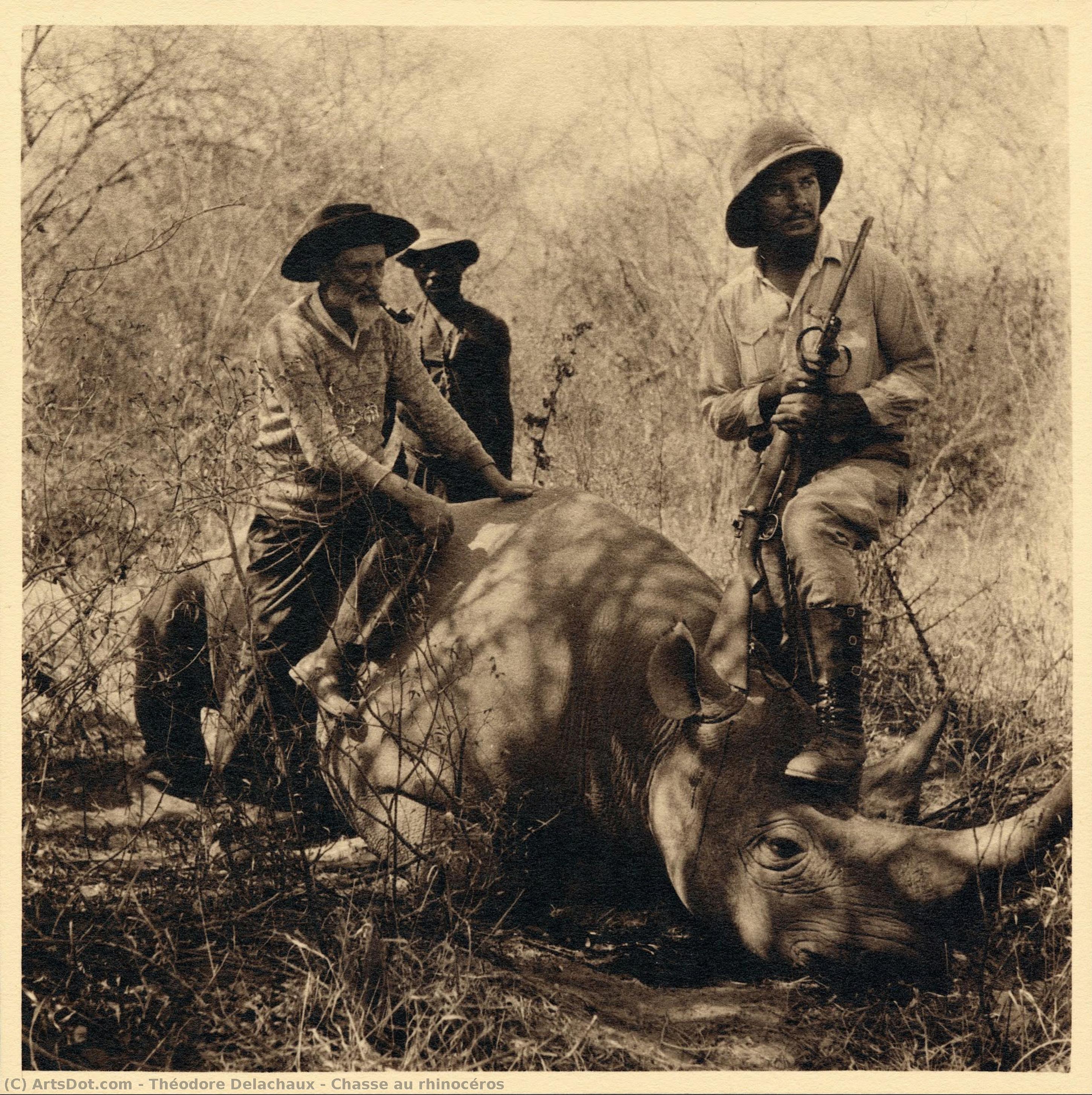
Chasse au rhinocéros
 Black and White Photography
- Photo
 1933
1933- Modern
 17.0 x 17.0 cm
 Musée d'ethnographie de Neuchâtel
 Read More
Giclée / Art Print
Museum-quality giclée or canvas print with fast production and flexible finish options. ( Buy Hand Made Painting Buy Image)




































Pick from our preset sizes that match the artwork's original proportions.

You may enter your own dimensions to fit a specific frame or space. If your selected size does not match the original image's proportions, we will either crop the artwork or extend the image with a mirrored or solid-fill edge. A digital mockup will be sent for your approval before production begins.
Please note that the on-screen preview does not reflect the actual cropping or extension. Only the mockup will accurately show the final composition.
While custom sizes are available, we recommend selecting a dimension from the predefined list to preserve the original proportions.
Worldwide Delivery () in 2 weeks instead of standard 4/5 weeks. (17 August)

Free Worldwide Express Shipping

High-Quality Linen Canvas

Full Shipping Insurance

Customs Tax Refund Guarantee

True Color Matching Guarantee

60-Day Return Policy (Defects Only)

100% Money-Back Guarantee

Bulk Discount Offer
 Glass option is only available in size under 110 CM

Chasse au rhinocéros
Giclée / Art Print
Reproduction Size
-


Total Price
$ 63
Collectible Description
A Moment Frozen in Time: The Raw Intensity of Chasse au rhinocéros
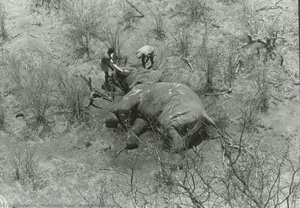
In the hauntingly silent depths of 1933, Théodore Delachaux captured a scene that transcends mere documentation, offering instead a visceral window into a bygone era of exploration and conquest. Chasse au rhinocéros is not simply a photograph; it is a profound narrative fragment that pulls the viewer into the heart of a dramatic encounter between man and nature. The monochrome composition presents a stark, unyielding reality where three men on horseback converge around the fallen form of a rhinoceros. There is an undeniable tension held within the frame—a heavy, breathless stillness that follows the thunderous climax of a hunt. Through the lens of Delachument, we witness the intersection of human ambition and the raw, untamed power of the wild, rendered in shades of silver and shadow that lend the scene an almost mythic quality.
The technical mastery of this piece lies in its ability to balance composition with raw emotion. The stark contrast of the black and white medium strips away the distractions of color, forcing the eye to focus on the textures of the rugged landscape, the muscular tension of the horses, and the grim gravity etched upon the faces of the hunters. One can almost feel the dust settling over the scene and hear the labored breathing of the animals. The presence of Charles Emile Thiébaud and R.P. Devis adds a layer of historical intimacy, transforming the image from a generic hunting scene into a specific, documented moment of ethnographic significance. This interplay of light and shadow creates a sense of depth that invites the collector to linger on the details, searching for the subtle clues of the struggle that has just unfolded.
For the discerning art lover or interior designer, this work serves as a powerful focal point that commands attention through its historical weight and atmospheric depth. It evokes the spirit of early 20th-century adventure and the complex, often controversial, relationship between humanity and the natural world. As a reproduction, it brings an air of sophisticated, scholarly intrigue to any space, acting as a conversation piece that bridges the gap between fine art photography and historical archive. Whether placed in a curated gallery setting or used to add a sense of rugged elegance to a contemporary study, Chasse au rhinocéros resonates with a timeless, melancholic beauty that continues to captivate the modern imagination.
Related Artworks
Artist Biography
Early Life and Artistic Foundations
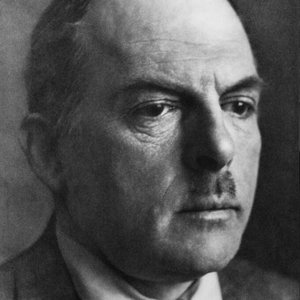
Théodore Delachaux, born in the picturesque town of Interlaken, Switzerland, on May 21st, 1879, embarked on a life deeply intertwined with both artistic expression and scholarly pursuit. His formative years were steeped in the beauty of the Swiss landscape, an environment that would subtly yet profoundly influence his later work. Delachaux’s initial training took place at the prestigious École des Beaux-Arts in Paris, a crucible for aspiring artists during a period of significant stylistic transition. This exposure to the Parisian art world—with its currents of Impressionism, Post-Impressionism, and burgeoning modern movements—laid the groundwork for his own unique artistic vision.
However, Delachaux’s path wasn't solely dedicated to painting. He seamlessly integrated his passion for art with a career in education, becoming a professor of drawing at the gymnase in Neuchâtel. This dual role speaks to a broader intellectual curiosity and a desire to share his knowledge and appreciation for visual culture. It also suggests a methodical approach to observation—a skill crucial not only for artistic representation but also for the meticulous documentation that would define much of his later work.
Ethnographic Studies in Angola: A Life’s Focus
The pivotal moment in Delachaux's career arrived in 1921 when he assumed the position of conservator at the Musée d'Ethnographie de Neuchâtel. This appointment wasn’t merely a professional step; it was a calling that would shape the trajectory of his life and artistic endeavors. The museum focused on non-European cultures, and Delachaux quickly became immersed in its collections, particularly those relating to Africa.
In 1932, Delachaux participated in the Second Swiss Scientific Mission to Angola, a journey that would become the defining experience of his life. Over the course of nearly two years—until December 1933—he meticulously documented the cultures and traditions of various Angolan communities. Unlike many colonial-era ethnographic endeavors, Delachaux’s work appears to have been driven by genuine curiosity and respect for the people he encountered. His photographs, in particular, offer a rare glimpse into daily life, rituals, craftsmanship, and social structures.
Artistic Style and Documentary Approach
Delachaux's artistic style is best described as representational with a strong emphasis on realism. While not overtly expressive or experimental, his paintings and photographs possess a quiet dignity and sensitivity. His black-and-white photographs are particularly striking for their clarity of detail and compositional balance. He eschewed dramatic lighting or sensationalism, instead opting for a straightforward approach that allowed the subjects—the people and their customs—to speak for themselves.
His work wasn’t about imposing an external narrative but rather about faithfully recording what he observed. This documentary impulse is evident in his depictions of traditional crafts like basket weaving, agricultural practices, and ceremonial attire. He captured not just the *what* of Angolan life but also the *how*—the intricate techniques passed down through generations.
Legacy and Historical Significance
Théodore Delachaux continued to serve as conservator of the Musée d'Ethnographie de Neuchâtel until his death in 1949, leaving behind a substantial body of work that continues to be valued by scholars and art enthusiasts alike. His photographs are particularly significant for their historical importance, offering a valuable counterpoint to more conventional colonial representations of Africa.
While he may not be widely known outside specialist circles, Delachaux’s contribution lies in his commitment to documenting cultural diversity with respect and accuracy. He stands as an example of an artist who seamlessly integrated artistic practice with scholarly research, creating a unique body of work that sheds light on the richness and complexity of Angolan cultures during a pivotal period in history.
- Key Themes: Ethnography, cultural documentation, African life, traditional craftsmanship, Swiss art.
- Influences: École des Beaux-Arts training, exposure to Impressionism and Post-Impressionism, the intellectual environment of Neuchâtel.
- Major Achievements: Conservator of the Musée d'Ethnographie de Neuchâtel, participation in the Second Swiss Scientific Mission to Angola, creation of a significant photographic archive documenting Angolan cultures.
théodore delachaux
1879 - 1949 , Switzerland
Quick Facts
- Artistic Movement Or Style: Ethnographic studies
- Date Of Birth: May 21, 1879
- Date Of Death: 1949
- Full Name: Théodore Delachaux
- Nationality: Swiss
- Notable Artworks:
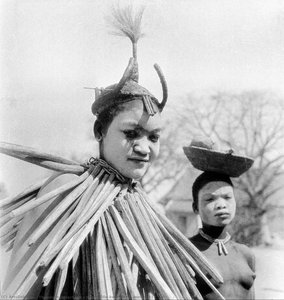
- Jeune fille kwanyama pendant l
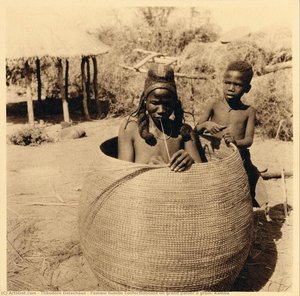
- Femme humbe confectionnant un grand panier à grain. Kâmba
- Chasse au rhinocéros
- Place Of Birth: Interlaken, Switzerland
Related Articles

Dark Masterpieces: 10 Iconic Paintings Dominated by Black Tones |
Explore 10 iconic paintings dominated by black tones, from Rembrandt’s chiaroscuro to Goya's dark expressions. Discover the stories behind these masterpieces & find museum-quality art reproductions for your home at .
Mars Black Masterpieces: 10 Iconic Paintings & Timeless Art Decor Ideas
Delve into the power of 'Mars Black' with 10 iconic paintings by masters like Rembrandt & Caravaggio. Explore dramatic chiaroscuro, gothic art, and timeless beauty. Find museum-quality reproductions & elevate your home decor on .
The Pursuit of Power & Prestige: Hunting Scenes in Western Art
Explore the rich history of hunting scenes in Western art, from royal pursuits to powerful allegories. Discover masterpieces & expert insights for discerning collectors. ArtsDot offers museum-quality reproductions.
Lamp Black & Masterpieces: 10 Paintings That Define Shadow & Light |
Delve into the captivating world of 'Lamp Black' tones with 10 iconic paintings by masters like Rembrandt & Caravaggio. Explore Baroque chiaroscuro, dramatic lighting & shadow in art history. Find museum-quality reproductions at
Ivory Black Masters: 10 Paintings That Define Dramatic Art |
Delve into the power of 'Ivory Black' with 10 iconic paintings by masters like Rembrandt & Caravaggio. Explore dramatic chiaroscuro, gothic moods & timeless art history. Find museum-quality reproductions and elevate your home decor at