 Preview
 Send
Send Share
Share
 Details

 Download
 Similars
 X-Ray
X-Ray Diaporama
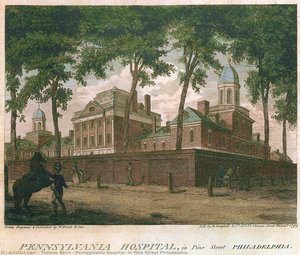
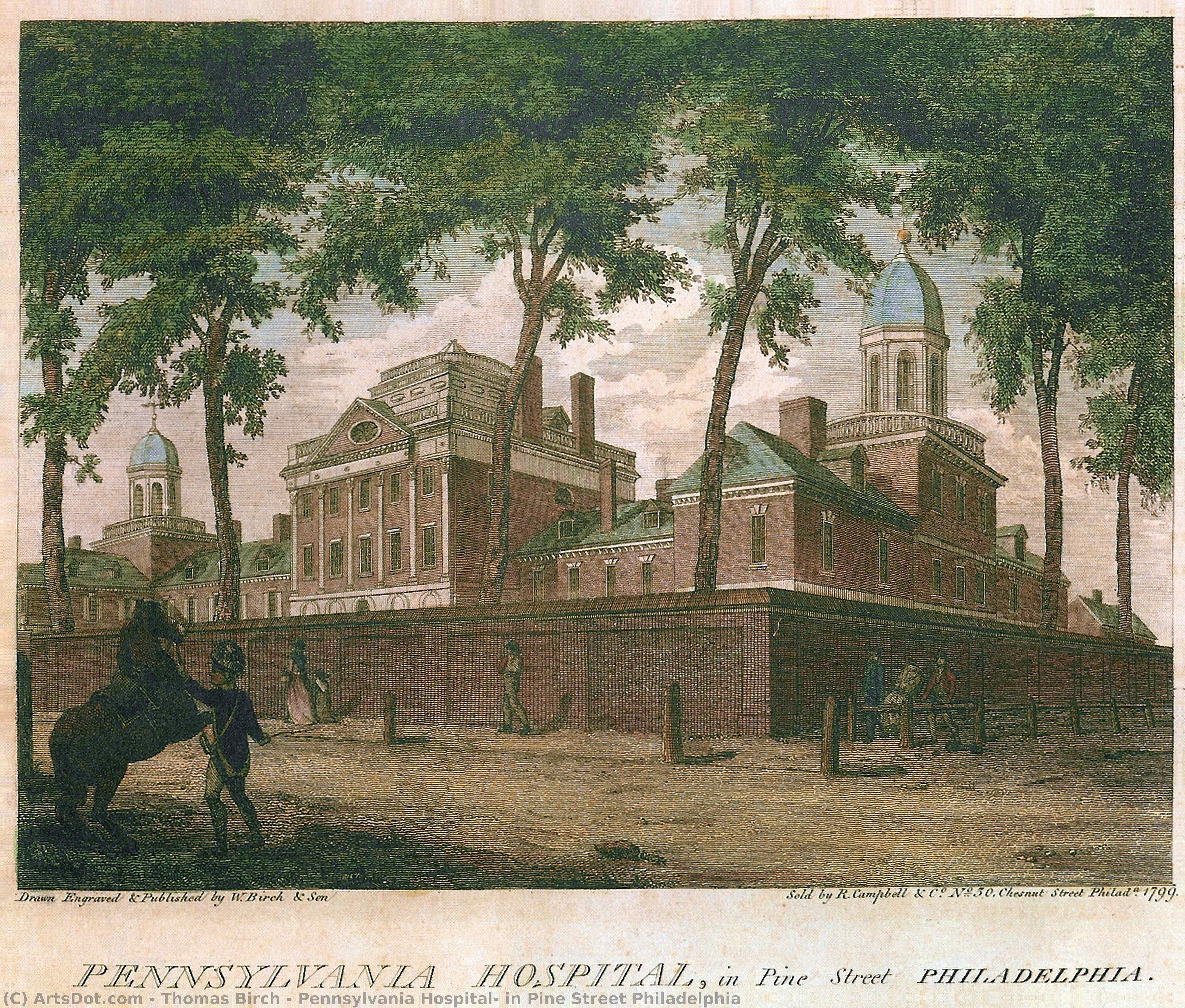
Pennsylvania Hospital, in Pine Street Philadelphia


 Read More
Giclée / Art Print
Museum-quality giclée or canvas print with fast production and flexible finish options. ( Buy Hand Made Painting Buy Image)




































Pick from our preset sizes that match the artwork's original proportions.

You may enter your own dimensions to fit a specific frame or space. If your selected size does not match the original image's proportions, we will either crop the artwork or extend the image with a mirrored or solid-fill edge. A digital mockup will be sent for your approval before production begins.
Please note that the on-screen preview does not reflect the actual cropping or extension. Only the mockup will accurately show the final composition.
While custom sizes are available, we recommend selecting a dimension from the predefined list to preserve the original proportions.
Worldwide Delivery () in 2 weeks instead of standard 4/5 weeks. (28 August)

Free Worldwide Express Shipping

High-Quality Linen Canvas

Full Shipping Insurance

Customs Tax Refund Guarantee

True Color Matching Guarantee

60-Day Return Policy (Defects Only)

100% Money-Back Guarantee

Bulk Discount Offer
 Glass option is only available in size under 110 CM

Pennsylvania Hospital, in Pine Street Philadelphia
Giclée / Art Print
Reproduction Size
-


Total Price
$ 63
A Window into 19th-Century Philadelphia
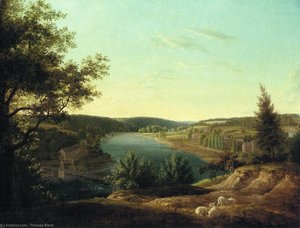
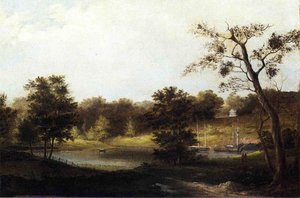
In the quiet, sweeping strokes of Thomas Birch’s Pennsylvania Hospital, in Pine Street Philadelphia, we are invited to step through a portal into a bygone era of American history. This exquisite oil painting serves as more than just a landscape; it is a soulful meditation on the intersection of urban progress and natural serenity. As the eye wanders across the canvas, one is immediately struck by the peaceful ambiance that envelops the hospital grounds. Birch, a master of capturing the essence of his surroundings, utilizes a delicate balance of light and shadow to frame the architectural significance of the institution within a lush, verdant setting. The trees that border the structure do not merely act as a frame but breathe life into the composition, offering a soft, organic contrast to the structured lines of the hospital itself.
The scene is imbued with a gentle vitality, achieved through Birch’s meticulous attention to the small, rhythmic details of daily life. Scattered throughout the landscape, figures move with a quiet purpose, their presence grounding the grand architecture in human reality. The inclusion of three horses—positioned strategically across the foreground and midground—introduces a sense of movement and temporal flow, reminding the viewer of the era's reliance on animal power and the steady pulse of a developing city. Each element, from the solitary figure near the left periphery to the subtle interplay of light on the central figures, contributes to a narrative of stability, community, and the quiet dignity of Philadelphia’s early civic life.
Historical Resonance and Artistic Mastery
To appreciate this work is to understand its profound historical weight. The Pennsylvania Hospital, established in 1751 by luminaries such as Benjamin Franklin, stands as a monument to American humanitarianism. By choosing this subject, Thomas Birch does not merely paint a building; he documents a cornerstone of the young United States' social fabric. His technique, characterized by a refined ability to blend naturalistic elements with urban settings, allows the viewer to feel the weight of history within the atmosphere of the painting. The artist’s background in both marine and cityscape painting informs his precise handling of light, which seems to glow with a nostalgic warmth, evoking a sense of tranquility that remains deeply resonant even centuries later.
For the discerning collector or interior designer, this reproduction offers an unparalleled opportunity to introduce a piece of American heritage into a modern space. The painting’s ability to evoke emotion—ranging from a sense of historical reverence to a profound feeling of peace—makes it a versatile centerpiece for any curated collection. Whether placed in a stately library, a professional office, or a sophisticated living area, the artwork acts as a conversation starter, inviting guests to contemplate the evolution of urban landscapes and the enduring beauty of the American spirit. Owning a high-quality hand-made reproduction of this masterpiece is an investment in both aesthetic elegance and historical storytelling.
Related Artworks
![View Up Wall Street With City Hall [federal Hall] And Trinity Church, New York City — Archibald Robertson](/media/artworks/images-thumb/c4/b5/c4b52d11cfee29a08b83fc326c27a6bc.jpg)
Artist Biography
A Transatlantic Vision: The Life and Art of Thomas Birch
Born in Warwickshire, England, in 1779, Thomas Birch embarked on a journey that would see him become a pivotal figure in the development of American marine painting. His story is one of artistic inheritance and adaptation, shaped by both European traditions and the burgeoning spirit of the New World. In 1794, at the age of fifteen, Birch immigrated to Philadelphia with his family, joining a wave of artisans and entrepreneurs seeking opportunity in the young United States. His father, William Russell Birch, was an accomplished engraver and miniaturist, and their collaborative venture – “Birch’s Views of Philadelphia” (1800) – quickly established them as prominent artists within the city's cultural landscape. This early work wasn’t merely a commercial success; it captured the essence of a rapidly evolving urban center, offering detailed depictions that resonated with a public eager to define its own identity. The project instilled in Thomas a keen eye for detail and composition, foundational skills he would later apply to his celebrated marine scenes.From Portraits to the Power of the Sea
Initially, Birch followed in his father’s footsteps, focusing on portraiture. However, by 1807, a significant shift occurred in his artistic trajectory. Drawn to the drama and dynamism of maritime life, he turned his attention to marine painting, a genre that would define his career. This transition wasn't arbitrary; it reflected both a personal fascination with the sea and a growing national interest in naval power, particularly as tensions escalated leading up to the War of 1812. Birch’s early marine works reveal an evolving style, deeply influenced by the Dutch masters – Jacob van Ruisdael and Jan van Goyen foremost among them. He admired their meticulous attention to atmospheric perspective, their ability to capture the subtle nuances of light on water, and their overall sense of realism. But Birch wasn't simply imitating; he was synthesizing these European techniques with an emerging American sensibility, imbuing his paintings with a patriotic fervor that resonated with audiences eager for artistic expressions of national pride.Naval Battles and National Identity
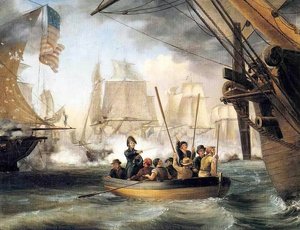
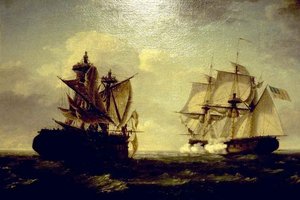
Birch’s name became synonymous with depictions of naval engagements during the War of 1812. His paintings weren't merely historical records; they were powerful visual narratives that celebrated American courage and resilience. USS United States and HMS Macedonian, perhaps his most famous work, immortalized a pivotal clash between American and British frigates. The painting’s dramatic composition, meticulous detail, and vibrant colors captured the intensity of battle while simultaneously conveying a sense of American triumph. Remarkably, this very canvas hung in the Oval Office during John F. Kennedy's presidency, a testament to its enduring symbolic power. Another significant work, Engagement Between the U.S. Frigate Constitution and the British Frigate Guerriere, further solidified his reputation as a master of marine painting. Beyond these iconic battle scenes, Birch also excelled at portraying tranquil harbor views and detailed ship portraits, showcasing his versatility and technical skill. He was, in essence, the first American artist to truly specialize in ship portraiture, setting a standard for accuracy and detail that would influence generations of artists to come.Legacy and Lasting Influence
Thomas Birch’s contributions to American art are undeniable. He didn't just paint ships; he captured a moment in history, reflecting the nation’s growing confidence and its aspirations on the world stage. His work provided valuable documentation of naval engagements, offering insights into maritime life during a crucial period of American development. His paintings served as both historical records and powerful symbols of national identity. Birch's influence extended beyond his immediate contemporaries; he helped establish marine painting as a significant genre within the American artistic landscape, paving the way for later artists to explore the beauty and drama of the sea. His works are now held in prestigious museum collections across the country – including the Pennsylvania Academy of the Fine Arts, the Smithsonian American Art Museum, and the Museum of Fine Arts, Boston – ensuring that his legacy will continue to inspire and captivate audiences for years to come. Elected an honorary member of the National Academy of Design in 1833, Birch’s life and art stand as a testament to the power of artistic vision and its ability to shape our understanding of history and national identity.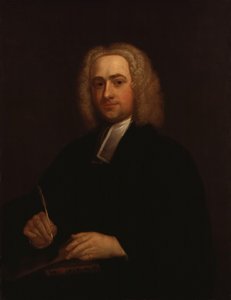
Thomas Birch
1779 - 1851 , United Kingdom
Quick Facts
- Artistic Movement Or Style: Marine painting, Portrait art
- Artists Or Movements Influenced By This Artist: ['Hudson River School']
- Artists Who Influenced This Artist:
- Jacob van Ruisdael
- Jan van Goyen
- Date Of Birth: 1779
- Date Of Death: 1851
- Full Name: Thomas Birch
- Nationality: British-American
- Notable Artworks:
- USS United States & HMS Macedonian
- U.S. Frigate Constitution
- View of the Water Gap
- Place Of Birth: London, UK
Related Articles
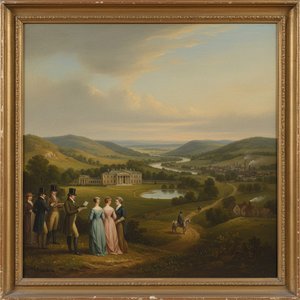
Thomas Barker of Bath: Landscape Painting & Societal Reflection in Early 19th-Century England
Explore the life & work of Thomas Barker of Bath, a key figure in 19th-century English Romanticism. Discover his Parisian success, iconic paintings like 'The Bride of Death', and lasting artistic legacy. Learn more at ArtsDot.
19th Century Masterpieces: 10 Paintings That Defined an Era | ArtsDot
Journey through 19th century art with ArtsDot! Explore 10 iconic paintings – from Monet & Renoir to Courbet – and discover the stories behind Romanticism, Realism & Impressionism. Find museum-quality reproductions for your home decor. Explore the full collection online!
Thomas Eakins: Realism, Anatomy & the American Spirit – A Comprehensive Exploration of Life and Legacy
Explore the life & legacy of Thomas Eakins, a pivotal American Realist painter. Discover his groundbreaking techniques, anatomical precision, and iconic works like 'The Gross Clinic.' A comprehensive guide for art enthusiasts.
Thomas Baines: Pioneering Landscape Art & Visual Documentation of 19th-Century Southern Africa
Explore the life & art of Thomas Baines, a pioneering British explorer and artist who documented 19th-century Southern Africa & Australia. Discover his stunning landscapes, war paintings, and invaluable cartographic contributions.
Thomas George Webster: Navigating Genre Boundaries & American Identity in 19th-Century Landscape Painting
Explore the captivating genre scenes of Thomas George Webster, a Victorian painter bridging British traditions with American themes. Discover his style, influences & legacy in 19th-century art history.