 Preview
 Send
Send Share
Share
 Details

 Download
 Similars
 X-Ray
X-Ray Diaporama
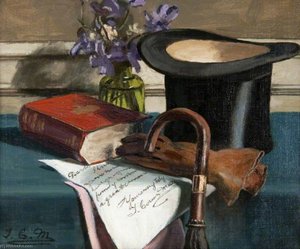
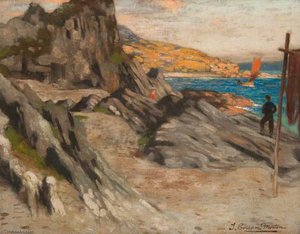
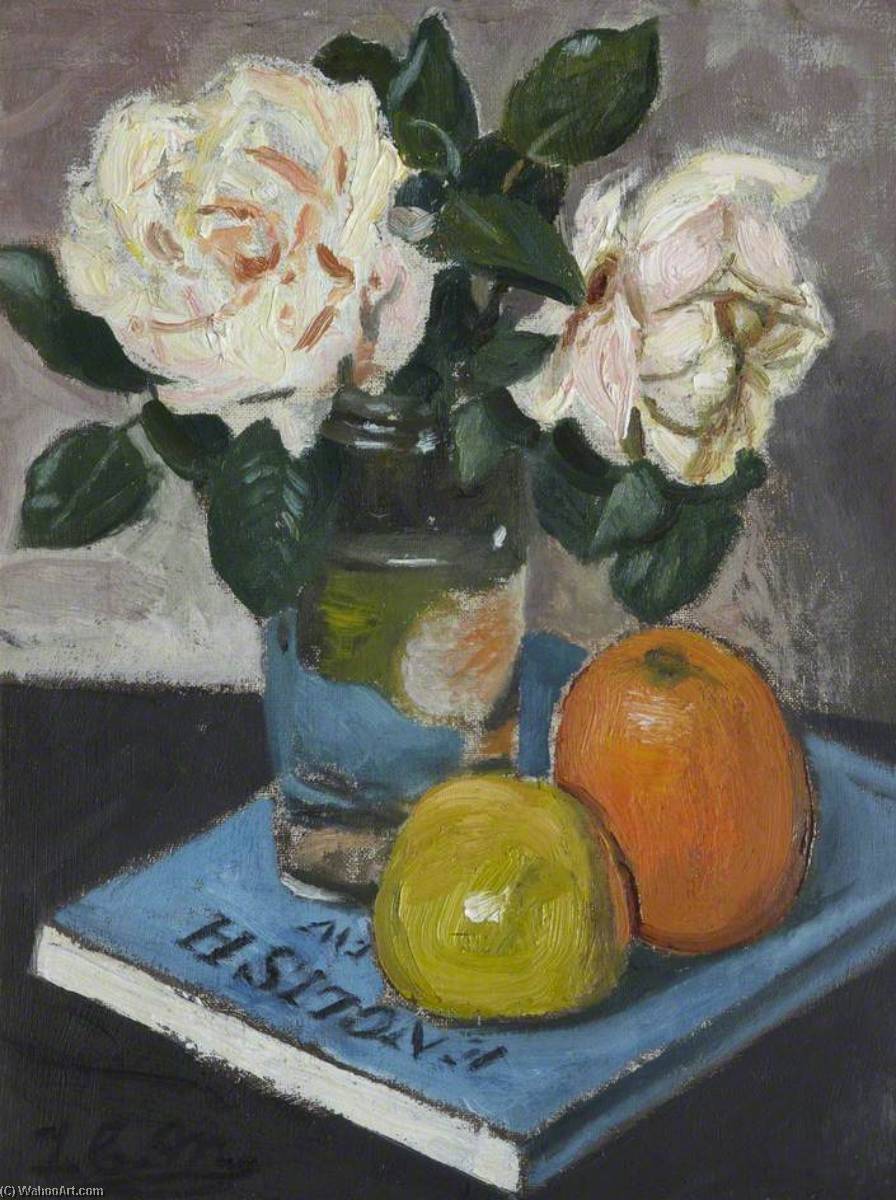
The 'English Review'
 Contemporary Realism
 32.0 x 24.0 cm
 Read More
Hand Made Oil Reproduction
Hand-painted oil on canvas in your size and frame, made to order by our artists. ( Buy Print Buy Image)




































Pick from our preset sizes that match the artwork's original proportions.

You may enter your own dimensions to fit a specific frame or space. If your selected size does not match the original image's proportions, we will either crop the artwork or extend the painting with additional hand-painted elements. A digital mockup will be sent for your approval before production begins.
Please note that the on-screen preview does not reflect the actual cropping or extension. Only the mockup will accurately show the final composition.
While custom sizes are available, we recommend selecting a dimension from the predefined list to preserve the original proportions.
After order, ArtsDot.com team will email client for instructions and provide a mockup preview
Worldwide Delivery () in 3/4 weeks instead of standard 5 weeks. (20 August). No compromise on quality.

Free Worldwide Express Shipping

High-Quality Linen Canvas

Full Shipping Insurance

Customs Tax Refund Guarantee

True Color Matching Guarantee

60-Day Return Policy (Defects Only)

100% Money-Back Guarantee

Bulk Discount Offer
 Glass option is only available in size under 110 CM

The 'English Review'
Reproduction Medium
Reproduction Size
-


Total Price
$ 263
Related Artworks
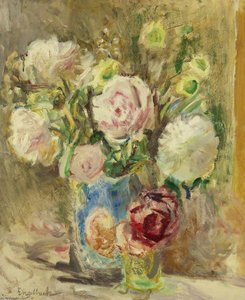
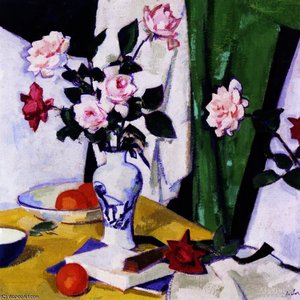
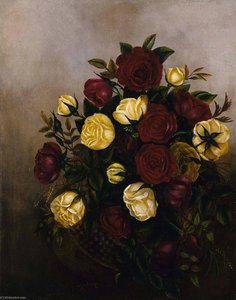
Artist Biography
The Visionary Light of Thomas Corsan Morton
In the vibrant tapestry of late nineteenth-century British art, few threads are as luminous or as deeply woven into the Scottish identity as those spun by Thomas Corsan Morton. A prominent figure within the celebrated Glasgow Boys, Morton was more than a mere chronicler of scenery; he was a painter of atmospheres, a master who sought to capture the ephemeral dance of light across the rugged landscapes of his homeland. Born in Glasgow in 1859, his journey began not with a brush, but with the structured world of legal studies. Yet, the call of the aesthetic proved irresistible, leading him away from the courtroom and toward the prestigious halls of the Glasgow School of Art and later the Slade School in London. This transition from law to fine art marked the beginning of a career defined by a profound sensitivity to the natural world.
Morton’s artistic evolution was significantly enriched by his time in Paris, where he immersed himself in the revolutionary currents of Impressionism. Under the guidance of masters such as Gustave Boulanger and Jules Joseph Lefebvre, he absorbed the techniques of light, color, and loose brushwork that would become the hallmarks of his mature style. This Parisian influence did not merely replicate French trends on Scottish soil; rather, it provided him with a new vocabulary to express the unique, often melanchative beauty of the Scottish Highlands and coastal retreats. Alongside his contemporaries in the Glasgow Boys, Morton embarked on collaborative expeditions to places like Kirkcudbright and Cockburnspath, where the interplay of mist, water, and earth offered endless inspiration for his increasingly expressive canvases.
A Mastery of Landscape and Light
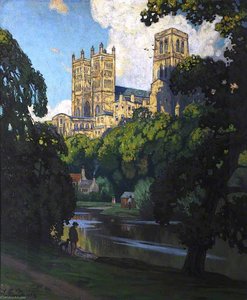
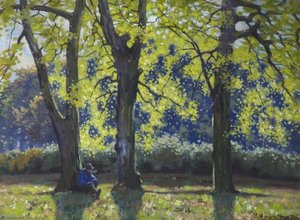
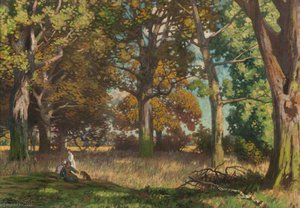
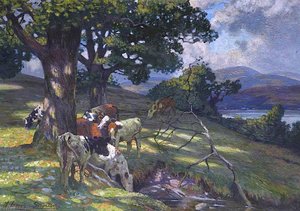
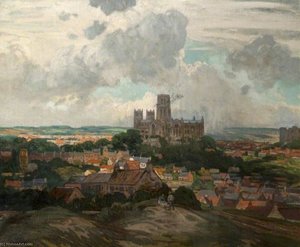
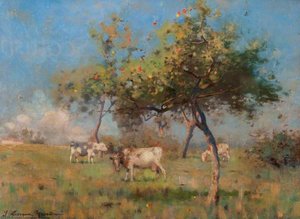
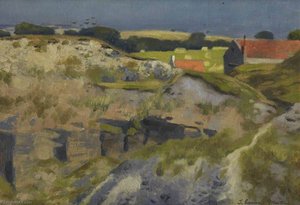
The essence of Morton’s work lies in its ability to evoke emotion through the careful manipulation of texture and tone. His landscapes are rarely static; they pulse with a quiet vitality. Whether depicting the serene majesty of Durham Cathedral or the rustic simplicity of a Tanning Shed, his hand is evident in the delicate, rhythmic brushstrokes that suggest movement—the flight of birds, the rustle of leaves, or the gentle flow of a river. His palette often leaned toward the warm and the atmospheric, utilizing soft hues to create a sense of profound tranquility and peace.
While landscape painting remained his primary passion, Morton’s versatility allowed him to navigate various genres with equal grace:
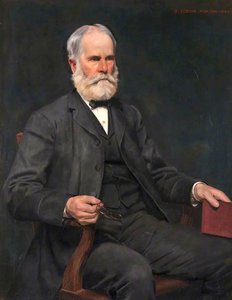
- Portraiture: Demonstrating an anatomical precision learned from his time assisting Francis Newbery at the Slade School.
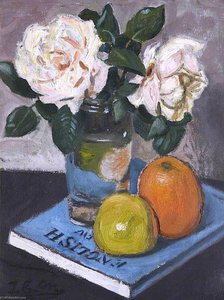
- Still Life: Capturing the intimate beauty of everyday objects, such as the textured elegance found in his depictions of roses and citrus.
- Architectural Renderings: Bringing a sense of historical weight and romantic grandeur to iconic structures through light and shadow.
Legacy and Cultural Contribution
Beyond the canvas, Morton’s influence extended into the very institutions that safeguard Scotland's artistic heritage. His appointment as Keeper of the Scottish National Gallery in 1908 was a crowning achievement, recognizing his deep understanding of art history and his commitment to cultural stewardship. Later in life, his role as Curator of the Art Gallery in Kirkcaldy allowed him to continue nurturing the next generation of art lovers and creators. His life was a testament to the idea that art is not merely an observation of reality, but a way of experiencing the soul of a place.
Today, the works of Thomas Corsan Morton serve as vital windows into a transformative era of British art. He remains a symbol of the Glasgow School's rebellion against rigid academicism, standing as a painter who dared to prioritize feeling over form and light over line. Through his enduring legacy, the misty mornings and sun-drenched afternoons of the Scottish landscape continue to live on, captured forever in the evocative, impressionistic spirit of his brush.
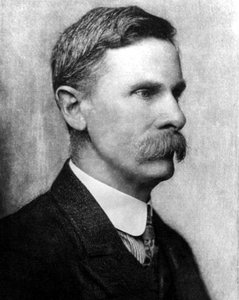
Thomas Corsan Morton
1859 - 1928
Quick Facts
- Artistic Movement Or Style: Impressionism
- Artists Or Movements Influenced By This Artist: ['Glasgow Boys']
- Artists Who Influenced This Artist:
- Gustave Boulanger
- Jules Joseph Lefebvre
- Date Of Birth: 1859
- Date Of Death: 1928
- Full Name: Thomas Corsan Morton
- Nationality: Scottish
- Notable Artworks: ['A Cathedral City, Durham']
- Place Of Birth: Glasgow, Scotland
Related Articles

The Enduring Legacy of Oil on Canvas: Technique, History & Aesthetic Impact
Explore the rich history & techniques of oil painting – from Renaissance masters to Impressionism. Discover pigments, layering methods, and why this timeless medium endures. Expert insights for artists & art enthusiasts.

Oil on Canvas: A Historical & Technical Exploration of a Timeless Artistic Medium
Explore the rich history & enduring techniques of oil painting on canvas. Discover the science behind its longevity, conservation practices, and contemporary relevance. Expert insights for art enthusiasts.

The Enduring Power of Painting: A Historical & Contemporary Exploration of Form and Emotion
Explore the rich history & enduring techniques of oil painting with ArtsDot. Discover masterpieces, learn about art collecting, and find authentic handmade reproductions crafted by skilled artists.
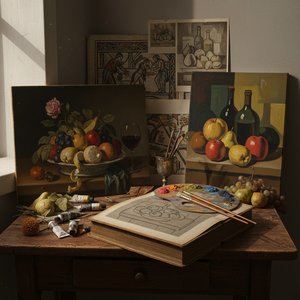
Silent Narratives: Exploring the Enduring Appeal of Still Life Painting Across Centuries
Explore the rich history of still life painting with ArtsDot. Discover Dutch Masters, decode vanitas symbolism & learn about collecting timeless art. Expert insights and museum-quality reproductions.

The Enduring Legacy of Oil on Canvas: Technique, History & Contemporary Practice
Explore the rich history & enduring techniques of oil painting on canvas. Discover the science behind its longevity, conservation practices, and contemporary relevance. Expert insights for art enthusiasts.