 Preview
 Send
Send Share
Share
 Details

 Download
 Similars
 X-Ray
X-Ray Diaporama
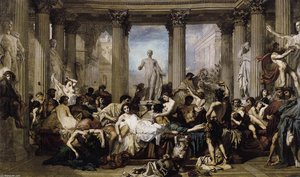
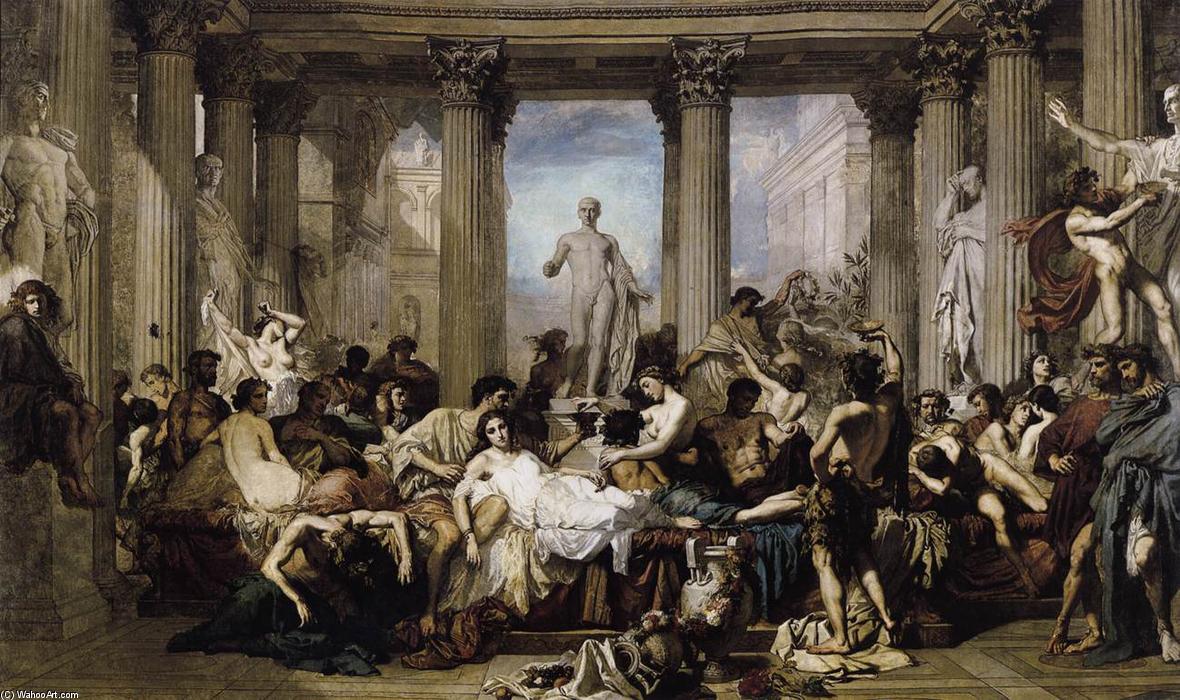
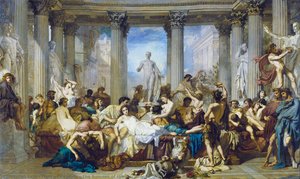
Romans of the Decadence
 Oil On Canvas
- WallArt
- Academic Art
 1847
1847- 19th Century
 466.0 x 773.0 cm
 Musée d'Orsay
 Read More
Giclée / Art Print
Museum-quality giclée or canvas print with fast production and flexible finish options. ( Buy Hand Made Painting Buy Image)




P118B $10

P118H $10

P118W $10

P438Z $10

P508JH $12

P508YH $12

P805H $10

P805Z $10

P919BZ $10

P919G $10

P919XJ $10

P959ZH $10

P968JZ $12

W106C $8

W218G $10

W218JH $8

W218Y $10

W307PJ $10

W316G $10

W316PJ $8

W316Y $10

W398PJ $8

W4111J $10

W500HY $15

W500JH $15

W692G $12

W849H $8

W940BG $15

W953PJ $8




Pick from our preset sizes that match the artwork's original proportions.

You may enter your own dimensions to fit a specific frame or space. If your selected size does not match the original image's proportions, we will either crop the artwork or extend the image with a mirrored or solid-fill edge. A digital mockup will be sent for your approval before production begins.
Please note that the on-screen preview does not reflect the actual cropping or extension. Only the mockup will accurately show the final composition.
While custom sizes are available, we recommend selecting a dimension from the predefined list to preserve the original proportions.
Worldwide Delivery () in 2 weeks instead of standard 4/5 weeks. (22 August)

Free Worldwide Express Shipping

High-Quality Linen Canvas

Full Shipping Insurance

Customs Tax Refund Guarantee

True Color Matching Guarantee

60-Day Return Policy (Defects Only)

100% Money-Back Guarantee

Bulk Discount Offer
 Glass option is only available in size under 110 CM

Romans of the Decadence
Giclée / Art Print
Reproduction Size
-


Total Price
$ 63
Collectible Description
A Monumental Vision of Antiquity
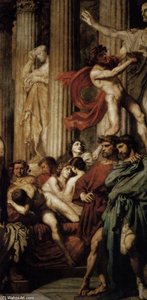
In the hallowed, quiet corridors of the Musée d'Orsay, there exists a window into a world of fading glory, captured through the masterful lens of Thomas Couture. His 1847 masterpiece, Romans in Their Decadence, is far more than a mere historical tableau; it is a visceral exploration of an empire in its twilight. This colossal oil on canvas, measuring an imposing 466 x 773 cm, stands as an arresting testament to the artistic fervor of the mid-nineteenth century—a period grappling with shifting intellectual currents and a profound yearning for a return to classical ideals. The painting presents a lavish gathering of figures within an opulent architectural setting, where the grandeur of ancient Rome meets the inevitable shadow of moral and societal erosion.
The composition pulsates with a restless dynamism, capturing a crowded scene that feels almost like a tableau vivant—a staged event designed to overwhelm the senses. As the viewer’s eye wanders through the dense arrangement of bodies, one encounters a symphony of movement: figures dancing, conversing, reclining, and observing in a state of luxurious excess. At the heart of this chaotic splendor, a statue of Venus stands prominently on a pedestal, framed by majestic Corinthian columns. This central icon serves as a silent witness to the surrounding revelry, embodying the very beauty and passion that the era's decadence sought to consume.
The Intersection of Neoclassicism and Romantic Emotion
Couture’s technical prowess lies in his ability to bridge two seemingly opposing worlds: the disciplined precision of Neoclassicism and the emotive turbulence of Romanticism. The architectural details—the meticulously rendered stone, the geometric stability of the arches, and the idealized forms of the figures—speak to a deep respect for classical tradition. Yet, this structural rigidity is infused with a Romantic soul through dramatic lighting and deeply expressive faces. A strong, theatrical light source illuminates the central area, casting long, heavy shadows that enhance the sense of depth and volume, creating an atmosphere that is simultaneously magnificent and haunting.
<The color palette further reinforces this emotional duality. Dominated by warm, earthy tones—rich browns, deep reds, and shimmering golds—the painting evokes a sense of heat, passion, and material wealth. These are sharply contrasted against cooler blues and whites found in the architectural elements and flowing drapery, providing a visual tension that mirrors the societal tension within the subject matter itself. Through layered brushwork and a sophisticated use of texture, Couture breathes life into fabric, skin, and stone, making the decadence feel tangibly present.
A Legacy for the Discerning Collector
For the art lover, the collector, or the interior designer, Romans in Their Decadence offers more than just historical interest; it provides a profound emotional resonance. It is a piece that commands attention, making it an ideal centerpiece for spaces that celebrate drama, history, and classical elegance. Whether placed in a grand salon or a sophisticated study, a high-quality reproduction of this work brings with it the weight of history and the spirit of rebellion that defined Couture’s career.
Owning a piece inspired by this masterpiece allows one to inhabit the tension between strength and decay, beauty and excess. It serves as a constant reminder of the cyclical nature of empires and the enduring power of art to capture the fleeting moments of human history. For those seeking to infuse their surroundings with a sense of monumental scale and narrative depth, Couture’s vision remains an unparalleled source of inspiration.
Related Artworks
Artist Biography
A Rebel in the Atelier: The Life and Legacy of Thomas Couture
Born in 1815 in Senlis, France, Thomas Couture emerged as a pivotal figure bridging Romanticism and Realism—a painter who dared to challenge academic convention while simultaneously mastering its techniques. His early life saw a relocation to Paris with his family, where he initially pursued studies at the École des Arts et Métiers before gravitating towards the prestigious École des Beaux-Arts. However, Couture’s path wasn't paved with immediate acceptance; he faced repeated rejection in the competition for the Prix de Rome, an honor that would have secured a coveted residency at the Académie de France in Rome. Rather than accepting defeat, these setbacks fueled his conviction that the established system itself was flawed, prompting him to forge his own artistic path and eventually establish an independent atelier—a haven for those seeking an alternative to traditional instruction.The Decadence of Empires and a New Artistic Vision
Couture’s breakthrough arrived with *Romans During the Decadence* (1847), a monumental work that ignited both praise and controversy at the Paris Salon. This painting wasn't merely a historical depiction; it was a scathing social commentary, inspired by the satirical writings of Juvenal, portraying the moral decay and opulent excess within Roman society. The scene pulsates with a sense of unrestrained indulgence, figures draped in luxurious fabrics amidst classical ruins—a deliberate juxtaposition meant to mirror the perceived decadence of contemporary French society under the Second Republic. Couture’s masterful use of tonal contrasts, employing rich dark hues punctuated by striking highlights, further intensified the dramatic impact and symbolic weight of the composition. The painting's success cemented his reputation as a leading artist and established him as a formidable force within the art world. It was more than just technical skill; it was a bold statement about the state of civilization itself.A Teacher of Titans: Shaping Future Generations
Beyond his own artistic achievements, Couture’s influence extended profoundly through his role as an educator. He opened his atelier to a diverse group of aspiring artists, rejecting the rigid constraints of the École des Beaux-Arts and fostering an environment of experimentation and critical thinking. Among his most celebrated pupils were names that would become synonymous with modern art: Édouard Manet, whose revolutionary approach to painting owed much to Couture’s emphasis on tonal values and expressive brushwork; Henri Fantin-Latour, renowned for his still lifes and portraits of fellow artists; Pierre Puvis de Chavannes, a pioneer of Symbolism; and John La Farge, an innovator in stained glass. Couture’s teaching methods were unconventional, encouraging students to develop their individual voices while grounding them in the fundamentals of draftsmanship and composition. He championed “quick painting,” anticipating techniques later embraced by the Impressionists, and stressed the importance of direct observation from life.Later Years and Enduring Influence
In 1860, disillusioned with the Parisian art scene, Couture retreated to his hometown of Senlis, where he continued to teach and paint. He codified his artistic philosophy in *Méthode et entretiens d'atelier* (Method and Workshop Interviews), published in 1867—a treatise that offered a radical critique of academic dogma and advocated for a more intuitive and expressive approach to art-making. This work, later translated into English as *Conversations on Art Methods*, provided invaluable insights into his pedagogical principles and artistic beliefs. Though he faced criticism throughout his career for challenging established norms, Couture’s impact on the development of modern art is undeniable. He fostered a generation of artists who dared to break free from convention, paving the way for the radical innovations that would define the late 19th and early 20th centuries. His legacy endures not only through his own compelling paintings but also through the enduring influence he exerted on some of the most important figures in art history.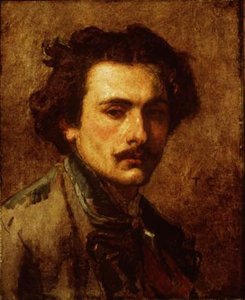
Thomas Couture
1815 - 1879 , France
Quick Facts
- Artistic Movement Or Style: Romanticism & Realism
- Artists Or Movements Influenced By This Artist:
- Édouard Manet
- Henri Fantin-Latour
- Pierre Puvis de Chavannes
- Artists Who Influenced This Artist:
- Antoine-Jean Gros
- Paul Delaroche
- Date Of Birth: Dec 21, 1815
- Date Of Death: March 30, 1879
- Full Name: Thomas Couture
- Nationality: French
- Notable Artworks:
- Romans During the Decadence
- The Duel After Masked Ball
- A Lawyer Going to Court
- Place Of Birth: Senlis, France
Related Articles
Academic Art: Tradition, Technique & the Pursuit of Ideal Form in the 19th Century
Explore the world of Academic Art! Discover its history, key artists like Ingres & Bouguereau, defining techniques, and lasting influence on 19th-century painting. Learn about the Salon system and its legacy.
Academic Art: Tradition, Technique & the Rise of Modernism
Explore the rich history of Academic Art – its techniques, key masters like Bouguereau & Ingres, and influence on 19th-century painting. Discover this enduring tradition.

19th Century Masterpieces: 10 Paintings That Defined an Era | ArtsDot
Journey through 19th century art with ArtsDot! Explore 10 iconic paintings – from Monet & Renoir to Courbet – and discover the stories behind Romanticism, Realism & Impressionism. Find museum-quality reproductions for your home decor. Explore the full collection online!
Academic Realism's Finest: 10 Masterpieces for Art Lovers & Home Decor
Explore 10 defining Academic Realism masterpieces by Bouguereau, Gérôme & Cabanel. Discover the stories behind these iconic paintings and bring timeless art into your home with museum-quality reproductions from ArtsDot.com. Explore the full collection online!
Thomas Barker of Bath: Landscape Painting & Societal Reflection in Early 19th-Century England
Explore the life & work of Thomas Barker of Bath, a key figure in 19th-century English Romanticism. Discover his Parisian success, iconic paintings like 'The Bride of Death', and lasting artistic legacy. Learn more at ArtsDot.