 Preview
 Send
Send Share
Share
 Details

 Download
 Similars
 X-Ray
X-Ray Diaporama
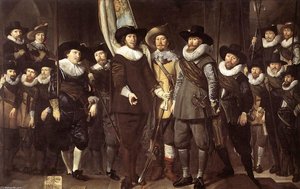
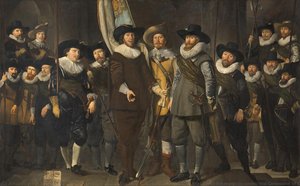
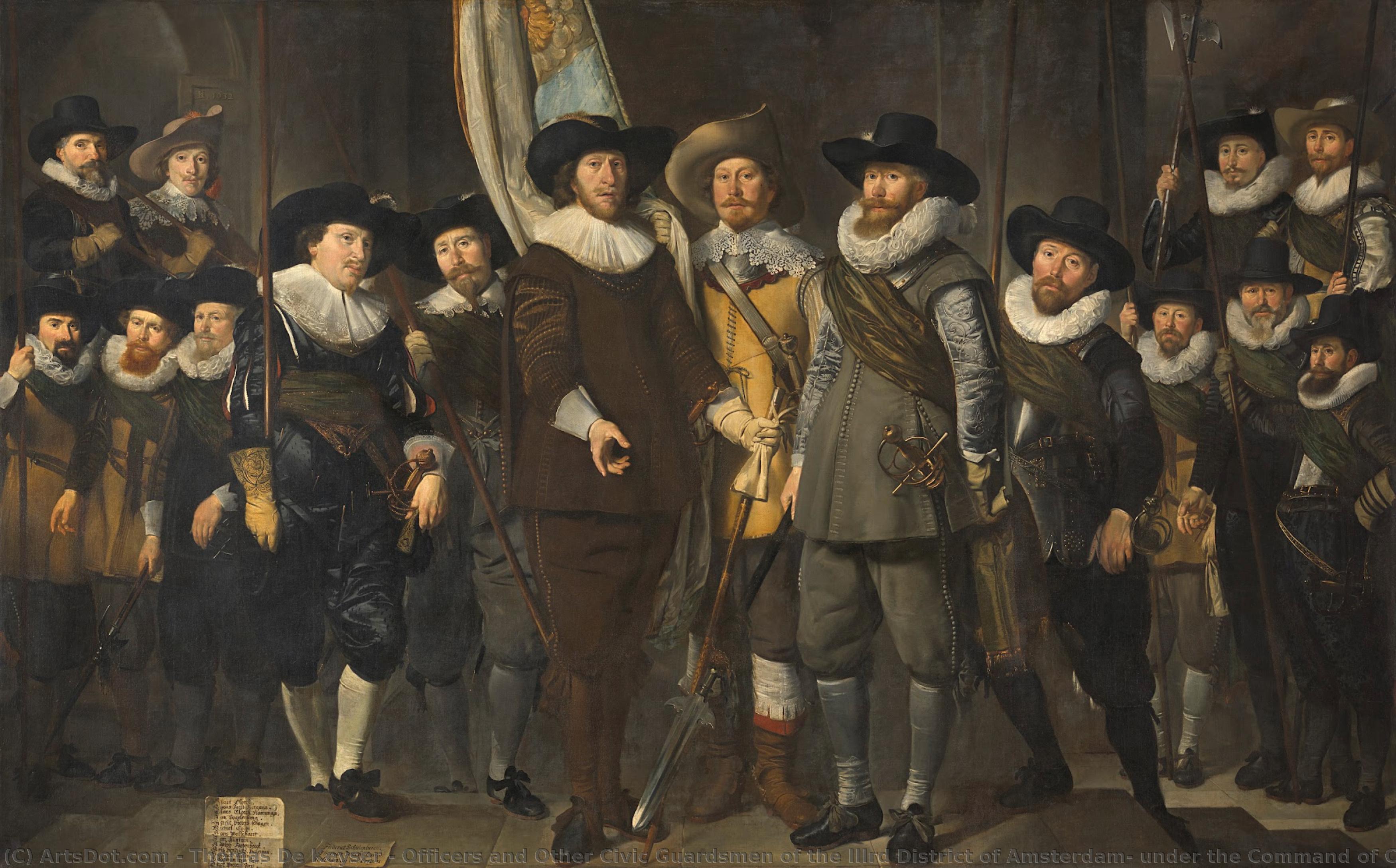
Officers and Other Civic Guardsmen of the IIIrd District of Amsterdam, under the Command of Captain Allaert Cloeck and Lieutenant Lucas Jacobsz Rotgans, Thomas de Keyser, 1632
 Dutch Golden Age
 1632
1632 220.0 x 351.0 cm
 Read More
Hand Made Oil Reproduction
Hand-painted oil on canvas in your size and frame, made to order by our artists. ( Buy Print Buy Image)




































Pick from our preset sizes that match the artwork's original proportions.

You may enter your own dimensions to fit a specific frame or space. If your selected size does not match the original image's proportions, we will either crop the artwork or extend the painting with additional hand-painted elements. A digital mockup will be sent for your approval before production begins.
Please note that the on-screen preview does not reflect the actual cropping or extension. Only the mockup will accurately show the final composition.
While custom sizes are available, we recommend selecting a dimension from the predefined list to preserve the original proportions.
After order, ArtsDot.com team will email client for instructions and provide a mockup preview
Worldwide Delivery () in 3/4 weeks instead of standard 5 weeks. (16 August). No compromise on quality.

Free Worldwide Express Shipping

High-Quality Linen Canvas

Full Shipping Insurance

Customs Tax Refund Guarantee

True Color Matching Guarantee

60-Day Return Policy (Defects Only)

100% Money-Back Guarantee

Bulk Discount Offer
 Glass option is only available in size under 110 CM

Officers and Other Civic Guardsmen of the IIIrd District of Amsterdam, under the Command of Captain Allaert Cloeck and Lieutenant Lucas Jacobsz Rotgans, Thomas de Keyser, 1632
Reproduction Medium
Reproduction Size
-


Total Price
$ 588
Artwork Description
Related Artworks
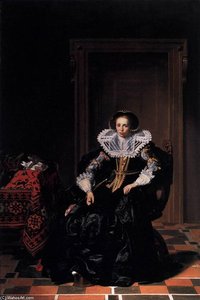
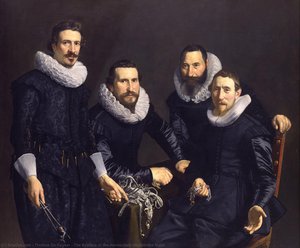
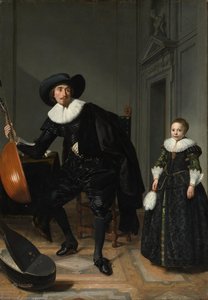
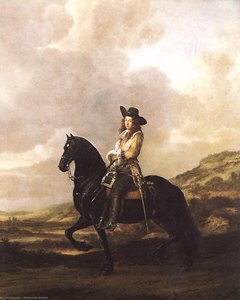
Artist Biography
The Legacy of Thomas de Keyser: A Master of the Dutch Golden Age
In the vibrant, bustling heart of seventeenth-century Amsterdam, a period defined by unprecedented prosperity and cultural flowering, Thomas de Keyser emerged as a formidable force in the realm of portraiture. Born in 1596 into an environment steeped in architectural grandeur, De Keyser was the son of the legendary Hendrick de Keyser, the architect whose hand shaped the very skyline of Amsterdam. This lineage of craftsmanship provided more than just a name; it offered a foundational understanding of structure, space, and the physical presence of objects that would later define his approach to the human form. Growing up amidst the stone yards along the Amstel River, De Keyser was immersed in a world where art and architecture were inextricably linked, fostering a technical precision that would become his hallmark.
His artistic journey was further refined through formal training under Cornelis van der Voort, an education that introduced him to the humanist ideals and sophisticated compositional techniques of the era. As he matured, De Keyser’s style began to coalesce into something truly distinctive—a bridge between the meticulous detail of the late Renaissance and the dramatic, psychological intensity of the burgeoning Baroque movement. While his early works displayed a keen interest in the formal elegance of his predecessors, he soon developed a capacity for capturing the lived reality of his subjects, moving beyond mere likeness to touch upon the very essence of their character.
The Rembrandtian Shadow and the Art of Realism
To understand the brilliance of De Keyser, one must navigate the complex relationship between his work and that of Rembrandt van Rijn. Often described as a contemporary who shared the revolutionary spirit of the era, De Keys_ser’s approach to light and shadow—the celebrated chiaroscuro—echoed the dramatic innovations championed by Rembrandt. However, De Keyser possessed a unique clarity; where Rembrandt might dissolve a form into deep, mysterious shadows, De Keyser often maintained a crispness of line and a luminous quality in his textures. He was a master of the tactile, rendering the heavy sheen of silk, the intricate patterns of lace, and the subtle weathered skin of an aging merchant with an almost scientific accuracy.
This commitment to realism made him the preferred portraitist for the rising merchant class of the Dutch Republic. His ability to balance the prestige of his sitters with a profound sense of psychological truth allowed him to create works that served both as status symbols and intimate character studies. In his group portraits, he demonstrated an extraordinary ability to organize complex arrangements of figures, ensuring that each individual maintained their distinct identity while contributing to a cohesive narrative of collective civic pride. His brushwork, though precise, never felt static; there is a rhythmic vitality in his compositions that breathes life into the frozen moments of the seventeenth century.
Historical Significance and Artistic Triumph
The achievements of Thomas de Keyser extend far beyond the canvas, representing a vital chapter in the history of Northern European art. His career coincided with the peak of the Dutch Golden Age, a time when the Netherlands was asserting its identity through commerce, science, and the arts. By documenting the faces of this era—from the wealthy burghers to the influential civic leaders—he provided a visual record of a society in transition. His work serves as a window into the social hierarchies, fashion, and values of an age defined by maritime power and Protestant industriousness.
Throughout his life and legacy, several key elements define his contribution to the art world:
- Technical Mastery: An unparalleled ability to render diverse textures and materials with lifelike precision.
- Architectural Influence: A unique sense of composition and structural integrity derived from his familial connection to Dutch architecture.
- Psychological Depth: The capacity to imbue formal portraits with a sense of individual humanity and emotional resonance.
- Cultural Documentation: His role in capturing the burgeoning identity of the Amsterdam merchant class during a period of immense wealth.
Though history sometimes places him in the shadow of Rembrandt, De Keyser’s importance remains undiminished. He was not merely an imitator of greatness but a pioneer in his own right, contributing a specific brand of clarity and structural elegance to the Dutch tradition. Today, his works continue to captivate scholars and art lovers alike, standing as enduring testaments to a master who could capture both the outward splendor and the inward soul of his age.
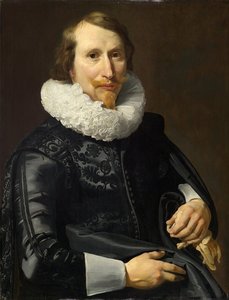
Thomas de Keyser
1596 - 1667 , Netherlands
Quick Facts
- Artistic Movement Or Style: Dutch Golden Age
- Artists Or Movements Influenced By This Artist: ['Rembrandt']
- Artists Who Influenced This Artist: ['Rembrandt van Riijn']
- Date Of Birth: Amsterdam, Netherlands (1596)
- Date Of Death: 1667
- Full Name: Thomas de Keyser
- Nationality: Dutch
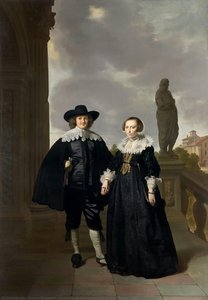
- Notable Artworks: ['Frederick van Velthuysen and his wife']
- Place Of Birth: Amsterdam
Related Articles

Demandes Commerciales
APS ofrece reproducciones de bellas artes y encargos personalizados desde 2004. Confían en nosotros corporaciones, hoteles y coleccionistas selectos para obras de arte de calidad museística, servicio discreto y soluciones artísticas completas. ¡Póngase en contacto con nosotros para obtener un presupuesto personalizado!

Dutch Masters: 10 Golden Age Paintings That Still Inspire |
Journey into the Dutch Golden Age! Explore 10 iconic paintings by Rembrandt, Vermeer & Hals. Discover the stories behind these Baroque masterpieces and find museum-quality art reproductions to elevate your home decor on .
Pieter de Hooch: Illuminating Dutch Domestic Life & Golden Age Charm
Explore the captivating world of Pieter de Hooch, a master of Dutch Golden Age painting. Discover his innovative use of light, intimate domestic scenes, and lasting influence on art history. Learn more at ArtsDot.
Willem van de Velde the Elder: Master of Maritime Painting & Chronicler of the Dutch Golden Age
Discover the captivating maritime paintings of Willem van de Velde the Elder, a master chronicler of the Dutch Golden Age. Explore his unparalleled realism and lasting influence on naval art history.

Golden Age Reflections: Dutch Baroque Painting & Cultural Innovation
Explore the Dutch Golden Age of painting! Discover key artists like Vermeer & ter Borch, their innovative techniques, and the rich cultural context behind these Baroque masterpieces. Learn about collecting & appreciating this iconic art period.