

 Preview
 Send
Send Share
Share
 Details

 Download
 Similars
 X-Ray
X-Ray Diaporama
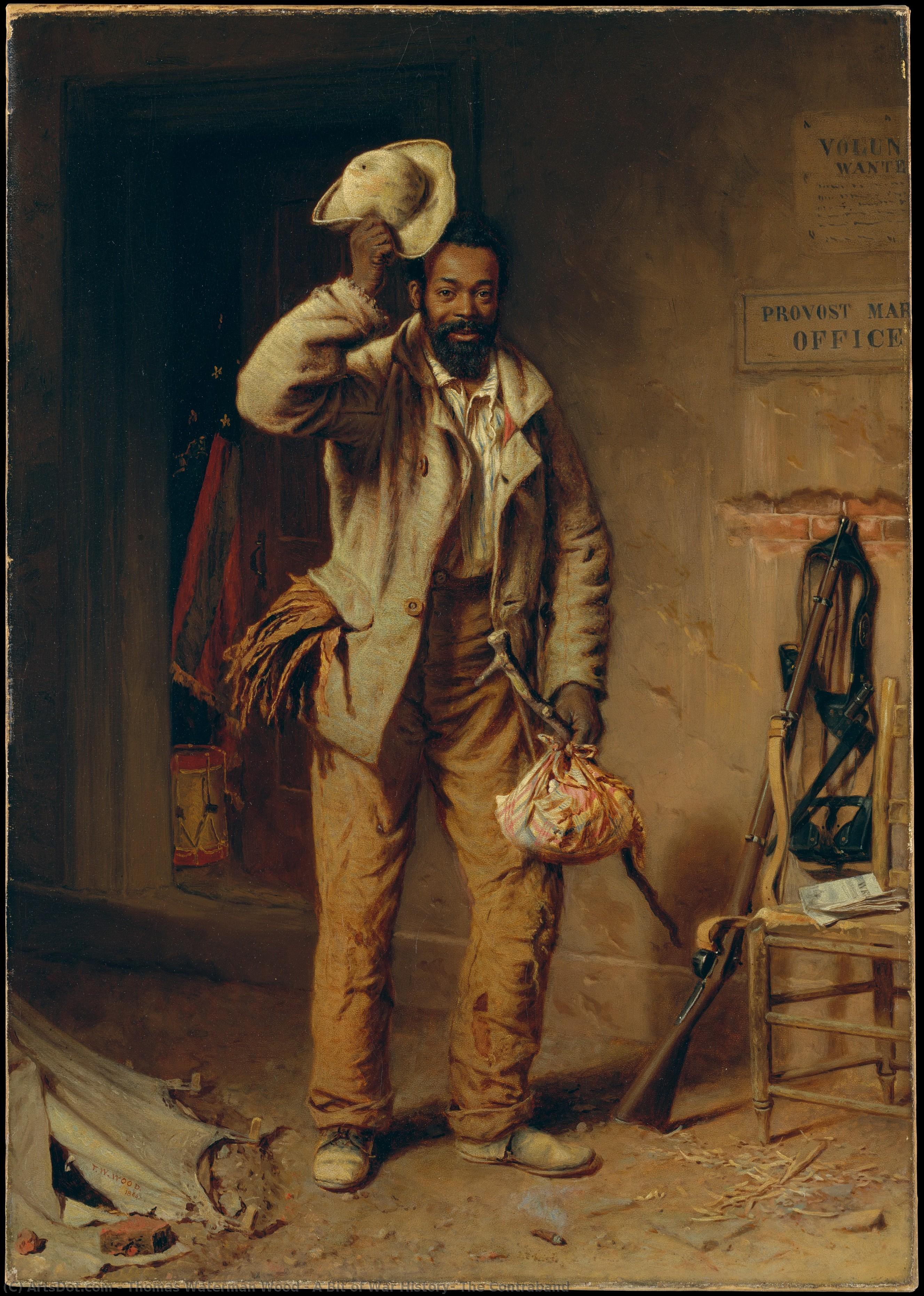
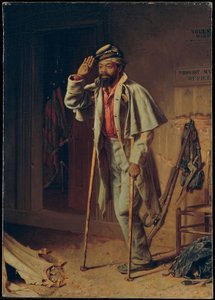
A Bit of War History: The Contraband
 Oil On Canvas
- WallArt
- Hudson River School
 1865
1865- 19th Century
 72.0 x 51.0 cm
 Metropolitan Museum of Art
 Read More
Purchase a high-resolution, enhanced digital image, far superior to the online preview.
Each file is meticulously prepared by our in-house specialists using advanced tools and expert manual retouching. We ensure every image has exceptional clarity, precise color accuracy, and fine detail.
The final file is delivered via email within 72 hours, optimized for immediate use in professional, editorial, and print environments. This is the same quality trusted by top-tier design studios, publishers, and galleries.
Digital Image
Download a high-resolution file for personal display, printing, and creative projects. ( Buy Print Buy Hand Made Painting)
Included in Every Digital Image Order
Expert Digital Delivery, Guaranteed
When you choose ArtsDot.com, you're not just getting an image - you're receiving a professionally enhanced digital artwork, crafted with precision and backed by a satisfaction guarantee. Here's everything that comes with your order, automatically:

Fast Email Delivery
Your high-resolution digital image file will be emailed to you within 72 hours of ordering - ready for immediate use.

AI-Enhanced Digital File
Your artwork is professionally optimized using advanced AI tools and manual editing, ensuring maximum detail, clarity, and color accuracy.

Free Lifetime Re-Delivery
Accidentally deleted or lost your file? No worries - we'll resend it to you anytime, free of charge.

No Import Fees - Ever
Enjoy your artwork instantly with zero customs, duties, or delivery fees - digital downloads are always tax-free.

Color Accuracy Guarantee
We ensure your digital image reflects the original colors as closely as possible using professional tools and color management.

60-Day Satisfaction Guarantee
If you're not satisfied with your digital image, we'll revise it or refund 100% within 60 days - no questions asked.

100% Money-Back Guarantee
Not satisfied? Get a full refund within 60 days of receiving your digital file - no questions asked.

Bulk Order Discounts
Buy 3 images, save 10% - Buy 5, save 15% - Buy 10+, save 20%. Great for creative projects, galleries, and agencies.
Collectible Description
A Poignant Narrative of Resilience
In the twilight of the American Civil War, as the nation stood on the precipice of profound transformation, Thomas Waterman Wood captured a moment of immense historical weight in his evocative triptych, A Bit of War History: The Contraband. Completed in 1865, this work transcends the boundaries of traditional landscape or genre painting to serve as a moving meditation on the themes of agency, aspiration, and the pursuit of freedom. Through this narrative sequence, Wood invites the viewer into the lived experience of African American military service, presenting a story that is as much about the internal spirit of a people as it is about the external shifts in American law and society.
The painting functions as a powerful window into the era of Reconstruction, specifically focusing on the experiences of self-emancipated individuals. In the primary panel, we encounter a man standing within the confines of a US Army office, his expression etched with an eager determination to enlist. This single image encapsulates the tension of a period marked by both immense struggle and the flickering light of new possibilities. By centering the narrative on the transition from "contraband" status to active military participant, Wood provides a profound commentary on the reclamation of identity through service and duty.
Mastery of Light and Atmospheric Depth
Technically, Wood demonstrates the sophisticated sensibilities of the second generation of the Hudson River School. His approach is characterized by a masterful use of atmospheric perspective, which lends the scenes an incredible sense of depth and realism. The artist employs the delicate technique of glazing—applying multiple thin, translucent layers of oil paint—to create a shimmering, luminous surface that seems to breathe with light. This method allows for a subtle interplay of shadow and radiance, particularly evident in the way light filters through the environments depicted.
The brushwork, while precise enough to render the textures of military uniforms and office interiors, retains a certain fluidity that captures the ephemeral quality of light. This luminous palette does more than just decorate the canvas; it serves an emotional purpose, bathing the subjects in a glow that suggests hope amidst the heavy atmosphere of war. For collectors and designers alike, this technical brilliance ensures that the piece possesses a captivating presence, capable of anchoring a room with its rich textures and sophisticated tonal range.
Symbolism and the Legacy of Freedom
Beyond its immediate historical subject matter, the artwork is steeped in profound symbolism. The very title, referencing "The Contraband," invokes the complex legal and social status of formerly enslaved people who sought refuge behind Union lines. Wood’s ability to move past the caricatured depictions common in mid-19th-century art allows him to present a more empathetic and humanistic portrayal. Every element, from the official documents within the office to the posture of the men depicted across the triptych, underscores the themes of legitimacy and the arduous journey toward citizenship.
For those looking to incorporate such a significant piece into an interior space, A Bit of War History: The Contraband offers more than mere decoration. It provides a conversation piece that honors the resilience of the human spirit. Whether displayed in a curated gallery setting or as a focal point in a sophisticated study, this reproduction brings with it the weight of history and the enduring beauty of Wood's artistic vision, making it an invaluable acquisition for any serious lover of American art history.
Related Artworks
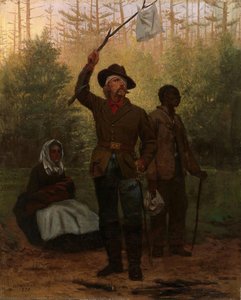
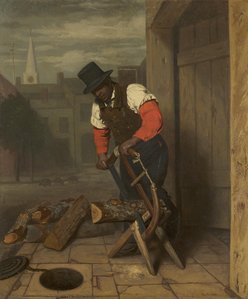
Artist Biography
Sanford Robinson Gifford: A Master of Light and the Hudson
Sanford Robinson Gifford (1823–1880) stands as a pivotal figure in American art, often considered the second-generation artist to emerge from the influential Hudson River School. Born in Greenfield, Saratoga County, New York, on May 5th, 1823, Gifford’s artistic journey was deeply intertwined with the legacy of his elder brother, Charles Gifford, who had been profoundly impacted by the landscapes of Thomas Cole and Asher B. Durand. This early exposure to the School's core tenets—a reverence for nature, a focus on atmospheric effects, and a celebration of the American wilderness—laid the foundation for Gifford’s distinctive style and enduring contribution to the movement. Unlike his brother, who initially pursued a career in finance, Gifford dedicated himself entirely to art, embarking on a path that would ultimately define his life's work. Gifford’s formative years were spent largely in Hudson, New York, where he received informal instruction from Henry Ary, a local painter whose connection to Cole and Durand provided a crucial link to the School’s artistic lineage. This early training instilled in him a deep appreciation for capturing the nuances of light and color within the natural world – a skill that would become his hallmark. Following a brief period at Brown University, Gifford moved to New York City in 1847, seeking opportunities within the burgeoning art scene. There, he studied under John Rubens Smith, a prominent English expatriate artist known for his watercolor techniques and his ability to render atmospheric effects with remarkable precision. Smith’s influence is evident in Gifford's early works, particularly his meticulous attention to detail and his skillful use of color. A significant turning point in Gifford’s artistic development occurred when he traveled to Europe in 1855–57. Inspired by the landscapes of J.M.W. Turner, a master of capturing atmospheric effects through light and color, Gifford spent time studying in London, France, Belgium, Holland, and Germany. He particularly admired Turner’s ability to evoke mood and atmosphere through subtle shifts in tone and hue. This European sojourn profoundly impacted his artistic sensibilities, leading him to incorporate elements of Impressionism into his own style – a move that distinguished him from many of his Hudson River School contemporaries. Gifford's return to America in 1857 marked the beginning of his most prolific period, during which he produced a vast body of work depicting scenes of the Catskill Mountains, the Hudson Valley, and other landscapes of New York State.- Key Characteristics: Gifford’s paintings are characterized by their luminous color palettes, their masterful rendering of light and shadow, and their evocative depictions of the American wilderness.
- Technique: He employed a direct painting technique, working quickly to capture the fleeting effects of light and atmosphere. His brushwork is often loose and expressive, yet always carefully controlled.
- Subject Matter: Gifford’s subjects primarily consisted of landscapes—mountain vistas, forests, rivers, and streams—often imbued with a sense of tranquility and timelessness.
William Oliver: A London Figure in the Victorian Art World
Born William Oliver Williams on December 28, 1823, in Worcester, England, William Oliver was an artist who carved out a distinctive niche within the bustling art scene of Victorian London. Unlike many artists of his era who sought fame and fortune abroad, Oliver remained firmly rooted in his native city, establishing himself as a respected figure primarily known for his evocative depictions of young women. His work offers a fascinating glimpse into the artistic tastes and social dynamics of late 19th-century England. Oliver’s early life is somewhat shrouded in mystery, though he was the son of surgeon William Williams and Jane Williams (née Oliver). He received an apprenticeship as a goldsmith before dedicating himself to painting, likely influenced by his brother, William Oliver (1804–1853), who was also an artist. Oliver’s artistic training is believed to have included time at the Government School of Design in Birmingham, where he served as assistant master and headmaster under Thomas Clarke. This experience provided him with a solid foundation in technique and composition.- Specialization: Oliver's primary subject matter was young women, often portrayed in intimate settings or engaged in everyday activities.
- Style: His paintings are characterized by a delicate realism combined with an elegant aesthetic sensibility. He paid close attention to detail, particularly in rendering the textures of clothing and the expressions on his subjects’ faces.
- Notable Commissions: Oliver received commissions from prominent families, suggesting that he was regarded as a skilled and reliable artist.
Paul Weber: A Pioneer of American Landscape Painting
Born in Darmstadt, Germany on February 18, 1823, Paul Weber's journey as an artist led him from his homeland to the United States, where he became a significant figure in the development of American landscape painting during the mid-19th century. Initially trained in Frankfurt, Weber’s artistic sensibilities were profoundly shaped by his exposure to the German Romantic tradition and, crucially, by his subsequent travels through Europe and America. Weber's early career was marked by a dedication to technical proficiency and a meticulous approach to capturing the details of the natural world. He spent time studying at the Düsseldorf Academy in Germany, where he honed his skills in drawing and painting. His European sojourn included visits to Italy, Belgium, Holland, and Switzerland, during which he immersed himself in the works of masters such as J.M.W. Turner and Caspar David Friedrich—artists who profoundly influenced his own artistic vision.- Early Training: Weber’s formal training at the Düsseldorf Academy provided him with a strong foundation in traditional painting techniques.
- European Influences: His travels through Europe exposed him to diverse artistic styles and landscapes, broadening his perspective and enriching his artistic vocabulary.
- American Period: Weber arrived in America around 1857, establishing himself as a teacher and artist in New Hampshire.
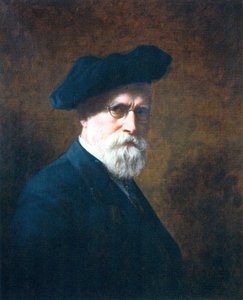
thomas waterman wood
1823 - 1903 , United States of America
Quick Facts
- Artistic Movement Or Style: Genre/Figurative Art
- Artists Or Movements Influenced By This Artist: ['Birmingham School of Art']
- Artists Who Influenced This Artist: ['William Oliver (1804–1853)']
- Date Of Birth: 1823
- Date Of Death: 1901
- Full Name: William Oliver Williams
- Nationality: English
- Notable Artworks: ['Young Women Series']
- Place Of Birth: Worcester, England

