 Preview
 Send
Send Share
Share
 Details

 Download
 Similars
 X-Ray
X-Ray Diaporama
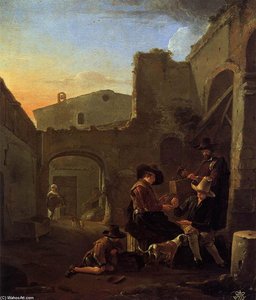
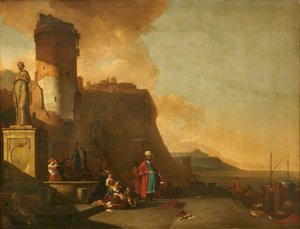
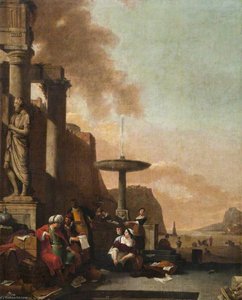
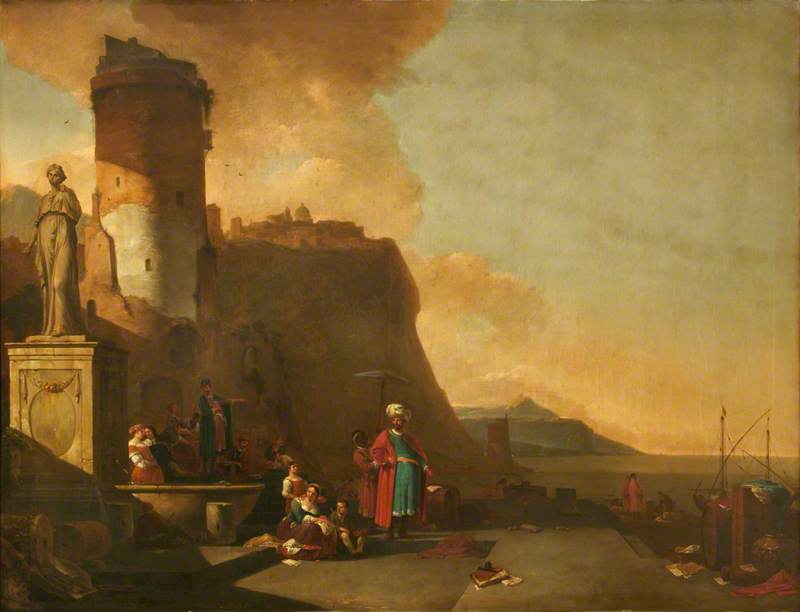
Capriccio of a Fort by the Sea, with Orientals and an Antique Statue
 Oil On Canvas
- WallArt
- Baroque
 1673
1673- Early Modern
 116.0 x 137.0 cm
 National Trust
 Read More
Hand Made Oil Reproduction
Hand-painted oil on canvas in your size and frame, made to order by our artists. ( Buy Print Buy Image)




P118B $10

P118H $10

P118W $10

P438Z $10

P508JH $12

P508YH $12

P805H $10

P805Z $10

P919BZ $10

P919G $10

P919XJ $10

P959ZH $10

P968JZ $12

W106C $8

W218G $10

W218JH $8

W218Y $10

W307PJ $10

W316G $10

W316PJ $8

W316Y $10

W398PJ $8

W4111J $10

W500HY $15

W500JH $15

W692G $12

W849H $8

W940BG $15

W953PJ $8




Pick from our preset sizes that match the artwork's original proportions.

You may enter your own dimensions to fit a specific frame or space. If your selected size does not match the original image's proportions, we will either crop the artwork or extend the painting with additional hand-painted elements. A digital mockup will be sent for your approval before production begins.
Please note that the on-screen preview does not reflect the actual cropping or extension. Only the mockup will accurately show the final composition.
While custom sizes are available, we recommend selecting a dimension from the predefined list to preserve the original proportions.
After order, ArtsDot.com team will email client for instructions and provide a mockup preview
Worldwide Delivery () in 3/4 weeks instead of standard 5 weeks. (1 September). No compromise on quality.

Free Worldwide Express Shipping

High-Quality Linen Canvas

Full Shipping Insurance

Customs Tax Refund Guarantee

True Color Matching Guarantee

60-Day Return Policy (Defects Only)

100% Money-Back Guarantee

Bulk Discount Offer
 Glass option is only available in size under 110 CM

Capriccio of a Fort by the Sea, with Orientals and an Antique Statue
Reproduction Medium
Reproduction Size
-


Total Price
$ 388
A Venetian Dreamscape of Commerce and Antiquity
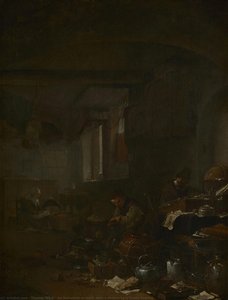
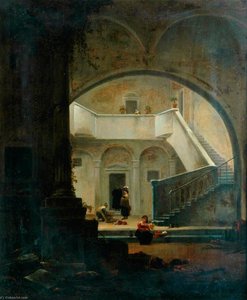
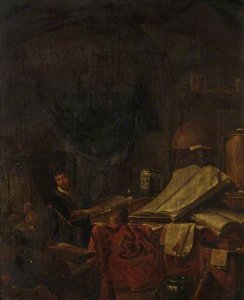
To gaze upon this magnificent Capriccio of a Fort by the Sea is to step directly into a sun-drenched moment plucked from the heart of the Dutch Golden Age. Thomas Wyck’s masterful oil painting, dated 1673, transports us to a vibrant, almost theatrical harbor scene where the solidity of classical architecture meets the ephemeral energy of human endeavor. It is more than just a depiction of a port; it is a carefully constructed narrative tapestry woven from maritime life, scholarly pursuits, and the enduring allure of antiquity. The composition itself guides the eye with an inherent rhythm, anchored by the imposing structure of the fort in the background, which serves as a monumental backdrop to the daily ballet unfolding in the foreground.
Mastery of Light and Form: Technical Brilliance
Wyck’s technical prowess is immediately apparent upon viewing the work. The handling of oil paint on canvas reveals a painterly richness, where every fold of fabric and every weathered stone surface seems imbued with palpable texture. Notice how the light behaves; it is dramatic, almost theatrical, suggesting either the golden hush of late afternoon or the crisp clarity of early morning. This masterful use of illumination casts long, defining shadows that give depth to what might otherwise appear as a somewhat flattened perspective—a characteristic common in grand genre scenes of this period. The contrast between the deep, cool tones of the water and the warm, earthy ochres of the stone creates an immediate visual warmth, inviting the viewer into its glow.
The Symphony of Subject Matter: Life at the Crossroads
The subject matter is a rich confluence of genres. We see the robust geometry of the castle walls juxtaposed against the organic forms of the figures below. Merchants haggle animatedly, scholars appear absorbed in their texts, and small groups of children observe the spectacle with innocent curiosity. These elements—the docked boats suggesting global trade, the prominent antique statue hinting at classical learning, and the bustling market activity—combine to create a powerful sense of community and commerce. It speaks to an era where worldly enterprise was deeply intertwined with cultural appreciation.
Symbolism and Emotional Resonance for the Modern Collector
For the contemporary admirer or designer, this piece offers more than mere decoration; it offers atmosphere. The painting evokes a profound feeling of historical narrative—a sense of time passing while civilization continues its cycle of trade and discovery. The inclusion of classical statuary alongside bustling modern life suggests that learning and history are ever-present companions to human activity. Reproducing this work allows one to infuse a space with the sophisticated gravitas of the Baroque period, lending an air of cultured romance and enduring vitality to any room. It is a piece that whispers tales of distant shores and learned pursuits.
Related Artworks


Artist Biography
Carlo Dolci: A Florentine Master of Quiet Devotion
Carlo Dolci, born in Florence on May 25th, 1616, and passing away on January 17th, 1686, remains a fascinating figure within the history of Italian painting. Often overshadowed by the flamboyant Baroque masters of his era, Dolci carved out a unique niche for himself—a deeply personal and intensely devotional style that resonated powerfully with his contemporaries and continues to hold an understated allure today. His life was inextricably linked to Florence, the city he called home throughout his career, and his art reflects its rich cultural heritage, particularly the legacy of Florentine Renaissance painting combined with a profound sense of religious piety. Dolci’s artistic journey began under the tutelage of Jacopo Vignali, a respected painter in Florence. This early apprenticeship instilled in him a meticulous approach to draftsmanship and an understanding of traditional Florentine techniques. However, it was his association with the Medici court, particularly through the patronage of Grand Duchess Vittoria della Rovere, that truly shaped his artistic development. This connection afforded him access to luxurious materials and provided opportunities to refine his skills, but more importantly, it fostered a deep appreciation for beauty and a commitment to portraying religious subjects with sincerity and grace. Unlike many artists seeking fame and fortune in Rome, Dolci remained rooted in Florence, dedicating himself entirely to his craft and the pursuit of spiritual expression through painting. His workshop was known for its slow pace; Baldinucci famously noted that “Sometimes he would take weeks over a single foot,” highlighting the painstaking detail and deliberate slowness with which Dolci approached each work.A Style Defined by Subtlety and Light
Dolci’s distinctive style is immediately recognizable—a delicate balance of realism and idealization, characterized by soft, diffused light, muted colors, and an almost dreamlike atmosphere. He eschewed the dramatic contrasts and bold gestures favored by many of his contemporaries, opting instead for a quiet, contemplative approach. His compositions often feature solitary figures – typically Christ, the Virgin Mary, or saints – set within intimate interiors bathed in hazy light. These scenes are not overtly theatrical; rather, they invite the viewer into a space of serene contemplation and spiritual reflection. His palette is restrained, dominated by browns, ochres, and muted greens, creating a sense of stillness and timelessness. The enamel-like finish he achieved through meticulous layering of glazes contributed significantly to the luminous quality of his paintings. He was particularly adept at capturing the subtle nuances of light and shadow, imbuing his figures with an ethereal glow.Religious Themes and Personal Piety
Dolci’s artistic output is overwhelmingly devoted to religious subjects. His works are not grand narratives or dramatic depictions of miracles; instead, they focus on moments of quiet devotion, intimate encounters between the divine and humanity. He frequently depicted scenes from the life of Christ, the Virgin Mary, and various saints, always emphasizing their humility, piety, and spiritual grace. His paintings were intended to inspire contemplation and foster a sense of connection with the sacred. It’s important to note that Dolci himself was deeply devout, and this personal faith permeated his art. He famously stated that his intention was to paint only works that would “inspire the fruits of Christian piety in those who saw them.” This conviction shaped every aspect of his artistic practice, from the choice of subjects to the meticulous rendering of detail.Recognition and Legacy
During his lifetime, Dolci’s work was highly regarded in Florence, though it later fell out of favor with collectors and connoisseurs during the 19th century due to its perceived “overly sweet” nature. However, in recent decades, there has been a resurgence of interest in his art, driven by a renewed appreciation for his unique style and profound spirituality. His paintings are now recognized as significant examples of Florentine Baroque painting, offering a compelling alternative to the more flamboyant styles of the period. Sir John Finch, a physician who traveled to Florence, was particularly impressed by Dolci’s work, amassing a notable collection that is now housed in the Fitzwilliam Museum in Cambridge. His portraits, notably those of Finch and Thomas Baines, stand out for their sober objectivity—a stark contrast to the idealized representations common in other portraits of the time.Key Works and Influences
Some of Dolci’s most celebrated works include *The Pen*, a small but intensely evocative painting depicting a solitary figure illuminated by candlelight, and his numerous depictions of scenes from the life of Christ, such as *Abduction of Europa* and *Return of the Holy Family from Egypt*. His work was influenced by the traditions of Florentine Renaissance painting, particularly the works of Andrea del Sarto and Leonardo da Vinci. However, Dolci’s distinctive style—characterized by its quiet intimacy, diffused light, and profound spirituality—sets him apart from his predecessors. His legacy endures as a testament to the power of art to inspire contemplation and foster a deeper connection with the divine.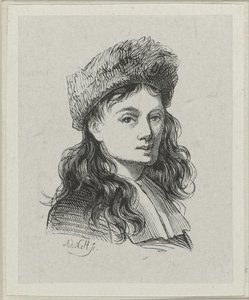
thomas wyck
1616 - 1677 , Netherlands
Quick Facts
- Artistic Movement Or Style: Florentine Baroque
- Artists Or Movements Influenced By This Artist:
- Rubens
- Baroque art
- Artists Who Influenced This Artist: ['Jacopo Vignali']
- Date Of Birth: May 25, 1616
- Date Of Death: Jan 17, 1686
- Full Name: Carlo Dolci
- Nationality: Italian
- Notable Artworks:
- Penitent Magdalene
- The Penitent Magdalen
- St. Lucy
- Place Of Birth: Florence, Italy
Related Articles

Dutch Masters: 10 Golden Age Paintings That Still Inspire |
Journey into the Dutch Golden Age! Explore 10 iconic paintings by Rembrandt, Vermeer & Hals. Discover the stories behind these Baroque masterpieces and find museum-quality art reproductions to elevate your home decor on .
Golden Light & Dutch Skies: Bringing the Magic of Dutch Golden Age Landscapes into Your Home
Transform your home with the breathtaking light of Dutch Golden Age landscapes. Discover how hand-painted oil reproductions of masterworks like Ruisdael and Vermeer bring timeless elegance, atmosphere, and soulful texture to modern interiors. Elevate your space with museum-quality art.
Nicolaes Berchem: Dutch Golden Age Pastoralism & the Evolution of Landscape Painting
Explore the captivating world of Nicolaes Berchem, a leading Dutch Golden Age painter. Discover his idyllic landscapes, masterful technique & lasting influence on art history. Learn more at ArtsDot.
Charles Leickert: Capturing the Dutch Golden Age Light – A Comprehensive Study of Technique, Context, and Legacy
Explore the captivating winter landscapes of Charles Leickert, a master of Dutch Golden Age light & atmosphere. Discover his techniques, symbolism, and lasting legacy – a comprehensive study for art enthusiasts and collectors.

Golden Age Reflections: Dutch Baroque Painting & Cultural Innovation
Explore the Dutch Golden Age of painting! Discover key artists like Vermeer & ter Borch, their innovative techniques, and the rich cultural context behind these Baroque masterpieces. Learn about collecting & appreciating this iconic art period.