 Preview
 Send
Send Share
Share
 Details

 Download
 Similars
 X-Ray
X-Ray Diaporama
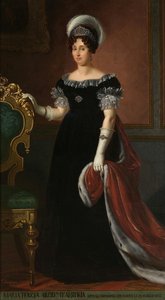
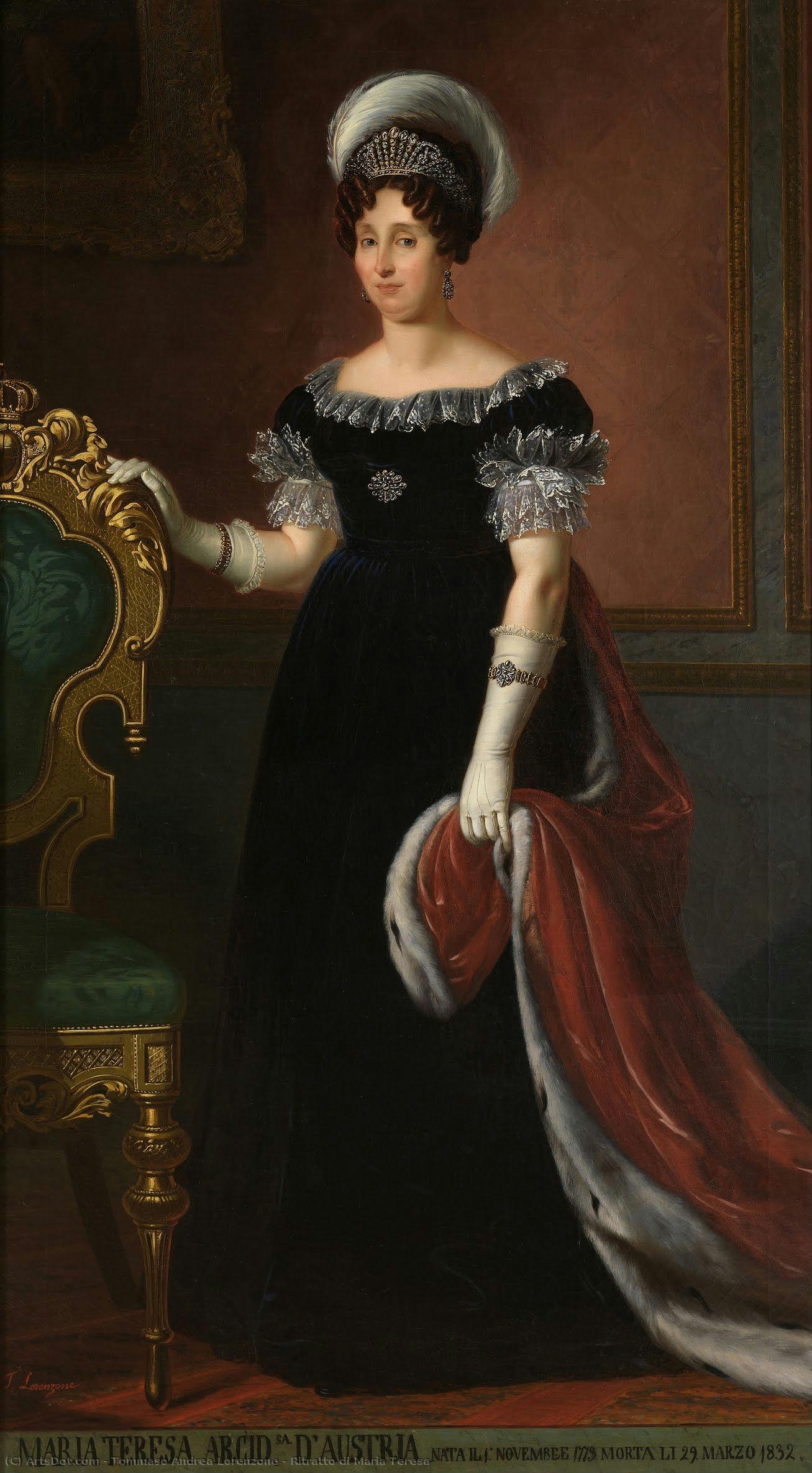
Ritratto di Maria Teresa
 Oil On Canvas
- WallArt
- Baroque
 1800
1800- 19th Century
 117.0 x 202.0 cm
 Royal Palace of Venaria
 Read More
Hand Made Oil Reproduction
Hand-painted oil on canvas in your size and frame, made to order by our artists. ( Buy Print Buy Image)




P118B $10

P118H $10

P118W $10

P438Z $10

P508JH $12

P508YH $12

P805H $10

P805Z $10

P919BZ $10

P919G $10

P919XJ $10

P959ZH $10

P968JZ $12

W106C $8

W218G $10

W218JH $8

W218Y $10

W307PJ $10

W316G $10

W316PJ $8

W316Y $10

W398PJ $8

W4111J $10

W500HY $15

W500JH $15

W692G $12

W849H $8

W940BG $15

W953PJ $8




Pick from our preset sizes that match the artwork's original proportions.

You may enter your own dimensions to fit a specific frame or space. If your selected size does not match the original image's proportions, we will either crop the artwork or extend the painting with additional hand-painted elements. A digital mockup will be sent for your approval before production begins.
Please note that the on-screen preview does not reflect the actual cropping or extension. Only the mockup will accurately show the final composition.
While custom sizes are available, we recommend selecting a dimension from the predefined list to preserve the original proportions.
After order, ArtsDot.com team will email client for instructions and provide a mockup preview
Worldwide Delivery () in 3/4 weeks instead of standard 5 weeks. (17 August). No compromise on quality.

Free Worldwide Express Shipping

High-Quality Linen Canvas

Full Shipping Insurance

Customs Tax Refund Guarantee

True Color Matching Guarantee

60-Day Return Policy (Defects Only)

100% Money-Back Guarantee

Bulk Discount Offer
 Glass option is only available in size under 110 CM

Ritratto di Maria Teresa
Reproduction Medium
Reproduction Size
-


Total Price
$ 263
Artwork Description
A Portrait of Regal Grace: *Ritratto di Maria Teresa* by Tommaso Andrea Lorenzone
Tommaso Andrea Lorenzone’s *Ritratto di Maria Teresa*, painted in 1800, is more than a simple depiction of a woman; it's a meticulously crafted window into the opulent world of early 19th-century Italy. Measuring an impressive 117 x 202 cm, this oil on canvas work, currently residing within the Royal Palace of Venaria, immediately commands attention with its formal composition and exquisite detail. Lorenzone, a master of his craft, demonstrates a profound understanding of light, texture, and the subtle nuances of human expression – qualities that elevate this portrait beyond mere representation to a powerful statement of status and grace.
The Subject: A Symbol of Venetian Nobility
The subject of the painting is Maria Teresa, likely a member of the Venetian nobility. The sitter’s attire—a flowing black dress adorned with a delicate white lace collar—is characteristic of the period and speaks to her elevated social standing. Notably, she wears a crown, a potent symbol of authority, power, and divine right, suggesting her position within the complex political landscape of the time. Lorenzone's careful rendering of the lace, a notoriously difficult subject matter, reveals his technical prowess and dedication to capturing the finest details.
Lorenzone’s Technique: Precision and Texture
- Oil on Canvas Mastery: Lorenzone expertly utilizes oil paints on canvas, achieving remarkable depth and luminosity. The brushstrokes are controlled and precise, contributing to the overall sense of realism.
- Detailed Rendering: His signature style is characterized by an almost obsessive attention to detail – particularly evident in the rendering of fabrics like the dress and lace, as well as the subtle modeling of Maria Teresa’s face.
- Chiaroscuro Effect: The artist skillfully employs chiaroscuro—the dramatic use of light and shadow—to sculpt the sitter's form, adding to the portrait’s three-dimensionality and enhancing its emotional impact.
Historical Context & Symbolism – A Reflection of an Era
*Ritratto di Maria Teresa* was created in 1800, a pivotal year in Italian history marked by the Napoleonic Wars and the subsequent rise of Italian nationalism. The painting reflects this era’s fascination with classical ideals of beauty and power, while simultaneously embodying the grandeur and formality associated with aristocratic portraiture. Lorenzone's work stands as a testament to the artistic traditions flourishing within the Royal Palace of Venaria during this period, showcasing the region's rich cultural heritage.
The painting’s enduring appeal lies not only in its technical brilliance but also in its ability to evoke a sense of timeless elegance and quiet dignity. A hand-painted reproduction offers an unparalleled opportunity to experience the full impact of Lorenzone’s artistry, bringing this remarkable portrait into your home or office.
Related Artworks

Artist Biography
Tommaso Andrea Lorenzone: A Master of Detail and Italian Grandeur
Born in Pancalleiri, Italy, in 1824, Tommaso Andrea Lorenzone’s life and career unfolded against the backdrop of a rapidly changing Italy. His artistic journey, spanning nearly eight decades, witnessed significant political and social shifts, profoundly influencing his work and establishing him as a respected figure within the Italian art scene. Lorenzone's legacy rests not just on the sheer volume of his output but on his meticulous approach to painting – a dedication to precision and an almost obsessive attention to detail that set him apart.
Lorenzone’s early training remains somewhat shrouded in mystery, though it is believed he received instruction from various local artists before establishing himself as an independent painter. He quickly developed a distinctive style characterized by a remarkable ability to render textures, fabrics, and architectural elements with astonishing accuracy. This technical mastery was particularly evident in his religious works, where he imbued scenes of piety and devotion with a palpable sense of realism and emotional depth. His commissions frequently involved large-scale projects, including the magnificent main altar of the Basilica di Mary Help of Christians in Turin – a testament to his skill and ambition.
Notable Works and Commissions
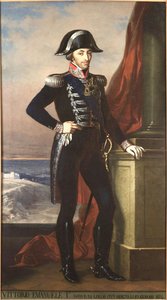
Lorenzone’s career was punctuated by several significant commissions that cemented his reputation. Undoubtedly, the most celebrated is his depiction of the main altar of the Basilica di Mary Help of Christians. This monumental work showcases his technical prowess at its finest, with intricate details in the stonework, gilded surfaces, and depictions of saints and biblical figures. Beyond this grand commission, Lorenzone’s portrait of Victor Emmanuel I stands as a significant achievement. The painting captures the regal bearing and solemnity of the first King of Italy, employing a neoclassical style that reflects the era's artistic sensibilities. His work also found its way into notable collections such as the Duomo della Vergine Assunta in Naples, alongside masterpieces by Caravaggio, Andrea Belverdi, and Cosimo Fanzago – demonstrating his standing within the broader Italian art landscape.
A Style Defined by Precision
Lorenzone’s artistic philosophy revolved around a rigorous approach to painting. He was known for meticulously planning each composition, creating detailed sketches and studies before embarking on the final work. His instruction manuals, reportedly shared with his pupils, emphasized careful observation, precise brushwork, and an unwavering commitment to accuracy. This dedication extended beyond mere technical skill; Lorenzone sought to capture not just the outward appearance of a subject but also its essence – its character, mood, and spiritual significance. The portraits he painted were particularly notable for their ability to convey personality and inner life.
Auction Records and Historical Significance
Throughout his career, Lorenzone’s paintings achieved recognition in the art market, appearing at auction multiple times with realized prices ranging from $131 to as high as $2,411. This demonstrates a consistent appreciation for his work by collectors and institutions alike. Lorenzone's contribution lies not only in his individual artistic achievements but also in his representation of a specific moment in Italian art history – the transition from Neoclassicism to Romanticism and the burgeoning sense of national identity following the unification of Italy. His works offer valuable insights into the cultural and artistic climate of 19th-century Piedmont.
Legacy and Continued Exploration
Tommaso Andrea Lorenzone’s legacy endures as a testament to the power of meticulous craftsmanship and unwavering dedication. His paintings, particularly those depicting religious scenes and portraits, continue to be studied and admired for their technical brilliance and emotional resonance. Further research into his life and work can be found on platforms like ArtsDot.com, where detailed information about his artistic process and notable works is readily available. The Wikidata entry provides a comprehensive overview of his biographical details and the historical context surrounding his career.
tommaso andrea lorenzone
1824 - 1902 , Italy
Quick Facts
- Artistic Movement Or Style: Detailed religious & portraiture
- Date Of Birth: 1824
- Date Of Death: 1902
- Full Name: Tommaso Andrea Lorenzone
- Nationality: Italian
- Notable Artworks:
- Ritratto di Vittorio Emanuele I
- Main altar Basilica Mary Help
- Place Of Birth: Pancalleiri, Italy
Related Articles

The Enduring Legacy of Oil on Canvas: Technique, History & Aesthetic Impact
Explore the rich history & techniques of oil painting – from Renaissance masters to Impressionism. Discover pigments, layering methods, and why this timeless medium endures. Expert insights for artists & art enthusiasts.

Oil on Canvas: A Historical & Technical Exploration of a Timeless Artistic Medium
Explore the rich history & enduring techniques of oil painting on canvas. Discover the science behind its longevity, conservation practices, and contemporary relevance. Expert insights for art enthusiasts.

The Enduring Power of Painting: A Historical & Contemporary Exploration of Form and Emotion
Explore the rich history & enduring techniques of oil painting with ArtsDot. Discover masterpieces, learn about art collecting, and find authentic handmade reproductions crafted by skilled artists.

The Enduring Legacy of Oil on Canvas: Technique, History & Contemporary Practice
Explore the rich history & enduring techniques of oil painting on canvas. Discover the science behind its longevity, conservation practices, and contemporary relevance. Expert insights for art enthusiasts.

Turn Your Digital Art Into Hand‑Painted Oil Masterpieces—Earn Big on Every Sale and Build an Enduring Legacy
Transform your NFT collection into hand‑painted oil masterpieces with ArtsDot’s expert artisans. Enjoy museum‑grade quality, free worldwide shipping, and a 100% satisfaction guarantee—turn digital art into a lasting legacy that earns you real value.