 Preview
 Send
Send Share
Share
 Details

 Download
 Similars
 X-Ray
X-Ray Diaporama
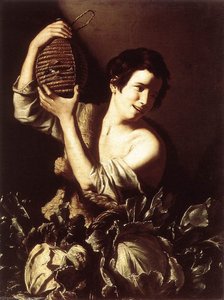
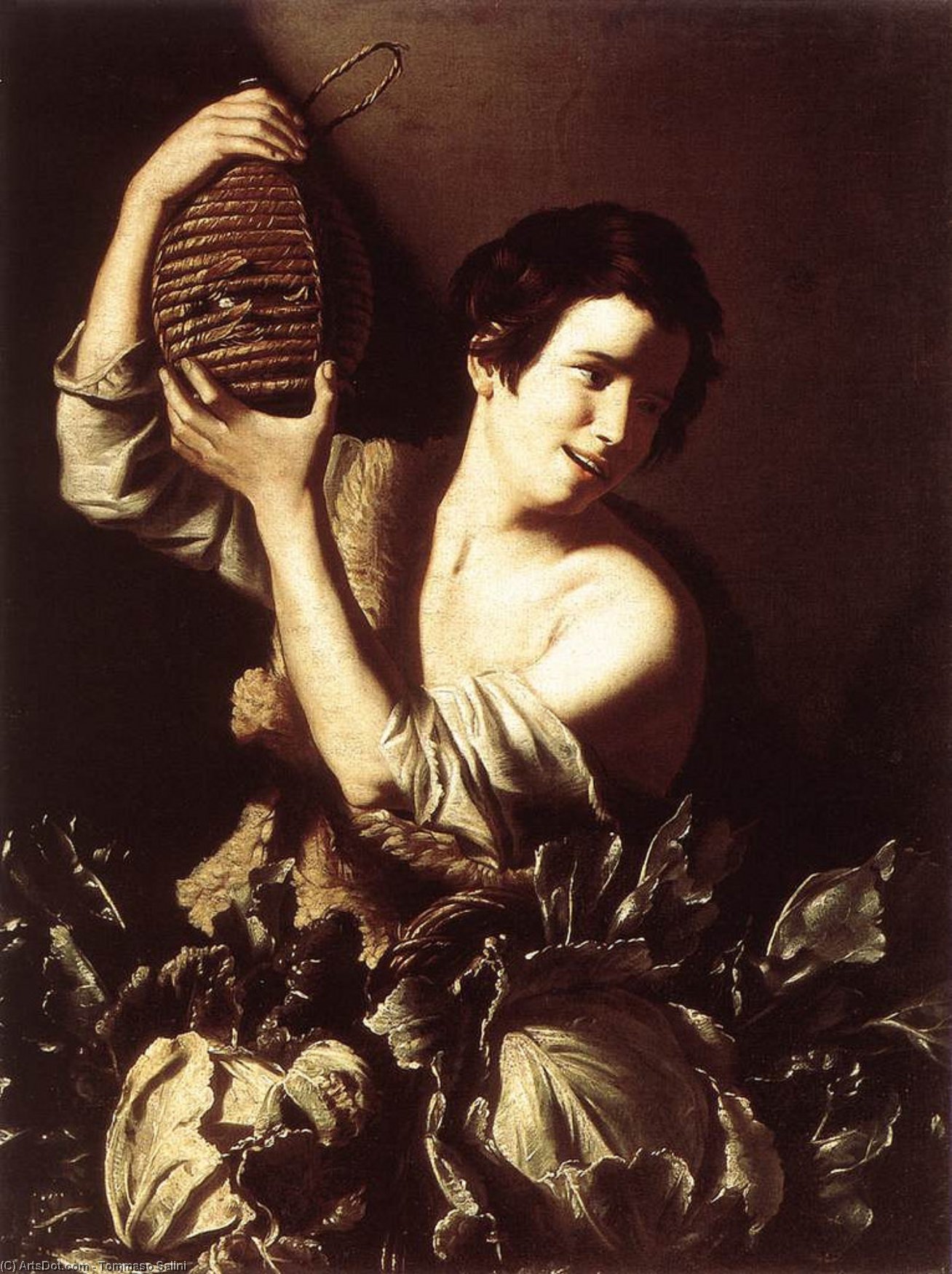
Boy with a Flask and Cabbages
 Oil On Canvas
- WallArt
- Baroque
 1610
1610- Early Modern
 99.0 x 73.0 cm
 Museo Thyssen-Bornemisza
 Read More
Hand Made Oil Reproduction
Hand-painted oil on canvas in your size and frame, made to order by our artists. ( Buy Print Buy Image)




P118B $10

P118H $10

P118W $10

P438Z $10

P508JH $12

P508YH $12

P805H $10

P805Z $10

P919BZ $10

P919G $10

P919XJ $10

P959ZH $10

P968JZ $12

W106C $8

W218G $10

W218JH $8

W218Y $10

W307PJ $10

W316G $10

W316PJ $8

W316Y $10

W398PJ $8

W4111J $10

W500HY $15

W500JH $15

W692G $12

W849H $8

W940BG $15

W953PJ $8




Pick from our preset sizes that match the artwork's original proportions.

You may enter your own dimensions to fit a specific frame or space. If your selected size does not match the original image's proportions, we will either crop the artwork or extend the painting with additional hand-painted elements. A digital mockup will be sent for your approval before production begins.
Please note that the on-screen preview does not reflect the actual cropping or extension. Only the mockup will accurately show the final composition.
While custom sizes are available, we recommend selecting a dimension from the predefined list to preserve the original proportions.
After order, ArtsDot.com team will email client for instructions and provide a mockup preview
Worldwide Delivery () in 3/4 weeks instead of standard 5 weeks. (17 August). No compromise on quality.

Free Worldwide Express Shipping

High-Quality Linen Canvas

Full Shipping Insurance

Customs Tax Refund Guarantee

True Color Matching Guarantee

60-Day Return Policy (Defects Only)

100% Money-Back Guarantee

Bulk Discount Offer
 Glass option is only available in size under 110 CM

Boy with a Flask and Cabbages
Reproduction Medium
Reproduction Size
-


Total Price
$ 263
Artwork Description
A Glimpse into Baroque Life: Tommaso Salini's Boy with a Flask and Cabbages
To stand before Boy with a Flask and Cabbages is to step directly into the vibrant, yet subtly enigmatic, atmosphere of early seventeenth-century Rome. This portrait by Tommaso Salini captures more than just a youthful figure; it arrests a moment brimming with potential energy—a confluence of natural bounty, scholarly curiosity, and burgeoning Baroque vitality. The subject, a smiling young man, holds aloft a basket teeming with bees, an image that immediately draws the eye and sparks the imagination. His gentle demeanor contrasts beautifully with the inherent industry suggested by the buzzing life within his grasp, inviting the viewer into a private, sunlit narrative.
Mastery of Form and Light in Baroque Technique
Salini’s handling of paint speaks to the technical brilliance characteristic of the Roman Baroque period. While the overall composition is rich with detail—from the delicate texture of the young man's necklace to the varied forms of the apples scattered nearby, and the presence of a central vase—the true magic lies in how light seems to articulate every surface. The technique employed allows for both crisp delineation and soft transitions, hallmarks of an artist navigating the shadow-drenched drama that Caravaggio had so profoundly influenced. One can almost feel the weight of the basket and smell the sweet nectar carried on the air.
Symbolism Woven into Everyday Objects
The objects surrounding the central figure are not mere decorative additions; they function as potent symbols, inviting layers of interpretation. The bees themselves are ancient emblems of industry, community, and the sweetness of life's rewards. Paired with the cabbages—a symbol often associated with abundance or even mortality in period art—and the ripe apples, the painting becomes a rich meditation on nature’s cycles. The flask itself hints at knowledge, perhaps poetry, or earthly pleasures, suggesting that this young man is a figure caught between rustic simplicity and cultivated intellect.
An Emotional Resonance for the Modern Collector
For the contemporary admirer of art, Boy with a Flask and Cabbages offers an unparalleled emotional connection. It possesses a warmth that transcends its historical distance. Whether you are seeking to infuse a gallery wall with the sophisticated drama of the Baroque era or desire a piece that whispers tales of pastoral life, this work resonates deeply. Owning a reproduction allows one to bring home not just paint on canvas, but a carefully preserved fragment of artistic history—a conversation starter imbued with the quiet joy of a sun-drenched Roman afternoon.
Related Artworks

Artist Biography
The Shadow of the Baroque: The Life and Legacy of Tommaso Salini
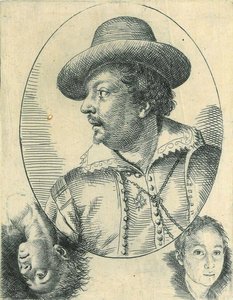
In the vibrant, often turbulent artistic landscape of late 16th-century Rome, few figures evoke as much mystery and scholarly intrigue as Tommaso Salini. Known to his contemporaries by the moniker Mao Salini, he emerged during a period of profound stylistic transition, where the structured elegance of Mannerism began to yield to the dramatic, visceral energy of the Baroque. While history has often relegated him to the periphery—frequently overshadowed by the monumental presence of Caravaggio or the biographical accounts of his contemporary Giovanni Baglione—Salini was far more than a mere footnote. He was a painter caught in the crosscurrents of revolution, a witness to the legal and artistic battles that defined an era, and an artist whose work sought a delicate balance between meticulous observation and dramatic light.
Born in Rome around 1575, Salini’s early life was deeply embedded in the Roman art scene. His presence in the prestigious Accademia di San Luca by 1605 signifies his standing among the city's elite practitioners. However, much of what we know of his character comes not from his brushstrokes, but from the courtroom. Salini famously stood as a courageous defender of his friend, Giovanni Baglione, during the infamous libel trial brought against Caravaggio and several other artists. This moment of intellectual and personal integrity highlights a man who navigated the competitive and often litigious milieu of Roman art circles with a steadfast commitment to his peers, even amidst the tempestuous rivalries that characterized the age.
A Synthesis of Light and Stillness
The stylistic evolution of Salini’s oeuvre presents a fascinating study in artistic synthesis. To look upon a Salini canvas is to witness a dialogue between two worlds: the lingering grace of the late Mannerist tradition, seen in the works of Santi di Tito, and the revolutionary naturalism introduced by Caravaggio. While he undeniably fell under the spell of Caravaggio’s dramatic chiaroscuro, Salini did not merely mimic the raw, often violent immediacy of the master. Instead, he tempered that darkness with a more restrained palette and a sense of compositional elegance that favored quiet dignity over visceral shock.
His mastery was particularly evident in his approach to different genres:
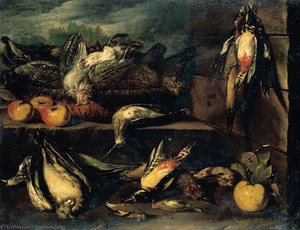
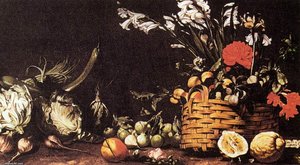
- Still Life: Salini was a specialist in the burgeoning genre of still life, often imbuing inanimate objects with a contemplative spirit. His works, such as those featuring luscious fruits, vegetables, and game, are characterized by a meticulous attention to texture and form that invites deep observation.
- Religious Compositions: In his sacred works, such as The Ecstasy of Saint Francis, one finds a profound sense of devotion expressed through nuanced rendering and a soft, atmospheric light that avoids the harshness of pure Caravaggism.
- Genre Scenes: His ability to capture the human element is seen in portraits and genre paintings where subjects possess a certain soulful stillness, bridging the gap between the mundane and the monumental.
Rediscovering a Forgotten Master
For centuries, the true identity of Salini’s hand was obscured by the emergence of "Pseudo-Salini" attributions—works that carried his name but lacked his specific touch. This scholarly fog led many to dismiss much of his output as anonymous or misattributed. Yet, recent connoisseurship and rigorous research are beginning to peel back these layers of doubt. By examining the original works documented by Baglione and identifying the consistent hallmarks of Salini’s technique—his unique way of handling light and his preference for a more tempered naturalism—art historians are reclaiming his place in the Baroque canon.
The historical significance of Tommaso Salini lies not only in the beauty of his surviving canvases but in what he represents: the essential, connective tissue of the Roman Baroque. He was an artist who stood at the crossroads of tradition and innovation, helping to shape a style that was neither purely Mannerist nor purely Caravaggesque, but something uniquely his own. As we continue to rediscover his contributions, Salini emerges from the shadows, no longer just a witness to history, but a vital voice in the grand narrative of Italian art.
Tommaso Salini
1575 - 1625 , Italy
Quick Facts
- Artistic Movement Or Style: Early Baroque
- Artists Or Movements Influenced By This Artist: ['Giovanni Baglione']
- Artists Who Influenced This Artist: ['Caravaggio']
- Date Of Birth: Rome, Italy (1575)
- Date Of Death: 1625
- Full Name: Tommaso Salini
- Nationality: Italian
- Notable Artworks:
- A boy eating a loaf of bread with a cat
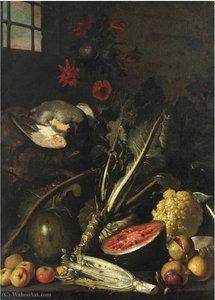
- Natura morta con cardo, cavolo, angurie, melagrana, cacciagione e fiori
- Place Of Birth: Rome
Related Articles

Baroque Drama: Bringing Opulence & Emotion into Contemporary Interiors
Explore the opulent world of Baroque interior design! Discover key elements, modern applications & how to bring dramatic elegance into your home with 's authentic reproductions.

Baroque Masterpieces: 10 Paintings That Defined an Era |
Journey through the drama & grandeur of Baroque art! Explore 10 masterpieces by Caravaggio, Rembrandt, Rubens & more. Discover stunning oil paintings, rich colors & timeless stories. Find museum-quality reproductions at .

The Visceral Stage: Exploring Dramatic Narratives & Emotional Intensity in Baroque Art
Explore the dramatic world of Baroque art! Discover iconic masters like Caravaggio & Rembrandt, their techniques, and the movement's lasting impact. Expert insights for collectors & enthusiasts at ArtsDot.
Simon Vouet: A Baroque Master's Journey from Italian Influence to French Classicism
Explore the life & art of Simon Vouet, a pivotal French Baroque painter who introduced Italian styles to France. Discover his masterpieces and lasting influence on 17th-century art.
Decoding Baroque Grandeur: A Guide to the Drama and Emotion of 17th-Century Art
Explore the breathtaking drama of 17th-century Baroque art. Our expert guide decodes the use of chiaroscuro, emotional intensity, and historical grandeur to help you appreciate and curate timeless masterpieces for your collection.