 Send
Send Share
Share
 Details

 Download
 Similars
 Diaporama
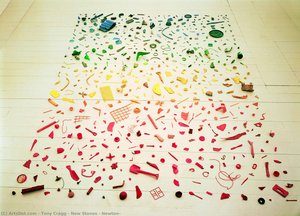
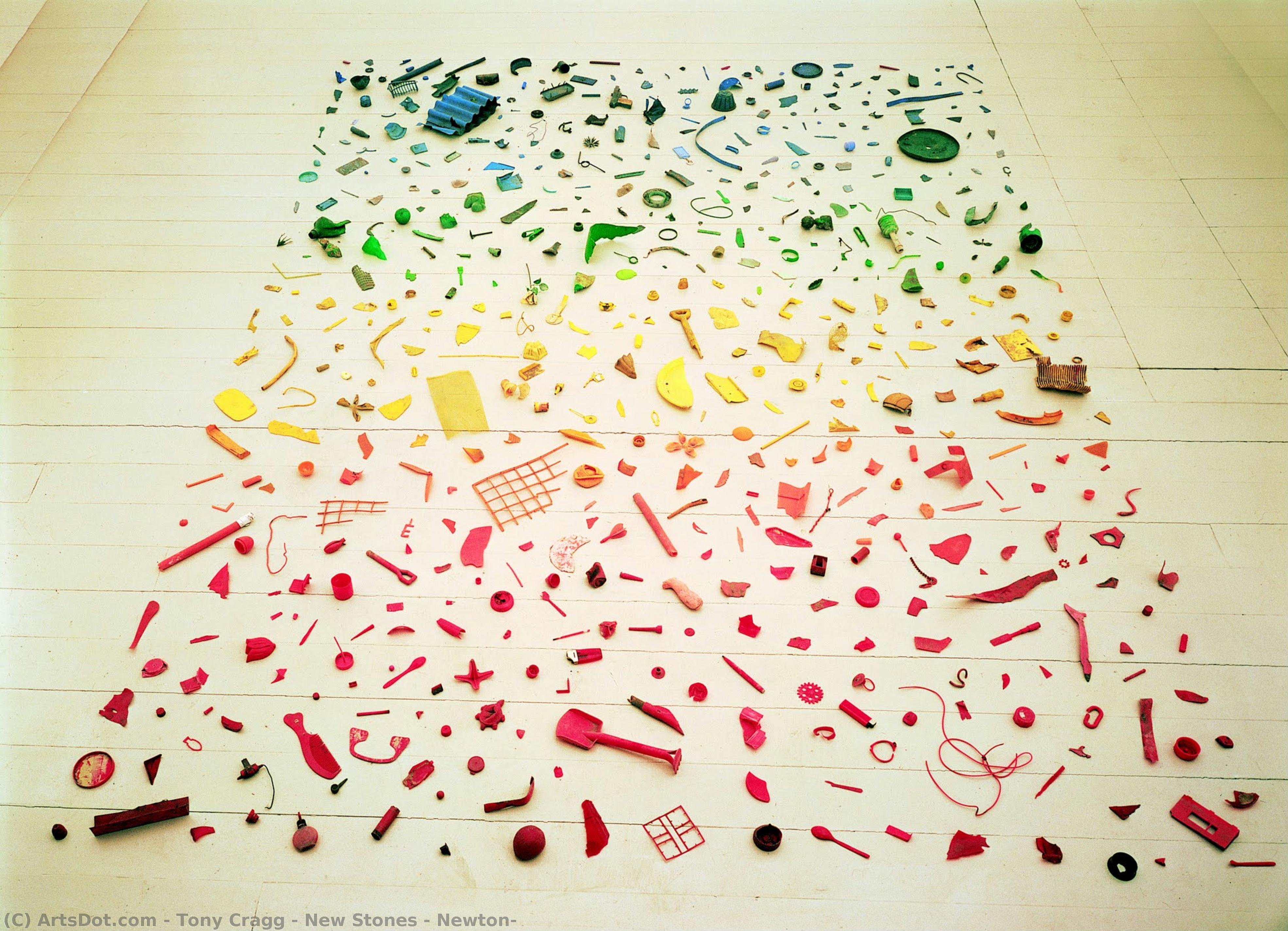
New Stones - Newton
 Found Object Art
 1978
1978- Contemporary
 366.0 x 244.0 cm
 Arts Council Collection
 Read More
Giclée / Art Print
Museum-quality giclée or canvas print with fast production and flexible finish options. ( Buy Hand Made Painting Buy Image)




































Pick from our preset sizes that match the artwork's original proportions.

You may enter your own dimensions to fit a specific frame or space. If your selected size does not match the original image's proportions, we will either crop the artwork or extend the image with a mirrored or solid-fill edge. A digital mockup will be sent for your approval before production begins.
Please note that the on-screen preview does not reflect the actual cropping or extension. Only the mockup will accurately show the final composition.
While custom sizes are available, we recommend selecting a dimension from the predefined list to preserve the original proportions.
Worldwide Delivery () in 2 weeks instead of standard 4/5 weeks. (18 August)

Free Worldwide Express Shipping

High-Quality Linen Canvas

Full Shipping Insurance

Customs Tax Refund Guarantee

True Color Matching Guarantee

60-Day Return Policy (Defects Only)

100% Money-Back Guarantee

Bulk Discount Offer
 Glass option is only available in size under 110 CM

New Stones - Newton
Giclée / Art Print
Reproduction Size
-


Total Price
$ 63
Collectible Description
A Spectrum of Modernity: The Alchemy of Discarded Objects
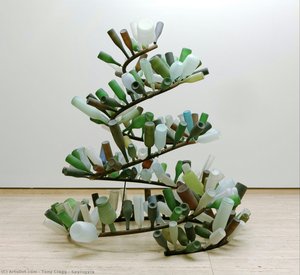
In the vast landscape of contemporary sculpture, few works possess the immediate, shimmering magnetism of Tony Cragg’s New Stones - Newton. Created in 1978, this monumental installation—reimagined here as a breathtaking visual experience—serves as a profound meditation on the intersection between human industry and the natural world. At first glance, the viewer is met with an explosion of color, a rhythmic dance of plastic fragments that seems to vibrate against its white expanse. The work does not merely present objects; it orchestrates them into a celestial event, where the mundane becomes miraculous.
The brilliance of this piece lies in its meticulous arrangement, which pays homage to Sir Isaac Newton’s discovery of the light spectrum. Cragg carefully curated these found objects—bottles, cups, and bowls collected from the streets of Wuppertal, Germany—organizing them into a deliberate sequence of hues. From deep, resonant reds through vibrant oranges and yellows, moving through lush greens into the profound depths of blue and violet, the composition mimics the very rainbow that defines our perception of light. This structural logic transforms a collection of detritus into a cohesive, breathing entity that appears to de-materialize as one moves around it.
The Poetry of the Found: Materiality and Meaning
Cragg’s technique is rooted in the art of assemblage, yet he elevates the medium far beyond simple collage. By selecting mass-produced plastic items—the very artifacts of modern consumerism—he challenges the viewer to reconsider the concept of value. There is a poignant tension within New Stones - Newton; while the materials are products of industrial repetition and often discarded as waste, their arrangement suggests an organic, almost biological growth. The artist invites us to see the "new stones" of our era not as trash, but as the geological strata of a technological age.
For the discerning collector or interior designer, this work offers a unique psychological depth. It possesses a dual nature: it is simultaneously a celebration of color and a subtle critique of industrial excess. The way the light interacts with the varied surfaces—some matte, some translucent, some reflective—creates a dynamic energy that changes with the ambient lighting of a room. It is a piece that demands attention through its sheer vibrancy, yet rewards close inspection with its complex layers of meaning and historical resonance.
An Evocative Presence for Sophisticated Spaces
Integrating a high-quality reproduction of this masterpiece into a curated space brings an unparalleled sense of intellectual and aesthetic vitality. The composition’s expansive scale and rhythmic color palette make it an ideal focal point for modern, minimalist, or avant-garde interiors. It acts as a bridge between the structured world of design and the fluid beauty of nature, providing a conversation piece that is both visually stimulating and deeply thought-provoking.
To possess this work is to hold a fragment of art history—a moment when the boundaries between sculpture and painting, between nature and industry, were irrevocably blurred. It remains an enduring symbol of innovation, reminding us that even in the most overlooked fragments of our daily lives, there exists the potential for sublime beauty and scientific wonder.
Related Artworks

Artist Biography
The Architect of Fragmented Forms
Sir Anthony Cragg, a titan of British contemporary sculpture, possesses the rare ability to breathe life into the inanimate. Born in Liverpool in 1949, Cragg’s artistic consciousness was shaped by an early mastery of painting, yet it was his profound fascination with the three-dimensional realm that would eventually redefine the boundaries of modern sculpture. His journey through the Gloucestershire College of Arts and Technology and Wimbledon School of Art provided a rigorous foundation, but it was his move to Germany in 1977 that acted as a true catalyst, thrusting him into an international dialogue with the avant-garde and expanding his sculptural vocabulary beyond the limits of traditional medium.
In the early stages of his career, Cragg emerged as a pioneer of the assemblage movement, finding profound beauty in the discarded and the mundane. He possessed a singular vision for transforming everyday detritus—stacked chairs, weathered tables, and forgotten boxes—into complex, rhythmic reliefs. Through works such as “Stack” (1975), he demonstrated an uncanny ability to manipulate spatial arrangement and color, turning fragments of plastic and wood into vibrant geometric abstractions. This period was defined by a philosophical rejection of representational imagery; instead, Cragg sought to distill visual language into its purest essence, forcing the viewer to confront the raw energy of form and texture without the distraction of recognizable subjects.
Evolution of Material and Motion
As his career progressed through the mid-1970s and into the 1980s, Cragg’s ambitions grew from the intimate scale of wall-mounted reliefs to the monumental presence of large-scale installations. He began to bridge the gap between architecture and sculpture, creating works that engaged aggressively with the spaces they inhabited. His mastery over diverse materials—ranging from the industrial coldness of fiberglass to the timeless weight of bronze—allowed him to explore a spectrum of textures and densities. In pieces like “Red Indian” (1982–3), one can observe his meticulous method of arranging individual fragments to generate larger, more complex images that simultaneously evoke organic, natural growth and rigid, geometric precision.
The brilliance of Cragg’s development lies in his ability to navigate the tension between the artificial and the biological. His later series, such as 'Early Forms' and 'Rational Beings', showcase a sculptor deeply invested in the concept of emergence—the way complex structures arise from simple components. His sculptures often appear to be in a state of flux, caught in a moment of transformation or unfolding. This sense of kinetic energy, even within static bronze or resin, creates a psychological depth that challenges our perceptions of stability and permanence.
Legacy and Artistic Significance
The historical significance of Sir Anthony Cragg cannot be overstated; he has fundamentally altered the trajectory of contemporary sculpture by dismantling the distinction between found objects and fine art. His work serves as a bridge between the sculptural traditions of the past and the fragmented, multi-material reality of the present. By treating the fragment not as a broken piece, but as a building block for new realities, he has provided a visual language for an era defined by complexity and interconnectedness.
Today, Cragg remains a vital force in the global art scene, his influence felt in the way contemporary artists approach materiality and spatial intervention. His achievements are marked by:
- Innovation in Assemblage: Redefining the use of discarded materials to create high-art aesthetics.
- Material Versatility: The seamless integration of fiberglass, bronze, and plastic into a cohesive sculptural language.
- Spatial Dialogue: A profound ability to transform architectural environments through monumental installations.
- Philosophical Depth: Exploring the intersection of geometric abstraction and organic, biological forms.

Tony Cragg
1949 -
Quick Facts
- Artistic Movement Or Style: Assemblage art
- Artists Who Influenced This Artist:
- Robert Irwin
- Donald Judd
- Date Of Birth: 1949
- Date Of Death: Living
- Full Name: Tony Cragg
- Nationality: British
- Notable Artworks:
- Axehead
- Opening Spiral
- Dining Motions
- Place Of Birth: Liverpool, UK
Related Articles

Industrial Revolution on Canvas: 10 Artworks That Define a Modern Aesthetic
Explore 10 iconic artworks capturing the Industrial Revolution’s grit & beauty. From Monet to Manet, discover realism, impressionism & powerful scenes of urban life. Find museum-quality reproductions for your home at ArtsDot.com.
The Gritty Muse: Industrial Vibe as Defining Aesthetic in Modern Artwork
Explore the captivating world of industrial aesthetics in modern art. Discover key movements, influential artists & collecting insights at ArtsDot.com – your source for museum-quality reproductions and expert art guidance.

Precisionism: A Study of Industrial Aesthetics & Modern American Art
Explore Precisionism, a pivotal American art movement celebrating the Machine Age. Discover key artists like Sheeler & O'Keeffe, its European roots, and lasting influence on modern aesthetics. Expert analysis for collectors.
Laurence Stephen Lowry: Chronicling Industrial Life with Poignant Beauty
Explore the poignant world of L.S. Lowry, Britain's iconic chronicler of industrial life. Discover his unique style, 'matchstick men', and captivating landscapes. Find original artwork & expert appraisal at ArtsDot.
Piet Mondrian: Deconstructing Reality – A Study of Neo-Plasticism & Universal Harmony
Explore the revolutionary art of Piet Mondrian and the principles of Neo-Plasticism. Discover De Stijl's influence, iconic compositions like 'Composition with Red, Yellow and Blue,' and Mondrian’s lasting legacy on modern design.