 Send
Send Share
Share
 Details

 Download
 Similars
 Diaporama
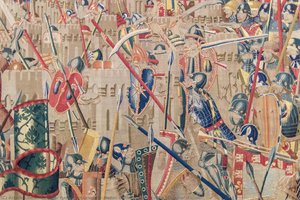
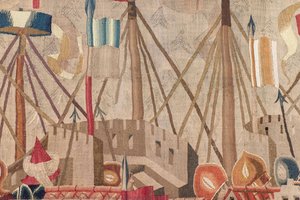
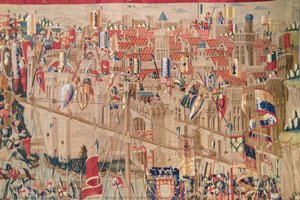
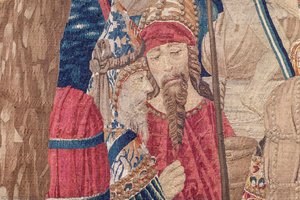
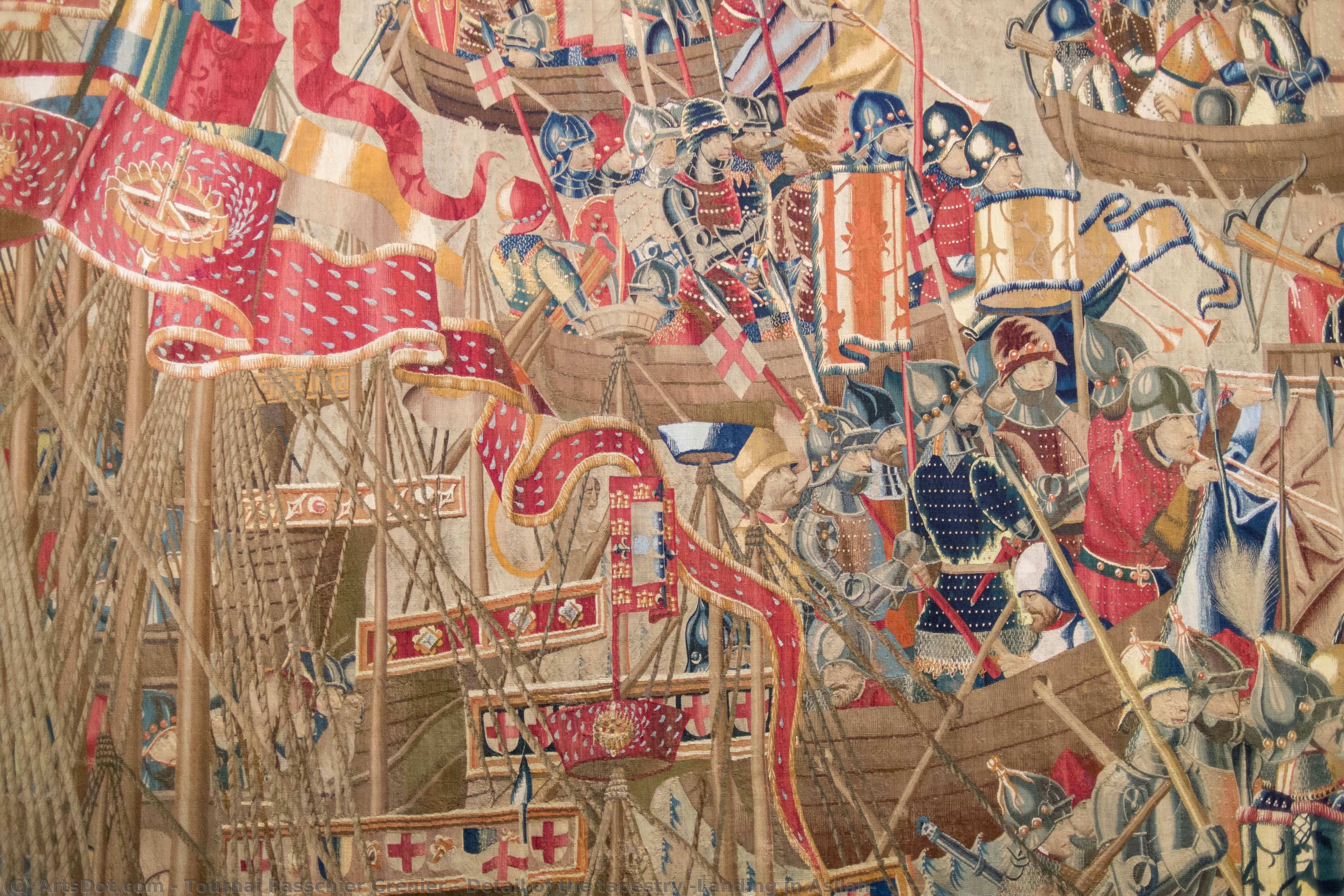
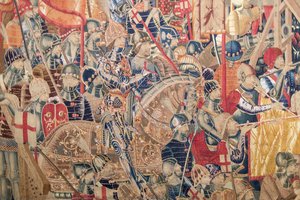
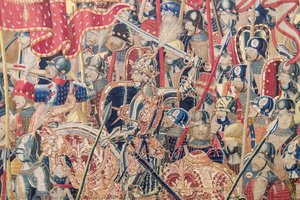
Detail of the tapestry “Landing in Asilah”


 Read More
Giclée / Art Print
Museum-quality giclée or canvas print with fast production and flexible finish options. ( Buy Hand Made Painting Buy Image)




































Pick from our preset sizes that match the artwork's original proportions.

You may enter your own dimensions to fit a specific frame or space. If your selected size does not match the original image's proportions, we will either crop the artwork or extend the image with a mirrored or solid-fill edge. A digital mockup will be sent for your approval before production begins.
Please note that the on-screen preview does not reflect the actual cropping or extension. Only the mockup will accurately show the final composition.
While custom sizes are available, we recommend selecting a dimension from the predefined list to preserve the original proportions.
Worldwide Delivery () in 2 weeks instead of standard 4/5 weeks. (6 September)

Free Worldwide Express Shipping

High-Quality Linen Canvas

Full Shipping Insurance

Customs Tax Refund Guarantee

True Color Matching Guarantee

100-Day Return Policy (Defects Only)

100% Money-Back Guarantee

Bulk Discount Offer
 Glass option is only available in size under 110 CM

Detail of the tapestry “Landing in Asilah”
Giclée / Art Print
Reproduction Size
-


Total Price
$ 63
A Window into the Burgundian Renaissance
In the intricate threads of the Detail of the tapestry “Landing in Asilah,” we find ourselves transported to the year 1475, a period where the artistry of Flanders reached a pinnacle of narrative complexity and technical brilliance. This exquisite fragment, attributed to the influential trade and workshop collaborations overseen by Tournai Passchier Grenier, serves as more than just a textile; it is a vibrant window into a world of maritime adventure and medieval splendor. The scene unfolds with a breathtaking sense of movement, capturing a lively waterfront where the boundaries between land and sea blur amidst a flurry of human activity. As one gazes upon the meticulously woven figures, there is an immediate emotional pull—a feeling of being a silent observer on the docks of a bustling, distant port, caught in a moment of historical transition.
The composition is a masterclass in late medieval storytelling, utilizing a dense, layered arrangement to guide the eye through a sea of characters and vessels. Within this detail, we encounter at least thirteen distinct figures, each rendered with a level of specificity that suggests a profound dedication to realism within the tapestry medium. Some travelers sit contemplatively upon their boats, while others stand poised for action, creating a rhythmic ebb and flow of human presence. The inclusion of varied watercraft—ranging from sturdy, sail-equipped vessels to smaller, more agile skiffs—adds a layer of structural depth to the work. Even the subtle presence of a horse on the periphery and the delicate flight of birds overhead imbue the scene with an organic vitality, suggesting that this landing is but one heartbeat in a much larger, living ecosystem.
The Mastery of Flemish Weaving and Texture
To appreciate this work is to appreciate the sheer Herculean effort required by the weavers of the 15th-century Burgundian territories. The technique employed here relies on a sophisticated interplay of color and thread density to simulate light, shadow, and texture. For the discerning collector or interior designer, the allure of such a piece lies in its ability to provide tactile richness to a space. Even in reproduction, the essence of the original's heavy, luxurious weave is palpable, offering a sense of historical weight and permanence. The way the light seems to dance across the depicted waves and the metallic glint of imagined armor speaks to the incredible skill of the artisans who worked under the direction of masters like Grenier.
The artistry extends beyond mere representation; it is an exploration of atmosphere. The artist uses a palette that, while aged by time, retains a sense of vibrancy that defines the Burgundian Renaissance style. This era was characterized by an obsession with detail and a desire to showcase wealth through complex iconography. In this tapestry, every knot and every dyed strand contributes to a larger narrative of exploration and commerce. For those looking to curate a space with profound character, this piece offers an unparalleled opportunity to introduce a sense of epic history and sophisticated craftsmanship into a modern setting.
A Legacy for the Discerning Collector
Owning a reproduction of such a significant historical fragment is an act of preserving cultural memory. The "Landing in Asilah" detail represents a time when tapestries were the ultimate status symbol, serving as both portable murals and profound storytelling devices for the European elite. It evokes themes of arrival, discovery, and the interconnectedness of the medieval world. Whether placed in a grand library, a formal dining room, or a contemporary studio, this artwork acts as a focal point that invites conversation and contemplation.
For the interior designer, this piece offers a unique way to layer history into a room, providing a sense of "old-world" soul that modern prints often lack. It brings with it the spirit of Tournai—a city synonymous with the highest standards of textile excellence. By integrating this work into a collection, one does not merely decorate a wall; one anchors a space within the grand continuum of art history, celebrating the enduring beauty of the Flemish tradition.
Related Artworks

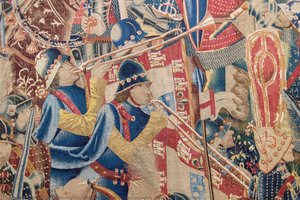
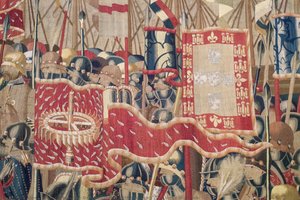
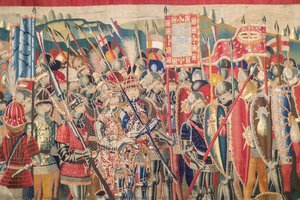
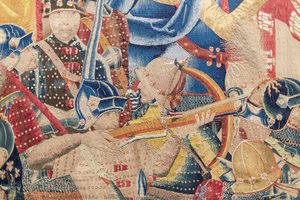
Artist Biography
The Architect of Flemish Grandeur: The Legacy of Pasquier Grenier
In the vibrant, loom-filled corridors of the fifteenth-century Burgundian Renaissance, few names carried as much weight in the realm of luxury and prestige as Pasquier Grenier. While history often reserves its highest honors for the hands that hold the needle or the brush, the true engine of artistic innovation was frequently found in the vision of the merchant-patron. Born in the industrious city of Tournai around 1447, Grenier emerged not merely as a trader of textiles, but as a sophisticated curator of cultural identity. His life’s work bridged the gap between raw craftsmanship and the high-stakes political theater of the Duchy of Burgundy, transforming the medium of tapestry from simple wall coverings into epic narratives of power, conquest, and divine right.
The essence of Grenier’s influence lay in his unparalleled ability to orchestrate the talents of the finest workshops across Flanders. Though long misidentified as a weaver himself, modern scholarship reveals him to be a master of the art trade—a man who understood that a tapestry was both a masterpiece of technique and a potent political tool. By fostering deep connections between the weaving centers of Tourlam, Bruges, and Antwerp, he created a cohesive artistic movement. He did not simply sell cloth; he commissioned stories. Under his guidance, the intricate threads of wool and silk were woven into complex tapestries that captured the zeitgeist of an era defined by chivalry, territorial expansion, and the burgeoning humanism of the North.
Masterpieces of Narrative and Conquest
The zenith of Grenier’s career is perhaps best exemplified by his involvement in the monumental series known as the Attack of Asilah. Produced around 1475, these tapestries represent a breathtaking fusion of historical documentation and artistic drama. Through these works, one can witness the meticulous attention to detail that defined the period—the glint of sunlight on polished plate armor, the chaotic movement of cavalry, and the sweeping landscapes of naval warfare. These were not merely decorative items; they were cinematic experiences rendered in thread, designed to evoke awe in the halls of the most powerful figures in Europe.
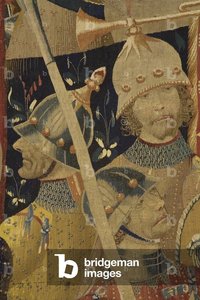
In specific details such as Landing in Asilah, the artistry reaches a level of breathtaking intensity. The viewer is transported into a world of armored combat and high-stakes military maneuvers, where every stitch serves to heighten the tension of the scene. These works demonstrate how Grenier pushed workshops to experiment with color palettes and compositional depth, ensuring that the Flemish style remained the gold standard for European nobility. His ability to secure commissions from figures such as Philip the Handsome allowed him to shape the visual language of the Burgundian court, embedding themes of bravery and legitimacy into the very fabric of their surroundings.
A Lasting Impression on Art History
The historical significance of Pasquier Grenier extends far beyond the lifespan of his physical inventories. He was a pivotal figure in establishing the economic and artistic infrastructure that allowed Flemish textile art to dominate the European market for generations. His legacy is found in the survival of these magnificent fragments, which continue to offer scholars and art lovers alike a window into the medieval mind. Through his strategic patronage, he ensured that the technical mastery of the Tournai weavers was documented with a grandeur that time could not erode.
To study the works associated with Grenier is to study the heartbeat of the Burgundian Renaissance. His career serves as a profound reminder that art is a collaborative endeavor, requiring both the creative spark of the artisan and the discerning eye of the visionary merchant. As we gaze upon the intricate battle scenes and vibrant landscapes of his era, we are seeing more than just ancient thread; we are witnessing the enduring triumph of a man who knew how to weave history itself.
tournai passchier grenier
1447 - 1493 , Belgium
Quick Facts
- Artistic Movement Or Style: Burgundian tapestry trade
- Date Of Birth: Tournai, Belgium (1447)
- Date Of Death: 1493
- Full Name: Pasquier Grenier
- Nationality: Flemish
- Notable Artworks: ['The Attack of Asilah']
- Place Of Birth: Tournai
Related Articles
High Medieval Art: 10 Masterpieces That Shaped an Era | ArtsDot
Journey through High Medieval Art! Explore 10 iconic masterpieces – from Giotto's frescoes to stunning Gothic cathedrals. Discover the stories behind these timeless paintings, sculptures & illuminated manuscripts. Find museum-quality art reproductions at ArtsDot.com.
Late Medieval Masterpieces: 10 Artworks That Defined an Era | ArtsDot
Journey through 10 defining Late Medieval masterpieces – from Giotto's frescoes to Jan van Eyck’s realism. Explore the stories, techniques & vibrant colors of Gothic art. Find museum-quality reproductions and elevate your home decor with ArtsDot.com! Discover all masterpieces on ArtsDot.com
Illuminating Faith & Power: A Journey Through Medieval Art (c. 500 – c. 1500)
Explore the rich history of Medieval Art (c. 500 – c. 1500) with ArtsDot. Discover Byzantine mosaics, Gothic cathedrals & Renaissance masterpieces. Expert insights & museum-quality reproductions.
Early Medieval Art: 10 Masterpieces That Shaped a New World | ArtsDot
Journey through 10 stunning Early Medieval masterpieces – from the Book of Kells to Carolingian mosaics. Explore art history, symbolism & find museum-quality reproductions for your home at ArtsDot.com. Discover all masterpieces online!
Jan Brueghel the Elder: A Master of Flemish Landscape & Allegory – Exploring Innovation & Influence
Explore the captivating world of Jan Brueghel the Elder, a Flemish Baroque master renowned for his stunning landscapes & allegorical paintings. Discover his collaborations with Rubens and lasting artistic legacy.