 Preview
 Send
Send Share
Share
 Details

 Download
 Similars
 X-Ray
X-Ray Diaporama
 Stats
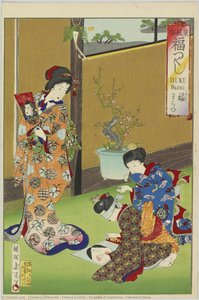
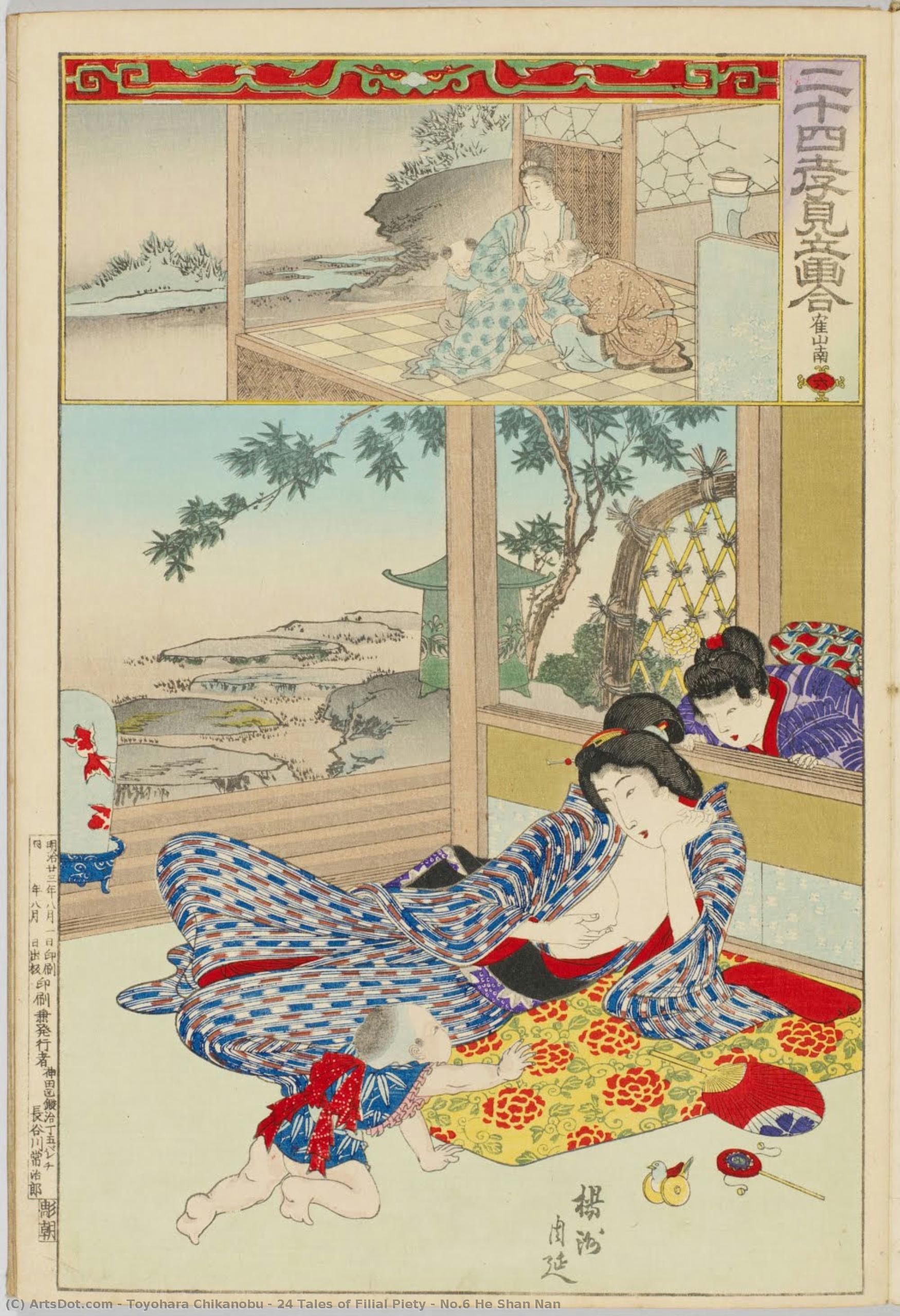
Stats24 Tales of Filial Piety : No.6 He Shan Nan
 Woodblock Print
- Ukiyo-e
 1890
1890- 19th Century
 35.0 x 23.0 cm
 Keio University Library
 Read More
Giclée / Art Print
Museum-quality giclée or canvas print with fast production and flexible finish options. ( Buy Hand Made Painting Switch to Digital Image)




P118B $10

P118H $10

P118W $10

P438Z $10

P508JH $12

P508YH $12

P805H $10

P805Z $10

P919BZ $10

P919G $10

P919XJ $10

P959ZH $10

P968JZ $12

W106C $8

W218G $10

W218JH $8

W218Y $10

W307PJ $10

W316G $10

W316PJ $8

W316Y $10

W398PJ $8

W4111J $10

W500HY $15

W500JH $15

W692G $12

W849H $8

W940BG $15

W953PJ $8




Pick from our preset sizes that match the artwork's original proportions.

You may enter your own dimensions to fit a specific frame or space. If your selected size does not match the original image's proportions, we will either crop the artwork or extend the image with a mirrored or solid-fill edge. A digital mockup will be sent for your approval before production begins.
Please note that the on-screen preview does not reflect the actual cropping or extension. Only the mockup will accurately show the final composition.
While custom sizes are available, we recommend selecting a dimension from the predefined list to preserve the original proportions.
Worldwide Delivery () in 2 weeks instead of standard 4/5 weeks. (10 September)

Free Worldwide Express Shipping

High-Quality Linen Canvas

Full Shipping Insurance

Customs Tax Refund Guarantee

True Color Matching Guarantee

100-Day Return Policy (Defects Only)

100% Money-Back Guarantee

Bulk Discount Offer
 Glass option is only available in size under 110 CM

24 Tales of Filial Piety : No.6 He Shan Nan
Giclée / Art Print
Reproduction Size
-


Total Price
$ 63
A Moment of Serenity in the Meiji Era
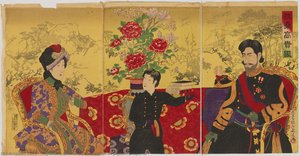
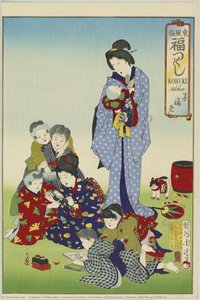
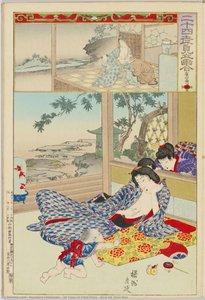
In the delicate interplay of light and shadow captured within "24 Tales of Filial Piety : No.6 He Shan Nan," we are transported to a quiet, intimate corner of late 19th-century Japan. Created in 1890 by the master woodblock artist Toyohara Chikanobu, this exquisite work serves as more than just a visual narrative; it is a window into the soul of the Meiji era. The scene unfolds with a profound sense of stillness, depicting a woman dressed in traditional Japanese attire, cradling her child amidst a gathering of loved ones. As natural light streams through a nearby window, it bathes the room in a warm, golden glow, illuminating the textures of the floor and the soft contours of the figures. This composition does not merely present a domestic scene; it invites the viewer to participate in a shared moment of peace, where the boundaries between the observer and the observed dissolve into a singular, breathing atmosphere of familial devotion.
The artistry of Chikanobu is on full display through his masterful command of the ukiyo-e tradition. While many artists of his time were racing toward Westernization, Chikanobu utilized the woodblock medium to preserve the elegance of classical Japanese aesthetics. In this specific piece, the technique allows for a breathtaking level of detail—from the subtle folds in the woman's kimono to the gentle expressions on the faces of the surrounding companions. The balance of the composition, with figures strategically placed to guide the eye through the room, creates a sense of depth and spatial harmony. For the discerning collector or interior designer, this work offers a sophisticated interplay of organic shapes and structured light, making it an ideal centerpiece for spaces that value tranquility, heritage, and the timeless beauty of Eastern craftsmanship.
The Symbolism of Devotion and Heritage
Beyond its aesthetic allure, "He Shan Nan" carries a profound emotional and cultural weight. As part of Chikanobu’s series celebrating tales of filial piety, every element within the frame is imbued with symbolic meaning. The act of the mother holding her child serves as a powerful metaphor for the continuity of lineage and the sacred duty of care that defines the human experience. The presence of other figures in the background—some standing near the periphery, others resting quietly—suggests a community bound together by shared values and mutual respect. This theme of devotion is central to the artwork's impact; it resonates with anyone who finds beauty in the quiet strength of family bonds.
For those looking to integrate this piece into a curated collection or a modern living space, its value lies in its ability to evoke nostalgia and emotional resonance. It is an artwork that speaks of stability in a changing world. The soft palette and the gentle narrative make it a versatile choice for high-end decor, providing a sense of historical depth to contemporary interiors. Owning a reproduction of such a significant work allows one to bring a piece of Japan's golden age of printmaking into the home, offering a daily encounter with a legacy of peace, love, and enduring cultural pride.
Related Artworks
Artist Biography
A Visionary of the Meiji Era: The Life and Legacy of Toyohara Chikanobu
In the twilight of the Edo period and the dawn of a modernizing Japan, few artists captured the profound tension between tradition and transformation as masterfully as Toyohara Chikanobu. Born in 1838, an era of profound cultural shifts, Chikanobu—often recognized by his art name Yōshū Chikanobu—emerged as a monumental figure in the world of Japanese woodblock printing. His life was a bridge between two worlds: the ancient, refined aesthetics of the samurai class and the burgeoning, Western-influenced energy of the Meiji era. While his real name, Hashimoto Naoyoshi, whispered of a more private existence, his artistic persona commanded the attention of a nation undergoing rapid metamorphosis.
Chikanobu’s early foundations were deeply rooted in the meticulous craftsmanship of Japanese heritage. Raised with an appreciation for detail that likely stemmed from his family's connection to the arts, he underwent rigorous training in painting and printmaking. This classical grounding allowed him to master the delicate nuances of ukiyo-e, yet he was never a mere imitator of the past. Instead, he became a pioneer of the Shin-hanga movement, a revitalizing force that sought to breathe new life into traditional woodblock techniques by integrating Western concepts such as realistic perspective and anatomical accuracy. This unique synthesis allowed his work to possess a depth and vitality that felt both timeless and strikingly contemporary to his contemporaries.
The Art of Transformation: Themes and Techniques
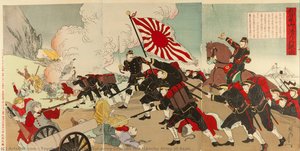
The brilliance of Chikanobu’s oeuvre lies in its incredible thematic breadth, ranging from the ethereal beauty of bijinga (pictures of beautiful women) to the visceral intensity of historical warfare. He possessed a rare ability to pivot between the serene and the spectacular. In his depictions of women, one finds a poetic grace; his lines are fluid, capturing the intricate patterns of kimonos and the soft, evocative moods of daily life. Yet, in stark contrast, Chikanobu was equally celebrated for his dramatic triptychs of battle. These works, such as his vivid accounts of the Japanese army at Asan, utilize rich colors and dynamic compositions to convey the grit, movement, and historical weight of a nation in conflict.
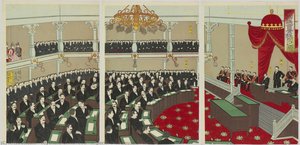
Beyond the human figure, Chikanobu’s landscapes and cultural scenes served as a visual archive of a disappearing Japan. He captured the ephemeral beauty of cherry blossoms and the grandeur of imperial ceremonies with an eye for both natural splendor and social significance. His technical mastery was evident in his use of color and light, often employing subtle gradations that suggested depth and atmosphere—a hallmark of his engagement with Western artistic influences. Through his prints, the viewer is not merely observing a scene but is transported into the very heart of Meiji-era celebrations, military triumphs, and quiet moments of devotion.
A Lasting Impression on Japanese Art
The historical significance of Toyohara Chikanobu extends far beyond the borders of Japan. As one of the last great masters of the ukiyo-e tradition, he provided a vital link in the evolution of Japanese printmaking. His work does not merely document history; it interprets the soul of an era. By embracing innovation without sacrificing the essence of Japanese craftsmanship, he ensured that the traditional woodblock medium remained relevant in a rapidly globalizing world. Today, his prints are cherished by collectors worldwide, standing alongside legends like Hokusai and Hiroshige as essential pillars of Japanese art history.
Reflecting on his immense contribution, several key elements define his enduring impact:
- Cultural Synthesis: His ability to blend Eastern sensibilities with Western perspective revolutionized the visual language of Meiji-era prints.
- Historical Documentation: His works serve as a profound window into the social, military, and imperial life of 19th-century Japan.
- Versatility of Subject: From the delicate elegance of bijinga to the powerful narratives of war, his range remains unparalleled.
- Preservation of Tradition: Through his dedication to woodblock printing, he helped sustain a classical art form during a period of intense modernization.
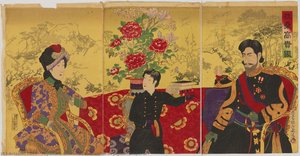
toyohara chikanobu
1838 - 1912 , Japan
Quick Facts
- Artistic Movement Or Style: Shin-hanga
- Artists Or Movements Influenced By Artist: ['Ukiyo-e']
- Artists Who Influenced This Artist: ['Hiroshi Yoshida']
- Date Of Birth: 1838
- Full Name: Toyohara Chikanobu
- Nationality: Japanese
- Notable Artworks: ['Cherry Blossoms Bloom Again (in front) Kuruwa']
- Place Of Birth: Japan (Osaka)
Related Articles
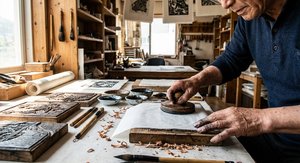
The Enduring Legacy of Woodblock Printmaking: Technique, History & Artistic Expression
Explore the rich history of woodblock printmaking – from ancient techniques to Ukiyo-e masterpieces. Discover expert insights on collecting, preserving & appreciating this enduring art form.
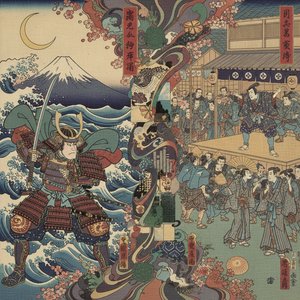
Utagawa Kuniyoshi: A Master of Japanese Ukiyo-e – Narrative Innovation & the Fusion of Tradition with Popular Culture
Explore the captivating world of Utagawa Kuniyoshi, a master of Japanese ukiyo-e woodblock prints. Discover his innovative warrior scenes, vibrant landscapes & lasting legacy in 19th-century art history.

Hokusai's Masterpieces: 25 Iconic Prints & Paintings for Art Lovers | ArtsDot
Journey through Katsushika Hokusai’s 25 most iconic artworks, including *The Great Wave*. Explore the ukiyo-e master's history, style & timeless Japanese woodblock prints. Find museum-quality reproductions for your home at ArtsDot.com.
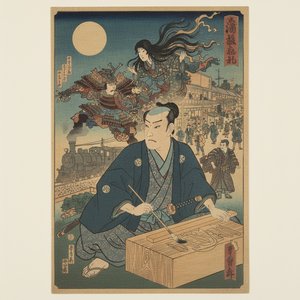
Tsukioka Yoshitoshi: A Master of Ukiyo-e's Final Flourish – Narrative, Innovation, and the Meiji Transition
Explore the life & art of Tsukioka Yoshitoshi, the last great master of ukiyo-e woodblock printing. Discover his dramatic warrior prints, innovative series like 'One Hundred Aspects of the Moon,' and legacy reflecting Japan's Meiji transition.
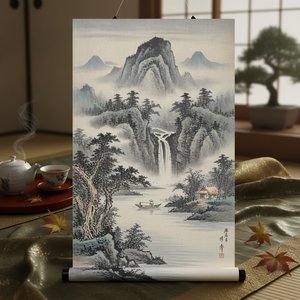
Serenity on Canvas: A Guide to the Timeless Beauty of Japanese Landscape Painting
Discover the serene beauty of Japanese landscape painting. From Hokusai's iconic woodblock prints to meditative sumi-e ink washes, explore a visual journey through the 'floating world' and learn how to bring this timeless Zen aesthetic into your modern home decor.