 Preview
 Send
Send Share
Share
 Details

 Download
 Similars
 X-Ray
X-Ray Diaporama
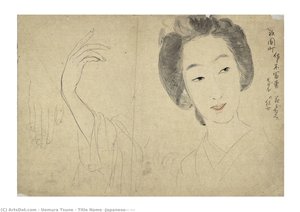
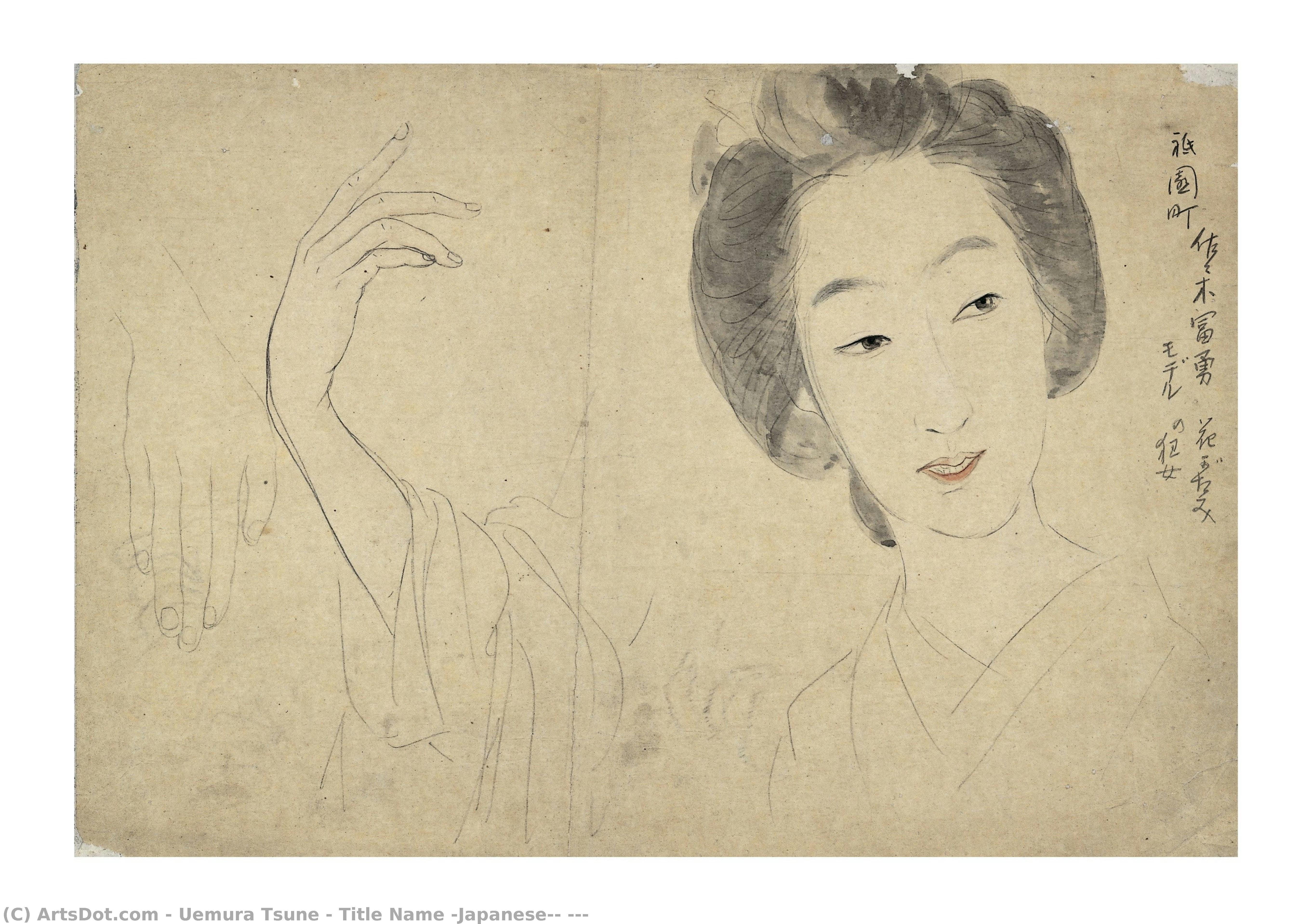
Title Name (Japanese): 富勇1
 Painting
- Nihonga
 19th Century
 37.0 x 26.0 cm
 Shohaku Art Museum
 Read More
Hand Made Oil Reproduction
Hand-painted oil on canvas in your size and frame, made to order by our artists. ( Buy Print Buy Image)




P118B $10

P118H $10

P118W $10

P438Z $10

P508JH $12

P508YH $12

P805H $10

P805Z $10

P919BZ $10

P919G $10

P919XJ $10

P959ZH $10

P968JZ $12

W106C $8

W218G $10

W218JH $8

W218Y $10

W307PJ $10

W316G $10

W316PJ $8

W316Y $10

W398PJ $8

W4111J $10

W500HY $15

W500JH $15

W692G $12

W849H $8

W940BG $15

W953PJ $8




Pick from our preset sizes that match the artwork's original proportions.

You may enter your own dimensions to fit a specific frame or space. If your selected size does not match the original image's proportions, we will either crop the artwork or extend the painting with additional hand-painted elements. A digital mockup will be sent for your approval before production begins.
Please note that the on-screen preview does not reflect the actual cropping or extension. Only the mockup will accurately show the final composition.
While custom sizes are available, we recommend selecting a dimension from the predefined list to preserve the original proportions.
After order, ArtsDot.com team will email client for instructions and provide a mockup preview
Worldwide Delivery () in 3/4 weeks instead of standard 5 weeks. (23 August). No compromise on quality.

Free Worldwide Express Shipping

High-Quality Linen Canvas

Full Shipping Insurance

Customs Tax Refund Guarantee

True Color Matching Guarantee

60-Day Return Policy (Defects Only)

100% Money-Back Guarantee

Bulk Discount Offer
 Glass option is only available in size under 110 CM

Title Name (Japanese): 富勇1
Reproduction Medium
Reproduction Size
-


Total Price
$ 263
Artwork Description
A Vision of Timeless Grace
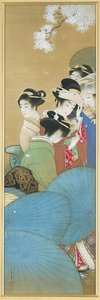
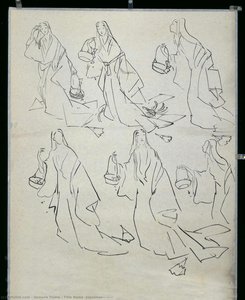
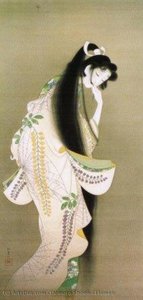
In the delicate strokes of Uemura Tsune, we encounter a profound meditation on femininity and the ethereal beauty of the Japanese spirit. The artwork titled 富勇1 (Fuyū 1) serves as a breathtaking window into the world of bijin-ga—the traditional genre of painting beautiful women. This particular piece presents a captivating duality, featuring two portraits of a young woman that seem to float within a celestial atmosphere. The composition, with its larger, more prominent figure anchored below a smaller, more distant visage, creates a rhythmic movement that draws the eye upward, mirroring the subject's own upward gaze toward the infinite sky. It is an intimate encounter with a soul caught in a moment of quiet contemplation, rendered with the masterful precision that defined the Meiji and Taishō eras.
The technique employed here is a testament to the Nihonga tradition, where every line carries the weight of intention and every wash of color evokes a specific emotion. The artist utilizes a soft, luminous palette to depict the flowing silk of the kimono and the cascading length of the subject's hair, creating a texture that feels almost tactile to the viewer. There is a subtle interplay between the terrestrial elegance of the woman’s attire and the expansive, atmospheric background. This contrast between the detailed, grounded beauty of the figure and the nebulous, dreamlike sky imbues the work with a sense of longing and spiritual transcendence, making it much more than a mere portrait; it is a poetic exploration of the connection between humanity and the cosmos.
Historical Resonance and Artistic Legacy
To understand the depth of this piece, one must look to the life of Uemura Tsune herself. As a pioneering female artist in an era when such paths were rarely trodden, her work carries an inherent strength and a refined sensitivity. Raised in the cultured atmosphere of a Kyoto tea shop, she was steeped in the aesthetics of the tea ceremony, which likely informed the balanced, harmonious composition seen in this work. Her ability to capture the subtle nuances of expression—the slight tilt of a head, the soft light hitting a cheekbone—allowed her to become a celebrated figure within the Imperial Household. This painting stands as a hallmark of her ability to blend historical reverence with a deeply personal, emotive touch.
For the discerning collector or interior designer, this reproduction offers more than just visual splendor; it provides a focal point of cultural sophistication. The artwork’s ability to evoke tranquility makes it an ideal centerpiece for spaces designed for reflection and repose. Whether placed in a contemporary gallery setting or integrated into a classic, richly textured room, the piece brings with it an aura of historical prestige and an enduring sense of peace. It is an invitation to pause, to look upward, and to find beauty in the quiet, fleeting moments of existence.
Related Artworks
![Bijin Eika [beauty Poem] — Uemura Tsune, Ukiyo-e](/media/artworks/images-thumb/46/9c/469cd8d72636f40f3a39b537751a674b.jpg)
Artist Biography
early life and training
uemura shōen, known by her real name uemura tsune, was a pioneering artist in meiji, taishō, and early shōwa period japanese painting. born on april 23, 1875, in shimogyō-ku, kyoto, she grew up in an all-female household after her father's passing. her mother's tea shop attracted refined clientele for the art of japanese tea ceremony, exposing uemura to a cultured environment from an early age.artistic career
by 12, uemura tsune demonstrated considerable skill in drawing human figures. at 15, she began exhibiting her work and winning awards in official art contests, as well as receiving private commissions. her mother supported her decision to pursue an artistic career, which was unusual for the time.- key achievements:
- first female recipient of the order of culture award
- hired as the imperial household's official artist
- produced numerous works on historical themes and traditional subjects, especially bijin-ga (paintings of beautiful women) in the nihonga style
- notable works:
- 花がたみ (129 x 219 cm, shohaku art museum, paper)
- 鼓の音 (95 x 77 cm, shohaku art museum, silk)
- 夕暮 (95 x 187 cm, shohaku art museum, paper)
- museums and collections:
- shohaku art museum (nara, japan)
legacy and influence
uemura tsune's success paved the way for future generations of female artists in japan. her work can be seen as a bridge between traditional japanese art forms and the evolving role of women in society during the taisho era.- related art movements:
- further reading:
conclusion
uemura tsune's remarkable career, marked by her trailblazing achievements and dedication to traditional japanese art forms, continues to inspire artists and art enthusiasts alike. her legacy serves as a testament to the evolving role of women in japanese society and the enduring power of art to transcend time and culture.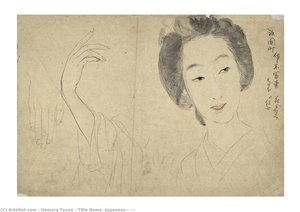
uemura tsune
1875 - 1949 , Japan
Quick Facts
- Artistic Movement Or Style: Nihonga
- Artists Or Movements Influenced By This Artist: ['Ukiyo-e']
- Artists Who Influenced This Artist: ['Kanō School']
- Date Of Birth: April 23, 1875
- Date Of Death: 1949
- Full Name: Uemura Tsune
- Nationality: Japanese
- Notable Artworks: ['雪', '鼓の音', '夕暮']
- Place Of Birth: Kyoto, Japan
Related Articles
Edward Hopper's Masterpieces: 25 Iconic Paintings & Their Enduring Legacy | ArtsDot
Explore 25 iconic Edward Hopper paintings & their stories. Discover American realism, urban loneliness, and timeless beauty through his masterpieces. Find museum-quality art reproductions & curated decor ideas at ArtsDot.com.
Egon Schiele's Masterpieces: 25 Paintings That Define Expressionism | ArtsDot
Delve into the haunting world of Egon Schiele with our curated selection of his 25 most iconic Expressionist paintings. Explore the artist's life, technique & emotional depth. Find museum-quality Schiele reproductions and elevate your home decor on ArtsDot.com.
Modigliani's Masterpieces: 25 Iconic Paintings & Sculptures | ArtsDot
Explore 25 iconic artworks by Amedeo Modigliani, from his haunting portraits to captivating sculptures. Discover the stories behind these masterpieces of early 20th-century art & find museum-quality reproductions at ArtsDot.com.
Henri Matisse's Masterpieces: Explore 25 Iconic Paintings & Art Decor Ideas
Journey through Henri Matisse's 25 most iconic paintings! Explore Fauvism, vibrant colors & the stories behind masterpieces like 'The Dance'. Find museum-quality art reproductions and curated decor ideas to elevate your space. Discover all masterpieces on ArtsDot.com.
Suzuki Harunobu: Pioneering Ukiyo-e & the Refinement of Edo Period Printmaking
Discover the revolutionary world of Suzuki Harunobu, a pioneer of ukiyo-e printmaking. Explore his exquisite nishiki-e techniques, diverse subjects & lasting impact on Japanese art history. Learn more at ArtsDot.