 Preview
 Send
Send Share
Share
 Details

 Download
 Similars
 X-Ray
X-Ray Diaporama
 Stats
StatsA record of origins of the great country of Japan

 Read More
Hand Made Oil Reproduction
Hand-painted oil on canvas in your size and frame, made to order by our artists. ( Switch to Print Switch to Digital Image)




P118B $10

P118H $10

P118W $10

P438Z $10

P508JH $12

P508YH $12

P805H $10

P805Z $10

P919BZ $10

P919G $10

P919XJ $10

P959ZH $10

P968JZ $12

W106C $8

W218G $10

W218JH $8

W218Y $10

W307PJ $10

W316G $10

W316PJ $8

W316Y $10

W398PJ $8

W4111J $10

W500HY $15

W500JH $15

W692G $12

W849H $8

W940BG $15

W953PJ $8




Pick from our preset sizes that match the artwork's original proportions.

You may enter your own dimensions to fit a specific frame or space. If your selected size does not match the original image's proportions, we will either crop the artwork or extend the painting with additional hand-painted elements. A digital mockup will be sent for your approval before production begins.
Please note that the on-screen preview does not reflect the actual cropping or extension. Only the mockup will accurately show the final composition.
While custom sizes are available, we recommend selecting a dimension from the predefined list to preserve the original proportions.
After order, ArtsDot.com team will email client for instructions and provide a mockup preview
Worldwide Delivery () in 3/4 weeks instead of standard 5 weeks. (10 September). No compromise on quality.

Free Worldwide Express Shipping

High-Quality Linen Canvas

Full Shipping Insurance

Customs Tax Refund Guarantee

True Color Matching Guarantee

100-Day Return Policy (Defects Only)

100% Money-Back Guarantee

Bulk Discount Offer
 Glass option is only available in size under 110 CM

A record of origins of the great country of Japan
Reproduction Medium
Reproduction Size
-


Total Price
$ 263
A Symphony of Wave and Warrior: Exploring Utagawa Kuniyoshi’s “A Record of Origins”
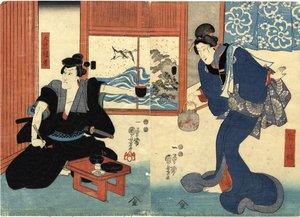
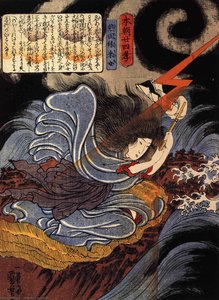
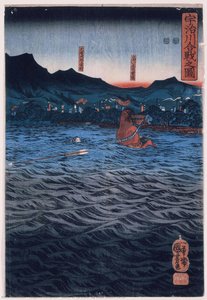
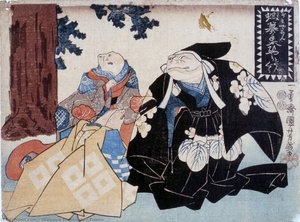
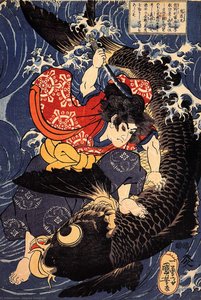
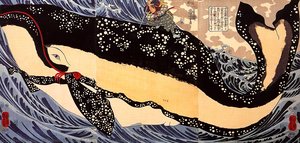
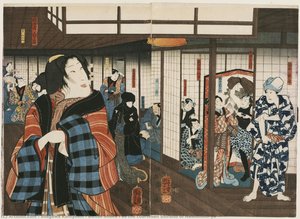
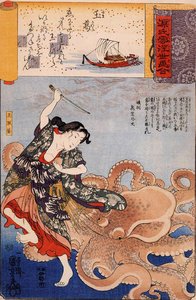
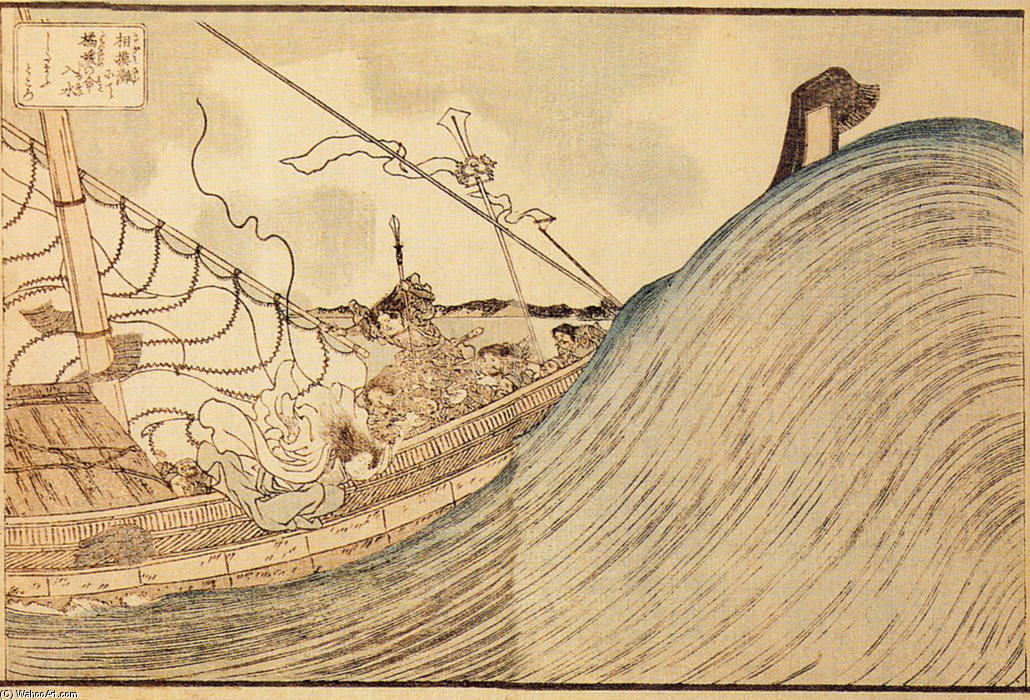
The Edo period in Japan (1603–1868) witnessed an unparalleled flourishing of artistic expression, largely fueled by the patronage of samurai clans and a burgeoning merchant class. Amidst this vibrant cultural landscape emerged *ukiyo-e*, meaning "pictures of the floating world," which offered artists like Utagawa Kuniyoshi a unique opportunity to depict everyday life alongside mythological narratives and heroic tales—a duality that continues to resonate with audiences today. Kuniyoshi’s “A Record of Origins,” created in 1859, exemplifies this masterful blend, cementing his legacy as one of the last great masters of the style.- Subject Matter & Narrative Drive: The print portrays a dramatic procession celebrating the anniversary of Emperor Meiji's ascension to the throne—a pivotal moment signifying Japan’s embrace of modernization and Western influence. Yet, Kuniyoshi doesn’t merely chronicle events; he elevates them into an epic drama, populated by warriors, artisans, and priests engaged in a ritualistic journey.
- Style & Technique: Characteristic of Kuniyoshi's oeuvre is his masterful command of *komposition*, or compositional arrangement. The dominant element—a colossal wave—commands the right side of the image, its crest surging upwards with palpable energy. This dynamic curve contrasts sharply with the horizontal lines of the procession’s path, creating a visual tension that underscores the narrative’s urgency.
Decoding Symbolism: The Wave and Beyond
The wave itself is laden with symbolic significance—representing both destructive force and regenerative potential. In Buddhist cosmology, waves symbolize the cyclical nature of existence, mirroring the ebb and flow of life and death. Kuniyoshi skillfully utilizes textural lines to convey this movement, drawing the viewer’s eye into the turbulent depths of the ocean. Furthermore, the figures in the procession are adorned with elaborate costumes and weaponry—symbols of samurai honor and tradition—underscoring Japan's commitment to preserving its cultural heritage amidst rapid change.Color Palette & Artistic Impression
Kuniyoshi’s palette is remarkably restrained compared to some contemporary prints, favoring hues of indigo blue, ochre yellow, and crimson red. These colors are applied with meticulous precision using *yakuguchi*, or recessed printing blocks—a technique that allows for exceptional tonal control and contributes to the print's luminous quality. The artist’s keen eye for detail extends beyond color; he captures subtle nuances of expression on the faces of the procession participants, conveying a sense of solemn reverence and determination.Legacy & Enduring Appeal
“A Record of Origins” stands as a testament to Kuniyoshi's artistic genius—a captivating fusion of observation, imagination, and technical virtuosity. Its enduring appeal lies not only in its dramatic depiction of historical events but also in its exploration of universal themes—the interplay between tradition and innovation, the confrontation between chaos and order, and ultimately, the human spirit’s capacity for resilience and aspiration. Reproductions of this iconic print continue to inspire artists and collectors alike, ensuring that Kuniyoshi's vision persists across generations.Related Artworks
Artist Biography
A Life Immersed in the Floating World
Utagawa Kuniyoshi, born Yoshisaburō on January 1, 1798, in Edo (modern-day Tokyo), stands as a towering figure at the close of the *ukiyo-e* tradition – the “pictures of the floating world” that so vividly captured Japanese life during the Edo period. His journey began not amidst artistic circles, but within the practical realm of his father’s silk-dyeing business. This early exposure to color and pattern would subtly inform his later work, imbuing it with a distinctive vibrancy. Even as a young boy, however, Kuniyoshi was captivated by the dramatic world of *ukiyo-e*, particularly the heroic imagery of warriors and artisans that populated popular prints. These formative impressions ignited within him a passion that would define his life’s pursuit. He entered the studio of Utagawa Toyokuni I in 1811, adopting the name Kuniyoshi and embarking on a rigorous apprenticeship that honed his skills and introduced him to the conventions of the Utagawa school.From Humble Beginnings to Masterful Innovation
Kuniyoshi’s early career was marked by a period of relative obscurity. While proficient in the established styles, he struggled to find his unique voice amidst the crowded landscape of Edo printmaking. His initial works largely mirrored those of his teacher, offering little that distinguished him from his contemporaries. However, this period of exploration proved crucial. He experimented with various genres and techniques, gradually developing a distinctive approach characterized by dynamic compositions, bold colors, and an increasingly sophisticated understanding of narrative storytelling. The breakthrough came in 1827 with the release of *The One Hundred and Eight Heroes of the Popular Suikoden*, a monumental series based on the Chinese novel *Shui Hu Zhuan*. This work catapulted Kuniyoshi to fame, establishing him as a master of *musha-e* – warrior prints. The series wasn’t merely an illustration of heroic tales; it was a showcase for Kuniyoshi's burgeoning talent for dramatic composition and characterization. He didn’t simply depict warriors; he brought them to life with compelling emotion and intricate detail.A Synthesis of Tradition and Western Influence
What truly sets Kuniyoshi apart is his willingness to embrace innovation while remaining deeply rooted in Japanese artistic traditions. As the Edo period drew to a close, Japan experienced increasing contact with the West, and Kuniyoshi was among the first *ukiyo-e* artists to incorporate elements of Western perspective and shading into his work. This wasn’t simply imitation; he skillfully integrated these techniques to enhance depth, realism, and dramatic impact. His landscapes, in particular, demonstrate a masterful command of atmospheric effects and spatial relationships, often evoking a sense of grandeur and awe. Beyond technique, Kuniyoshi expanded the subject matter of *ukiyo-e*. While traditional themes like beautiful women and Kabuki actors remained popular, he ventured into new territory, depicting historical scenes, mythological creatures, and even satirical commentaries on contemporary society. His triptych *In Minamoto’s Residence the Earth Spider Appears as a Monster* (1843) is a prime example of this daring approach, cleverly disguising political criticism within a fantastical narrative.Legacy of a Visionary
Kuniyoshi's influence on subsequent generations of artists is undeniable. He left behind a vast and diverse body of work – estimated to number over 5,000 designs – that continues to inspire awe and admiration today. His innovative blending of traditional Japanese aesthetics with Western techniques paved the way for new artistic possibilities, while his willingness to challenge conventions broadened the scope of *ukiyo-e*. He trained numerous students, including Yoshitoshi, who would carry on his legacy into the Meiji period.- Notable series: *The One Hundred and Eight Heroes of the Popular Suikoden*, a landmark achievement in warrior printmaking.
- Masterful compositions: His ability to create dynamic, visually arresting scenes remains unparalleled.
- Innovative techniques: The integration of Western perspective and shading revolutionized *ukiyo-e* landscape painting.
- Broadened subject matter: He expanded the boundaries of *ukiyo-e*, exploring new themes and narratives.
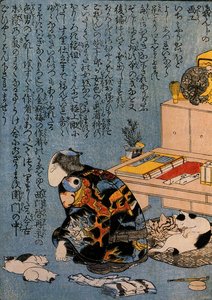
Utagawa Kuniyoshi
1797 - 1861 , Japan
Quick Facts
- Artistic Movement Or Style: Ukiyo-e
- Artists Or Movements Influenced By This Artist: ['Ozawa Tsuyoshi']
- Artists Who Influenced This Artist: ['Utagawa Toyokuni']
- Date Of Birth: January 1, 1798
- Date Of Death: April 14, 1861
- Full Name: Utagawa Kuniyoshi
- Nationality: Japanese
- Notable Artworks:
- One hundred and eight heroes...
- The ghost of taira no tomomori
- The gōjō bridge
- Place Of Birth: Tokyo, Japan
Related Articles
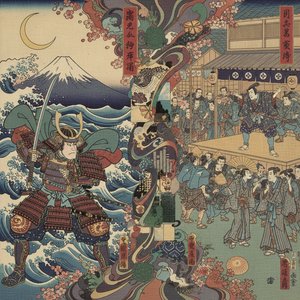
Utagawa Kuniyoshi: A Master of Japanese Ukiyo-e – Narrative Innovation & the Fusion of Tradition with Popular Culture
Explore the captivating world of Utagawa Kuniyoshi, a master of Japanese ukiyo-e woodblock prints. Discover his innovative warrior scenes, vibrant landscapes & lasting legacy in 19th-century art history.

Hokusai's Masterpieces: 25 Iconic Prints & Paintings for Art Lovers | ArtsDot
Journey through Katsushika Hokusai’s 25 most iconic artworks, including *The Great Wave*. Explore the ukiyo-e master's history, style & timeless Japanese woodblock prints. Find museum-quality reproductions for your home at ArtsDot.com.
Japonisme: How Japanese Woodblock Prints Revolutionized Western Art
Explore the profound impact of Japonisme on Western art. Discover how Japanese ukiyo-e woodblock prints revolutionized perspective, color, and composition for masters like Monet and Van Gogh, forever changing the course of modern art history.
Ukiyo-e: Exploring Japan's Floating World & Enduring Artistic Legacy
Explore the captivating world of Ukiyo-e – Japan's iconic woodblock prints! Discover masters like Hokusai & Hiroshige, learn about Edo period culture, and find expert art collecting guidance at ArtsDot.
Tsukioka Yoshitoshi: A Master of Ukiyo-e's Final Flourish – Narrative, Innovation, and the Meiji Transition
Explore the life & art of Tsukioka Yoshitoshi, the last great master of ukiyo-e woodblock printing. Discover his dramatic warrior prints, innovative series like 'One Hundred Aspects of the Moon,' and legacy reflecting Japan's Meiji transition.