 Preview
 Send
Send Share
Share
 Details

 Download
 Similars
 X-Ray
X-Ray Diaporama
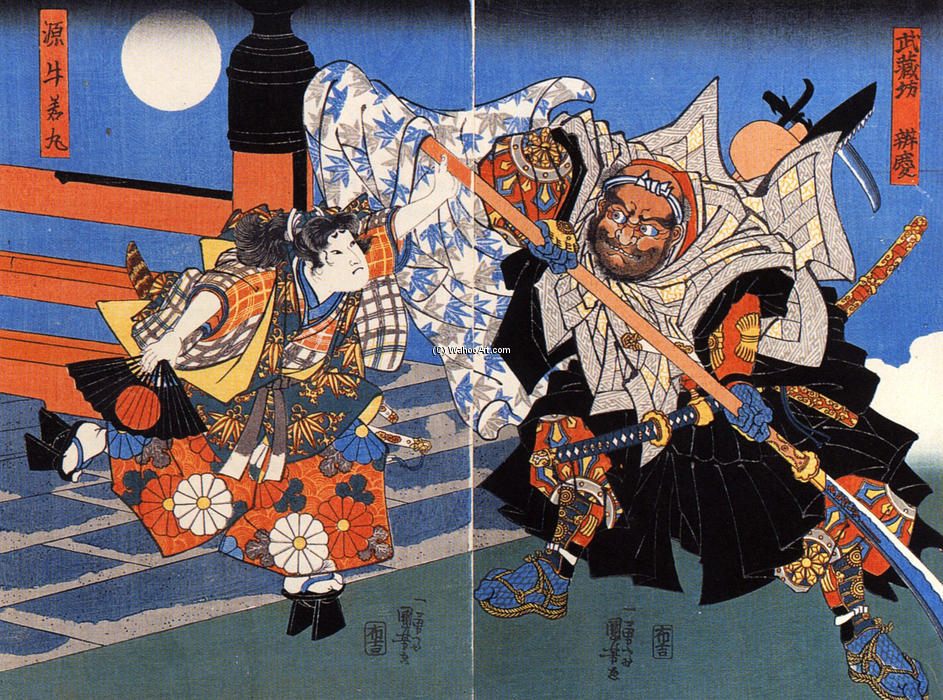
Uchiwakamaru fighting Benkei on Gojo bridge


 Read More
Hand Made Oil Reproduction
Hand-painted oil on canvas in your size and frame, made to order by our artists. ( Buy Print Buy Image)




































Pick from our preset sizes that match the artwork's original proportions.

You may enter your own dimensions to fit a specific frame or space. If your selected size does not match the original image's proportions, we will either crop the artwork or extend the painting with additional hand-painted elements. A digital mockup will be sent for your approval before production begins.
Please note that the on-screen preview does not reflect the actual cropping or extension. Only the mockup will accurately show the final composition.
While custom sizes are available, we recommend selecting a dimension from the predefined list to preserve the original proportions.
After order, ArtsDot.com team will email client for instructions and provide a mockup preview
Worldwide Delivery () in 3/4 weeks instead of standard 5 weeks. (24 August). No compromise on quality.

Free Worldwide Express Shipping

High-Quality Linen Canvas

Full Shipping Insurance

Customs Tax Refund Guarantee

True Color Matching Guarantee

60-Day Return Policy (Defects Only)

100% Money-Back Guarantee

Bulk Discount Offer
 Glass option is only available in size under 110 CM

Uchiwakamaru fighting Benkei on Gojo bridge
Reproduction Medium
Reproduction Size
-


Total Price
$ 263
Artwork Description
The Clash of Legend: Uchiwakamaru and Benkei on Gojo Bridge
Utagawa Kuniyoshi’s “Uchiwakamaru fighting Benkei on Gojo bridge” is more than just a depiction of a legendary duel; it's a vibrant window into the heart of Edo-period Japan. Executed in the late 1840s or early 1850s, this triptych woodblock print captures a pivotal moment from the *Heike Monogatari* (The Tale of the Heike), a foundational epic of Japanese literature. Kuniyoshi, nearing the end of his illustrious career, masterfully synthesizes narrative drama with the established conventions of *ukiyo-e*, creating an image brimming with dynamic energy and profound symbolism.
At first glance, the scene explodes with action. Uchiwakamaru, a young warrior hero, lunges forward with ferocious determination, his stance suggesting a desperate attempt to overcome the formidable Benkei, a giant blacksmith known for his unwavering loyalty and superhuman strength. The composition is deliberately unbalanced, mirroring the intensity of the confrontation. Kuniyoshi’s signature style—bold lines, flattened perspective, and vibrant color – is fully realized here. Notice how he uses color not just for aesthetic effect but to emphasize movement and emotion; the bright reds of Uchiwakamaru's kimono contrast sharply with Benkei’s dark, almost brooding attire, immediately establishing a visual dichotomy between youthful vigor and seasoned resolve.
A Masterclass in Ukiyo-e Technique
Kuniyoshi’s skill as a printmaker is evident in every detail. The woodblocks themselves were meticulously carved by skilled artisans, allowing for the precise layering of colors that defines *ukiyo-e*. Observe the delicate rendering of Uchiwakamaru's flowing garments and the textured surface of Benkei’s staff – achieved through careful manipulation of the carving tools. The artist employed a technique known as *bokashi*, or shading, to create subtle gradations in tone, adding depth and realism to the figures. This was particularly important in depicting the rough texture of Benkei's armor and the weathered stone of the Gojo Bridge itself.
The bridge itself – the Gojo Bridge – is more than just a backdrop; it’s a crucial element of the narrative. Traditionally, this bridge served as a meeting place for warriors and a site of conflict. Its inclusion elevates the scene beyond a simple battle to one steeped in historical and mythological significance. The use of perspective, though stylized, effectively draws the viewer into the drama, making us feel like witnesses to this epic struggle.
Symbolism and Narrative Resonance
The story depicted is rich with symbolism. Uchiwakamaru represents youthful idealism and a desire for justice, while Benkei embodies steadfast loyalty and unwavering strength. Their conflict isn’t merely physical; it's a clash of ideologies – the young hero challenging the established order. The inclusion of Tengu (mythical bird-like creatures) adds another layer to the narrative, suggesting divine intervention or perhaps the assistance of supernatural forces. Kuniyoshi frequently incorporated these mythical elements into his work, reflecting the pervasive influence of Japanese folklore and religious beliefs.
This print is a testament to Kuniyoshi’s artistic vision and his ability to capture the spirit of a bygone era. A hand-painted reproduction offers an unparalleled opportunity to experience the power and beauty of this iconic image, bringing its dynamic energy and profound symbolism into your own space. It's a piece that speaks volumes about Japanese history, mythology, and the enduring appeal of heroic tales.
Related Artworks
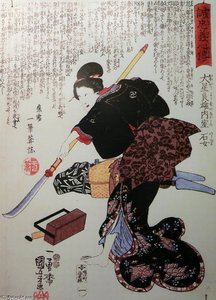
Artist Biography
A Life Immersed in the Floating World
Utagawa Kuniyoshi, born Yoshisaburō on January 1, 1798, in Edo (modern-day Tokyo), stands as a towering figure at the close of the *ukiyo-e* tradition – the “pictures of the floating world” that so vividly captured Japanese life during the Edo period. His journey began not amidst artistic circles, but within the practical realm of his father’s silk-dyeing business. This early exposure to color and pattern would subtly inform his later work, imbuing it with a distinctive vibrancy. Even as a young boy, however, Kuniyoshi was captivated by the dramatic world of *ukiyo-e*, particularly the heroic imagery of warriors and artisans that populated popular prints. These formative impressions ignited within him a passion that would define his life’s pursuit. He entered the studio of Utagawa Toyokuni I in 1811, adopting the name Kuniyoshi and embarking on a rigorous apprenticeship that honed his skills and introduced him to the conventions of the Utagawa school.From Humble Beginnings to Masterful Innovation
Kuniyoshi’s early career was marked by a period of relative obscurity. While proficient in the established styles, he struggled to find his unique voice amidst the crowded landscape of Edo printmaking. His initial works largely mirrored those of his teacher, offering little that distinguished him from his contemporaries. However, this period of exploration proved crucial. He experimented with various genres and techniques, gradually developing a distinctive approach characterized by dynamic compositions, bold colors, and an increasingly sophisticated understanding of narrative storytelling. The breakthrough came in 1827 with the release of *The One Hundred and Eight Heroes of the Popular Suikoden*, a monumental series based on the Chinese novel *Shui Hu Zhuan*. This work catapulted Kuniyoshi to fame, establishing him as a master of *musha-e* – warrior prints. The series wasn’t merely an illustration of heroic tales; it was a showcase for Kuniyoshi's burgeoning talent for dramatic composition and characterization. He didn’t simply depict warriors; he brought them to life with compelling emotion and intricate detail.A Synthesis of Tradition and Western Influence
What truly sets Kuniyoshi apart is his willingness to embrace innovation while remaining deeply rooted in Japanese artistic traditions. As the Edo period drew to a close, Japan experienced increasing contact with the West, and Kuniyoshi was among the first *ukiyo-e* artists to incorporate elements of Western perspective and shading into his work. This wasn’t simply imitation; he skillfully integrated these techniques to enhance depth, realism, and dramatic impact. His landscapes, in particular, demonstrate a masterful command of atmospheric effects and spatial relationships, often evoking a sense of grandeur and awe. Beyond technique, Kuniyoshi expanded the subject matter of *ukiyo-e*. While traditional themes like beautiful women and Kabuki actors remained popular, he ventured into new territory, depicting historical scenes, mythological creatures, and even satirical commentaries on contemporary society. His triptych *In Minamoto’s Residence the Earth Spider Appears as a Monster* (1843) is a prime example of this daring approach, cleverly disguising political criticism within a fantastical narrative.Legacy of a Visionary
Kuniyoshi's influence on subsequent generations of artists is undeniable. He left behind a vast and diverse body of work – estimated to number over 5,000 designs – that continues to inspire awe and admiration today. His innovative blending of traditional Japanese aesthetics with Western techniques paved the way for new artistic possibilities, while his willingness to challenge conventions broadened the scope of *ukiyo-e*. He trained numerous students, including Yoshitoshi, who would carry on his legacy into the Meiji period.- Notable series: *The One Hundred and Eight Heroes of the Popular Suikoden*, a landmark achievement in warrior printmaking.
- Masterful compositions: His ability to create dynamic, visually arresting scenes remains unparalleled.
- Innovative techniques: The integration of Western perspective and shading revolutionized *ukiyo-e* landscape painting.
- Broadened subject matter: He expanded the boundaries of *ukiyo-e*, exploring new themes and narratives.
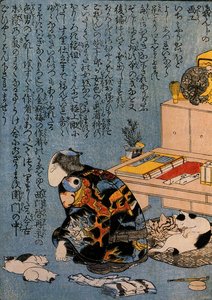
Utagawa Kuniyoshi
1797 - 1861 , Japan
Quick Facts
- Artistic Movement Or Style: Ukiyo-e
- Artists Or Movements Influenced By This Artist: ['Ozawa Tsuyoshi']
- Artists Who Influenced This Artist: ['Utagawa Toyokuni']
- Date Of Birth: January 1, 1798
- Date Of Death: April 14, 1861
- Full Name: Utagawa Kuniyoshi
- Nationality: Japanese
- Notable Artworks:
- One hundred and eight heroes...
- The ghost of taira no tomomori
- The gōjō bridge
- Place Of Birth: Tokyo, Japan
Related Articles
Utagawa Kuniyoshi: A Master of Japanese Ukiyo-e – Narrative Innovation & the Fusion of Tradition with Popular Culture
Explore the captivating world of Utagawa Kuniyoshi, a master of Japanese ukiyo-e woodblock prints. Discover his innovative warrior scenes, vibrant landscapes & lasting legacy in 19th-century art history.

Hokusai's Masterpieces: 25 Iconic Prints & Paintings for Art Lovers | ArtsDot
Journey through Katsushika Hokusai’s 25 most iconic artworks, including *The Great Wave*. Explore the ukiyo-e master's history, style & timeless Japanese woodblock prints. Find museum-quality reproductions for your home at ArtsDot.com.
Floating World: The Captivating Art and Legacy of Japanese Ukiyo-e
Explore the profound beauty of Japanese Ukiyo-e. Discover the history, masters like Hokusai, and the enduring legacy of the 'Floating World' through an expert art-historical lens.
Serenity on Canvas: A Guide to the Timeless Beauty of Japanese Landscape Painting
Discover the serene beauty of Japanese landscape painting. From Hokusai's iconic woodblock prints to meditative sumi-e ink washes, explore a visual journey through the 'floating world' and learn how to bring this timeless Zen aesthetic into your modern home decor.
Ukiyo-e: Exploring Japan's Floating World & Enduring Artistic Legacy
Explore the captivating world of Ukiyo-e – Japan's iconic woodblock prints! Discover masters like Hokusai & Hiroshige, learn about Edo period culture, and find expert art collecting guidance at ArtsDot.