 Preview
 Send
Send Share
Share
 Details

 Download
 Similars
 X-Ray
X-Ray Diaporama
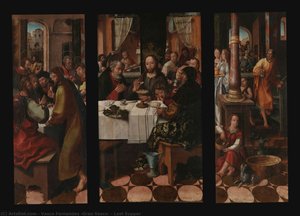
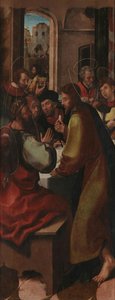
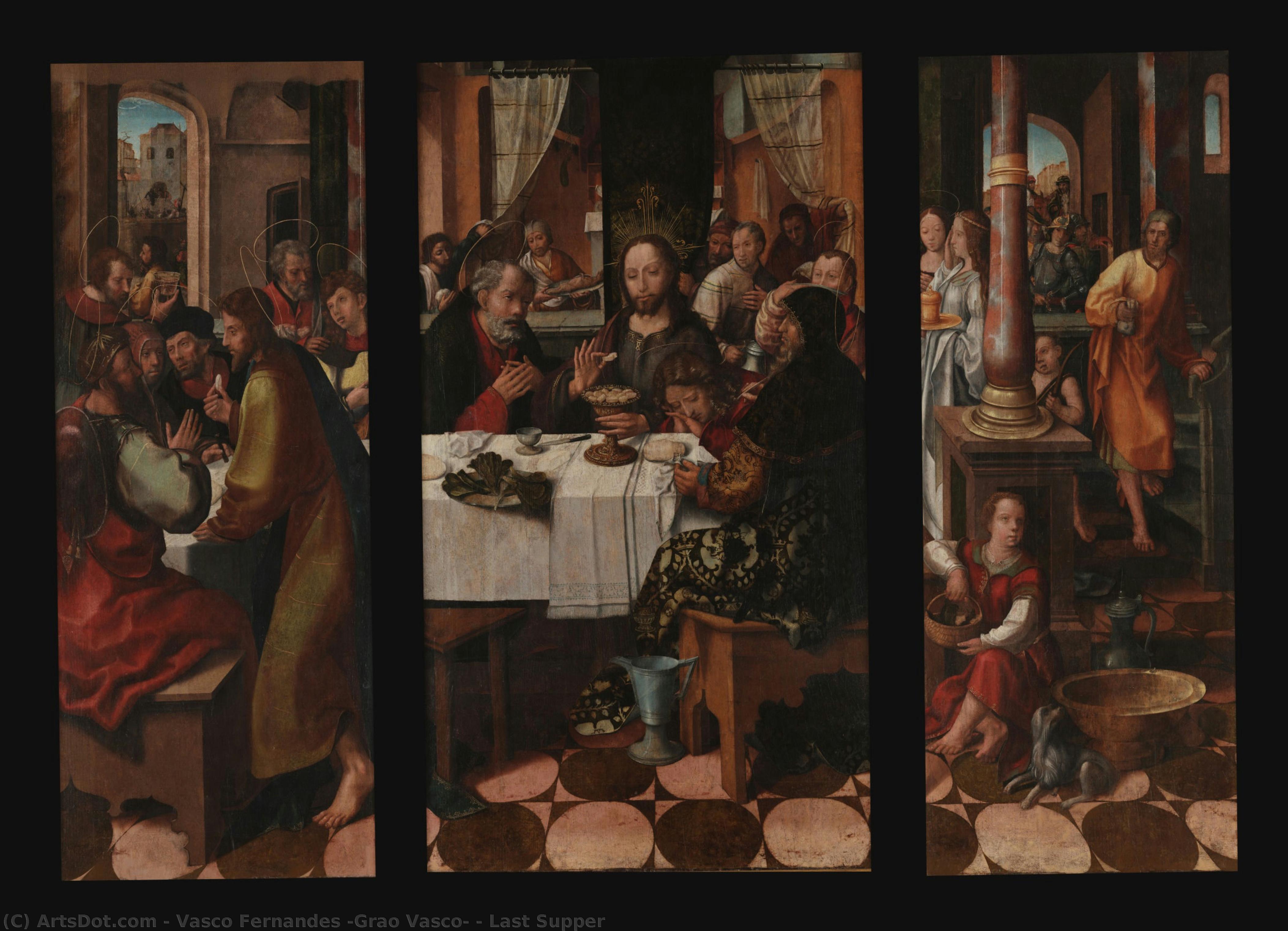
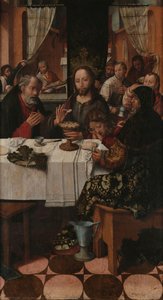
Last Supper
 Oil On Canvas
- WallArt
- High Renaissance
 1540
1540 167.0 x 233.0 cm
 Grão Vasco National Museum
 Read More
Hand Made Oil Reproduction
Hand-painted oil on canvas in your size and frame, made to order by our artists. ( Buy Print Buy Image)




P118B $10

P118H $10

P118W $10

P438Z $10

P508JH $12

P508YH $12

P805H $10

P805Z $10

P919BZ $10

P919G $10

P919XJ $10

P959ZH $10

P968JZ $12

W106C $8

W218G $10

W218JH $8

W218Y $10

W307PJ $10

W316G $10

W316PJ $8

W316Y $10

W398PJ $8

W4111J $10

W500HY $15

W500JH $15

W692G $12

W849H $8

W940BG $15

W953PJ $8




Pick from our preset sizes that match the artwork's original proportions.

You may enter your own dimensions to fit a specific frame or space. If your selected size does not match the original image's proportions, we will either crop the artwork or extend the painting with additional hand-painted elements. A digital mockup will be sent for your approval before production begins.
Please note that the on-screen preview does not reflect the actual cropping or extension. Only the mockup will accurately show the final composition.
While custom sizes are available, we recommend selecting a dimension from the predefined list to preserve the original proportions.
After order, ArtsDot.com team will email client for instructions and provide a mockup preview
Worldwide Delivery () in 3/4 weeks instead of standard 5 weeks. (16 August). No compromise on quality.

Free Worldwide Express Shipping

High-Quality Linen Canvas

Full Shipping Insurance

Customs Tax Refund Guarantee

True Color Matching Guarantee

60-Day Return Policy (Defects Only)

100% Money-Back Guarantee

Bulk Discount Offer
 Glass option is only available in size under 110 CM

Last Supper
Reproduction Medium
Reproduction Size
-


Total Price
$ 263
Artwork Description
A Moment Frozen in Time: The Legacy of Grão Vasco’s *Last Supper*
Leonardo da Vinci's *The Last Supper*, housed within the refectory of Santa Maria delle Grazie in Milan, isn’t merely a painting; it’s an experience. Completed between 1495 and 1498, this monumental fresco captures a single, pivotal moment – the announcement by Jesus of his impending betrayal – with an intensity that continues to resonate centuries later. Commissioned as part of a larger renovation project for the convent, the work immediately established Leonardo’s reputation as a revolutionary artist, pushing the boundaries of perspective, emotion, and narrative in Renaissance art. It's a testament to human drama, rendered with a profound understanding of psychology and an unparalleled mastery of technique.
The painting’s genesis is inextricably linked to the ambitious vision of Ludovico Sforza, Duke of Milan, who sought to transform the convent into a family mausoleum. This project necessitated significant alterations to the building's layout, prompting Leonardo to adapt his approach – opting for tempera on gesso rather than traditional fresco painting due to the complex design changes. This decision, while innovative, ultimately contributed to the artwork’s rapid deterioration, a poignant reminder of the fragility of artistic creation and the challenges inherent in employing unconventional methods.
The Anatomy of Emotion: Technique and Composition
Leonardo's genius lies not just in his subject matter but also in his execution. He employed a revolutionary technique, layering tempera pigments on a carefully prepared gesso surface – a method that allowed for greater flexibility and the ability to make adjustments as he worked. However, this approach proved inherently unstable, leading to the painting’s gradual decay over time. The composition itself is a marvel of spatial reasoning. Leonardo masterfully utilizes linear perspective, drawing the viewer's eye towards Jesus at the center of the scene, while simultaneously creating a sense of depth and dynamism through the arrangement of the apostles.
- Dynamic Grouping: Leonardo deliberately avoids symmetrical arrangements, instead grouping the apostles in clusters that reflect their individual reactions to Christ’s announcement.
- Expressive Faces: Each apostle is rendered with remarkable psychological detail, capturing a range of emotions – shock, disbelief, anger, fear, and betrayal – with subtle shifts in expression and gesture. Judas Iscariot, identifiable by his dark clothing and averted gaze, stands apart from the group, radiating an aura of treachery.
- Chiaroscuro: The masterful use of light and shadow (chiaroscuro) dramatically enhances the sense of drama and realism, highlighting key figures and creating a powerful emotional impact.
Symbolism and Spiritual Depth
Beyond its technical brilliance, *The Last Supper* is rich in symbolic meaning. The meal itself represents the Eucharist – the central sacrament of Christianity – and symbolizes Christ’s sacrifice for humanity. Each apostle embodies a different aspect of human nature, reflecting the complexities of faith and betrayal. The inclusion of everyday objects—a loaf of bread, a jug of water—adds a layer of realism and invites viewers to contemplate the ordinary moments that underpin extraordinary events.
The painting’s enduring power lies in its ability to evoke profound questions about human nature, morality, and faith – themes that continue to resonate with audiences today.A Timeless Masterpiece: Reproduction and Legacy
Reproductions of *The Last Supper* offer a remarkable opportunity to experience Leonardo’s genius firsthand. High-quality reproductions capture the painting's vibrant colors, intricate details, and emotional intensity, allowing viewers to appreciate its artistic merit from afar. Whether adorning a grand salon or a smaller study, this iconic image serves as a constant reminder of the power of art to inspire, provoke thought, and transcend time.
Related Artworks

Artist Biography
The Master of Viseu: The Life and Legacy of Grão Vasco
In the heart of the Portuguese Renaissance, few names resonate with as much reverence as Vasco Fernandes, known to history by the affectionate moniker Grão Vasco. Born around 1475 in the historic city of Viseu, Fernandes emerged as a titan of the 16th century, a painter whose brush captured the spiritual fervor and burgeoning worldly splendor of his era. His life’s work represents a profound intersection of Northern European technical precision and a uniquely Portuguese soul, creating a visual language that defined the Manueline period—an age of maritime discovery and ornate, decorative magnificence.
The foundation of Fernandes' extraordinary skill was laid in the workshops of his contemporaries, most notably under the influence of Joaneanes. This connection to Flemish traditions was transformative; it introduced him to the sophisticated medium of oil painting, which allowed for a level of luminosity and microscopic detail previously unseen in the Iberian Peninsula. Through this lineage, Vasco learned to manipulate light and shadow, mastering the art of chiaroscroll and the delicate layering of pigments to create textures that seemed almost tactile to the viewer. This synthesis of Flemish realism with a local, emotive sensibility became the hallmark of his mature style.
A Tapestry of Faith and Detail
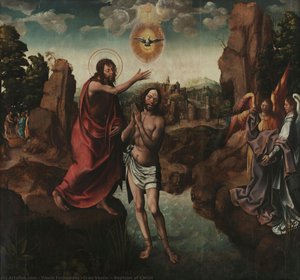
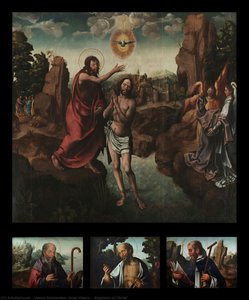
The oeuvre of Grão Vasco is characterized by its monumental altarpieces, which served not merely as decorations but as profound theological windows for the faithful. His ability to weave complex religious narratives into compositions of immense dramatic power is perhaps best observed in his treatment of sacred subjects. In works such as Baptism of Christ, one can witness a breathtaking command of dynamic movement and spiritual pathos. The luminous details of the water and the divine light descending upon the scene reflect a master at the height of his technical prowess, using every brushstroke to evoke a sense of the miraculous.
Beyond the singular figures of saints, Fernandes possessed a remarkable ability to capture human emotion and communal tension. His interpretations of the Last Supper stand as towering achievements of Renaissance artistry. In these compositions, the artist moves beyond simple iconography to explore the psychological depth of the disciples, utilizing the dramatic interplay of light to highlight the gravity of Christ's final meal. The meticulous attention to drapery, the symbolic use of flora, and the architectural grandeur within his paintings all contribute to a sense of Manueline splendor—a style that mirrors the richness of Portugal's golden age of exploration.
Historical Significance and Enduring Influence
The historical importance of Vasco Fernandes cannot be overstated; he was the architect of a national aesthetic. By integrating the meticulousness of the North with the decorative exuberance of the Portuguese court, he provided a visual identity for a nation at the zenith of its power. His legacy is found in the way he elevated the status of the painter from a mere craftsman to a profound storyteller of the human and divine condition.
Today, the works of Grão Vasco continue to captivate audiences worldwide, serving as essential touchstones for anyone seeking to understand the Renaissance in Southern Europe. His contributions can be summarized through several key artistic pillars:
- Technical Innovation: The masterful adoption and refinement of Flemish oil painting techniques within Portugal.
- Cultural Synthesis: The seamless blending of Northern European realism with the ornate, maritime-inspired Manueline style.
- Spiritual Narrative: An unparalleled ability to translate complex religious doctrines into emotionally resonant visual experiences.
- National Identity: Establishing a definitive Portuguese school of painting that stood alongside the great traditions of Italy and Flanders.
As we gaze upon the enduring brilliance of his altarpieces, we see more than just paint on wood; we see the heartbeat of a Renaissance era, preserved through the visionary eyes of Grão Vasco.
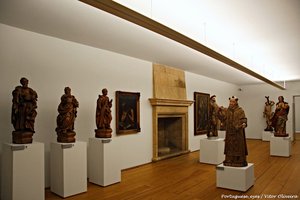
vasco fernandes (grao vasco)
1475 - 1542 , Portugal
Quick Facts
- Artistic Movement Or Style: Manueline style
- Artists Or Movements Influenced By This Artist: ['Edite Melo']
- Artists Who Influenced This Artist: ['Joaneanes']
- Date Of Birth: c. 1475 Viseu
- Date Of Death: c. 1542
- Full Name: Vasco Fernandes
- Nationality: Portuguese
- Notable Artworks:
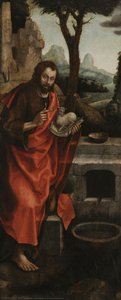
- St. John the Baptist
- The Seine in Paris
- Sailing the Pacific Ocean
- The Wedding of the Fish
- Place Of Birth: Portugal
Related Articles

The Fresco as Family Legacy: Preserving Heritage Through Wall Art
Explore the rich history & enduring legacy of fresco painting. Discover how to preserve family heritage through stunning wall art. Expert insights & restoration guidance.
Fernand Léger's Masterpieces: 25 Iconic Paintings & The Machine Age Aesthetic | ArtsDot
Explore 25 iconic Fernand Léger paintings that defined the Machine Age & Cubism. Discover the stories behind his bold colors, geometric forms & avant-garde style. Find museum-quality art reproductions on ArtsDot.com.

The Enduring Legacy of Fresco Painting: Techniques, History & Contemporary Relevance
Explore the rich history & enduring artistry of fresco painting – from Giotto to Michelangelo! Discover techniques, conservation efforts, & modern applications. Learn how ArtsDot brings this timeless art form to your home.

The Enduring Legacy of Fresco: Technique, History & Artistic Expression Across Cultures
Explore the rich history & enduring legacy of fresco painting! Discover ancient techniques, Giotto's masterpieces, and modern applications. Expert insights for art lovers & professionals.
Fresco's Finest: 10 Masterpieces That Define Art History | ArtsDot
Journey through art history with our Top 10 Fresco Masterpieces! Explore Michelangelo, Raphael & Giotto's iconic works. Find museum-quality reproductions and elevate your home decor at ArtsDot.com.