 Preview
 Send
Send Share
Share
 Details

 Download
 Similars
 X-Ray
X-Ray Diaporama
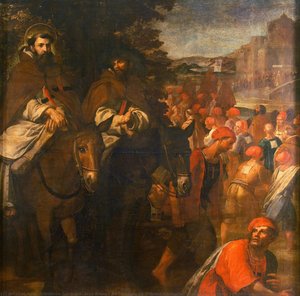
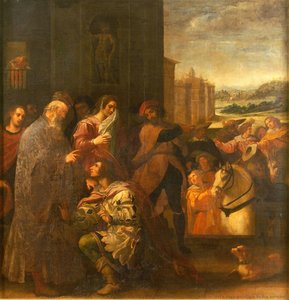
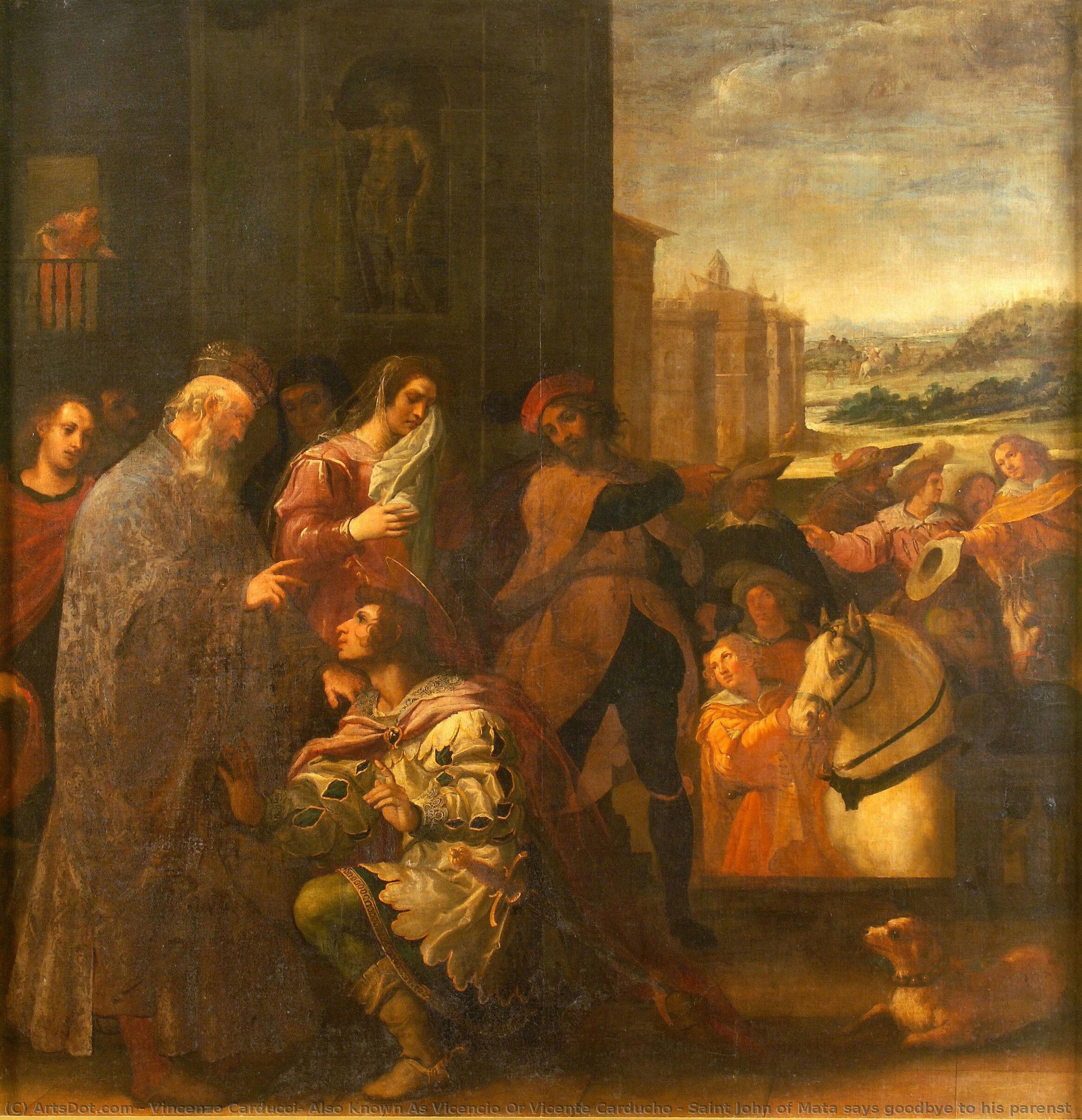
Saint John of Mata says goodbye to his parenst


 Read More
Giclée / Art Print
Museum-quality giclée or canvas print with fast production and flexible finish options. ( Buy Hand Made Painting Buy Image)




P118B $10

P118H $10

P118W $10

P438Z $10

P508JH $12

P508YH $12

P805H $10

P805Z $10

P919BZ $10

P919G $10

P919XJ $10

P959ZH $10

P968JZ $12

W106C $8

W218G $10

W218JH $8

W218Y $10

W307PJ $10

W316G $10

W316PJ $8

W316Y $10

W398PJ $8

W4111J $10

W500HY $15

W500JH $15

W692G $12

W849H $8

W940BG $15

W953PJ $8




Pick from our preset sizes that match the artwork's original proportions.

You may enter your own dimensions to fit a specific frame or space. If your selected size does not match the original image's proportions, we will either crop the artwork or extend the image with a mirrored or solid-fill edge. A digital mockup will be sent for your approval before production begins.
Please note that the on-screen preview does not reflect the actual cropping or extension. Only the mockup will accurately show the final composition.
While custom sizes are available, we recommend selecting a dimension from the predefined list to preserve the original proportions.
Worldwide Delivery () in 2 weeks instead of standard 4/5 weeks. (1 September)

Free Worldwide Express Shipping

High-Quality Linen Canvas

Full Shipping Insurance

Customs Tax Refund Guarantee

True Color Matching Guarantee

60-Day Return Policy (Defects Only)

100% Money-Back Guarantee

Bulk Discount Offer
 Glass option is only available in size under 110 CM

Saint John of Mata says goodbye to his parenst
Giclée / Art Print
Reproduction Size
-


Total Price
$ 63
A Moment of Sacred Departure
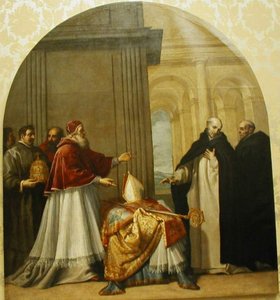
In the profound stillness of 1634, Vicente Carducho captured a moment of immense spiritual and familial weight in his masterpiece, Saint John of Mata says goodbye to his parents. This evocative oil on canvas serves as more than just a historical record; it is a window into the soul of the Spanish Baroque. The scene unfolds before a stately building, where the air seems thick with the tension between earthly devotion and familial love. At the heart of the composition, a man kneels in a gesture of profound humility and surrender, while those around him—parents, companions, and onlookers—form a tapestry of human emotion. The presence of a horse on the periphery hints at the impending journey, suggesting that this farewell is not merely a parting, but the beginning of a transformative pilgrimage.
Carducho, an artist whose roots stretched from the vibrant studios of Florence to the prestigious courts of Madrid, brings a sophisticated Italianate sensibility to this Spanish narrative. His technique utilizes the dramatic interplay of light and shadow characteristic of the era, guiding the viewer's eye through the crowded assembly toward the central figures of devotion. The brushwork, though masterful in its ability to render the textures of fabric and the weathered skin of the elderly, maintains a certain classical dignity that prevents the scene from descending into chaos. Instead, there is a structured grace to the arrangement of bodies, creating a sense of communal witness to a singular, holy event.
The Language of Baroque Devotion
To behold this painting is to experience the profound emotional gravity of the Counter-Reformation. Every element within the frame serves a symbolic purpose, reinforcing the theme of renunciation. The kneeling posture of Saint John represents the ultimate triumph of spiritual calling over worldly attachment. The surrounding figures, captured in various states of grief, contemplation, and quiet observation, represent the shared human experience of loss and the communal recognition of sanctity. For the collector or the interior designer, this piece offers a profound sense of narrative depth; it is an artwork that invites long periods of contemplation, making it a commanding centerpiece for any space dedicated to reflection or classical elegance.
The historical context of Carducho’s work adds a layer of prestige to the piece. As a leading figure who helped shape the Spanish Baroque landscape, his ability to blend Florentine precision with the dramatic fervor of Madrid makes this work an essential study in 17th-century mastery. For those seeking to adorn a home or gallery with a high-quality reproduction, this painting provides an opportunity to possess a fragment of history. It brings into a contemporary setting the timeless themes of sacrifice, faith, and the enduring strength of the human spirit, ensuring that the room it inhabits is imbued with a sense of historical importance and artistic grandeur.
Related Artworks



Artist Biography
Vicente Carducho (1576-1638): A Leading Figure of Spanish Baroque
Vincenzo Carducci, more commonly known as Vicente Carducho, was a pivotal Italian painter who significantly shaped the landscape of 17th-century Spanish art. Born in Florence, Italy, in 1576, he died in Madrid, Spain, in 1638. His career spanned both Italy and Spain, ultimately establishing him as a leading figure within the Spanish Baroque movement.
Early Life and Training
- Origins: Carducho was born in Florence, Italy, amidst a vibrant artistic environment.
- Family Influence: He received his initial training from his brother, Bartolomeo Carduccio, also a painter. This familial connection proved crucial to his early development.
- Move to Spain: Following his brother, Vicente relocated to Madrid as a young man, initially working in Valladolid before gaining commissions at the Escorial under Philip II of Spain.
- Early Commissions: He assisted his brother with painting projects for Philip II and later contributed to the decoration of the newly rebuilt Palacio del Pardo during the reign of Philip III. A notable early work was a history of Achilles painted there.
Development as an Artist & Major Achievements
- Monastery Frescoes: A significant turning point in his career came with a four-year commission from the monks of the Chartreuse of El Paular to decorate their monastery. This resulted in 54 large canvases depicting historical figures, divided between the lives of St. Bruno (27) and martyrs (27).
- Royal Patronage: Carducho enjoyed considerable patronage from Philip IV, producing some of his best-known works for the Prado. These paintings showcased his mastery of dramatic composition and religious themes.
- Teaching & Influence: For many years, Carducho served as a teacher in Madrid, nurturing a new generation of Spanish artists. His pupils included Giovanni Ricci, Pedro Obregon, Vela, and Francisco Collantes – all prominent figures in the 17th-century Spanish school.
- Theoretical Writings: He authored "De las excelencias de la pintura," or "Dialogues on Painting," a treatise published in 1633. Written as a dialogue between a master and apprentice, it reflects the piety of the Spanish realm and offers insights into his artistic philosophy.
Artistic Style & Influences
- Baroque Characteristics: Carducho’s style is firmly rooted in the Baroque period, characterized by dramatic lighting, dynamic compositions, and a focus on emotional intensity.
- Classical Tradition: His treatise demonstrates an engagement with classical artistic theory and dialogue form.
- Critique of Caravaggio: Notably, Carducho was a vocal critic of Caravaggio and his followers, whom he accused of lacking discipline and relying too heavily on naturalism without sufficient study or preparation. He viewed their approach as potentially detrimental to the future of painting. His criticism extended to Michelangelo's style, which he deemed overly reliant on superficial copying of nature.
- Influences: While critical of Caravaggio, Carducho’s work also reflects influences from earlier Italian masters and a distinctly Spanish sensibility.
Historical Significance
Vicente Carducho holds a significant place in the history of Spanish art. He was instrumental in establishing a distinct Spanish Baroque style, blending Italian techniques with local traditions. His role as a teacher ensured that his artistic principles were passed on to subsequent generations. While his critiques of Caravaggio reveal a conservative perspective, his contributions to religious painting and his theoretical writings provide valuable insights into the artistic debates of his time. Carducho's legacy lies in his ability to synthesize diverse influences into a uniquely Spanish Baroque aesthetic.
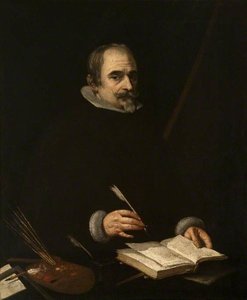
Vicente Carducho
1576 - 1638 , Italy
Quick Facts
- Artistic Movement Or Style: Spanish Baroque
- Artists Or Movements Influenced By This Artist:
- Giovanni Ricci
- Pedro Obregon
- Artists Who Influenced This Artist:
- Michelangelo
- Caravaggio
- Date Of Birth: 1576
- Date Of Death: 1638
- Full Name: Vicente Carducho
- Nationality: Italian/Spanish
- Notable Artworks:
- History of Achilles
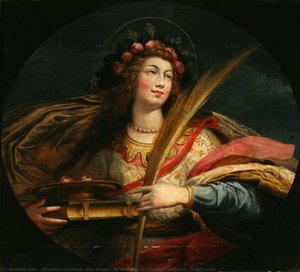
- Saint Lucia
- Meeting Saint Bruno
- Place Of Birth: Florence, Italy
Related Articles

The Golden Age Reforged: Dramatic Realism & Religious Zeal in Spanish Baroque Art
Explore the dramatic world of Spanish Baroque art! Discover masters like Zurbarán & the powerful influence of religious zeal on painting techniques – a guide for collectors and enthusiasts.

The Dramatic Flourish: Exploring the Baroque Movement's Enduring Legacy in Art History
Explore the dramatic world of Baroque art! Discover iconic artists like Caravaggio & Rubens, defining techniques, and its lasting impact on art history. Expert insights for collectors & enthusiasts at ArtsDot.

Baroque Drama: Bringing Opulence & Emotion into Contemporary Interiors
Explore the opulent world of Baroque interior design! Discover key elements, modern applications & how to bring dramatic elegance into your home with 's authentic reproductions.

Baroque Masterpieces: 10 Paintings That Defined an Era |
Journey through the drama & grandeur of Baroque art! Explore 10 masterpieces by Caravaggio, Rembrandt, Rubens & more. Discover stunning oil paintings, rich colors & timeless stories. Find museum-quality reproductions at .

The Enduring Power of Painting: A Historical & Contemporary Exploration of Form and Emotion
Explore the rich history & enduring techniques of oil painting with ArtsDot. Discover masterpieces, learn about art collecting, and find authentic handmade reproductions crafted by skilled artists.