 Preview
 Send
Send Share
Share
 Details

 Download
 Similars
 X-Ray
X-Ray Diaporama
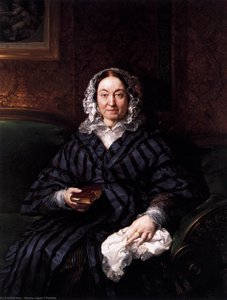
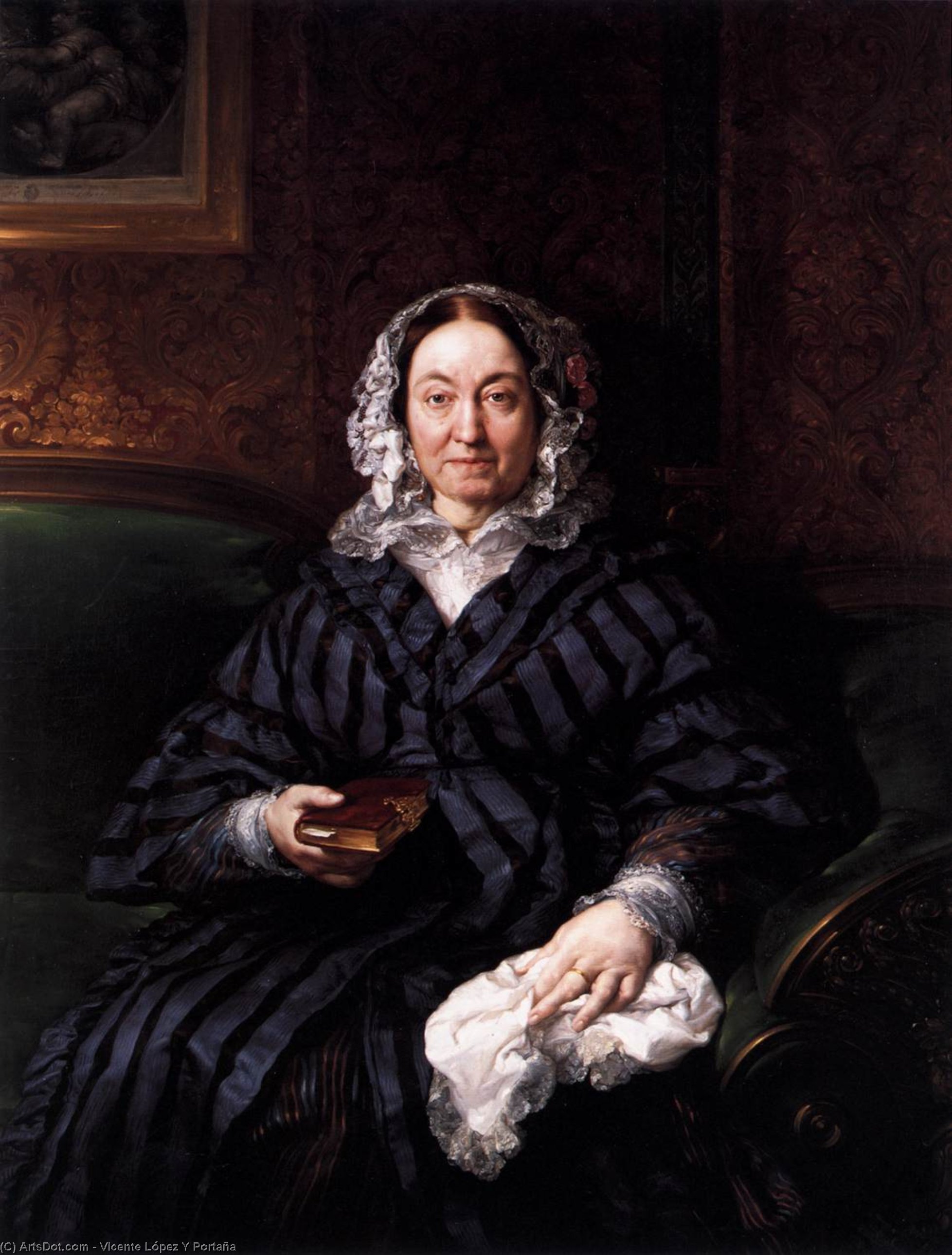
Portrait of Doña Francisca de la Gándara
 Oil On Canvas
- WallArt
- Neoclassical Portraiture
 1846
1846- 19th Century
 128.0 x 98.0 cm
 Museo del Prado
 Read More
Hand Made Oil Reproduction
Hand-painted oil on canvas in your size and frame, made to order by our artists. ( Buy Print Buy Image)




P118B $10

P118H $10

P118W $10

P438Z $10

P508JH $12

P508YH $12

P805H $10

P805Z $10

P919BZ $10

P919G $10

P919XJ $10

P959ZH $10

P968JZ $12

W106C $8

W218G $10

W218JH $8

W218Y $10

W307PJ $10

W316G $10

W316PJ $8

W316Y $10

W398PJ $8

W4111J $10

W500HY $15

W500JH $15

W692G $12

W849H $8

W940BG $15

W953PJ $8




Pick from our preset sizes that match the artwork's original proportions.

You may enter your own dimensions to fit a specific frame or space. If your selected size does not match the original image's proportions, we will either crop the artwork or extend the painting with additional hand-painted elements. A digital mockup will be sent for your approval before production begins.
Please note that the on-screen preview does not reflect the actual cropping or extension. Only the mockup will accurately show the final composition.
While custom sizes are available, we recommend selecting a dimension from the predefined list to preserve the original proportions.
After order, ArtsDot.com team will email client for instructions and provide a mockup preview
Worldwide Delivery () in 3/4 weeks instead of standard 5 weeks. (16 August). No compromise on quality.

Free Worldwide Express Shipping

High-Quality Linen Canvas

Full Shipping Insurance

Customs Tax Refund Guarantee

True Color Matching Guarantee

60-Day Return Policy (Defects Only)

100% Money-Back Guarantee

Bulk Discount Offer
 Glass option is only available in size under 110 CM

Portrait of Doña Francisca de la Gándara
Reproduction Medium
Reproduction Size
-


Total Price
$ 263
Artwork Description
A Glimpse into Mid-Nineteenth Century Spanish Elegance
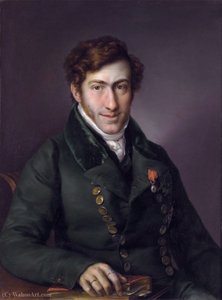
This captivating portrait, Portrait of Doña Francisca de la Gándara, transports the viewer directly into the refined drawing rooms of mid-nineteenth century Spain. Painted in 1846 by Vicente López y Portaña, the work is more than a mere likeness; it is a carefully composed tableau vivant, capturing an atmosphere of quiet dignity and social grace. The central figure, Doña Francisca, commands attention with her poised posture, seated elegantly upon a chair while her hands rest gently folded in her lap. Her attire, particularly the delicate bonnet and rich blue gown, speaks volumes about the societal expectations and aesthetic tastes of the era.
Mastery of Portraiture: Technique and Composition
Vicente López y Portaña, whose career spanned the transition from Neoclassicism to Romanticism, demonstrates a masterful command of portrait technique here. Observe the subtle interplay between light and shadow across Doña Francisca’s features; the artist achieves a remarkable sense of three-dimensionality that breathes life into the painted surface. While she remains the undeniable focal point, the inclusion of two partially visible figures—one to the left and another to the right—adds crucial depth and narrative complexity. These secondary elements, along with the plush couch anchoring the background, suggest a moment interrupted, allowing us an intimate, almost voyeuristic view into a private gathering.
Historical Echoes and Social Context
To appreciate this piece is to understand its time. The 1840s in Spain were a period of significant cultural flux, and portraiture served as both commemoration and statement. López y Portaña’s ability to capture such formality while retaining an air of lived reality speaks to his genius. The painting functions as a historical document, preserving the fashion, the social hierarchy, and the quiet rituals of the Spanish aristocracy or affluent bourgeoisie. It is a window into a world defined by structured elegance.
Emotional Resonance for the Modern Collector
For the contemporary admirer, this artwork offers more than just decorative beauty; it provides an emotional anchor. The direct gaze of Doña Francisca engages the viewer immediately, inviting contemplation on themes of presence and memory. Owning a reproduction of this piece allows one to infuse a space—be it a grand salon or a richly decorated study—with palpable history and undeniable sophistication. It is a statement piece that whispers tales of Spanish heritage, blending academic artistry with enduring human connection.
Related Artworks

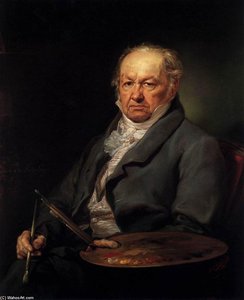
Artist Biography
A Life Etched in Portraiture: The World of Vicente López y Portaña
Born into the vibrant artistic landscape of Valencia, Spain, in 1772, Vicente López y Portaña emerged as a pivotal figure bridging the Neoclassical and Romantic eras. His parents, Cristóbal López Sanchordi and Manuela Portaña Miró, nurtured his early inclinations toward art, initiating his formal training at the tender age of thirteen under the guidance of Father Antonio de Villanueva, a Franciscan friar who instilled in him not only technical skill but also a deep appreciation for artistic discipline. This foundation led him to the prestigious Academy of San Carlos in Valencia, where he honed his abilities before earning a coveted scholarship to the Academia Real de Bellas Artes de San Fernando in Madrid at just seventeen years old—a testament to his burgeoning talent. There, a three-year apprenticeship under the esteemed Valencian painter Mariano Salvador Maella further refined his technique and exposed him to the intricacies of courtly artistry.Royal Commissions and Artistic Ascendancy
López y Portaña’s return to Valencia in 1794 marked not an end to his education, but a new beginning as vice-director of painting at the Academy. His personal life blossomed alongside his professional one; marriage to Maria Piquer in 1795 brought two sons into the world, Bernardo and Luis, both of whom followed their father’s artistic path, though with limited success. However, it was a royal visit in 1802 that truly propelled López y Portaña onto the national stage. King Charles IV, captivated by his work, appointed him an honorary court painter—a distinction that opened doors to commissions from Spain's elite. Following the tumultuous Peninsular War and the restoration of Ferdinand VII’s reign in 1814, López y Portaña ascended further, becoming the official court painter and drawing teacher to the queens Maria Isabella of Portugal and later Maria Josepha Amalia of Saxony. This position solidified his status as a leading artist of the time, culminating in his appointment as President of the Real Academia de Bellas Artes de San Fernando in 1817—a role he held with distinction. He became renowned for capturing the likenesses of prominent figures, documenting a significant period in Spanish history through his masterful portraits.A Style Defined by Precision and Grace
López y Portaña’s artistic style was deeply rooted in Neoclassicism, emphasizing meticulous draftsmanship and a refined aesthetic sensibility. While embracing the clarity and order of this movement, he retained subtle traces of Rococo elegance—a delicate balance that characterized his work. He drew significant inspiration from Anton Raphael Mengs and the principles of Academicism, prioritizing technical skill and adherence to established artistic conventions. Notably, however, López y Portaña remained largely unaffected by the burgeoning Romantic movement that swept through Europe during his later career, choosing instead to refine and perfect his existing style. His drawings and small-scale paintings are particularly celebrated for their exquisite detail and skillful execution of brushwork—though he never quite reached the revolutionary genius of his contemporary, Francisco Goya. Nevertheless, his portraits stand as remarkable achievements in capturing not only physical resemblance but also the character and social standing of his subjects.Legacy and Historical Significance
Vicente López y Portaña’s prolific output during the first half of the 19th century cemented his place as one of Spain's most important artists. He painted nearly every notable person in Spanish society, creating a visual record of an era marked by political upheaval and social change. His 1826 portrait of Francisco Goya—a poignant depiction of the aging master—offers a unique glimpse into the personality of a legendary figure. Serving as court painter to Queen Isabella II further solidified his position within the artistic hierarchy. While often overshadowed by Goya’s dramatic innovations, López y Portaña was widely considered the best Spanish painter of his time, admired for his technical mastery and ability to capture the essence of his subjects. His work continues to be studied and appreciated today, offering valuable insights into the art, society, and politics of 19th-century Spain. He died in Madrid on July 22, 1850, leaving behind a legacy of refined artistry and historical documentation that endures to this day.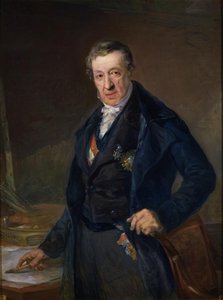
Vicente López y Portaña
1772 - 1850 , Spain
Quick Facts
- Artistic Movement Or Style: Neoclassical
- Artists Or Movements Influenced By This Artist: ['Manuel Aguirre y Monsalbe']
- Artists Who Influenced This Artist:
- Anton Raphael Mengs
- Mariano Salvador Maella
- Date Of Birth: September 19, 1772
- Date Of Death: July 22, 1850
- Full Name: Vicente López y Portaña
- Nationality: Spanish
- Notable Artworks:
- Equestrian Portrait of Ferdinand VII
- Adoration of the Trinity
- Portrait of Goya
- Place Of Birth: Valencia, Spain
Related Articles

Goya's Masterpieces: Explore 25 Iconic Paintings & Art Prints | ArtsDot
Delve into the world of Francisco Goya with ArtsDot. Explore 25 iconic paintings – from 'The Third of May' to his haunting Black Paintings. Discover the stories, techniques & emotions behind these Spanish masterpieces. Find museum-quality art reproductions for your home at ArtsDot.com!
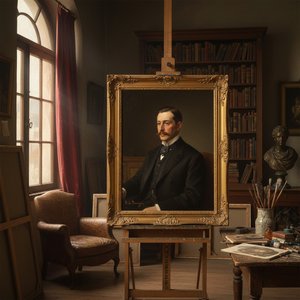
Rafael de Penagos: A Study in Spanish Portraiture & Artistic Identity
Explore the life & art of Rafael de Penagos, a leading Spanish Art Deco illustrator. Discover his iconic 'Penagos Woman', commercial work, and lasting legacy. Learn about this pivotal figure in 20th-century Spanish art history.
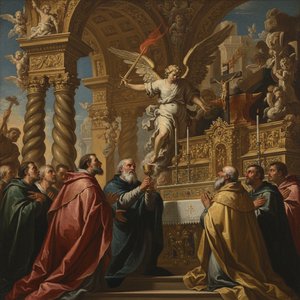
The Golden Age Reforged: Dramatic Realism & Religious Zeal in Spanish Baroque Art
Explore the dramatic world of Spanish Baroque art! Discover masters like Zurbarán & the powerful influence of religious zeal on painting techniques – a guide for collectors and enthusiasts.
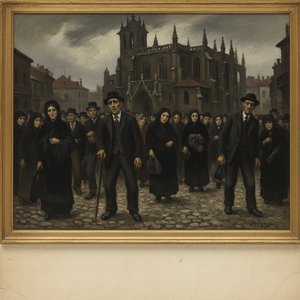
José Gutiérrez Solana: A Chronicle of Spanish Society Through Expressionist Vision
Explore the captivating world of José Gutiérrez Solana, a pivotal Spanish Expressionist painter. Discover his haunting depictions of early 20th-century Spain, influenced by Goya & El Greco. Learn about his key works and lasting legacy.
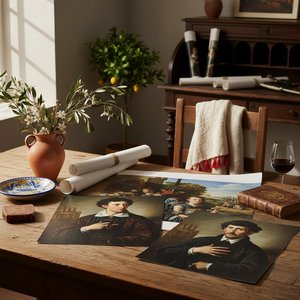
Prado Masterpieces: Explore 25 Iconic Artworks & Bring Spanish Beauty Home
Journey through 25 Prado Museum masterpieces! Explore Velázquez, Goya & El Greco's iconic Spanish art. Discover the stories behind these timeless paintings and find museum-quality reproductions for your home at ArtsDot.com.