


 Preview
 Send
Send Share
Share
 Details

 Download
 Similars
 X-Ray
X-Ray Diaporama
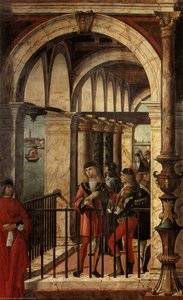
The Ambassadors Return to the English Court (detail)


 Read More
Purchase a high-resolution, enhanced digital image, far superior to the online preview.
Each file is meticulously prepared by our in-house specialists using advanced tools and expert manual retouching. We ensure every image has exceptional clarity, precise color accuracy, and fine detail.
The final file is delivered via email within 72 hours, optimized for immediate use in professional, editorial, and print environments. This is the same quality trusted by top-tier design studios, publishers, and galleries.
Digital Image
Download a high-resolution file for personal display, printing, and creative projects. ( Buy Print Buy Hand Made Painting)
Included in Every Digital Image Order
Expert Digital Delivery, Guaranteed
When you choose ArtsDot.com, you're not just getting an image - you're receiving a professionally enhanced digital artwork, crafted with precision and backed by a satisfaction guarantee. Here's everything that comes with your order, automatically:

Fast Email Delivery
Your high-resolution digital image file will be emailed to you within 72 hours of ordering - ready for immediate use.

AI-Enhanced Digital File
Your artwork is professionally optimized using advanced AI tools and manual editing, ensuring maximum detail, clarity, and color accuracy.

Free Lifetime Re-Delivery
Accidentally deleted or lost your file? No worries - we'll resend it to you anytime, free of charge.

No Import Fees - Ever
Enjoy your artwork instantly with zero customs, duties, or delivery fees - digital downloads are always tax-free.

Color Accuracy Guarantee
We ensure your digital image reflects the original colors as closely as possible using professional tools and color management.

60-Day Satisfaction Guarantee
If you're not satisfied with your digital image, we'll revise it or refund 100% within 60 days - no questions asked.

100% Money-Back Guarantee
Not satisfied? Get a full refund within 60 days of receiving your digital file - no questions asked.

Bulk Order Discounts
Buy 3 images, save 10% - Buy 5, save 15% - Buy 10+, save 20%. Great for creative projects, galleries, and agencies.
A Return to Courtly Splendor: Vittore Carpaccio’s “The Ambassadors Return to the English Court”
Vittore Carpaccio's "The Ambassadors Return to the English Court," a meticulously rendered detail from his monumental cycle depicting Saint Ursula, offers a captivating glimpse into the vibrant world of 15th-century Venice. More than just a depiction of a bustling city scene, this panel embodies the era’s fascination with diplomacy, wealth, and the intricate dance between power and representation. The painting transports us to a square brimming with life – merchants hawking their wares, citizens engaged in animated conversation, and the stately presence of figures draped in richly colored fabrics. It's a tableau vivant, capturing not just a moment but an entire atmosphere.
Carpaccio’s style, often described as conservative yet remarkably detailed, distinguishes itself from the more flamboyant Renaissance trends emerging at the time. He eschewed the overtly humanist focus on individual portraiture and instead prioritized narrative clarity and a meticulous observation of reality. This is evident in the careful rendering of each building facade, the subtle variations in clothing textures, and the dynamic arrangement of figures within the composition. Influenced by the early Netherlandish masters, particularly Antonello da Messina, Carpaccio masterfully employs atmospheric perspective – creating a sense of depth through the gradual blurring of distant elements – to draw the viewer’s eye into the heart of the scene.
The Language of Diplomacy and Patronage
“The Ambassadors Return” is not merely a picturesque cityscape; it's deeply rooted in the political realities of its time. The painting likely served as a visual representation of diplomatic exchanges, reflecting Venice’s role as a crucial hub for trade and negotiation between European powers. The figures are dressed in attire indicative of their social standing – elaborate robes and jewels signifying wealth and influence, while simpler garments suggest merchants and commoners. The presence of the clock tower is particularly significant, acting as a symbolic marker of time and order within this complex scene.
Furthermore, the painting’s commission likely stemmed from the patronage of a wealthy Venetian family, perhaps connected to diplomatic missions or involved in international trade. Carpaccio's meticulous attention to detail served not only to honor his patron but also to subtly convey their status and influence through the lavishness of the setting and the prominence of their figures within the composition. The very act of depicting such a scene underscored the importance of maintaining alliances and projecting an image of prosperity and stability.
Symbolism Woven into the Fabric
Beyond its immediate depiction, “The Ambassadors Return” is rich in symbolic detail. The boats in the background, for example, could represent trade routes and the flow of goods between Venice and other European cities. The various figures engaged in conversation might symbolize the exchange of ideas and political strategies. Even the arrangement of objects – a merchant’s stall overflowing with wares, a nobleman examining a map – contributes to the painting's layered meaning.
The inclusion within the larger Saint Ursula cycle adds another layer of symbolism. The story itself is one of virtuous women protecting relics of Christ, and this panel can be interpreted as representing the safeguarding of diplomatic ties and the preservation of Venetian power. It’s a visual testament to the interconnectedness of faith, politics, and commerce in 15th-century Venice.
A Window into a Lost World
“The Ambassadors Return to the English Court” offers a rare and intimate glimpse into a world long past – a vibrant city teeming with life, driven by ambition, and shaped by intricate political alliances. Carpaccio’s masterful technique and keen eye for detail transport us back to Venice during the height of its power, reminding us of the enduring legacy of Renaissance art and its ability to capture not just appearances but also the spirit of an era. Reproductions of this captivating panel offer a beautiful way to bring this world into your own space, allowing you to appreciate the artistry and historical significance of this remarkable work.
Related Artworks

Artist Biography
early life and training
vittore carpaccio, a prominent italian painter, was born in venice around 1465. he studied under the tutelage of gentile bellini, a renowned artist of the venetian school. this apprenticeship laid the foundation for carpaccio's future success.artistic style and influences
carpaccio's style was characterized by its conservative nature, showing minimal influence from the humanist trends that transformed italian renaissance painting during his lifetime. his work was influenced by antonello da messina's style and early netherlandish art. this unique blend of styles resulted in a distinctive approach to venetian painting.notable works
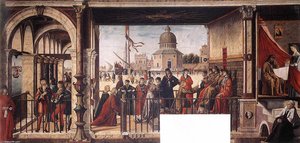
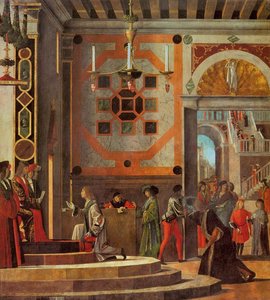
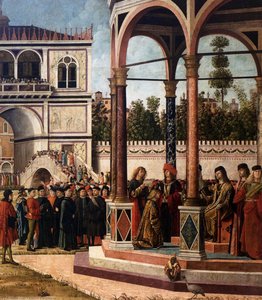
- the legend of saint ursula, a cycle of nine paintings, is carpaccio's most famous work. this series, now housed in the gallerie dell'accademia, showcases his mastery of narrative painting.
- glory of st. ursula altarpiece (1491) demonstrates carpaccio's skill in capturing light and color, reminiscent of giovanni bellini's style.
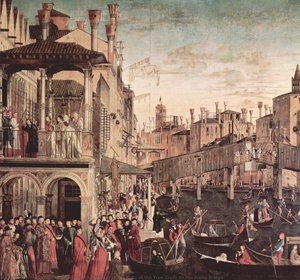
- miracle of the relic of the cross at the ponte di rialto (1494) highlights carpaccio's ability to balance composition and narrative.
career highlights and legacy
- carpaccio's principal works were executed between 1490 and 1519, ranking him among the early masters of the venetian renaissance.
- his orientalist style, as seen in st. george baptizing the selenites, reflects a new fascination with the levant.
- carpaccio's work has been somewhat overlooked in comparison to his contemporaries, such as giovanni bellini or giorgione.
references and further reading
discover more about vittore carpaccio and the venetian school on ArtsDot.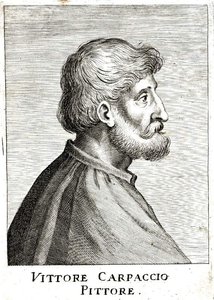
Vittore Carpaccio
1465 - 1526 , Italy
Quick Facts
- Artistic Movement Or Style: Early Venetian Renaissance
- Artists Or Movements Influenced By This Artist: ['Early Netherlandish Painting']
- Artists Who Influenced This Artist:
- Antonello da Messina
- Gentile Bellini
- Date Of Birth: Venice, Italy (c. 1465)
- Date Of Death: 1526
- Full Name: Vittore Carpaccio
- Nationality: Italian
- Notable Artworks:
- The Legend of Saint Ursula
- Glory of St. Ursula Altarpiece
- Miracle of the Relic of the Cross at the Ponte di Rialto
- Place Of Birth: Venice

