 Preview
 Send
Send Share
Share
 Details

 Download
 Similars
 X-Ray
X-Ray Diaporama
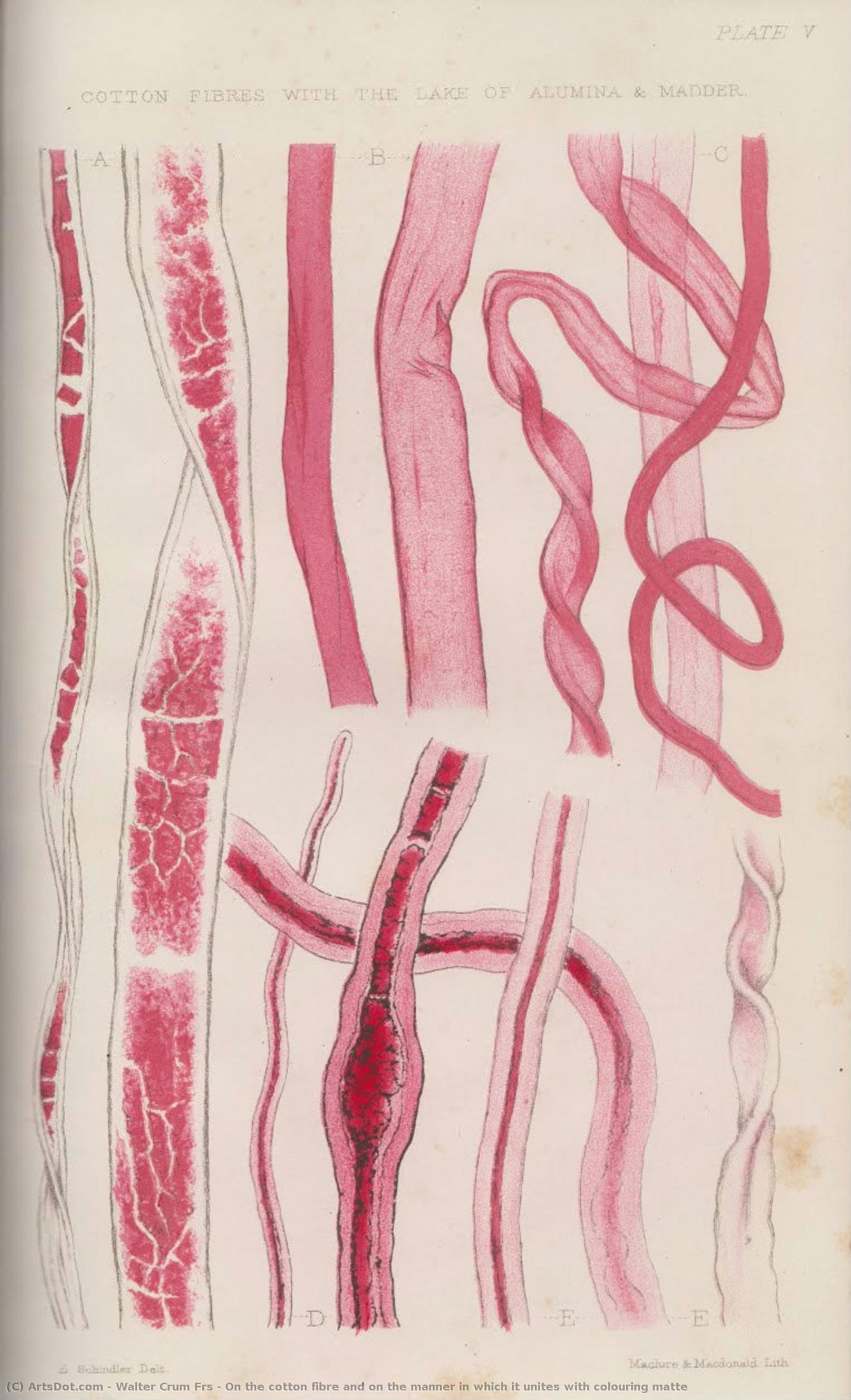
On the cotton fibre and on the manner in which it unites with colouring matte


 Read More
Hand Made Oil Reproduction
Hand-painted oil on canvas in your size and frame, made to order by our artists. ( Buy Print Buy Image)




































Pick from our preset sizes that match the artwork's original proportions.

You may enter your own dimensions to fit a specific frame or space. If your selected size does not match the original image's proportions, we will either crop the artwork or extend the painting with additional hand-painted elements. A digital mockup will be sent for your approval before production begins.
Please note that the on-screen preview does not reflect the actual cropping or extension. Only the mockup will accurately show the final composition.
While custom sizes are available, we recommend selecting a dimension from the predefined list to preserve the original proportions.
After order, ArtsDot.com team will email client for instructions and provide a mockup preview
Worldwide Delivery () in 3/4 weeks instead of standard 5 weeks. (3 September). No compromise on quality.

Free Worldwide Express Shipping

High-Quality Linen Canvas

Full Shipping Insurance

Customs Tax Refund Guarantee

True Color Matching Guarantee

60-Day Return Policy (Defects Only)

100% Money-Back Guarantee

Bulk Discount Offer
 Glass option is only available in size under 110 CM

On the cotton fibre and on the manner in which it unites with colouring matte
Reproduction Medium
Reproduction Size
-


Total Price
$ 263
Related Artworks

Artist Biography
A Pioneer of Calico Printing: The Life and Legacy of Walter Crum
Walter Crum, born in Glasgow in 1796, was far more than a successful businessman; he was a pivotal figure in the transformation of calico printing from an empirical craft into a scientifically grounded industry. His story is one of astute observation, relentless experimentation, and a commitment to elevating textile production through rigorous chemical understanding. Crum’s early life provided a solid foundation for his future endeavors. He came from a family deeply entrenched in the mercantile world—his father, Alexander Crum, was a prominent calico printer, and this familial connection would prove instrumental in shaping his path. After receiving an education that included studies at Anderson's University under the esteemed Thomas Graham, he honed his skills with James Thomson before embarking on a journey of independent enterprise. This period wasn’t merely about commerce; it involved extensive travel across Europe, including time spent in Turkey and Asia Minor, where he immersed himself in the intricacies of dyeing techniques and established connections with leading scientists like Alexander von Humboldt, Jean-Baptiste Dumas, and Justus von Liebig.The Scientific Revolution at Thornliebank
Returning to Glasgow, Crum took the reins of the family firm at Thornliebank, a business already substantial but poised for innovation under his direction. He didn’t simply maintain the status quo; he spearheaded a shift towards dyeing, with a particular focus on achieving vibrant and lasting Turkey red hues—a color notoriously difficult to fix onto fabric. This pursuit wasn't based on guesswork or tradition, but on meticulous chemical analysis. Crum systematically investigated the properties of cotton fibers, the mordants used in dyeing, and the complex reactions that occurred during the process. His 1863 illustration of cotton fibres is a testament to this scientific approach—a delicate watercolor rendering revealing an intricate study of the material’s structure. This dedication to understanding the underlying principles earned him recognition from the Royal Society in 1844, solidifying his position as a leading figure in applied chemistry. He wasn't content with merely replicating existing methods; he sought to *understand* them, and through that understanding, improve upon them.Beyond Turkey Red: A Broader Impact
Crum’s influence extended beyond the specific realm of calico printing. His work fostered a culture of scientific inquiry within his company, encouraging employees to embrace experimentation and innovation. He actively supported educational institutions like Anderson's University and the Mechanics' Institute of Glasgow, recognizing the importance of disseminating knowledge and fostering a skilled workforce. Furthermore, Crum was an early adopter of photography, collecting images that reflected both artistic sensibility and a fascination with emerging technologies. This demonstrates a broader intellectual curiosity—a desire to explore new avenues of understanding and representation. His estate at Birkenshaw (later Rouken Glen Park) became a symbol of his success and a testament to his commitment to public life; he later gifted the park to the people of Glasgow, leaving a lasting legacy for generations to enjoy.Family Connections and Enduring Influence
The Crum family’s impact resonates through multiple generations. His son, Alexander Crum, followed in his footsteps as a successful businessman and Liberal Party politician, further contributing to the prosperity of Renfrewshire. Perhaps most notably, his sister Margaret Fisher Crum married John Brown, becoming the mother of Alexander Crum Brown, a distinguished organic chemist who would also achieve prominence within the scientific community. This lineage underscores a dedication to intellectual pursuits and public service that spanned multiple generations. The establishment of the Crum Brown Chair of Chemistry at the University of Edinburgh in 1967 stands as a lasting tribute to their collective contributions.A Legacy Forged in Science and Industry
Walter Crum’s historical significance lies not only in his technical achievements but also in his pioneering approach to industrial production. He demonstrated that scientific rigor could be seamlessly integrated with commercial success, paving the way for future advancements in textile chemistry and beyond. His commitment to education, public service, and a deeper understanding of the natural world cemented his place as a true innovator—a man who transformed an industry while simultaneously enriching the lives of those around him. He embodied a spirit of inquiry that continues to inspire scientists and entrepreneurs today, reminding us that progress often arises from the intersection of knowledge, dedication, and a willingness to challenge conventional wisdom.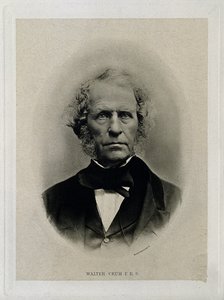
walter crum frs
1796 - 1867 , United Kingdom
Quick Facts
- Artistic Movement Or Style: Scientific illustration
- Artists Who Influenced This Artist:
- Thomas Graham
- James Thomson
- Date Of Birth: 1796
- Date Of Death: 1867
- Full Name: Walter Crum FRS
- Nationality: Scottish
- Notable Artworks: ['On the cotton fibre (1863)']
- Place Of Birth: Glasgow, UK
Related Articles
The Flourishing Canvas: A Historical & Artistic Exploration of Botanical Illustration
Explore the rich history of botanical illustration! Discover key artists like Havell & Barraband, learn about scientific accuracy & aesthetic beauty. Shop museum-quality reproductions at ArtsDot.
The Flourishing Canvas: A Historical Journey Through Botanical Illustration
Explore the captivating history of botanical illustration! Discover renowned artists like Robert Havell & Mary Walcott, learn about techniques, and find museum-quality art at ArtsDot.com.
Victorian Botanical Painting: Science, Art & Aesthetic Sensibility
Explore the exquisite world of Victorian botanical art! Discover the science & artistry behind stunning floral illustrations by Gould, Muckley & more. Learn about collecting, value & investment at ArtsDot.
The Flourishing Canvas: A Historical Journey Through Botanical Illustration
Explore the captivating history of botanical illustration! Discover renowned artists like Robert Havell & Mary Walcott, learn about techniques, and find museum-quality art at ArtsDot.com.

The Evocative Detail of Nature: A History of Naturalistic Illustration
Explore the rich history of botanical illustration! Discover pioneering artists like Maria Sibylla Merian & Marianne North. Learn about scientific precision, artistic expression, and find museum-quality reproductions at ArtsDot.