 Send
Send Share
Share
 Details

 Download
 Similars
 Diaporama
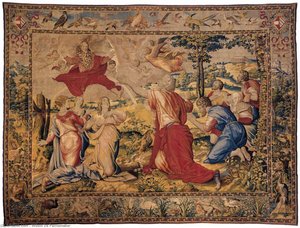
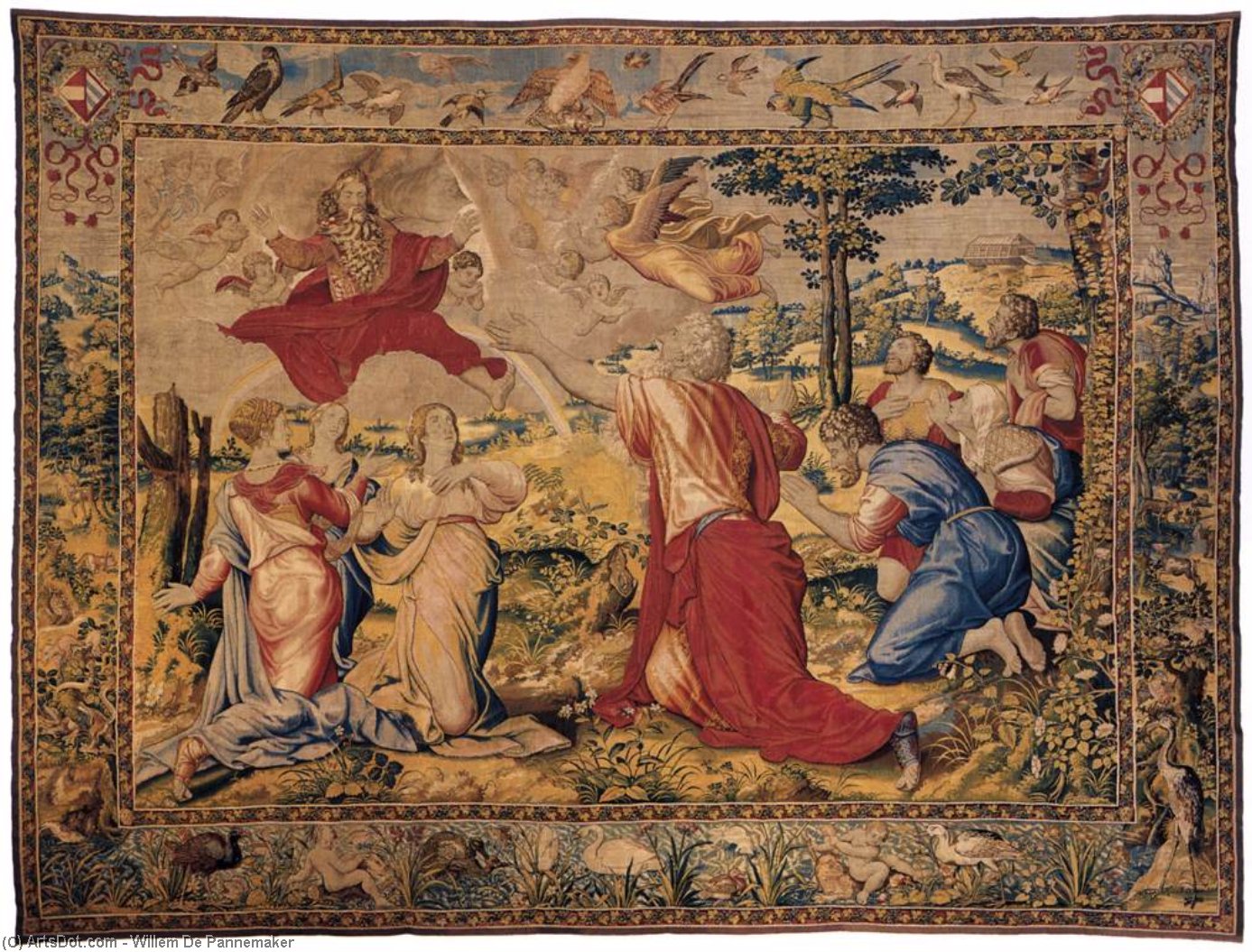
God the Father Establishing His Covenant with Noah
 Tapestry
- Textile
- Renaissance
 1567
1567- Renaissance
 430.0 x 560.0 cm
 Rijksmuseum
 Read More
Hand Made Oil Reproduction
Hand-painted oil on canvas in your size and frame, made to order by our artists. ( Buy Print Buy Image)




































Pick from our preset sizes that match the artwork's original proportions.

You may enter your own dimensions to fit a specific frame or space. If your selected size does not match the original image's proportions, we will either crop the artwork or extend the painting with additional hand-painted elements. A digital mockup will be sent for your approval before production begins.
Please note that the on-screen preview does not reflect the actual cropping or extension. Only the mockup will accurately show the final composition.
While custom sizes are available, we recommend selecting a dimension from the predefined list to preserve the original proportions.
After order, ArtsDot.com team will email client for instructions and provide a mockup preview
Worldwide Delivery () in 3/4 weeks instead of standard 5 weeks. (21 August). No compromise on quality.

Free Worldwide Express Shipping

High-Quality Linen Canvas

Full Shipping Insurance

Customs Tax Refund Guarantee

True Color Matching Guarantee

60-Day Return Policy (Defects Only)

100% Money-Back Guarantee

Bulk Discount Offer
 Glass option is only available in size under 110 CM

God the Father Establishing His Covenant with Noah
Reproduction Medium
Reproduction Size
-


Total Price
$ 263
Artwork Description
A Divine Pact Etched in Time: God Establishing His Covenant with Noah
To stand before this monumental depiction of God the Father Establishing His Covenant with Noah is to be enveloped by an atmosphere thick with divine promise and profound human vulnerability. This canvas captures not merely a scene, but a pivotal moment in theological narrative—the instant grace descends upon humanity after the cataclysm. The composition draws the eye immediately to the central interaction: God’s outstretched hand gently touching Noah's head, a gesture that speaks volumes of mercy overcoming judgment. In His other hand, the dove, an eternal symbol of peace and renewal, completes this tableau of divine reassurance. Surrounding this core exchange are figures—witnesses to history—and the subtle inclusion of life itself, represented by the bird in the upper corner, all contributing to a sense of sacred drama unfolding before our very eyes.
The Masterful Hand of Willem de Pannemaker
This work is attributed to Willem de Pannemaker, an artist whose career was deeply rooted in the rich traditions of Flemish craftsmanship. While his biography speaks of him as a titan associated with tapestry, this painting showcases his mastery across various mediums, allowing us to appreciate the enduring quality of his vision. The style reflects the grand sweep of Renaissance influence filtering through Northern European art—a period where meticulous detail met burgeoning emotional depth. One can almost feel the dedication in every brushstroke, an inheritance from the rigorous standards set within the Pannemaker workshop. His ability to imbue religious subject matter with such palpable human emotion elevates this piece beyond mere illustration; it becomes a meditation on faith.
Symbolism and Spiritual Resonance
The symbolism woven throughout the scene is rich and deeply resonant for the art connoisseur. The covenant itself represents a fresh start, a promise of enduring life following ultimate destruction. The dove is perhaps the most potent symbol here, universally understood as the cessation of storm and the return of hope. Observing the grouping of figures—the solemnity on the far left, the attentive presence near the center, and the quiet witness on the right—we are invited to contemplate our own place within cycles of trial and redemption. It is a visual sermon, urging the viewer toward contemplation of enduring covenants in their own lives.
Bringing Sacred Grandeur Home
For those seeking to integrate such profound artistic weight into a contemporary space, this reproduction offers an unparalleled opportunity. The sheer scale of the original work—a commanding 430 x 560 cm—suggests its intended placement in a grand hall or chapel setting. Owning a high-quality hand-painted reproduction allows one to harness that monumental feeling of sacred grandeur without the logistical constraints. It serves not just as decoration, but as a focal point for contemplation, transforming any room into a space imbued with historical reverence and enduring spiritual calm.
Related Artworks

Artist Biography
Willem de Pannemaker (1510 – 1581): The Titan of Flemish Tapestry
Willem de Pannemaker stands as a monumental figure in the history of Flemish art and tapestry weaving, cementing his legacy as arguably the greatest artist of his time. Born circa 1510 in Beverwijk, Netherlands—a location reflecting the burgeoning artistic dynamism of the era—he ascended to prominence through his father’s workshop, Pieter Pannemaker, which established itself as a dominant force within Brussels's textile industry. Trained rigorously by Pieter, Willem inherited not only technical mastery but also an unwavering dedication to upholding the traditions of Flemish craftsmanship and embracing the stylistic innovations emerging from Italy during the Renaissance.- Early Life & Training: Pieter Pannemaker’s workshop was renowned for its meticulous attention to detail and its commitment to producing exceptionally high-quality tapestries. Willem's formative years were spent absorbing these principles, honing his skills in dyeing, weaving, and designing intricate patterns—skills that would define his artistic output throughout his career.
- The Habsburg Patronage: Willem’s fortunes dramatically shifted when he secured the patronage of Charles V, Holy Roman Emperor. Recognizing his unparalleled talent, Charles entrusted him with creating monumental tapestries for the Habsburg court in Madrid and Brussels – commissions that showcased Willem's ability to synthesize classical ideals with Flemish artistic sensibilities.
- Style & Technique: Willem’s distinctive style is characterized by a remarkable blend of realism and decorative exuberance. He meticulously rendered naturalistic landscapes and architectural elements, capturing the subtleties of light and texture with unparalleled precision. Simultaneously, he employed bold color palettes and dynamic compositions—influenced by artists like Raphael—to infuse his tapestries with an emotional intensity that captivated audiences.
- Notable Works: Among Willem’s most celebrated achievements are the “Conquest of Tunis” series (1548-54), depicting the pivotal Battle of Tunis against Ottoman forces, and “The Wedding of Mercury” (1546-47), a lavish depiction of the mythological wedding ceremony—works that exemplify his mastery of narrative storytelling and artistic innovation.
- Legacy & Influence: Willem de Pannemaker’s influence extended far beyond his own lifetime. His workshop continued to produce masterpieces for generations, establishing Brussels as the undisputed center of Flemish tapestry weaving. Furthermore, his stylistic innovations profoundly impacted subsequent artists—particularly those working in the Baroque period—solidifying his position as a cornerstone of European artistic heritage.
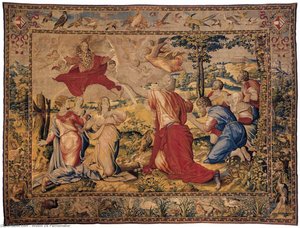
willem de pannemaker
1513 - 1581
Quick Facts
- Artistic Movement Or Style: Renaissance Tapestry Art
- Artists Or Movements Influenced By This Artist: ['Charles V']
- Artists Who Influenced This Artist: ['Jan Cornelisz Vermeyen']
- Date Of Birth: circa 1510
- Date Of Death: 1581
- Full Name: Willem de Pannemaker
- Nationality: Flemish
- Notable Artworks:
- Conquest of Tunis
- The Wedding of Mercury
- Christ Appearing to Mary Magdalene
- Place Of Birth: Brussels
Related Articles
The Return of the Fresco: Why Wall Murals Are the New Luxury Statement
Elevate your space with bespoke wall murals & frescoes. Explore the resurgence of this luxury art form. Expert design guidance & seamless installation – .

Transforming Spaces: A Comprehensive Exploration of Wall Decor Through Art History & Contemporary Practice
Explore the art of transforming spaces with our comprehensive guide to wall decor. From historical movements to contemporary trends, discover how to curate impactful interiors and commission bespoke artwork for a truly personalized aesthetic.

Illuminating Faith: Biblical Narrative & Artistic Expression Through the Ages
Explore the rich history of biblical art from Giotto to the Renaissance masters with ArtsDot. Discover symbolism, techniques & enduring legacies. Museum-quality reproductions & expert insights.
Sacred Narratives on Canvas: Exploring Religious Painting Through History
Explore the rich history of religious painting with ArtsDot.com! Discover iconic artworks, symbolism & techniques from antiquity to the Renaissance. Enhance your art appreciation today.
Sacred Narratives Embodied: A Comprehensive Exploration of Religious Iconography in Art History
Explore the rich history of religious iconography in art! Discover symbolism, movements & masterpieces from Byzantine to Renaissance periods. Expert insights for collectors and enthusiasts at ArtsDot.