 Preview
 Send
Send Share
Share
 Details

 Download
 Similars
 X-Ray
X-Ray Diaporama
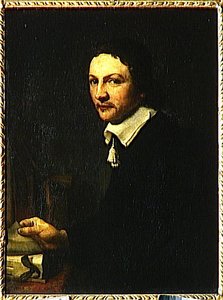
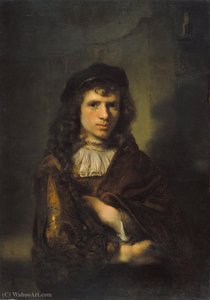
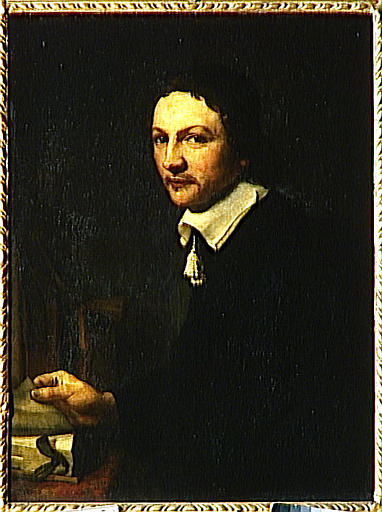
PORTRAIT D'HOMME FEUILLETANT UN LIVRE


 Read More
Hand Made Oil Reproduction
Hand-painted oil on canvas in your size and frame, made to order by our artists. ( Buy Print Buy Image)




P118B $10

P118H $10

P118W $10

P438Z $10

P508JH $12

P508YH $12

P805H $10

P805Z $10

P919BZ $10

P919G $10

P919XJ $10

P959ZH $10

P968JZ $12

W106C $8

W218G $10

W218JH $8

W218Y $10

W307PJ $10

W316G $10

W316PJ $8

W316Y $10

W398PJ $8

W4111J $10

W500HY $15

W500JH $15

W692G $12

W849H $8

W940BG $15

W953PJ $8




Pick from our preset sizes that match the artwork's original proportions.

You may enter your own dimensions to fit a specific frame or space. If your selected size does not match the original image's proportions, we will either crop the artwork or extend the painting with additional hand-painted elements. A digital mockup will be sent for your approval before production begins.
Please note that the on-screen preview does not reflect the actual cropping or extension. Only the mockup will accurately show the final composition.
While custom sizes are available, we recommend selecting a dimension from the predefined list to preserve the original proportions.
After order, ArtsDot.com team will email client for instructions and provide a mockup preview
Worldwide Delivery () in 3/4 weeks instead of standard 5 weeks. (16 August). No compromise on quality.

Free Worldwide Express Shipping

High-Quality Linen Canvas

Full Shipping Insurance

Customs Tax Refund Guarantee

True Color Matching Guarantee

60-Day Return Policy (Defects Only)

100% Money-Back Guarantee

Bulk Discount Offer
 Glass option is only available in size under 110 CM

PORTRAIT D'HOMME FEUILLETANT UN LIVRE
Reproduction Medium
Reproduction Size
-


Total Price
$ 263
Artwork Description
A Shadowed Masterpiece: Unveiling the Enigmatic Portrait of a Man
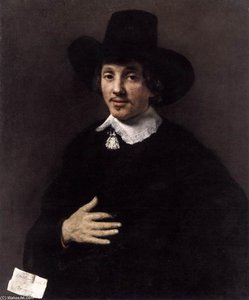
Willem Drost’s “Portrait d’Homme Feuilletant un Livre” isn't merely a depiction of a gentleman absorbed in reading; it’s a carefully constructed window into the Dutch Golden Age, a poignant study of intellect, contemplation, and the subtle nuances of artistic influence. Painted in 1653 or 1654, this work, now residing within the hallowed halls of the Louvre Museum in Paris, embodies the formal elegance and psychological depth characteristic of Rembrandt’s circle while simultaneously hinting at Drost's own distinctive vision. The painting immediately draws the viewer into a scene of quiet dignity – a man, likely a scholar or gentleman of means, seated comfortably, his gaze fixed upon an open book. The composition is meticulously balanced, reflecting the prevailing principles of 17th-century Dutch portraiture: a central figure, rendered with remarkable realism and attention to detail, framed by a dark, receding background that serves to heighten the sense of intimacy and focus.
Technical Brilliance and Rembrandt’s Legacy
Drost's mastery lies in his ability to seamlessly blend the techniques he learned from Rembrandt with his own artistic sensibilities. The painting is executed in oil on canvas, utilizing a layering technique—glazes of thin paint built upon one another—to achieve an astonishing level of detail and luminosity. Note the subtle variations in tone across the man’s face – the delicate highlights catching the light, the soft shadows defining his features. The fabric of his clothing, rendered with meticulous brushstrokes, exhibits a tactile quality that invites the viewer to almost feel its texture. The book itself is depicted with remarkable precision, capturing the weight and materiality of the pages. It's a testament to Drost’s technical skill that he was able to emulate Rembrandt’s signature style while simultaneously establishing his own unique voice within the master’s workshop. The painting’s palette is deliberately restrained – dominated by deep browns, blacks, and muted reds—creating an atmosphere of solemnity and intellectual seriousness.
Symbolism and the Pursuit of Knowledge
Beyond its technical merits, “Portrait d’Homme Feuilletant un Livre” is rich in symbolic meaning. The act of reading itself represents a profound engagement with knowledge, learning, and perhaps even wisdom. The man's posture—relaxed yet attentive—suggests a state of deep contemplation, inviting the viewer to share in his intellectual journey. Some scholars have interpreted the painting as an allegory for the pursuit of virtue or enlightenment, aligning with the humanist ideals that flourished during the Dutch Golden Age. The book’s open pages are not merely a prop; they represent a gateway to understanding, a symbol of the transformative power of education and the importance of cultivating one's mind. The dark background further emphasizes this symbolic weight, suggesting a realm of intellectual exploration beyond the confines of the immediate world.
A Rediscovered Master: Drost in the Shadow of Rembrandt
For centuries, Willem Drost’s work was largely overshadowed by that of his mentor, Rembrandt van Rijn. Many of his paintings were mistakenly attributed to the more famous artist, obscuring his individual talent and contribution to Dutch art history. However, recent scholarship has dramatically shifted our understanding of Drost's significance, revealing him as a remarkably skilled painter in his own right—a figure whose work offers a fascinating glimpse into the dynamics of artistic apprenticeship and attribution during this pivotal period. The rediscovery of Drost’s oeuvre is not merely an academic exercise; it’s a celebration of an artist who deserves to be recognized for his unique vision and technical prowess. “Portrait d’Homme Feuilletant un Livre” stands as a compelling example of his artistry, inviting us to contemplate the enduring power of knowledge, beauty, and the mysteries surrounding the lives and legacies of great artists.
Related Artworks
Artist Biography
A Shadow in Rembrandt’s Light: The Enigmatic World of Willem Drost
Willem Drost remains one of the more elusive figures within the celebrated constellation of Dutch Golden Age painters. Born in Amsterdam in 1633 and tragically dying at barely twenty-six years old in 1659, his artistic output is small, yet increasingly recognized for its quality and significance. For centuries, Drost existed largely in the shadow of his master, Rembrandt van Rijn, with many of his works mistakenly attributed to the more famous artist. Recent scholarship, however, has begun to illuminate Drost’s unique talent and establish him as a compelling artist in his own right—a painter whose work offers a fascinating lens through which to examine the dynamics of artistic apprenticeship and attribution during this pivotal period in art history. The story of Willem Drost is not merely one of rediscovery; it's a testament to the complexities inherent in understanding artistic influence, individual style, and the often-tenuous nature of historical record.Formative Years and Apprenticeship with Rembrandt
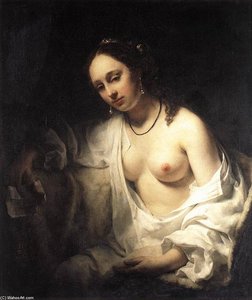
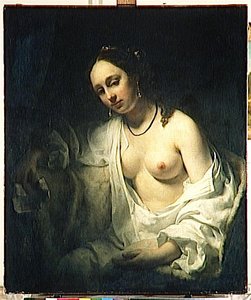
Details surrounding Drost’s early life are scarce, shrouded in the typical mysteries that often accompany artists from this era. What is known centers around his relationship with Rembrandt. Around 1650, he entered Rembrandt's studio, becoming a dedicated pupil and absorbing the master’s techniques and artistic sensibilities. This was a period of profound influence for Drost, shaping not only his technical skills but also his preferred subject matter. He embraced history painting, biblical narratives, introspective studies of solitary figures, and portraiture—all hallmarks of Rembrandt's prolific oeuvre. However, even in these early works, hints of Drost’s individual voice begin to emerge. His 1654 interpretation of “Bathsheba,” for example, undertaken while still under Rembrandt’s tutelage, demonstrates a distinct approach to the same subject matter explored by his mentor. Both paintings reside today in the Louvre Museum, offering a compelling side-by-side comparison of two artists grappling with a shared theme but expressing it through uniquely personal visions. Drost's Bathsheba possesses a certain coolness and restraint that differentiates it from Rembrandt’s more emotionally charged rendering.Italian Sojourn and Collaborative Ventures
Around 1655, Drost embarked on a journey that took him to Italy—a common destination for Dutch artists seeking further training and exposure to different artistic traditions. In Rome, he forged connections with fellow painters Karel Lot and Joan van der Meer, the latter being a wealthy patron of the arts from Utrecht who had previously traveled extensively throughout Italy. Historical accounts suggest Drost collaborated with Johann Carl Loth on a series of paintings depicting the Four Evangelists in Venice, though these works have sadly been lost to time. This period in Italy appears to have broadened his artistic horizons and subtly influenced his style, introducing new elements into his compositions. However, documentation from this phase of his life remains limited, making it difficult to fully assess the extent of Italian influence on his development. He eventually returned to Amsterdam before settling permanently in Venice, where he met an untimely end in 1659.The Long Road to Recognition and Reattribution
For many years, numerous paintings were confidently ascribed to Rembrandt based on stylistic similarities—a testament to the profound impact of his artistic authority. However, as art historical scholarship advanced, particularly through the meticulous work of the Rembrandt Research Project, a critical reassessment began. This project systematically examined countless works previously attributed to Rembrandt, leading to a gradual but significant reattribution process. Drost emerged as a central figure in this scholarly shift. Paintings such as “Portrait of a Young Man on Horseback” – famously known as "The Polish Rider" – and “Portrait of a Young Woman with her Hands Folded on a Book,” once considered masterpieces by Rembrandt, are now increasingly recognized as the work of Drost. The attribution of “The Polish Rider” remains a subject of debate among scholars—some believe Rembrandt initiated the painting but left it unfinished for Drost to complete—but the growing consensus supports Drost’s authorship for many pieces previously misattributed. This reevaluation has not only shed light on Drost's artistry but also deepened our understanding of workshop practices and collaborative art production during the Dutch Golden Age.A Legacy Reclaimed: Drost’s Place in Art History
Willem Drost’s legacy is complex, shaped by his short career, limited output, and the historical tendency to overshadow lesser-known artists with those of greater renown. However, recent scholarship has rightfully illuminated his significant role within Rembrandt's circle and highlighted his unique contributions to Dutch Golden Age painting. The reattribution of key works has not only revealed Drost’s artistic talent but also provided valuable insights into the dynamics of artistic training and collaboration during this period. While he may never achieve the widespread recognition enjoyed by Rembrandt, Willem Drost is increasingly acknowledged as a gifted artist deserving greater attention for his evocative portraits, compelling historical scenes, and contributions to the rich tapestry of 17th-century Dutch art. His story serves as a potent reminder that art history is an ongoing process—a continuous cycle of discovery, reevaluation, and the unveiling of hidden narratives. His paintings offer a quiet intensity, a psychological depth that resonates with modern viewers, making his work increasingly sought after by collectors and admired by scholars alike.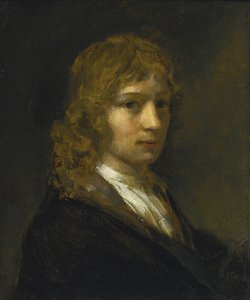
Willem Drost
1633 - 1659 , Netherlands
Quick Facts
- Artistic Movement Or Style: Dutch Golden Age painting
- Artists Who Influenced This Artist: ['Rembrandt van Rijn']
- Date Of Birth: 1633
- Date Of Death: 1659
- Full Name: Willem Drost
- Nationality: Dutch
- Notable Artworks:
- Bathsheba
- Portrait of a Lady
- Portrait of a Young Man
- The Philosopher
- Place Of Birth: Amsterdam, Netherlands
Related Articles

Rembrandt's Masterpieces: Explore 25 Iconic Paintings & Prints | ArtsDot
Journey through Rembrandt van Rijn's 25 most iconic paintings & etchings. Explore Dutch Golden Age masterpieces, dramatic chiaroscuro, and timeless portraits. Find museum-quality art reproductions to elevate your home decor on ArtsDot.com.

Dutch Masters: 10 Golden Age Paintings That Still Inspire |
Journey into the Dutch Golden Age! Explore 10 iconic paintings by Rembrandt, Vermeer & Hals. Discover the stories behind these Baroque masterpieces and find museum-quality art reproductions to elevate your home decor on .

Dutch Baroque Masters: 10 Paintings That Shaped an Era | ArtsDot
Journey through the Golden Age with our guide to the Top 10 Dutch Baroque masterpieces! Explore iconic paintings by Rembrandt, Vermeer & Frans Hals. Find museum-quality art reproductions and elevate your home decor at ArtsDot.com.
Rembrandt van Rijn: A Life Illuminated – Innovation, Emotion, and the Dutch Golden Age
Explore the life & art of Rembrandt van Rijn, a Dutch Golden Age master. Discover his innovative techniques, iconic paintings like 'The Night Watch', and enduring legacy. Expert insights for collectors & enthusiasts.

Illuminating Innovation: Exploring the Dutch Golden Age of Painting
Explore the Dutch Golden Age of painting with ArtsDot. Discover Rembrandt, Vermeer & other Masters. Learn about key characteristics, iconic artworks, and lasting influence. Expert insights for collectors & enthusiasts.